
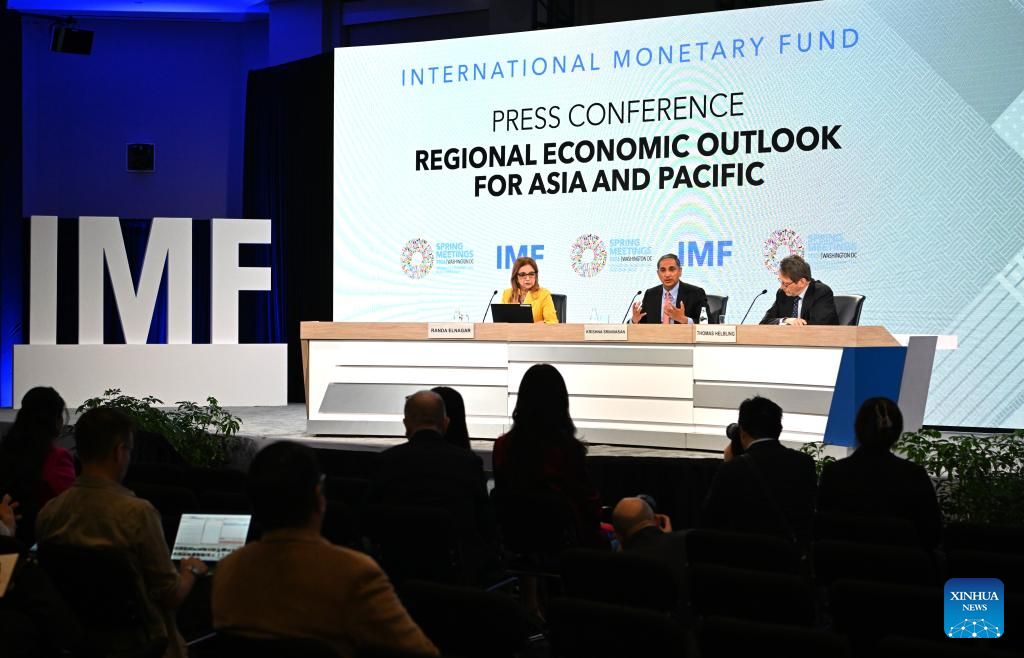
Krishna Srinivasan (2nd R), director of the IMF's Asia and Pacific Department, speaks at a press conference on the regional economic outlook for Asia and Pacific in Washington, D.C., the United States, on April 16, 2026. Asia's economy remains resilient at the start of the new year, but a new round of energy shocks will have a negative impact on Asia, an International Monetary Fund (IMF) official said on Thursday. (Xinhua/Li Rui)
WASHINGTON, April 16 (Xinhua) -- Asia's economy remains resilient at the start of the new year, but a new round of energy shocks will have a negative impact on Asia, an International Monetary Fund (IMF) official said on Thursday.
"Given the region's high fossil fuel intensity and reliance on the conflict areas of heat commodities, the new energy shock will have a negative impact on the region," Krishna Srinivasan, director of the IMF's Asia and Pacific Department, said at a press briefing during the 2026 Spring Meetings of the IMF and the World Bank Group.
Srinivasan noted that growth in most Asian economies turned out stronger than expected in late 2025.
"With regard to exports, much of the recent strength has been driven by robust demand for tech goods," he said. "This has benefited many Asian economies that are deeply integrated into tech supply chains. In addition, trade diversification toward the rest of the world also helped cushion softer import demand from the United States."
The IMF official noted that, in the context of the war in the Middle East, oil and gas prices have risen sharply, highlighting Asia's high exposure to energy shocks due to its energy-intensive economies, heavy reliance on imported fuels, and vulnerability to disruptions in related inputs such as fertilizers and petrochemical products, which could further strain supply chains if the conflict persists.
Asia's growth is projected to moderate from 5 percent in 2025 to 4.4 percent in 2026 and 4.2 percent in 2027. In a blog post on Thursday, the IMF also projected that China and India will account for about 70 percent of Asia's growth.
On macro policy, Srinivasan said that the near-term task is to absorb the shocks while preserving price signals and policy credibility, while the medium-term task is to build a more resilient, balanced and inclusive growth model. ■
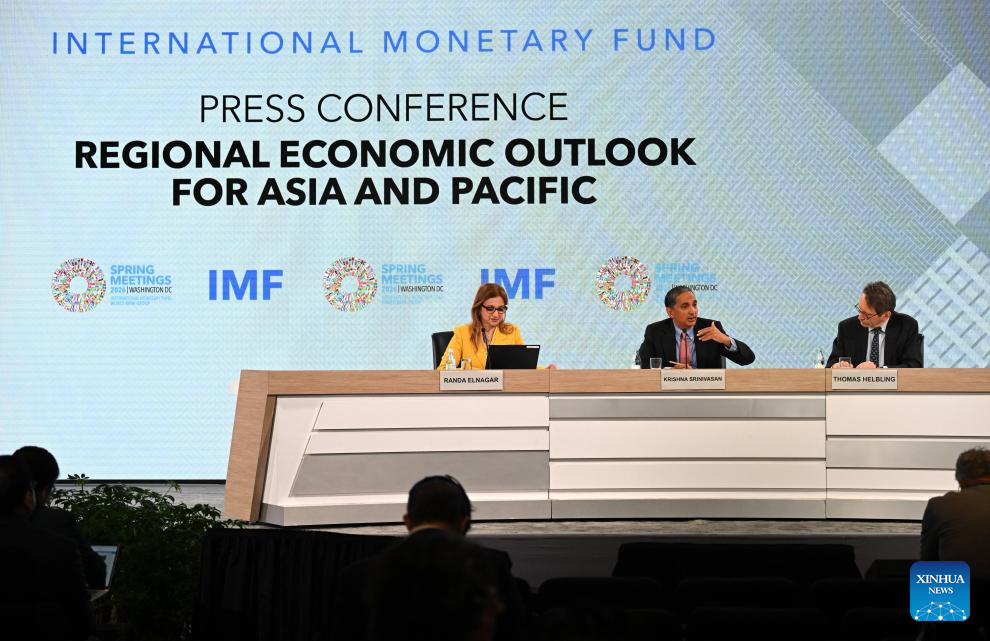
Krishna Srinivasan (2nd R), director of the IMF's Asia and Pacific Department, speaks at a press conference on the regional economic outlook for Asia and Pacific in Washington, D.C., the United States, on April 16, 2026. Asia's economy remains resilient at the start of the new year, but a new round of energy shocks will have a negative impact on Asia, an International Monetary Fund (IMF) official said on Thursday. (Xinhua/Li Rui)
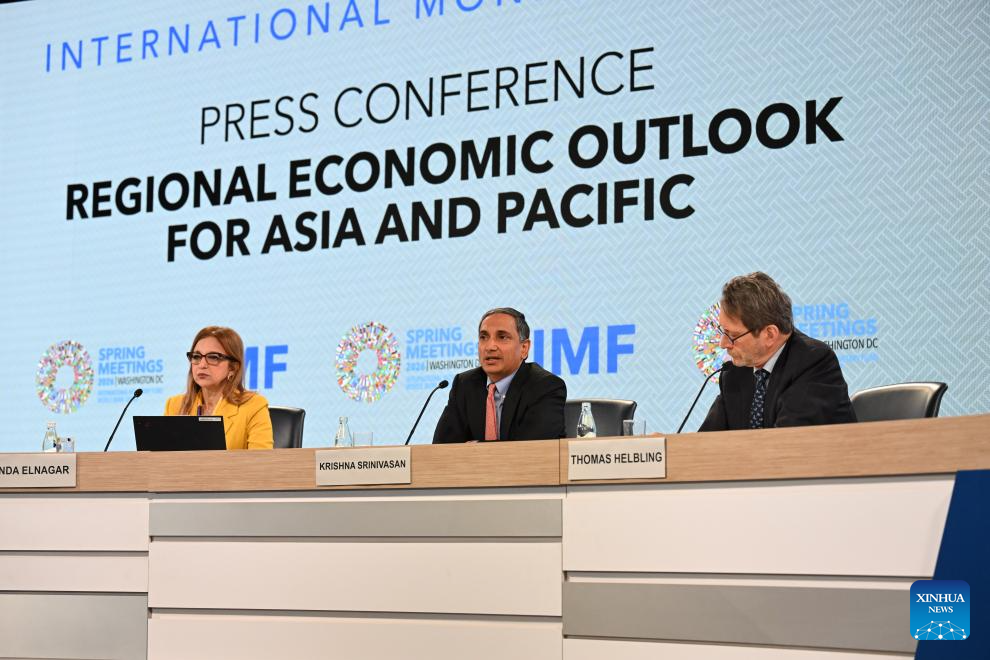
Krishna Srinivasan (C), director of the IMF's Asia and Pacific Department, speaks at a press conference on the regional economic outlook for Asia and Pacific in Washington, D.C., the United States, on April 16, 2026. Asia's economy remains resilient at the start of the new year, but a new round of energy shocks will have a negative impact on Asia, an International Monetary Fund (IMF) official said on Thursday. (Xinhua/Li Rui)
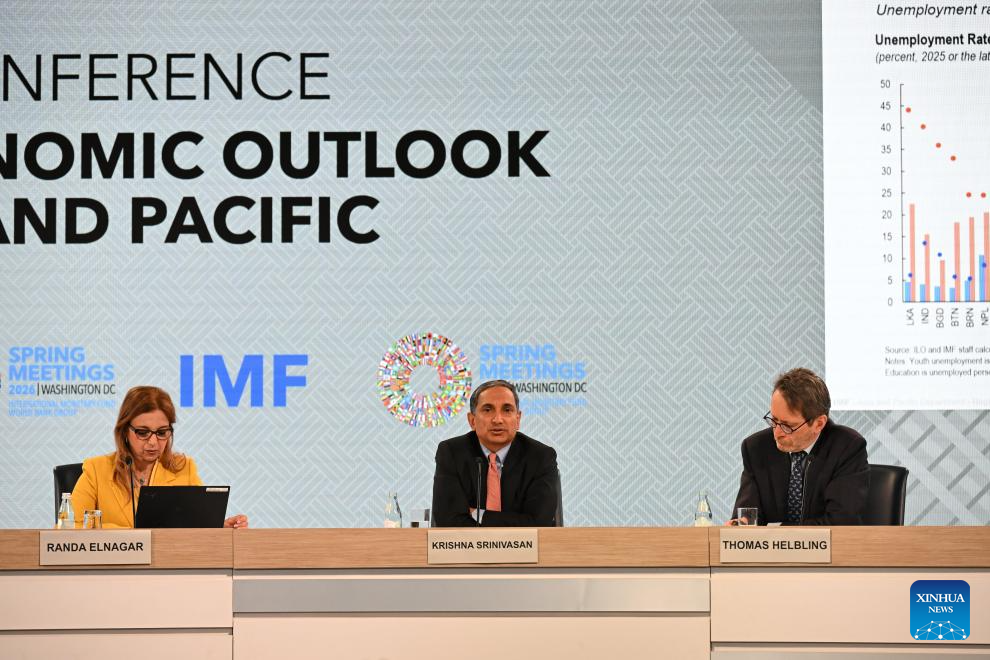
Krishna Srinivasan (C), director of the IMF's Asia and Pacific Department, speaks at a press conference on the regional economic outlook for Asia and Pacific in Washington, D.C., the United States, on April 16, 2026. Asia's economy remains resilient at the start of the new year, but a new round of energy shocks will have a negative impact on Asia, an International Monetary Fund (IMF) official said on Thursday. (Xinhua/Li Rui)
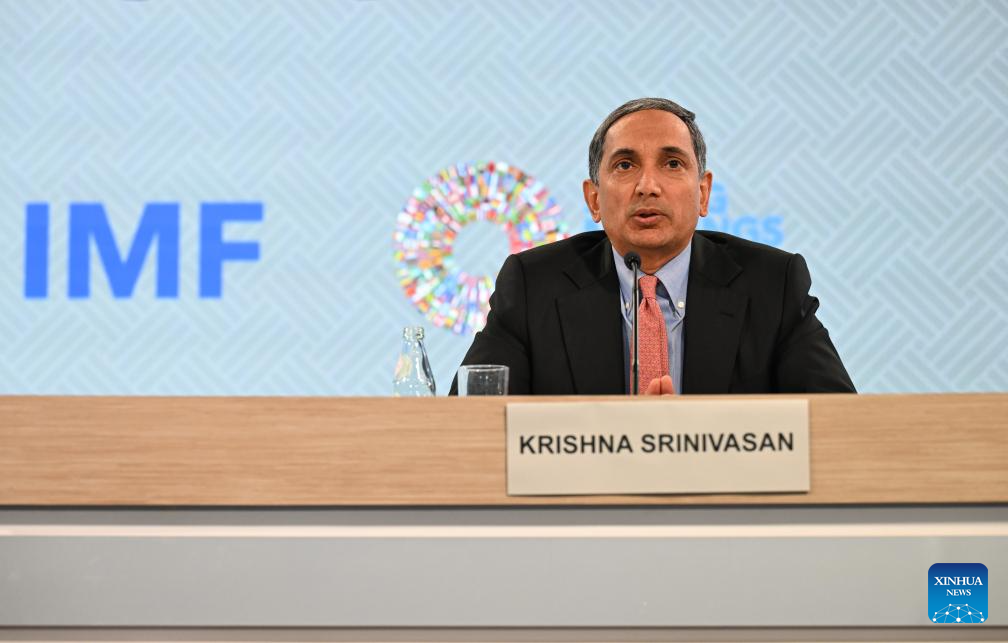
Krishna Srinivasan, director of the IMF's Asia and Pacific Department, speaks at a press conference on the regional economic outlook for Asia and Pacific in Washington, D.C., the United States, on April 16, 2026. Asia's economy remains resilient at the start of the new year, but a new round of energy shocks will have a negative impact on Asia, an International Monetary Fund (IMF) official said on Thursday. (Xinhua/Li Rui)