
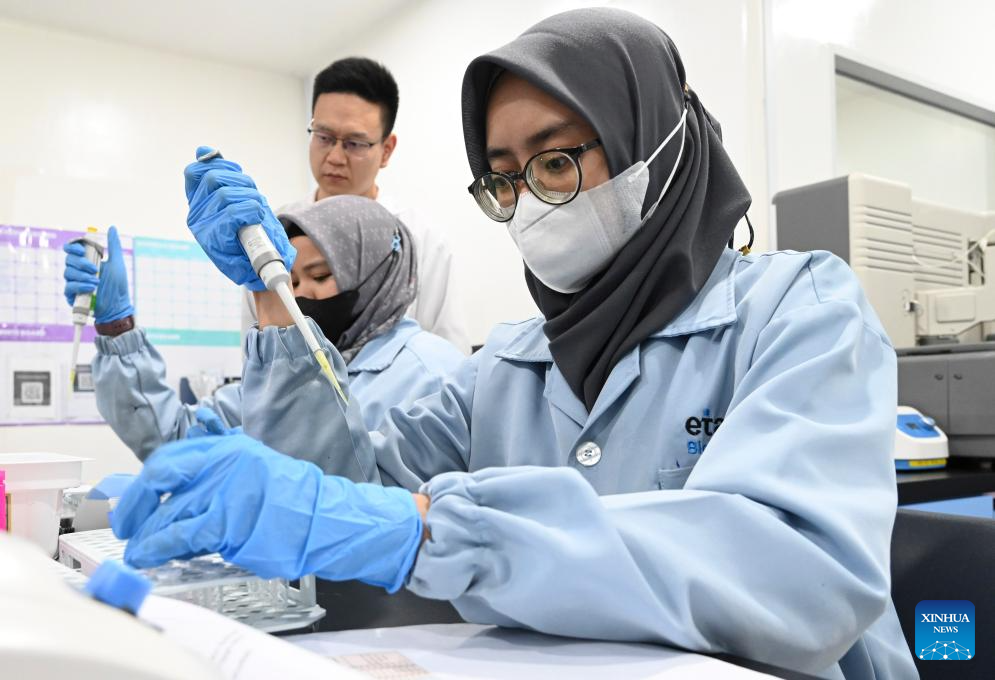
Laboratory staff members of Indonesian biopharmaceutical company Etana work in Jakarta, Indonesia, April 10, 2026. (Xinhua/Zulkarnain)
by Cao Kai, Zhang Yisheng and Nurul Fitri Ramadhani
JAKARTA, April 13 (Xinhua) -- As an Indonesian mother with a daughter, Ita has always firmly believed that every young woman deserves the opportunity to receive the HPV vaccine -- and the earlier, the better.
"The HPV vaccine is very important for women in Indonesia because it can protect us from cervical cancer," said Ita.
Yet for many families, affordability and availability remain formidable hurdles.
Across the world's largest archipelagic country, those seeking to protect their daughters often face the triple barriers of high costs, limited supply and uneven distribution.
"If the vaccine is produced locally and becomes more affordable, it will be easier for parents to access it and recommend it to others," Ita added.
Her daughter, Alena, who received the vaccine at school, said early protection is crucial, reflecting growing awareness of HPV prevention among younger generations.
In a recent interview with Xinhua, Taruna Ikrar, head of Indonesia's Food and Drug Authority (BPOM), said the urgency of HPV vaccination is closely tied to the country's cancer burden.
"Indonesia has nearly 300 million people and more than 17,000 islands, which creates unique challenges in delivering healthcare and vaccines," Ikrar said, noting that immunization remains the frontline defense, with HPV vaccination serving as a cornerstone in protecting women's health.
Cervical cancer remains a pressing concern in Indonesia. To address this, BPOM is promoting the nine-valent HPV vaccine, which offers over 90 percent effectiveness in preventing infection.
To fast-track availability, Indonesia has been deepening cooperation with China through technology transfer and know-how sharing, alongside partnerships with other international players, Ikrar said, highlighting that collaboration with Chinese biotech firms has played a key role.
Such cooperation enables Indonesia to bypass the early-stage trial-and-error phase and move more quickly toward building its own manufacturing capacity, he added.
The partnership is also evolving into a multi-tiered ecosystem spanning government, industry and academia, further strengthening the country's public health resilience, the official said.
Vino Soaduon, production director at Indonesian biopharmaceutical company Etana, said technology exchange with Chinese partners is critical to advancing domestic production.
"By building robust quality systems and working closely with our partners, we ensure the vaccine meets global standards," Vino said.
He added that once full-scale local production is achieved, Indonesia could produce millions of doses annually, stabilizing supply while significantly reducing costs for families.
For parents like Ita, the shift toward locally produced vaccines could be transformative. Lower prices mean more children can be protected, while improved access and awareness will help more families take preventive action.
"I would recommend the vaccine to any family," Ita said. "If access becomes easier and prices drop, more parents will be willing to take that step for their children's future." ■
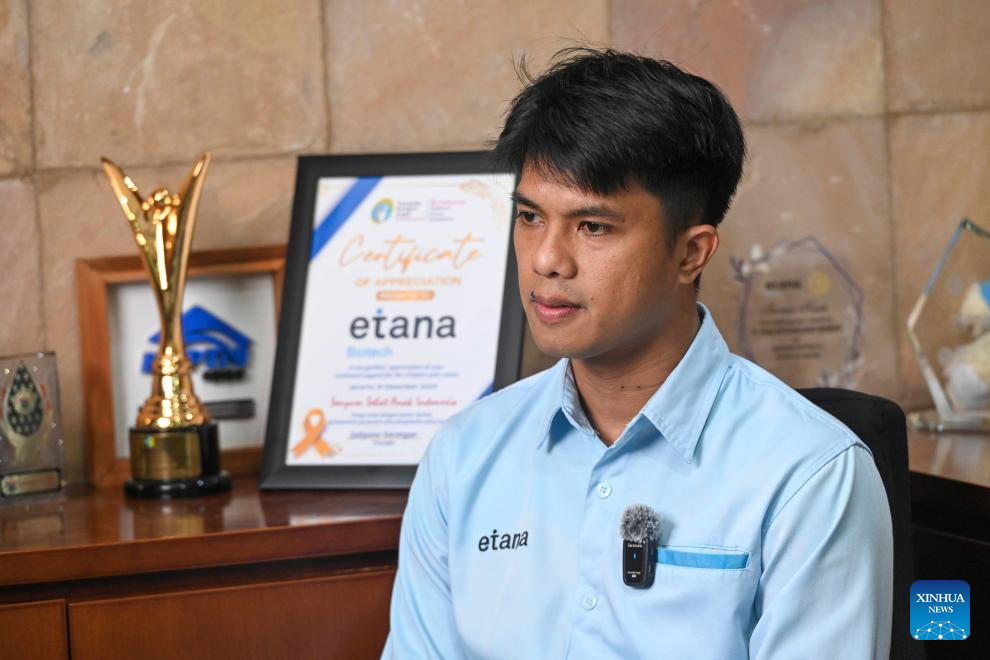
Vino Soaduon, production director at Indonesian biopharmaceutical company Etana, is pictured during an interview with Xinhua in Jakarta, Indonesia, April 10, 2026. (Xinhua/Zulkarnain)

Taruna Ikrar, head of Indonesia's Food and Drug Authority (BPOM), speaks during an interview with Xinhua in Jakarta, Indonesia, April 10, 2026. (Xinhua/Zulkarnain)

Ita (L) and her daughter Alena are pictured during an interview with Xinhua in Jakarta, Indonesia, April 10, 2026. (Xinhua/Zulkarnain)