
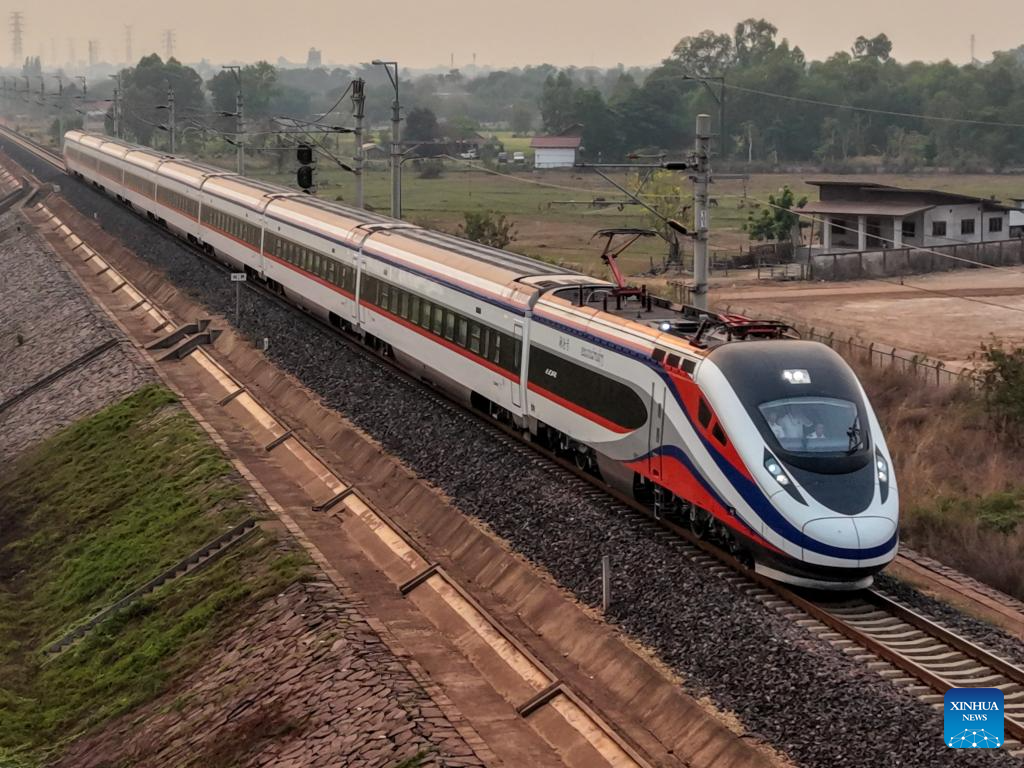
An aerial drone photo taken on April 13, 2026 shows a train of the China-Laos Railway, departing from Kunming of southwest China's Yunnan Province, arriving in Vientiane, Laos. The China-Laos Railway cross-border passenger service marks its third anniversary on Monday, representing a significant milestone in regional connectivity and cultural exchange. Linking Kunming in southwest China's Yunnan Province with the Lao capital Vientiane, the railway enables same-day travel between the two cities, significantly reducing journey time while bringing the people of China and Laos closer together. (Photo by Xia Ningqin/Xinhua)
VIENTIANE, April 12 (Xinhua) -- The China-Laos Railway cross-border passenger service is set to mark its third anniversary, representing a significant milestone in regional connectivity and cultural exchange. Linking Kunming in southwest China's Yunnan province with the Lao capital Vientiane, the railway enables same-day travel between the two cities, significantly reducing journey time while bringing the people of China and Laos closer together.
Over the past three years, the service has transformed cross-border mobility. According to the Laos-China Railway Co. Ltd. (LCRC), which operates the Lao section of the railway, the train service has handled over 800,000 cross-border passengers trips as of April 12.
The opening of the cross-border passenger service has effectively shortened the travel time between Kunming and Vientiane from several days by road to less than 10 hours, significantly improving travel efficiency.
"It used to be so difficult to study in China," Manisa from northern Laos' Oudomxay province recalled her past journey to study in China. Manisa's home is located in the mountainous region of northern Laos, about 100 kilometers from the Laos-China border, but the journey to China was not smooth.
"You either had to pay expensive airfares or endure long, winding journeys by road with multiple transfers, which were bumpy and tiring."
"It's completely different now. The cross-border train passes through my hometown, and I can board the train directly and arrive in China in just a few hours. It's time-saving and comfortable," Manisa said happily.
For 32-year-old Lao resident Soulinda, the launch of the cross-border train has transformed international travel from a luxury into a normal part of life.
"Before, I could only travel to China by bus, which was inconvenient, so I rarely went. Even when I did go, it was only for medical treatment; I almost never traveled to China for tourism," Soulinda recalled.
Now, every one or two months, she takes the China-Laos Railway to places like Jinghong and Mengla in southwest China's Yunnan province, and she also makes a special trip to China every year for a medical check-up.
"It's so convenient to take the train to China now. You can charge your phone and order food on the train, and the service is very attentive. It's much more comfortable than taking a bus," Soulinda said with a smile.
"The more times I've been to China, the more I understand Chinese culture and the more interested I become. Every time I come back from China, I can't wait to share my interesting experiences with my friends."
Soulinda added that the launch of the cross-border train has led to a continuous increase in exchanges between the people of the two countries. "Now more and more Lao people are going to China, and it's common to meet friends or relatives on the train."
According to figures from both China and Laos, during the nine-day Spring Festival holiday this year, which lasted from Feb. 15 to Feb. 23, the China-Laos Railway handled 12,900 cross-border trips, representing a significant year-on-year increase of 41.8 percent.
"When the train first started operating, there weren't many passengers and not much luggage," said Koua Moua, a 25-year-old Lao conductor on the train.
"But things changed quickly. More and more Lao students studying in China returned to Laos during their holidays and then went back to China before the start of the semester. They would bring a lot of luggage, and we would help them arrange it neatly."
The influx of Chinese tourists is particularly noticeable. "The number of Chinese tour groups has risen significantly compared with the early days of the service. I often run into familiar tour guides on the train as well," Koua Moua said.
Koua Moua is frequently surrounded by Chinese tourists asking, "I've heard Luang Prabang is a lot of fun, can you recommend some attractions?" "What are some places worth visiting here?" Koua Moua and fellow staff members often enthusiastically recommend popular Lao attractions.
The change in passenger flow is also reflected in the number of carriages. Koua Moua said, "Previously, there were only three cross-border carriages. Now, we have expanded to four to accommodate the growing number of passengers."
Over the past three years, the China-Laos Railway cross-border passenger service has evolved into more than just a transportation link. It has become a vital bridge connecting people, cultures, and opportunities. This steel artery has made exchanges and mutual learning between the two sides an accessible part of daily life.
"As I work on the train, I often feel that the hearts of the people of our two countries are getting closer," Koua Moua said. As the wheels roll, the friendship grows stronger. With each whistle, the train carries the common expectations of the people of both countries for development, embarking on journeys of people-to-people connectivity and writing a new chapter of mutual benefit and win-win cooperation. ■
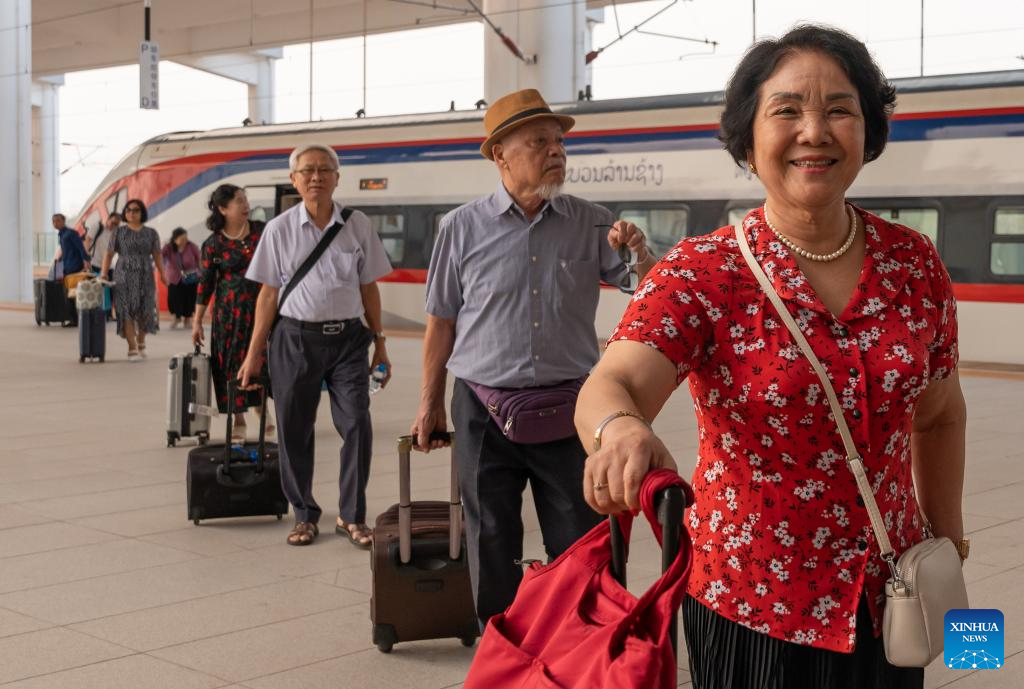
Passengers taking the China-Laos Railway arrive at the Vientiane Station in Vientiane, Laos, April 13, 2026. The China-Laos Railway cross-border passenger service marks its third anniversary on Monday, representing a significant milestone in regional connectivity and cultural exchange. Linking Kunming in southwest China's Yunnan Province with the Lao capital Vientiane, the railway enables same-day travel between the two cities, significantly reducing journey time while bringing the people of China and Laos closer together. (Photo by Kaikeo Saiyasane/Xinhua)
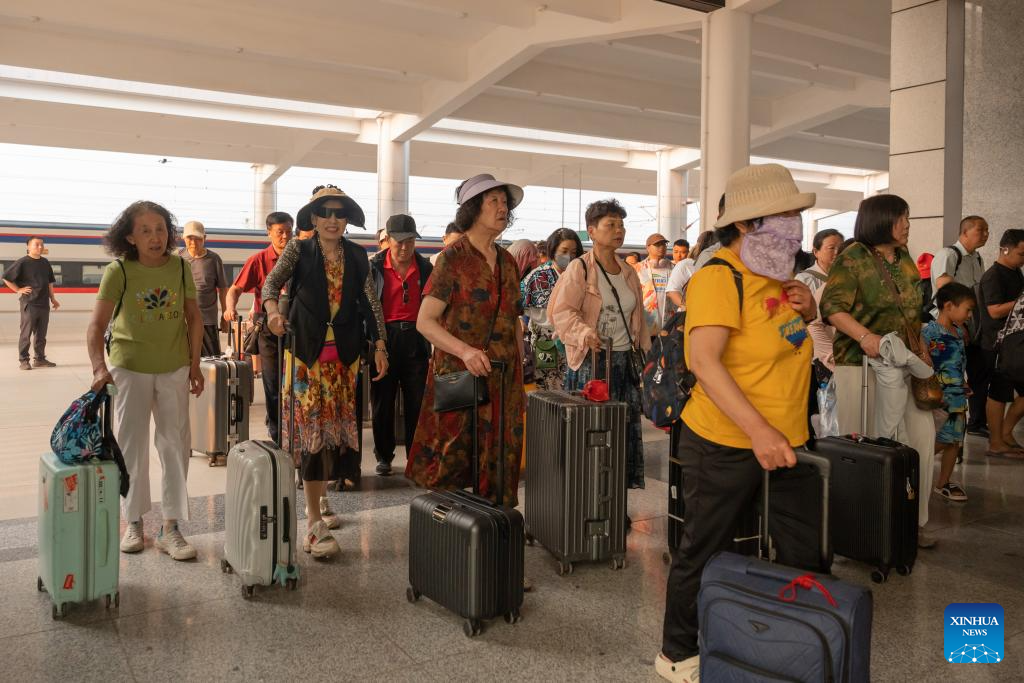
Passengers taking the China-Laos Railway arrive at the Vientiane Station in Vientiane, Laos, April 13, 2026. The China-Laos Railway cross-border passenger service marks its third anniversary on Monday, representing a significant milestone in regional connectivity and cultural exchange. Linking Kunming in southwest China's Yunnan Province with the Lao capital Vientiane, the railway enables same-day travel between the two cities, significantly reducing journey time while bringing the people of China and Laos closer together. (Photo by Kaikeo Saiyasane/Xinhua)
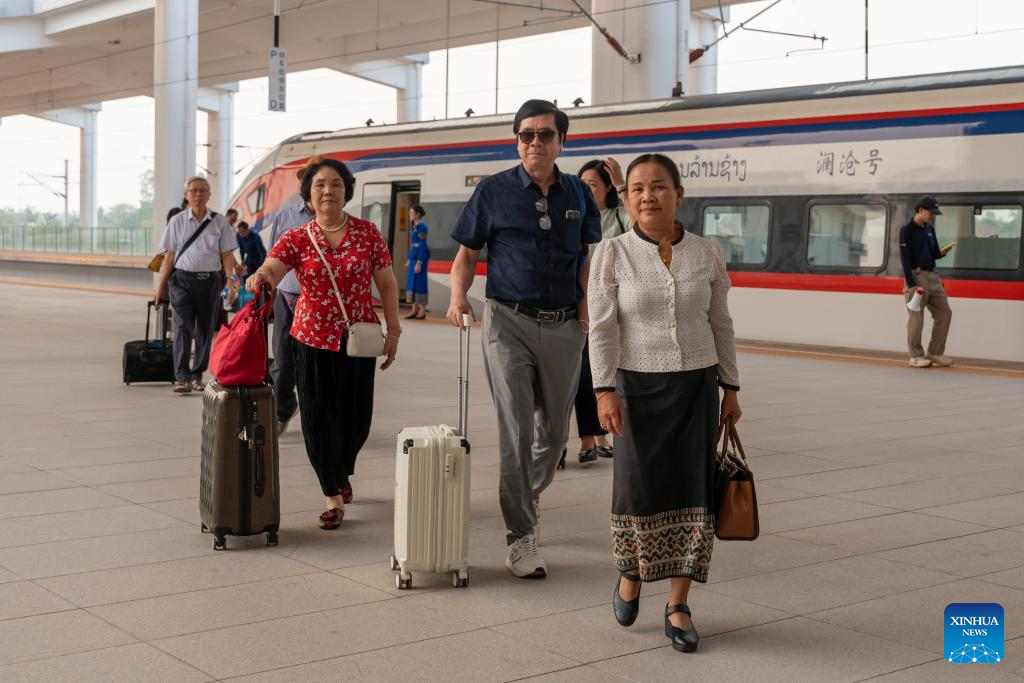
Passengers taking the China-Laos Railway arrive at the Vientiane Station in Vientiane, Laos, April 13, 2026. The China-Laos Railway cross-border passenger service marks its third anniversary on Monday, representing a significant milestone in regional connectivity and cultural exchange. Linking Kunming in southwest China's Yunnan Province with the Lao capital Vientiane, the railway enables same-day travel between the two cities, significantly reducing journey time while bringing the people of China and Laos closer together. (Photo by Kaikeo Saiyasane/Xinhua)
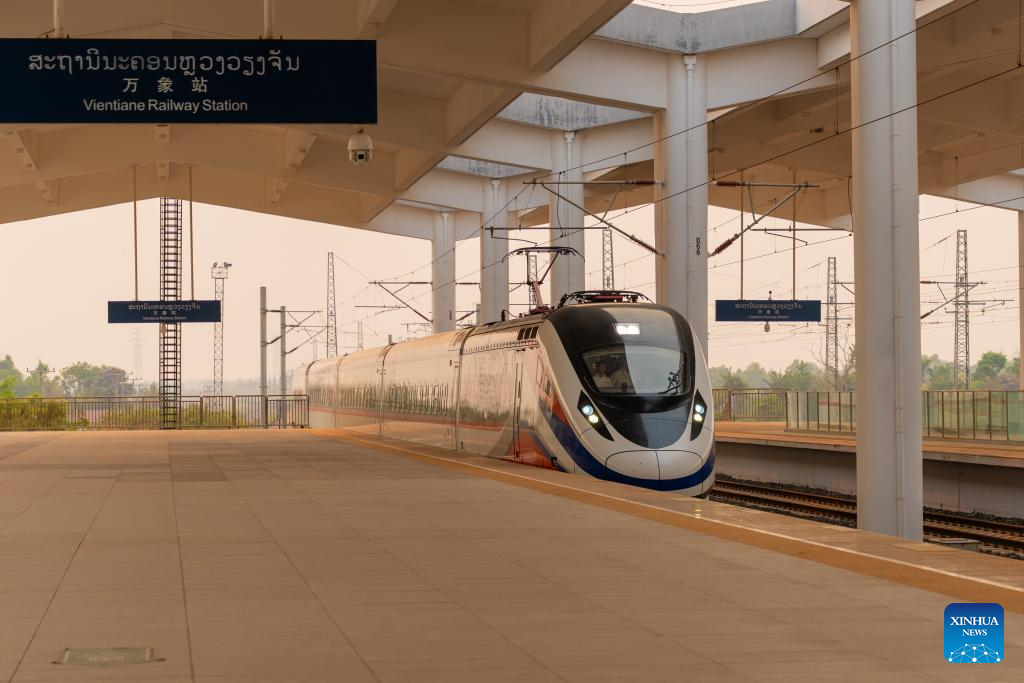
A train of the China-Laos Railway, departing from Kunming of southwest China's Yunnan Province, arrives at the Vientiane Station, in Vientiane, Laos, April 13, 2026. The China-Laos Railway cross-border passenger service marks its third anniversary on Monday, representing a significant milestone in regional connectivity and cultural exchange. Linking Kunming in southwest China's Yunnan Province with the Lao capital Vientiane, the railway enables same-day travel between the two cities, significantly reducing journey time while bringing the people of China and Laos closer together. (Photo by Kaikeo Saiyasane/Xinhua)
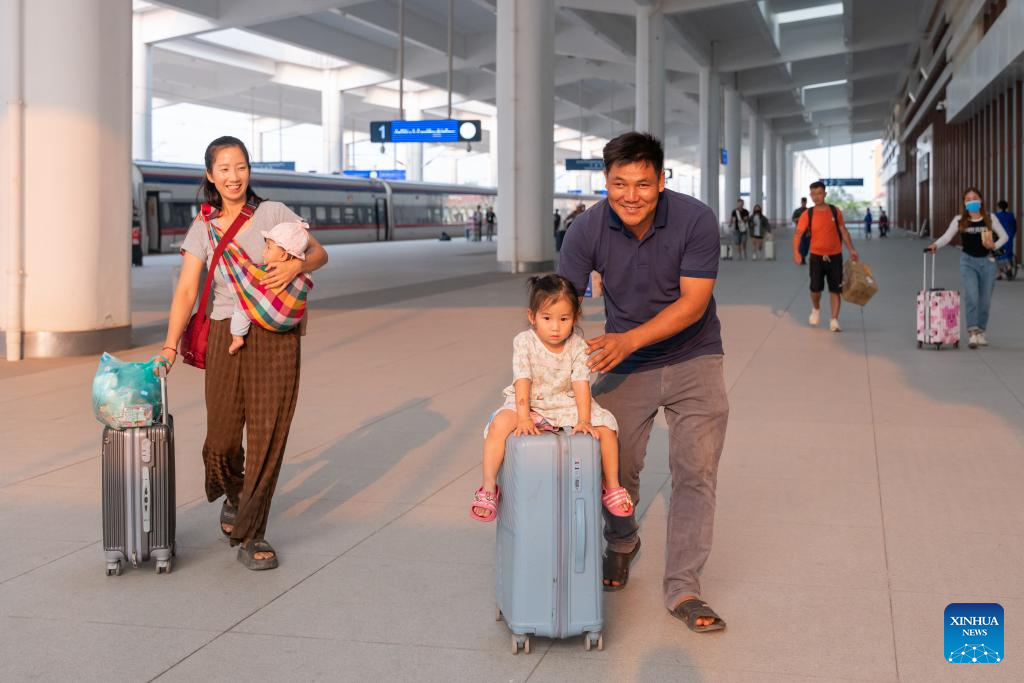
Passengers taking the China-Laos Railway arrive at the Vientiane Station in Vientiane, Laos, April 13, 2026. The China-Laos Railway cross-border passenger service marks its third anniversary on Monday, representing a significant milestone in regional connectivity and cultural exchange. Linking Kunming in southwest China's Yunnan Province with the Lao capital Vientiane, the railway enables same-day travel between the two cities, significantly reducing journey time while bringing the people of China and Laos closer together. (Photo by Kaikeo Saiyasane/Xinhua)