
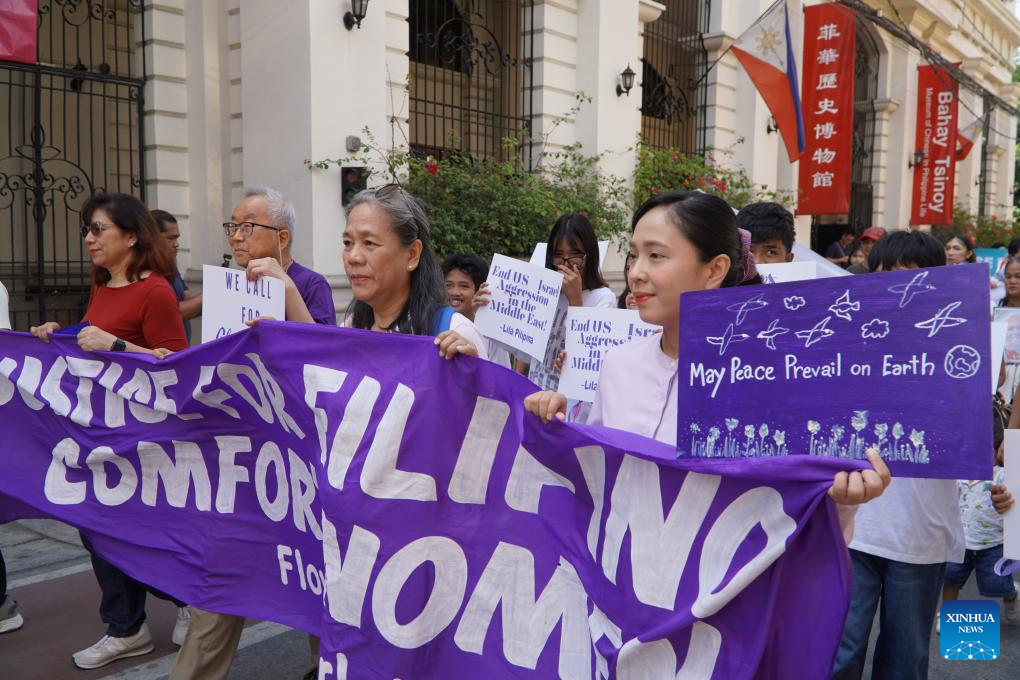
Filipinos take part in a rally to commemorate victims of wartime atrocities and call for peace amid rising tensions in the Middle East, in downtown Manila, the Philippines, March 15, 2026. Wearing pink and purple ribbons, around 100 Filipinos marched through downtown Manila on Sunday to commemorate victims of wartime atrocities and call for peace amid rising tensions in the Middle East. The march was organized by Lila Pilipina, a group advocating justice for Filipino victims of wartime sexual slavery by Japanese troops during World War II. Participants held daylong rallies and activities aimed at raising public awareness about the human cost of war. (Xinhua/Guo Yige)
by Xinhua writers Zhang Yisheng, Li Meng
MANILA, March 15 (Xinhua) -- Wearing pink and purple ribbons, around 100 Filipinos marched through downtown Manila on Sunday to commemorate victims of wartime atrocities and call for peace amid rising tensions in the Middle East.
The march was organized by Lila Pilipina, a group advocating justice for Filipino victims of wartime sexual slavery by Japanese troops during World War II. Participants held daylong rallies and activities aimed at raising public awareness about the human cost of war.
During the event, the group condemned the escalating U.S.-Israeli strikes on Iran, warning that a widening conflict could have far-reaching economic and security consequences for the Philippines.
In an interview with Xinhua, Lila Pilipina coordinator Sharon Cabusao-Silva expressed concern over the growing tensions in the Middle East and their potential impact on the global economy, including that of the Philippines, which has more than 2 million citizens living and working in the region.
"There is the prospect of the Philippines being dragged into a war that we do not want because of the U.S. facilities in the country," she said.
Silva said the consequences of the conflict could extend far beyond the region, with countries hosting U.S. military facilities potentially becoming targets as tensions escalate.
She warned that the Philippines, given its long-standing military ties with the United States and the presence of U.S. military facilities in the country, could face security risks if the conflict broadens.
Silva also condemned what she described as the targeting of women and children in ongoing conflicts in the Middle East, drawing parallels with atrocities committed by Japanese forces against women in territories they occupied during World War II (WWII).
Beyond security concerns, she said a prolonged conflict could also disrupt the livelihoods of overseas Filipino workers in the region and affect the remittances they send home, a key pillar of the Philippine economy.
"Disruptions to overseas Filipino workers and their remittances caused by war could put a major lifeline of the economy at risk," she said.
Silva also criticized the Philippine government for maintaining close military ties with the United States and called for a more independent foreign policy. "We must refuse to be dragged by the U.S. into its warmongering and orchestration of destruction in any region of the world."
For many participants, the march was also a reminder of history. Monica Bangalan, a volunteer at the event, urged Filipinos to remember the suffering of Filipino "comfort women" during World War II and remain vigilant against attempts to deny or revise that history.
Data showed that more than 1,000 Filipino women were forced to serve as sex slaves during Japan's occupation of the Philippines during WWII. There are only a few surviving women victims, most of them sickly and poor in their 90s.
"We need to remember the past and let more people know the truth," Bangalan said. (Xinhua reporters Guo Yige and Dario Agnote also contributed to the story.) ■
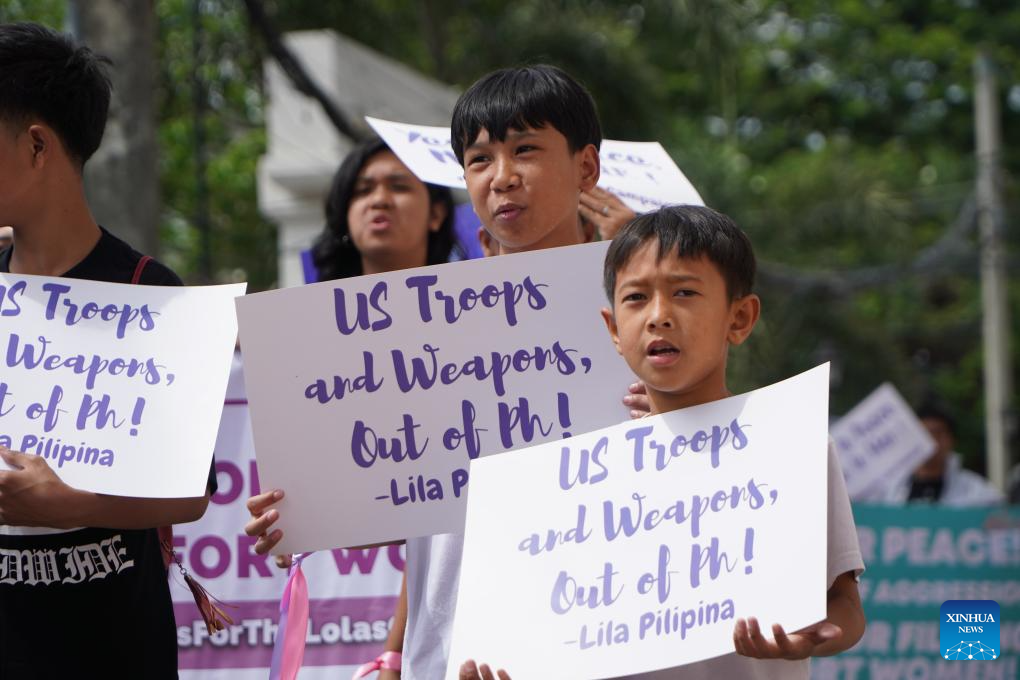
Filipinos take part in a rally to commemorate victims of wartime atrocities and call for peace amid rising tensions in the Middle East, in downtown Manila, the Philippines, March 15, 2026. Wearing pink and purple ribbons, around 100 Filipinos marched through downtown Manila on Sunday to commemorate victims of wartime atrocities and call for peace amid rising tensions in the Middle East.
The march was organized by Lila Pilipina, a group advocating justice for Filipino victims of wartime sexual slavery by Japanese troops during World War II. Participants held daylong rallies and activities aimed at raising public awareness about the human cost of war. (Xinhua/Guo Yige)