
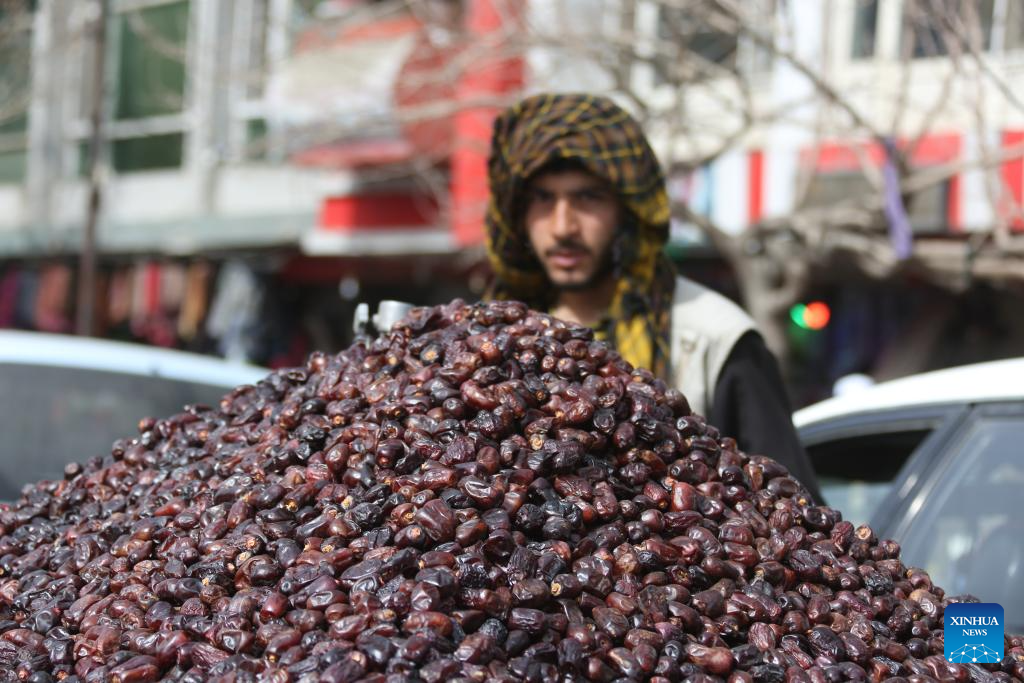
A vendor waits for customers ahead of Ramadan in Kabul, Afghanistan, Feb. 15, 2026. (Photo by Saifurahman Safi/Xinhua)
KABUL, Feb. 17 (Xinhua) -- Running a small shop in a newly constructed dusty market to earn a livelihood, Mohammad Reza, 35, lamented that the U.S. sanctions, poverty and persistent increase of prices of basic needs have shrunk the purchasing power and left him and his family cash-strapped ahead of Ramadan.
The Muslim holy month Ramadan is getting closer by each passing day, and the people of Afghanistan, like Muslims across the globe, are buying basic needs, including confectionery, dates, jam and other foodstuffs to welcome the fasting month.
During the month of Ramadan, which lasts 28, 29 or 30 days in the lunar calendar, depending on the month sighting, the faithful Muslims observe fast and do not eat or drink from dawn to dusk. In Afghanistan, Ramadan might begin on Wednesday or Thursday, depending on moon sight.
"To be frank, I am facing extreme economic problems. Contrary to other Muslim countries, the prices of foodstuffs and other essential items go up in Ramadan here," Reza told Xinhua.
Reza, the breadwinner of the five-member family, also claimed that ordinary people cannot buy what they need to welcome Ramadan, because the prices are beyond the reach of the people.
"The prices of everything, including cooking oil and rice, have gone up," Reza said, noting that a sack of 21 kg rice cost 2,900 afghani (46 U.S. dollars) to 3,000 afghani three months ago; currently it costs 4,000 afghani to 4,500 afghani.
The majority of the people in post-war Afghanistan have been facing extreme economic hardships, mostly due to the U.S.-slapped sanctions, a high rate of unemployment and poverty, many Afghans believe.
According to a UN report, around 17.4 million people, over one-third of the post-war country's population, could experience severe food insecurity in 2026, which indicates a crisis level of food insecurity in Afghanistan.
Blaming the reported U.S. sanctions as the main reason for poverty and economic problems in his war-torn country, Reza said that the sanctions have smashed the country's economy. "Otherwise, our economy might have improved."
Another Kabul resident, Safiullah Rahimi, also lashed out at U.S. sanctions and their impact on the prices of basic needs in Afghanistan.
"The American sanctions have spoiled the labor market and eventually undermined our income and even affected the cost of peas in the bazaar," Rahimi said. ■
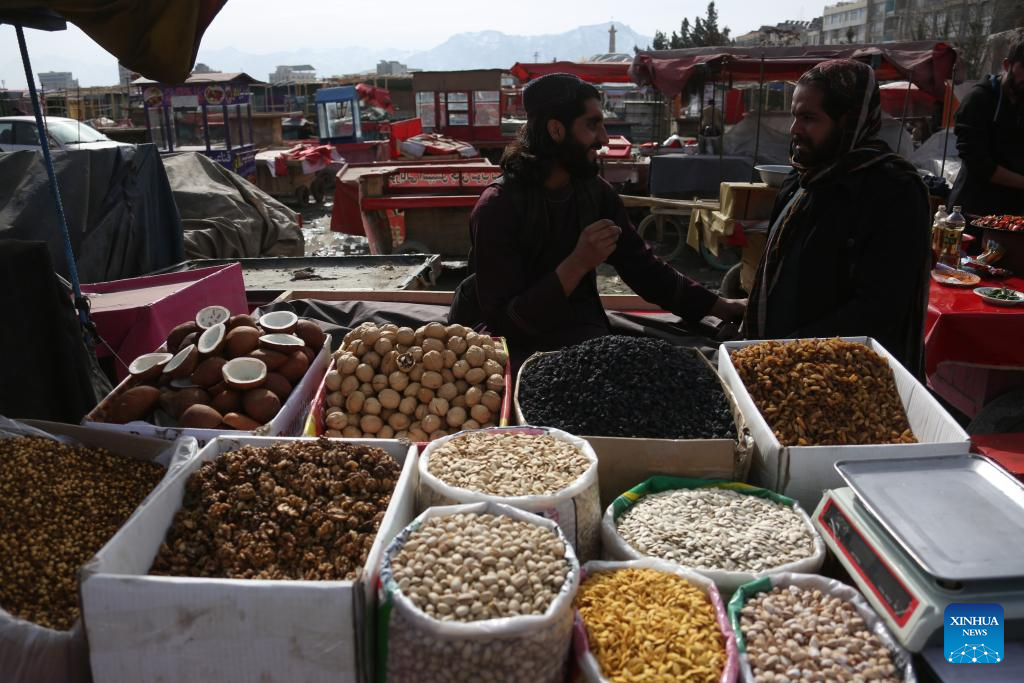
A vendor waits for customers ahead of Ramadan in Kabul, Afghanistan, Feb. 15, 2026. (Photo by Saifurahman Safi/Xinhua)
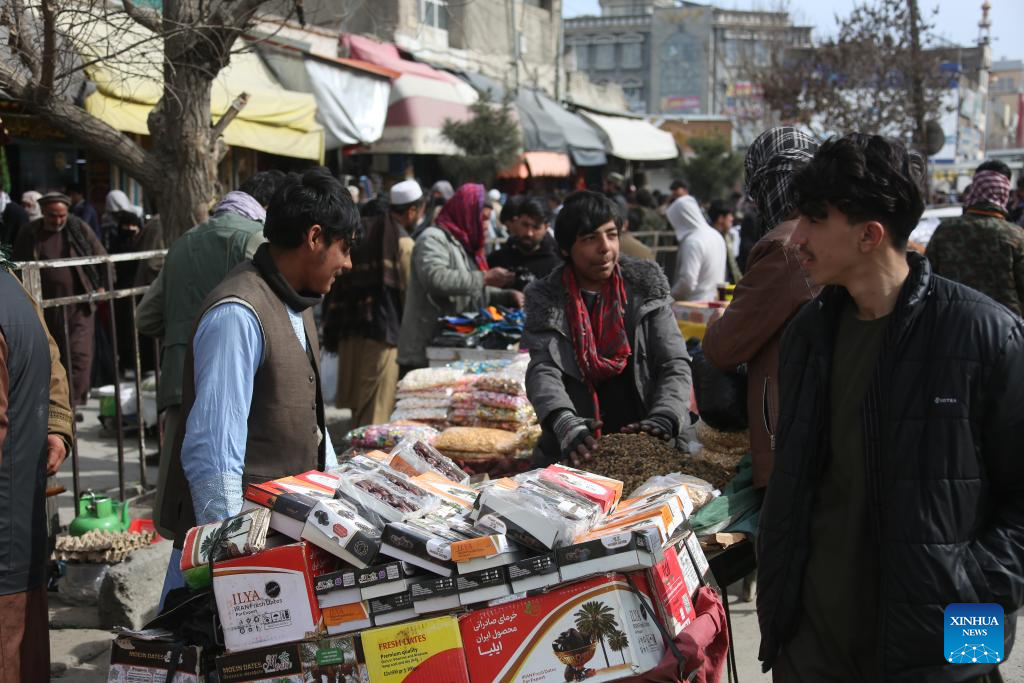
Street vendors wait for customers ahead of Ramadan in Kabul, Afghanistan, Feb. 15, 2026. (Photo by Saifurahman Safi/Xinhua)