
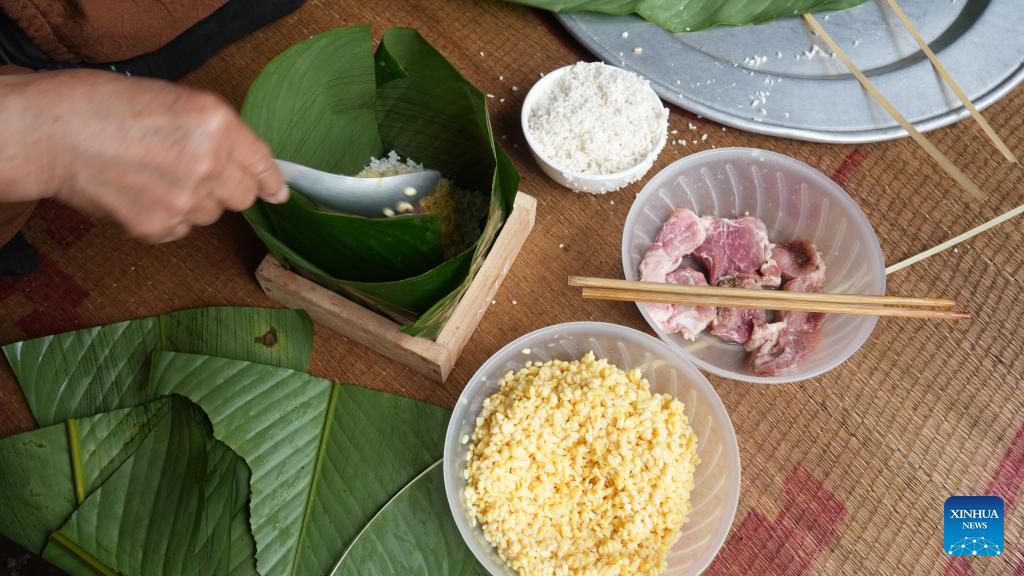
A villager makes square glutinous rice cakes in Duong Lam of Hanoi, Vietnam, Feb. 9, 2026. (Xinhua/Hu Jiali)
HANOI, Feb. 11 (Xinhua) -- Carefully wrapping fresh ingredients inside thin rice paper, Do Thi Minh Nguyet instructs foreign visitors on how to make spring rolls inside her centuries-old home in Hanoi's Duong Lam ancient village as the festive season approaches.
Amid laughter, sizzling pans and the aroma of fresh herbs, the simple cooking class offers tourists an intimate glimpse into a traditional Lunar New Year dish of northern Vietnam, turning the ancient house into a living bridge between rural Vietnam's past and present.
Located on the outskirts of Hanoi, Duong Lam is widely regarded as one of Vietnam's best-preserved ancient villages, home to nearly 1,000 traditional houses built from laterite stone and wood.
Tucked among winding lanes and communal courtyards, the village has retained much of its original rural landscape despite rapid urbanization surrounding the capital.
In 2006, Duong Lam became Vietnam's first ancient village recognized as a national cultural and historical relic.
While preserving their ancestral homes, Duong Lam's residents have gradually opened their doors to visitors, offering hands-on cultural experiences and traditional meals.
At the heart of the village, Nguyet's ancient house, built in 1674, once belonged to a high-ranking education official of the former Son Tay province.
"Since the 2000s, when Duong Lam was officially recognized as an ancient village, large numbers of domestic and foreign tourists have come to visit the house, bringing renewed vitality to our family's heritage," said Nguyet, 72, a former history teacher.
"In the first lunar month, especially during the Lunar New Year, the number of visitors increases significantly," she added.
Three generations of Nguyet's family, her mother, herself and her daughter, take part in welcoming visitors, guiding them in making traditional Lunar New Year dishes such as square glutinous rice cakes and spring rolls. Tourists can stay and enjoy their own cooking.
A typical traditional Lunar New Year meal in Duong Lam village features Vietnamese sausages, spring rolls and square glutinous rice cakes, and must include two signature local dishes: grilled pork and sugarcane chicken, a small but plump and juicy local breed.
Visiting Nguyet's family in the days leading up to the Lunar New Year to learn how to make spring rolls, Andrea Baker, an American tourist, said it was such a great experience.
"Anytime we can do hands-on activities, it's just a great cultural sharing," Baker told Xinhua.
Baker was impressed by the interaction with local people during the activities, where both sides could ask questions and share experiences.
Having previously traveled in China, she observed similarities in Duong Lam, including the presence of Chinese characters and language on walls and decorations.
Nguyet said Chinese visitors have also come to visit the house, with many noting similarities between the ancient houses in Duong Lam and elements of traditional Chinese culture.
She said the development of tourism has transformed the lives of Duong Lam residents in general, and her family in particular.
"In the past, most villagers relied mainly on traditional farming for their livelihoods. With the growth of tourism, supplementary occupations have flourished alongside it."
These include making traditional cakes and producing local soy sauce, according to Nguyet.
"The expansion of these side trades has improved incomes and made life in the village more prosperous overall," she said. ■
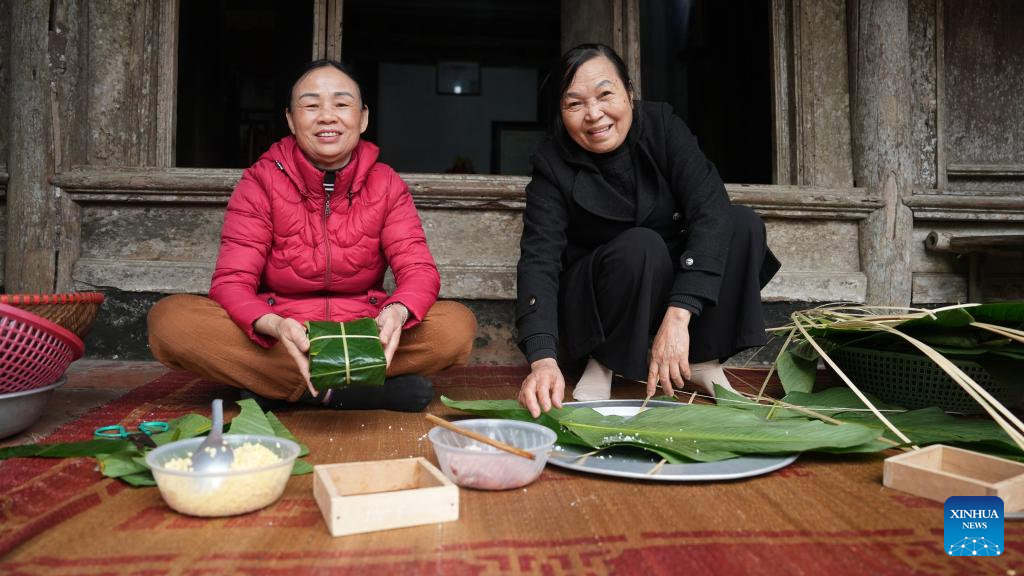
Do Thi Minh Nguyet and her relative make square glutinous rice cakes in Duong Lam of Hanoi, Vietnam, Feb. 9, 2026. (Xinhua/Hu Jiali)
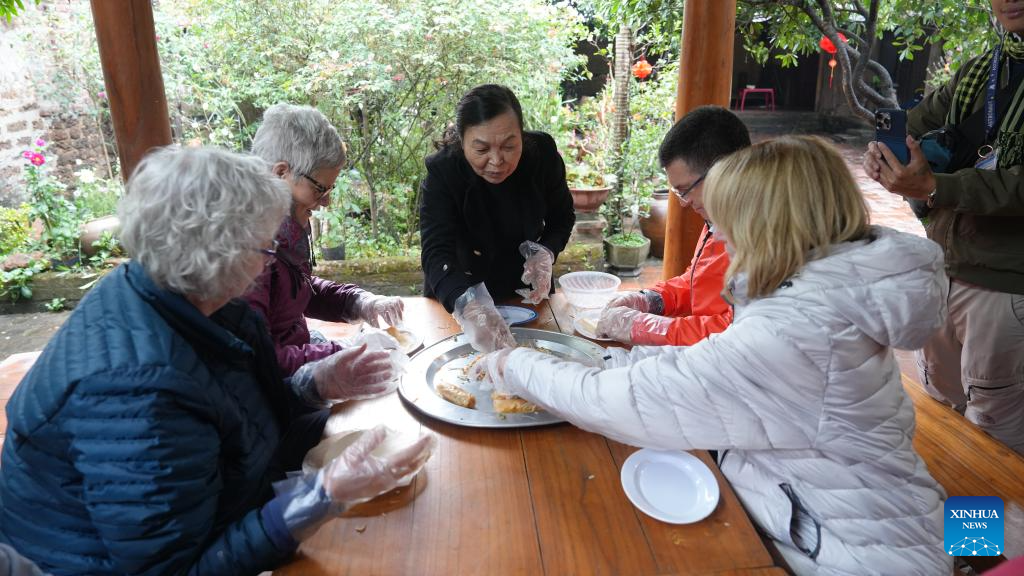
Do Thi Minh Nguyet instructs foreign visitors in making spring rolls in Duong Lam of Hanoi, Vietnam, Feb. 9, 2026. (Xinhua/Hu Jiali)