
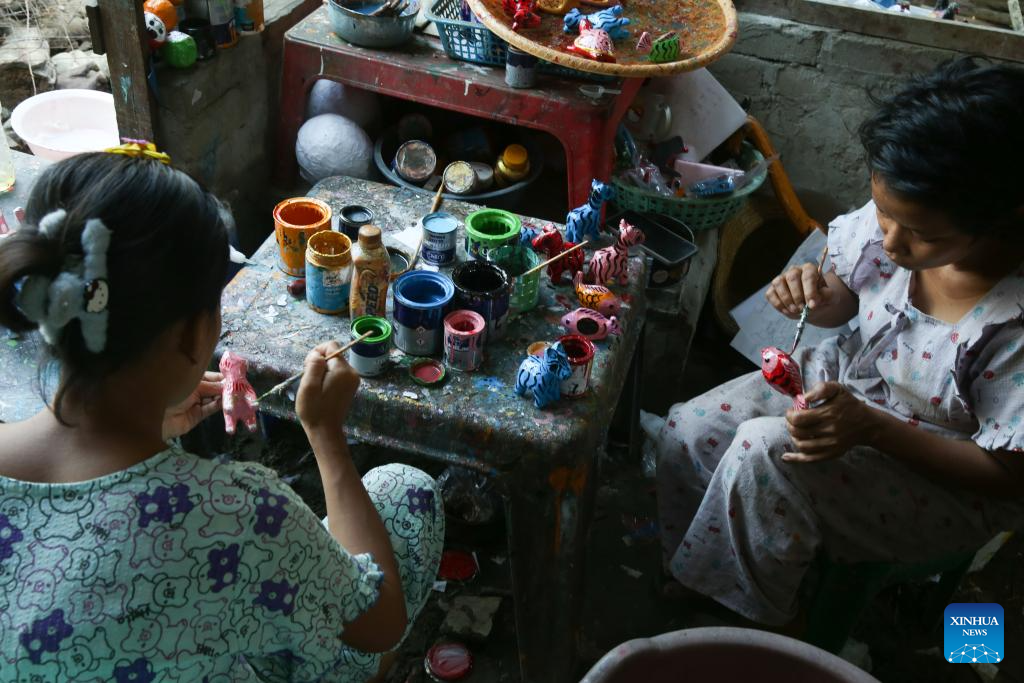
Women make handmade paper animal figures at a workshop in Yangon, Myanmar, Jan. 21, 2026. In Yangon's Dagon Seikkan township, a small workshop named La Min Eain is alive with quiet concentration as three artisans carefully paint animal figures made entirely from paper, working steadily to meet incoming orders.(Xinhua/Myo Kyaw Soe)
YANGON, Jan. 22 (Xinhua) -- In Yangon's Dagon Seikkan township, a small workshop named La Min Eain is alive with quiet concentration as three artisans carefully paint animal figures made entirely from paper, working steadily to meet incoming orders.
The workshop, which employs some 20 workers, was founded 15 years ago by Nyi Nyi Aung, now 52, who began creating handmade paper animal figurines when his son was just three years old. What started as simple toys for his child gradually became a lifelong passion.
"I started by making toys for my son. Then I realized I truly enjoyed this work, so I decided to continue," he said.
Over the past decade and a half, handmade paper craft has been Nyi Nyi Aung's sole occupation. Yet in Myanmar, paper-made toys have long struggled to attract attention.
"The market for paper toys in our country is limited. People in Myanmar are not very impressed by paper toys. But foreigners value handmade work very much," he said.
The early years were challenging. He sold his paper figures around the Shwedagon Pagoda, where foreign visitors showed interest, but larger designs were difficult to carry. He then began creating smaller, lightweight figures that tourists could easily take home.
Today, his handmade paper animal figurines are supplied to souvenir shops across Myanmar.
"Local sales don't sustain the business," Nyi Nyi Aung said. "Our survival depends mainly on international orders," he added.
Demand rises sharply during the Christmas season. But even with demand from abroad, production is becoming harder due to higher paper prices and fewer molds, he said.
Each figure is created entirely by hand from start to finish, using waste paper. The process requires patience and precision.
Zar Zar Win, 30, began learning handmade paper craft from Nyi Nyi Aung when she was 16.
"We mainly produce animal figures such as cows, horses, tortoises, and dogs," she said. "When the raw materials are ready, we can make more than 300 figures in a week."
"Our main challenges are labor shortage and high raw materials prices. I can't say for sure whether this can survive in the future. It all depends on the market and our workforce," she added.
When Nyi Nyi Aung first began, around 20 artisans across Myanmar were engaged in similar handmade paper craft. Today, fewer than 10 remain. "My wife has passed away, and my son is not interested in continuing this work," he said.
"For me, profit has never been the motivation. Sometimes, I even put my own money into this work. I do it because I love doing it, and I make these paper figures with my heart," he said.
As Myanmar's handmade paper art quietly gains appreciation abroad, its future at home depends on whether a new generation will choose passion over profit and keep the craft alive with heart, Nyi Nyi Aung said. ■
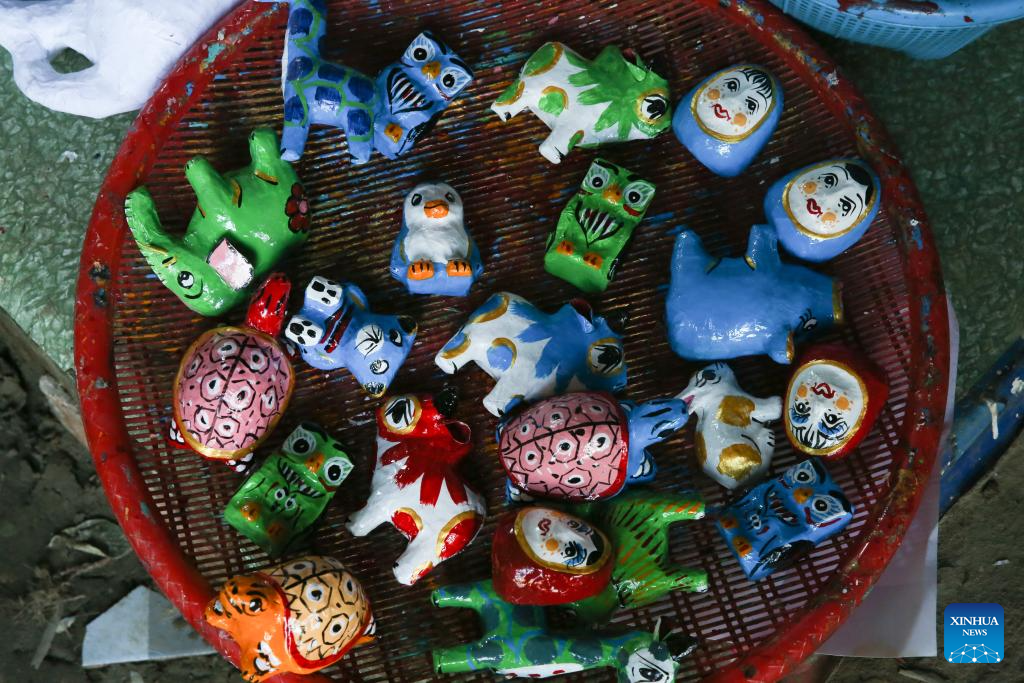
This photo taken on Jan. 21, 2026 shows handmade paper animal figures at a workshop in Yangon, Myanmar. In Yangon's Dagon Seikkan township, a small workshop named La Min Eain is alive with quiet concentration as three artisans carefully paint animal figures made entirely from paper, working steadily to meet incoming orders.(Xinhua/Myo Kyaw Soe)