
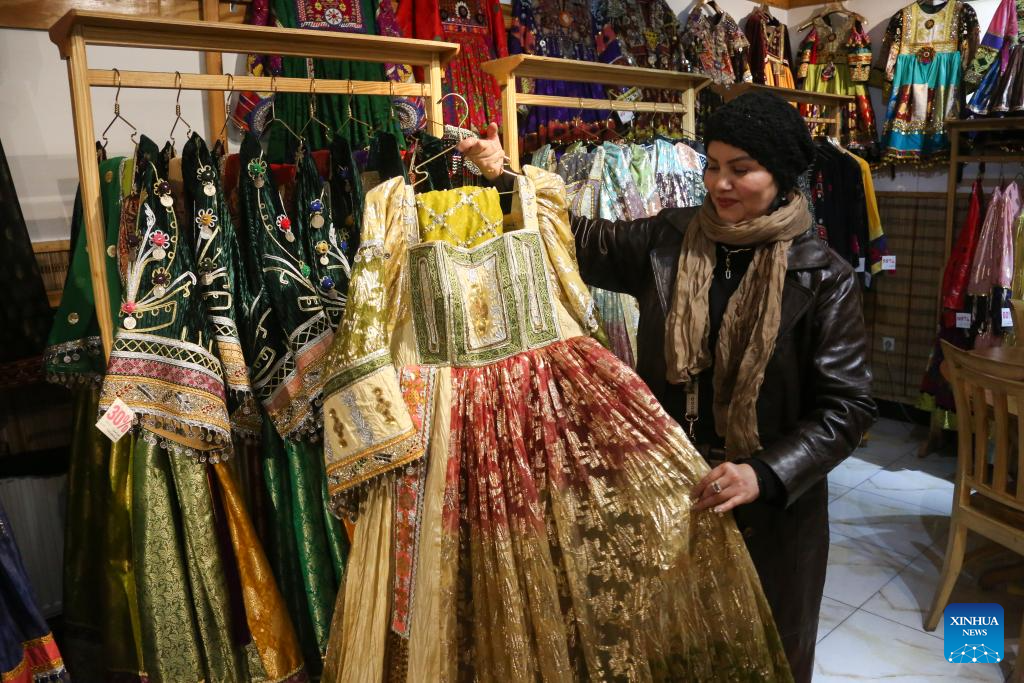
A staff member showcases a dress at a clothing store in Kabul, Afghanistan, Jan. 14, 2026. (Photo by Saifurahman Safi/Xinhua)
KABUL, Jan. 20 (Xinhua) -- As visitors step into the Jama Designing Center in Kabul, capital of Afghanistan, they are greeted by the steady hum of sewing machines, each precise stitch tells a story -- not only of garments being made, but also of determination, skill, and teamwork -- linking local craftsmanship with international markets.
At the heart of the workshop is Mohsena Saqib, a 45-year-old entrepreneur whose vision has transformed a small tailoring operation into a thriving enterprise.
She set out to create a space where traditional Afghan craftsmanship could survive, adapt, and reach new markets, while also providing stable jobs for people with limited opportunities.
"At the beginning, we were only six people, and now more than 50 people are directly employed," Saqib said. "In addition, more than 20 women collaborate with us from their homes in the hand-stitching section."
A turning point came through cooperation beyond Afghanistan's borders.
After obtaining her business visa, Saqib traveled to China, where she was able for the first time to select fabrics directly, negotiate prices, and establish relationships with suppliers who understand the demands of modern clothing design.
The early years were challenging. As orders increased, access to suitable materials became a persistent obstacle, she said. Imported textiles were available in Kabul's markets, but they often lacked the quality and variety required for women's clothing.
"Our focus on quality has allowed us to build strong relationships with Chinese traders and source a wide range of raw materials, including ribbons and metal accessories, for our designs," Saqib said.
Creativity, delicacy, and effective technical management have come together in the workshop, helping attract more customers and allowing its designs to stand out from the rest.
For many employees, this is their first experience with a steady income. Najmir, a tailor who supports a family of seven, said the workshop offers more than financial stability. "Here, we are treated with respect," he said. "That gives us the motivation to plan for the future."
Inside the workshop, progress is measured not only by output but also by personal growth. Ahmad Naser, now the head tailor, oversees production and trains apprentices. Young women and men learn side by side, developing skills that can sustain them for years to come.
"Trust between management and workers is what makes this place strong," he said. "We all work together as one team, and every step -- from pricing to design -- is discussed and coordinated collectively."
As demand continues to rise, the workshop has entered a new phase of development. Orders arrive steadily, and the sewing machines maintain their familiar rhythm, though their meaning has evolved.
The workshop's reputation now extends far beyond Afghanistan. Its products are sold both domestically and abroad, and Afghan-made clothing from the center is gaining renewed recognition among buyers.
The center has more than 300,000 followers on Instagram, which is a huge number for a handmade clothing workshop. Blending and mixing the distinctive elements of traditional dress from different Afghan ethnic groups is the store's main hallmark.
Stories of transformation and growth are common. Tamana joined the workshop at the age of 13, starting with basic sewing tasks. Today, at 18, she manages the online sales department, coordinating orders from both domestic and international customers.
"I started working here at a young age, and the experience and skills I have gained show how satisfied I am with this work. This place has become like my second home," she said.
Saqib believes Afghanistan holds significant untapped potential in the clothing industry, citing skilled labor, rich cultural traditions, and growing market demand.
Saqib also sent her son to study Chinese at Foshan University in Guangdong Province in south China, preparing for expanding trade with China in the future.
The women-led enterprise in Kabul is demonstrating how local craftsmanship supported by skills training is on its way to help revive an industry, connect cultures, and create sustainable livelihoods, one garment at a time. ■
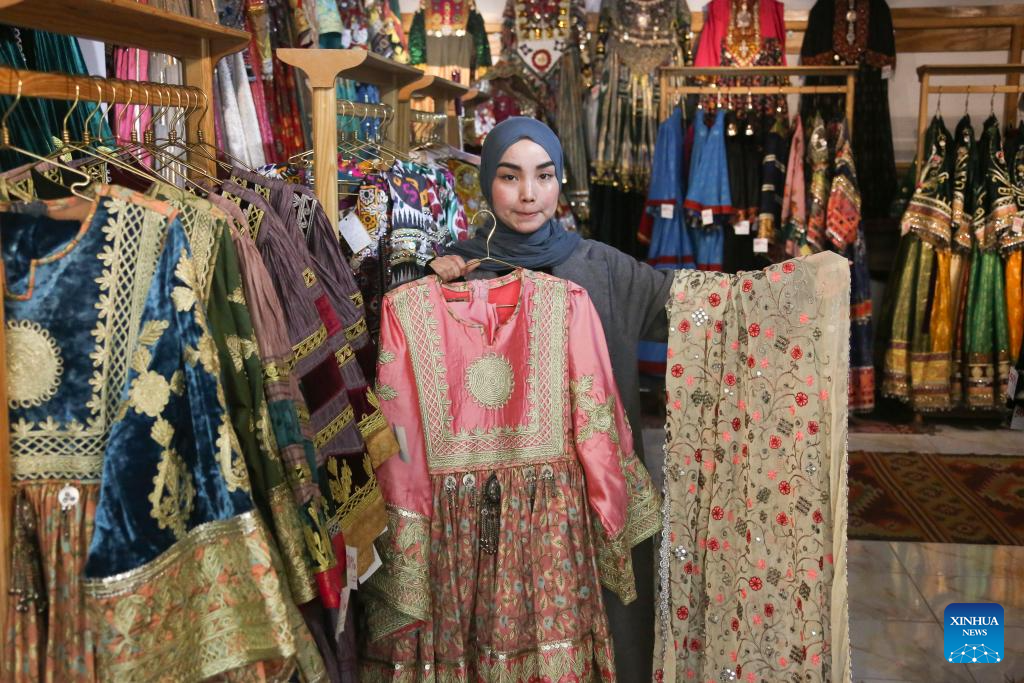
A staff member showcases garments at a clothing store in Kabul, Afghanistan, Jan. 14, 2026. (Photo by Saifurahman Safi/Xinhua)
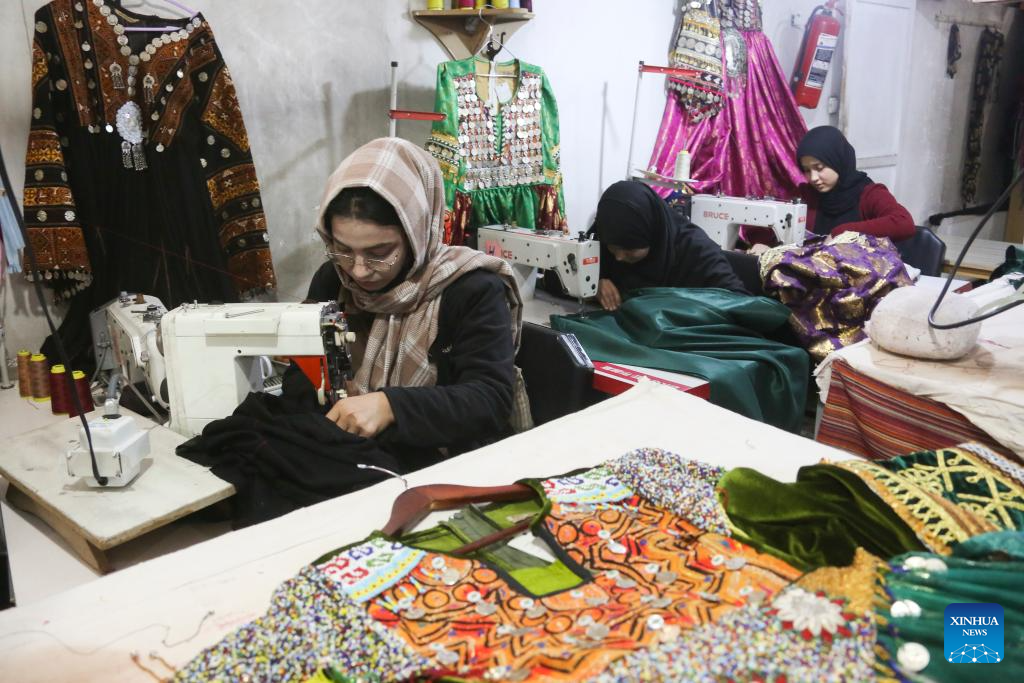
Women work at an embroidery workshop in Kabul, Afghanistan, Jan. 14, 2026. (Photo by Saifurahman Safi/Xinhua)
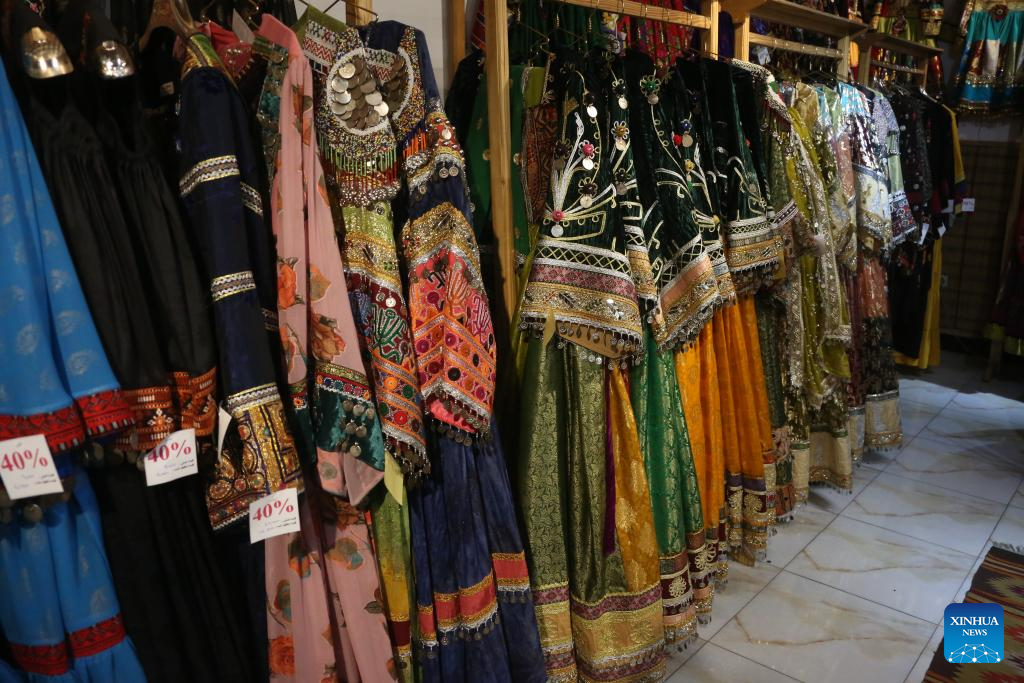
This photo taken on Jan. 14, 2026 shows handmade dresses in Kabul, Afghanistan. (Photo by Saifurahman Safi/Xinhua)