
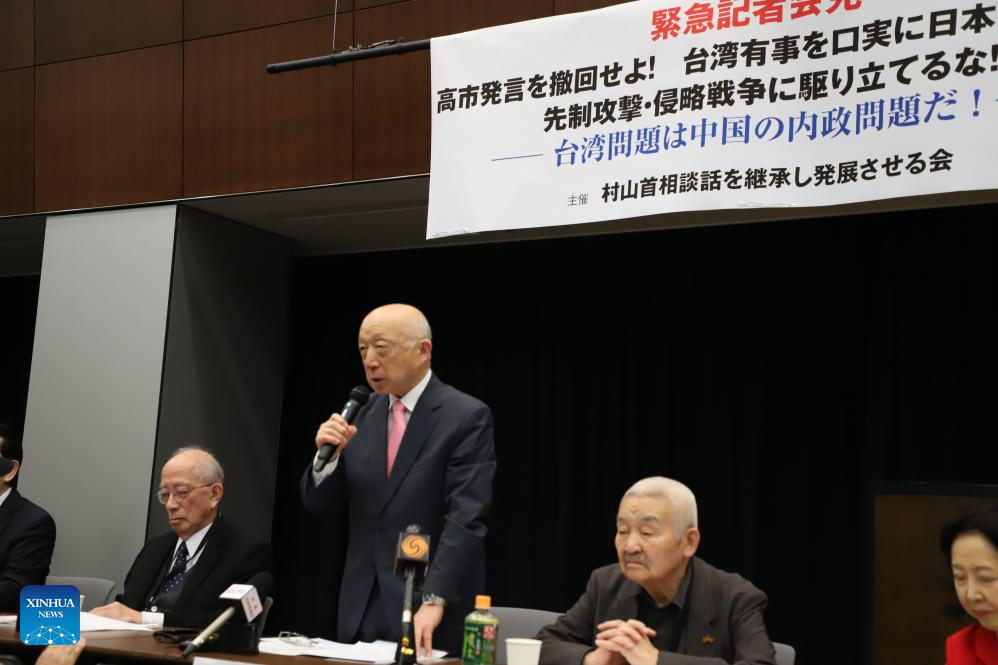
Takakage Fujita, the secretary-general of the Association for Inheriting and Propagating the Murayama Statement, reads out a statement demanding Takaichi withdraw her comments at a press conference in Tokyo, Japan, Dec. 8, 2025. Over a dozen Japanese scholars, former government officials and media figures held a press conference in Tokyo on Monday, urging Prime Minister Sanae Takaichi to immediately retract her earlier erroneous remarks on Taiwan, warning the comments could further strain Japan-China relations.(Xinhua/Li Ziyue)
TOKYO, Dec. 9 (Xinhua) -- Over a dozen Japanese scholars, former government officials and media figures held a press conference in Tokyo on Monday, urging Prime Minister Sanae Takaichi to immediately retract her earlier erroneous remarks on Taiwan, warning the comments could further strain Japan-China relations.
Takaichi's remarks in the Diet had clearly deviated from the basic position maintained by successive Japanese governments on the Taiwan question, said the attendees at the event held by the Association for Inheriting and Propagating the Murayama Statement, a Japanese civil group.
At the event, Takakage Fujita, the secretary-general of the civil group, read out a statement demanding Takaichi withdraw her comments.
The statement said her remarks in the Diet marked a clear departure from those of the previous government, and it is the first time in the Diet that a Japanese prime minister had indicated Japan would enter a wartime posture in the event of a "Taiwan contingency," which could be seen as a revival of Japanese militarism.
The statement also accused Japan of instigating the current tensions while portraying itself as a victim, and called on Takaichi to acknowledge that the Taiwan question is China's internal affair and immediately retract the remarks.
Kumiko Haba, professor emeritus at Aoyama Gakuin University, said Takaichi's comments contradicted the postwar international order, noting that the 1943 Cairo Declaration and the 1945 Potsdam Proclamation have all affirmed China's sovereignty over Taiwan.
Takaichi's remarks have strayed from the Japanese government's long-held position, she added.
Kazuhiko Togo, an international politics scholar and former diplomat, said Takaichi's remarks had pushed Japan-China relations into an extremely difficult situation.
He stressed that the Taiwan-related commitments in the 1972 China-Japan Joint Statement were finalized only after serious negotiations by both sides. China has consistently demanded that Japan strictly adhere to it, and Takaichi should give the issue due attention, he added.
Political economist Kazuhide Uekusa said Takaichi has made contradictory explanations, saying on the one hand that she did not intend her Taiwan remarks to represent a unified government position, while on the other insisting that her Diet remarks "do not change the Japanese government's long-held positions."
He said such explanations could only be interpreted as attempts to obscure the issue or deflect the debate, urging Takaichi to correct her wrongdoing rather than evade responsibility.
Atsushi Okamoto, former editor-in-chief of Sekai Magazine, said Takaichi has repeatedly mentioned having "dialogues" with China, but that meaningful dialogue must be based on mutual respect, equality and efforts to understand the other side.
"Her current attitude does not meet the conditions for genuine dialogue," he said.
Masakatsu Adachi, emeritus professor at the Kanto Gakuin University, pointed out that since taking office, Takaichi has called for revisions to Japan's three security documents, loosened arms export restrictions and expanded defense spending, while pushing for an anti-espionage law and discussing the creation of a national intelligence body.
He said these moves have, in essence, strengthened internal information controls and external intelligence-gathering, and warned that these moves are pushing Japan toward war. ■
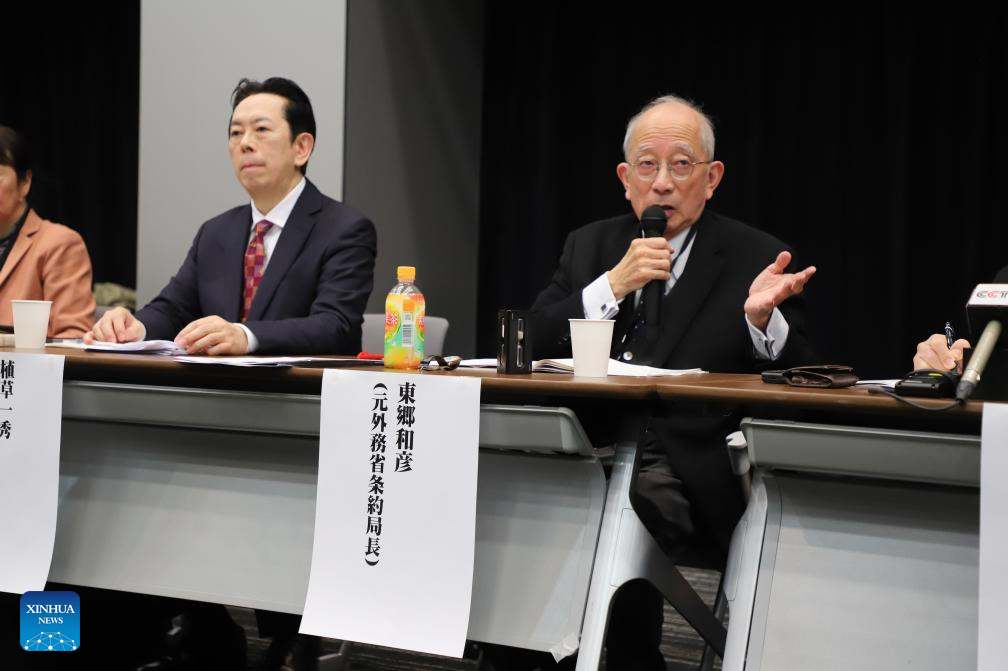
(251209) -- TOKYO, Dec. 9, 2025 (Xinhua) -- Kazuhiko Togo, an international politics scholar and former diplomat, speaks at a press conference in Tokyo, Japan, Dec. 8, 2025. Over a dozen Japanese scholars, former government officials and media figures held a press conference in Tokyo on Monday, urging Prime Minister Sanae Takaichi to immediately retract her earlier erroneous remarks on Taiwan, warning the comments could further strain Japan-China relations.(Xinhua/Li Ziyue)
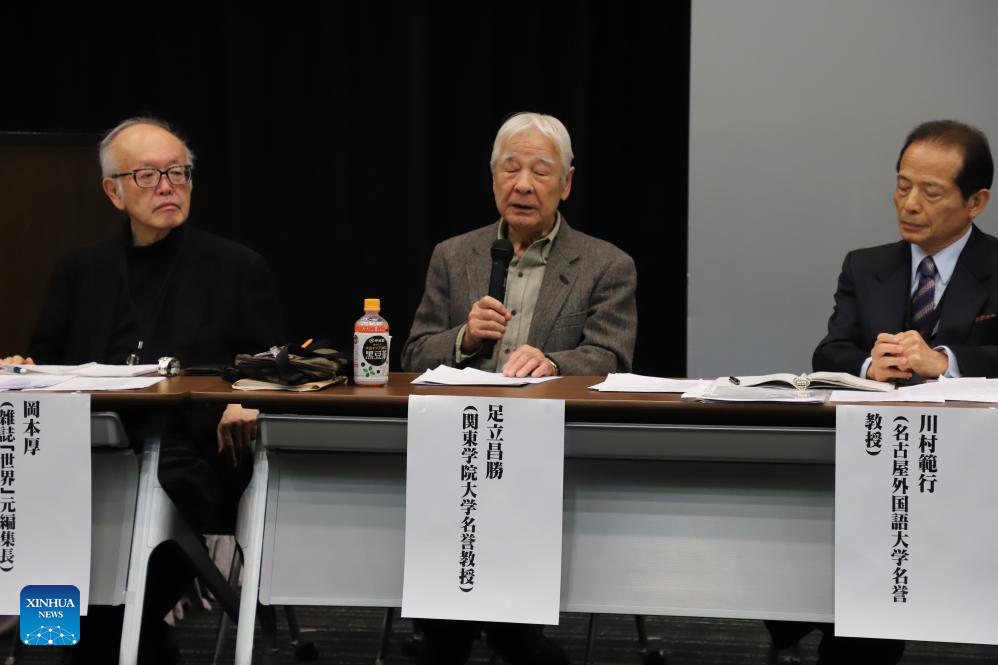
(251209) -- TOKYO, Dec. 9, 2025 (Xinhua) -- Masakatsu Adachi, emeritus professor at the Kanto Gakuin University, speaks at a press conference in Tokyo, Japan, Dec. 8, 2025. Over a dozen Japanese scholars, former government officials and media figures held a press conference in Tokyo on Monday, urging Prime Minister Sanae Takaichi to immediately retract her earlier erroneous remarks on Taiwan, warning the comments could further strain Japan-China relations.(Xinhua/Li Ziyue)
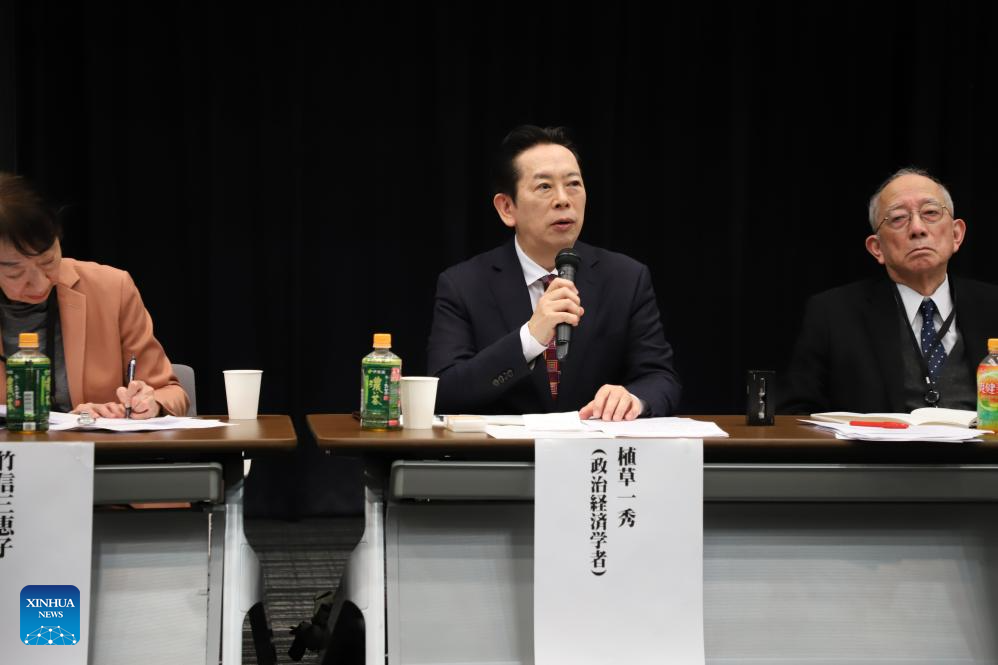
(251209) -- TOKYO, Dec. 9, 2025 (Xinhua) -- Political economist Kazuhide Uekusa speaks at a press conference in Tokyo, Japan, Dec. 8, 2025. Over a dozen Japanese scholars, former government officials and media figures held a press conference in Tokyo on Monday, urging Prime Minister Sanae Takaichi to immediately retract her earlier erroneous remarks on Taiwan, warning the comments could further strain Japan-China relations.(Xinhua/Li Ziyue)
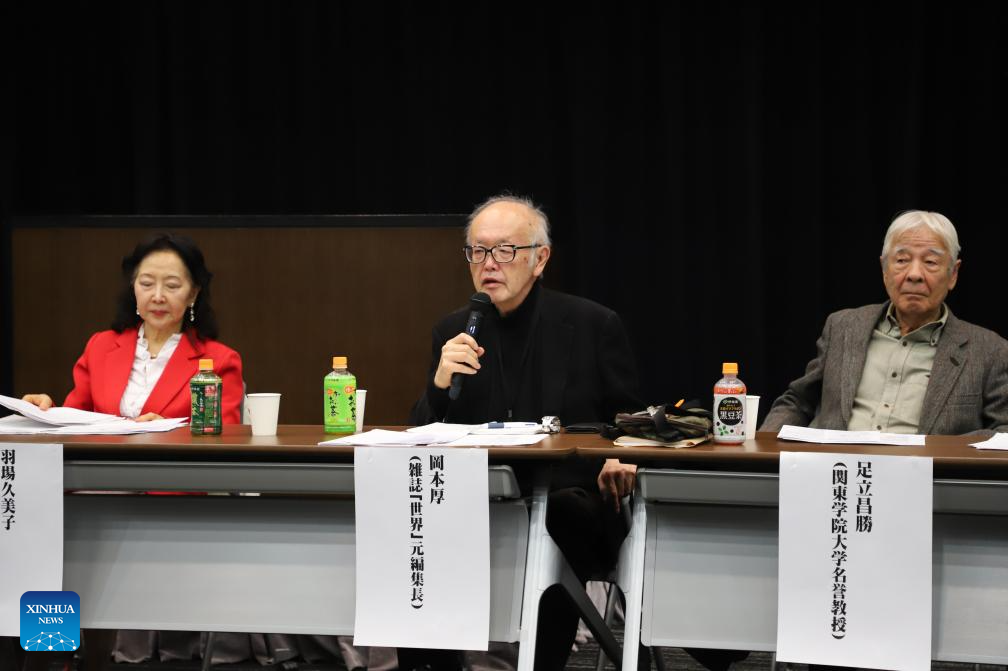
(251209) -- TOKYO, Dec. 9, 2025 (Xinhua) -- Atsushi Okamoto, former editor-in-chief of Sekai Magazine, speaks at a press conference in Tokyo, Japan, Dec. 8, 2025. Over a dozen Japanese scholars, former government officials and media figures held a press conference in Tokyo on Monday, urging Prime Minister Sanae Takaichi to immediately retract her earlier erroneous remarks on Taiwan, warning the comments could further strain Japan-China relations.(Xinhua/Li Ziyue)
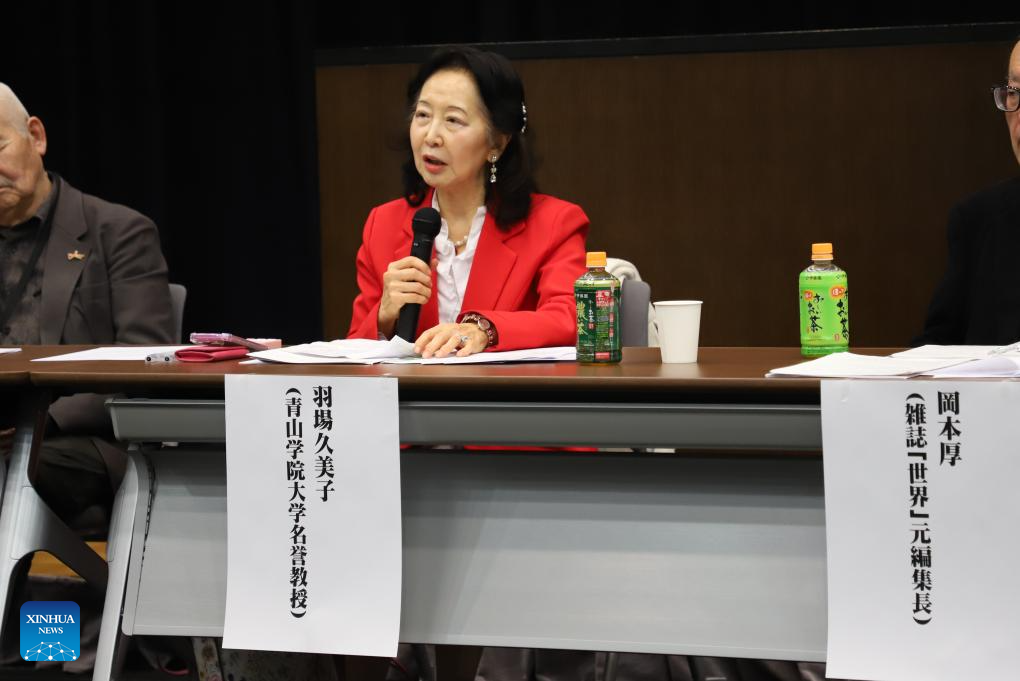
(251209) -- TOKYO, Dec. 9, 2025 (Xinhua) -- Kumiko Haba, professor emeritus at Aoyama Gakuin University, speaks at a press conference in Tokyo, Japan, Dec. 8, 2025. Over a dozen Japanese scholars, former government officials and media figures held a press conference in Tokyo on Monday, urging Prime Minister Sanae Takaichi to immediately retract her earlier erroneous remarks on Taiwan, warning the comments could further strain Japan-China relations.(Xinhua/Li Ziyue)