
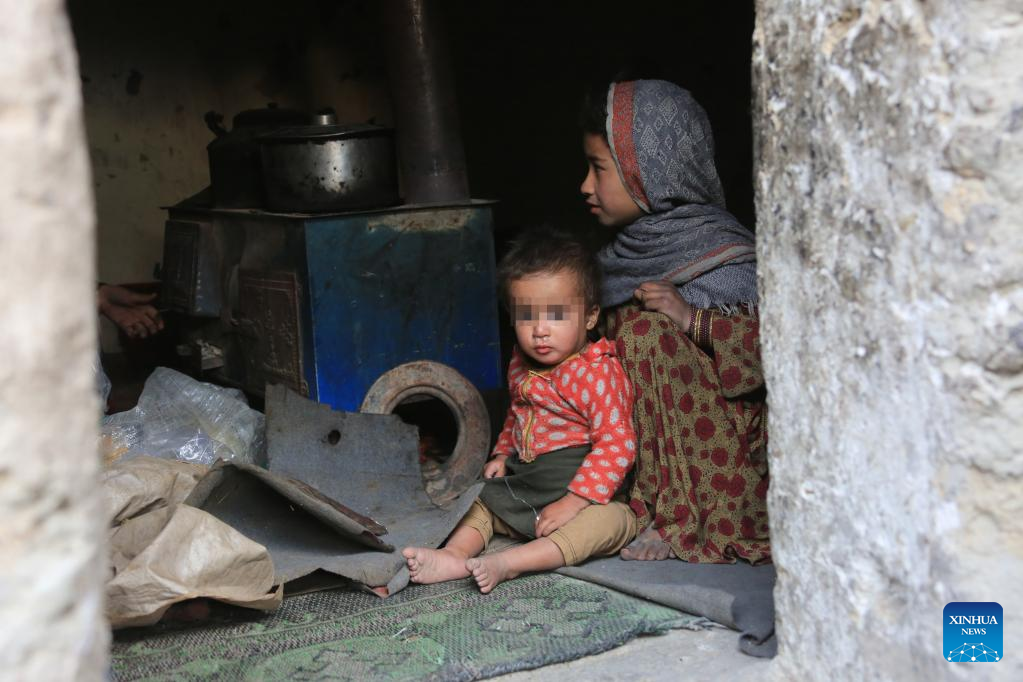
Photo taken on Dec. 5, 2022 shows a child from a poor family in Kabul, Afghanistan. (Photo by Saifurahman Safi/Xinhua)
KABUL, Dec. 17 (Xinhua) -- "The prices are skyrocketing, the rate of poverty is high and I am the only bread earner of my family, having a taxi and roaming on streets from dawn to dusk to support my family," a Kabul resident Wahidullah said.
Having a 22-member family and living in Shiwaki village on the outskirts of Afghanistan's capital Kabul city, Wahidullah said that poverty has weakened his ability to buy wood or coal to keep his house warm in the chilly winter.
"The price of a ton of coal was 6,000 afghanis to 6,500 afghanis last year but this year it costs 16,000 afghanis, which is beyond the reach of an ordinary person," Wahidullah told Xinhua at a coal shop.
Wood seller Rahim Ashna confirmed the price hike, saying the price of one Khirwar (560 kg) of wood was 4,000 to 5,000 afghanis last year but currently it costs 6,000 to 7,000 afghanis.
The war-torn and economically impoverished Afghanistan has been suffering from poverty and a high rate of unemployment since the evacuation of the U.S.-led coalition forces in August 2021.
The U.S. sanctions on Afghanistan and the banning of illegal cutting of trees by the Taliban-led caretaker government have led to price hikes of wood and fuel, Ashna told Xinhua at his wood-selling shop.
The high rate of unemployment and extreme poverty have led to fewer power purchases by Afghan citizens, Ashna said.
"Our business was lucrative in the past years but since slapping sanctions the business is flop," Ashan said.
Following the withdrawal of the U.S.-led forces from the Asian country, Afghanistan's assets worth more than 9 billion U.S. dollars were frozen by the United States as part of its sanctions on the new rulers of the war-torn country.
Aid agencies said more than 24 million out of Afghanistan's 35 million population are facing acute food insecurity, calling for food aid ahead of the chilly winter.
Living in the Taimani temporary refugee camp in Kabul, Mohammad Nasir, 50, who looks older than his real age, believes that living in Afghanistan virtually is not "life." Rather, it is to remain "alive."
Like thousands of the poor living in the refugee camp, Nasir and his 15 family members had to burn garbage to keep warm in the chilly winter, which made the smell of his house pungent.
"I, along with my two children, are working from dawn to dusk in the market with a handcart, also selling shopping bags, but our earning is 110 to 120 afghanis daily, which is enough only for buying flour and nothing more," Nasir told Xinhua. (1 U.S. dollar equals 88 afghanis) ■
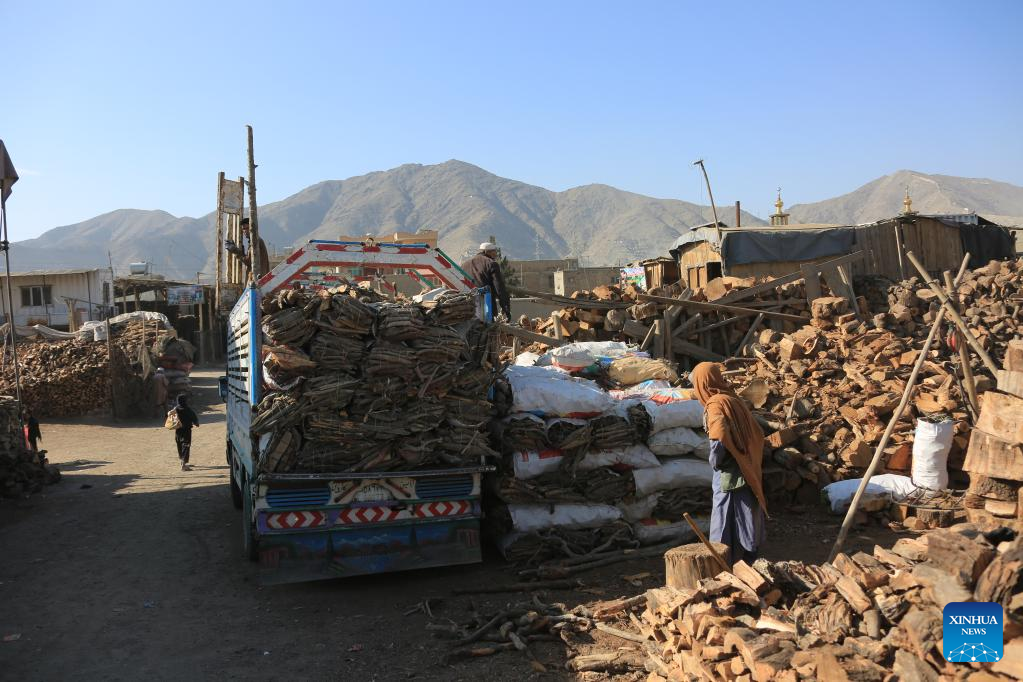
An Afghan sells wood in his shop in Kabul, Afghanistan, Dec. 5, 2022. (Photo by Saifurahman Safi/Xinhua)
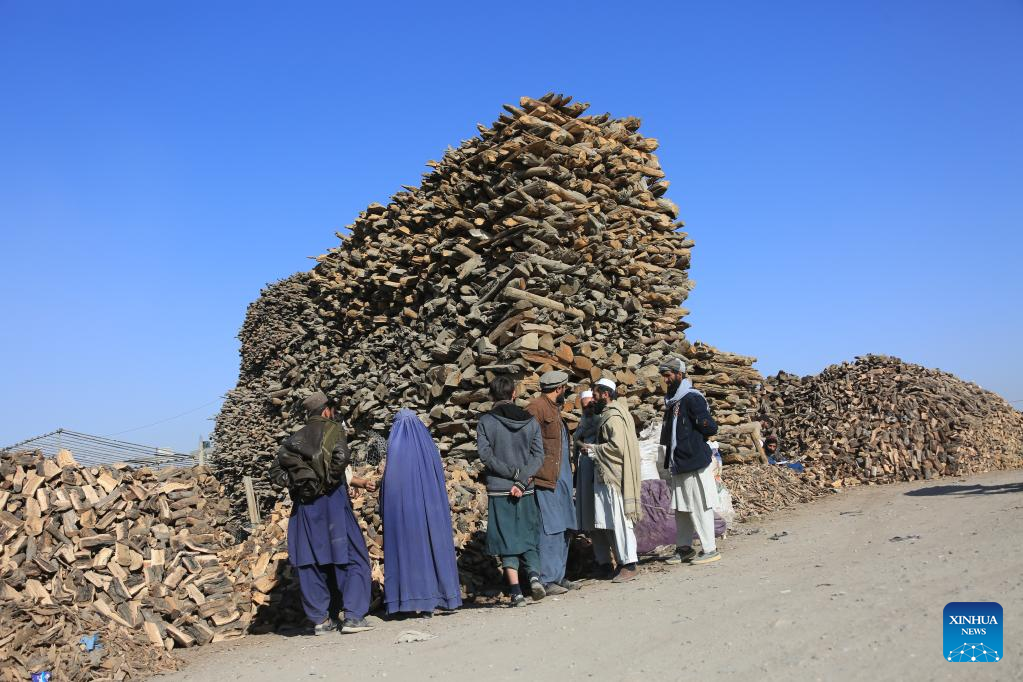
Afghans bargain with wood seller in a wood shop in Kabul, Afghanistan, Dec. 5, 2022. (Photo by Saifurahman Safi/Xinhua)
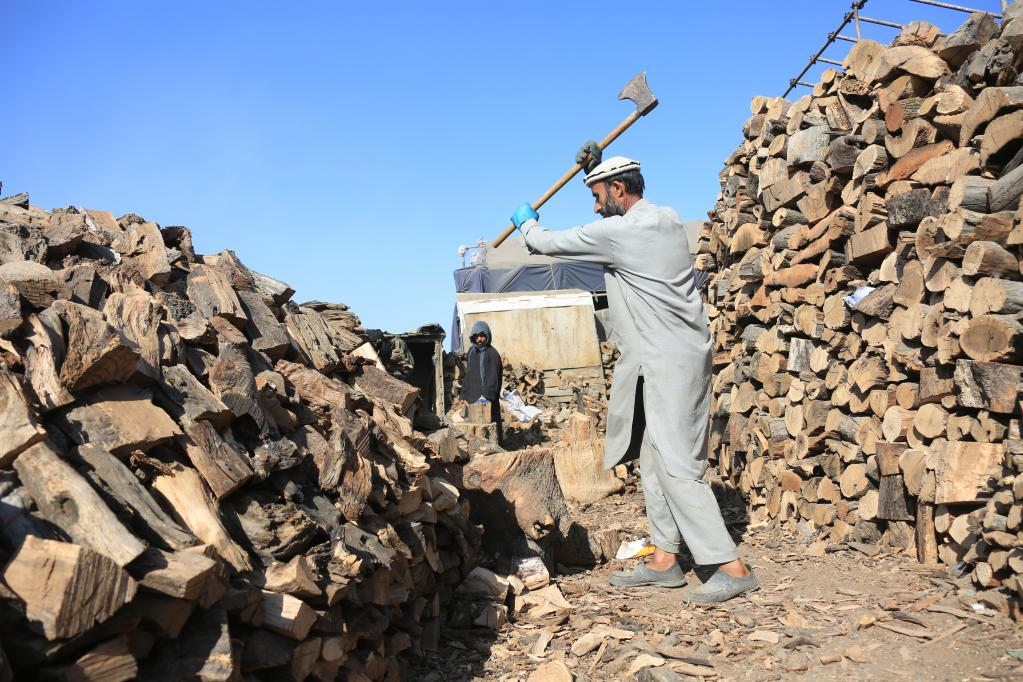
An Afghan chops wood for sale in Kabul, Afghanistan, Dec. 5, 2022. (Photo by Saifurahman Safi/Xinhua)