
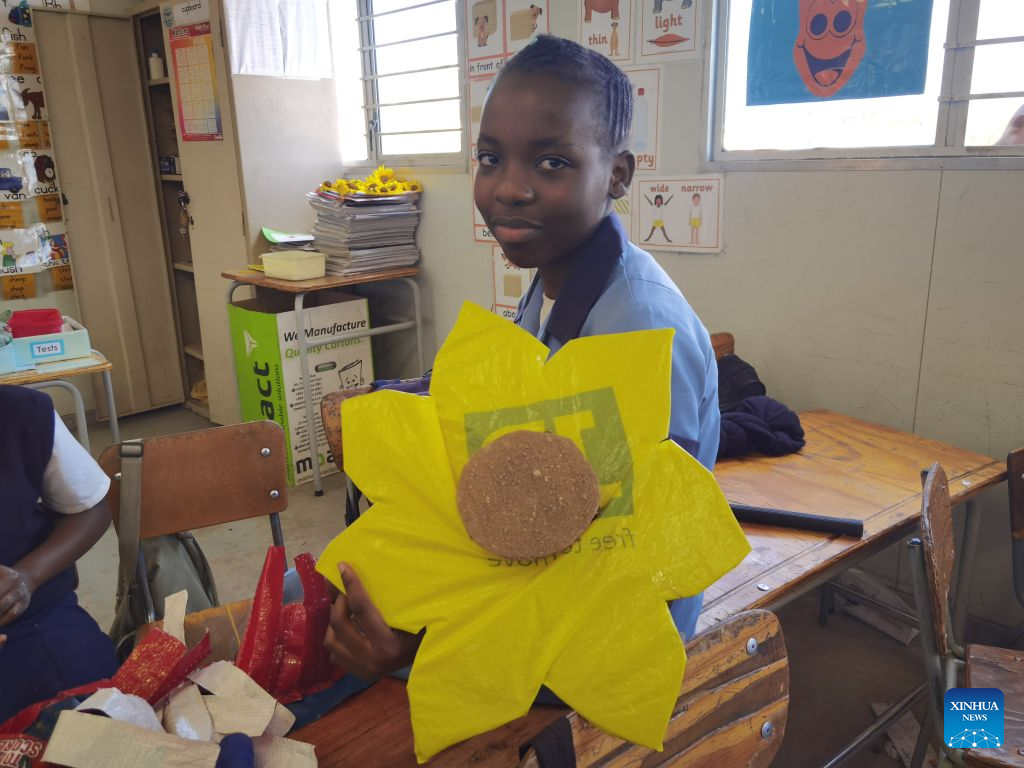
This photo taken with a mobile phone shows a student showing a flower made from a discarded plastic bag at Tobias Hainyeko Primary School in Windhoek, Namibia, on Nov. 18, 2026. (Photo by Ndalimpinga Iita/Xinhua)
WINDHOEK, Nov. 20 (Xinhua) -- In the hands of 13-year-old Virginia Kanduriko, more than 50 discarded newspapers have become a stylish dress.
"We collected old newspapers, cut, shaped, and stitched newspapers into a fashionable item to showcase value in rubbish," the seventh grader at St. Barnabas Primary School in Windhoek told Xinhua in a recent interview.
Kanduriko is one of a growing number of young Namibians who, through school environmental clubs, are turning waste into resources and carrying the message of environmental protection beyond the classroom.
Their efforts come as Namibia, one of the driest countries in sub-Saharan Africa and highly vulnerable to climate change, steps up the fight against littering, illegal dumping and plastic pollution. Officials warn these environmental hazards threaten public health, food security and tourism.
Set up in 2023, the St. Barnabas club has about 25 sixth and seventh graders who collect paper, plastics and bottles, and turn them into robots, clothing and artworks. The aim is to help youngsters see waste as valuable, said club coordinator Linda Aron.
Its flagship project turns paper into fuel.
"Our main product is fireballs. We soak collected paper, shape it into balls, and dry them to use as an energy source. Waste can be treasure. In this case, it becomes a source of energy for cooking in urban areas where cheap wood is scarce," said Kanduriko, who joined the club in 2025.
Another learner, 13-year-old Roma Hungwe, and her classmates built a robot that collects paper to clean up the environment.
At Tobias Hainyeko Primary School, also in Windhoek's Katutura township, about 30 members of the Eco-Warriors Environmental Club run clean-up campaigns, gardening, water conservation and waste collection, said supervising teacher Julia Shiweda.
"We carved the Namibian map from waste paper, plastic bottles, and caps," said 14-year-old club member Tobias Teofelus, adding that the artwork is about cleaning the environment and raising awareness.
The clubs raise funds by selling paper, plastics and beverage cans to the city's first Waste Buy-Back Center, opened in Katutura in April 2024 to divert waste from landfills. Windhoek produces about 84,520 tonnes of waste a year, according to city records.
Their creativity has also reached a wider audience.
At a recent fashion show held by the Ministry of Environment, Forestry and Tourism, 23 schools transformed waste into clothing and art.
"We asked people when they last considered how their waste impacts the environment," said Hungwe.
Caroline !Garus-Oas, deputy environmental commissioner at the ministry, said the clubs help Namibia play its part in tackling the global challenges of waste management, overconsumption, climate change and the transition to a circular economy.
"Instead of the landfill, they educate and change how locals see waste, promoting reuse and recycling," she said.
Teachers say the clubs also benefit learning. Their activities draw on science and agriculture lessons, and members have shown better performance and motivation, Aron said.
"We turn theory into practice and invite experts to guide learners," Shiweda said. "They make their own decisions and learn dedication and time management. Also, we see more confidence."
Most importantly, the young members are bringing these lessons back to Katutura, one of Windhoek's oldest and historically disadvantaged areas.
"I educate my siblings and neighbors not to litter and to recycle, showing them how to create things from waste. I bring fireballs to the community and teach neighbors to recycle and make fireballs, saving electricity," Kanduriko said. ■
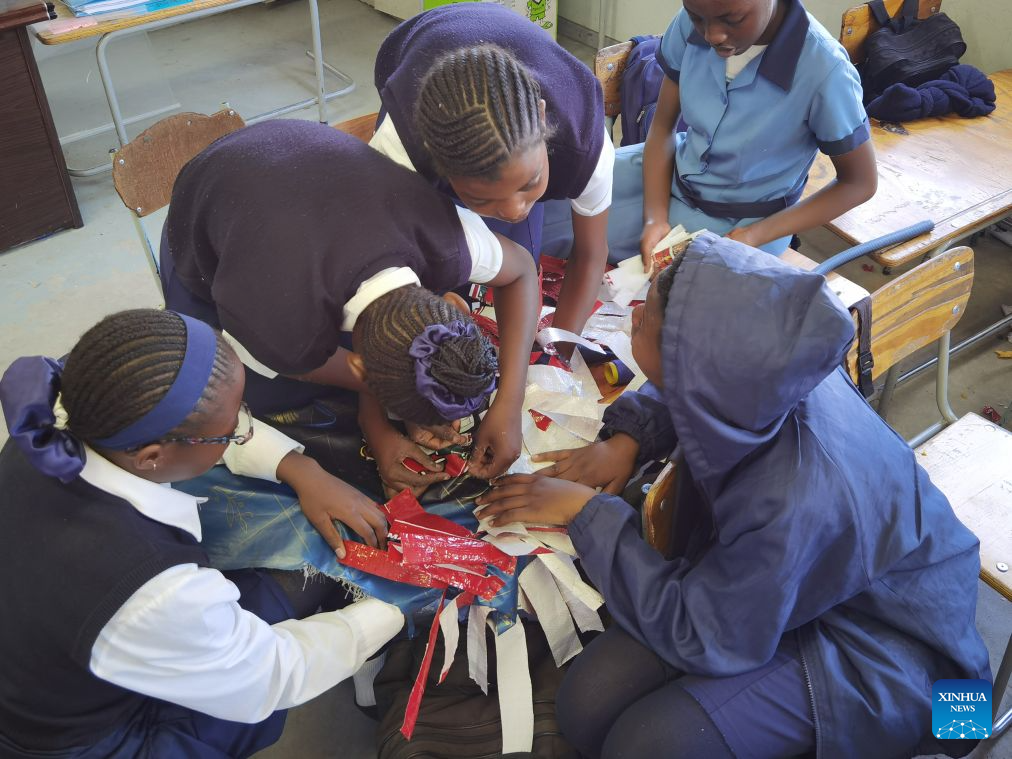
This photo taken with a mobile phone shows students making a handicraft from discarded plastic bags and fabric at Tobias Hainyeko Primary School in Windhoek, Namibia, on Nov. 18, 2026. (Photo by Ndalimpinga Iita/Xinhua)
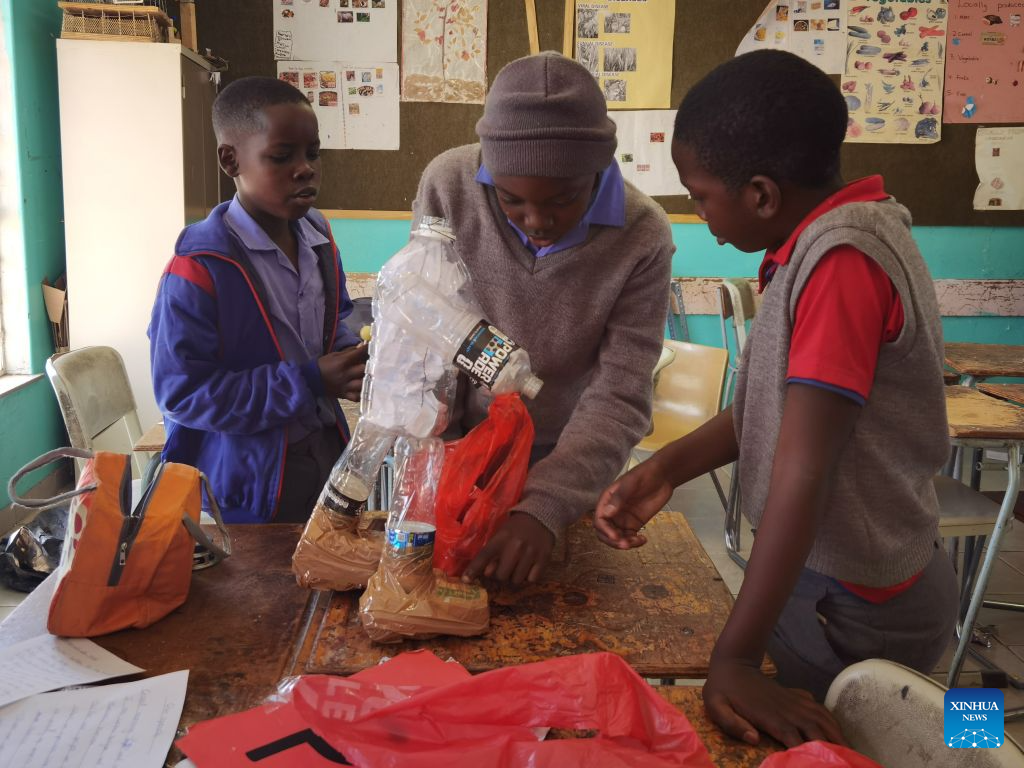
This photo taken with a mobile phone shows students making a robot from discarded plastic bottles and bags at St. Barnabas Primary School in Windhoek, Namibia, on Nov. 18, 2026. (Photo by Ndalimpinga Iita/Xinhua)
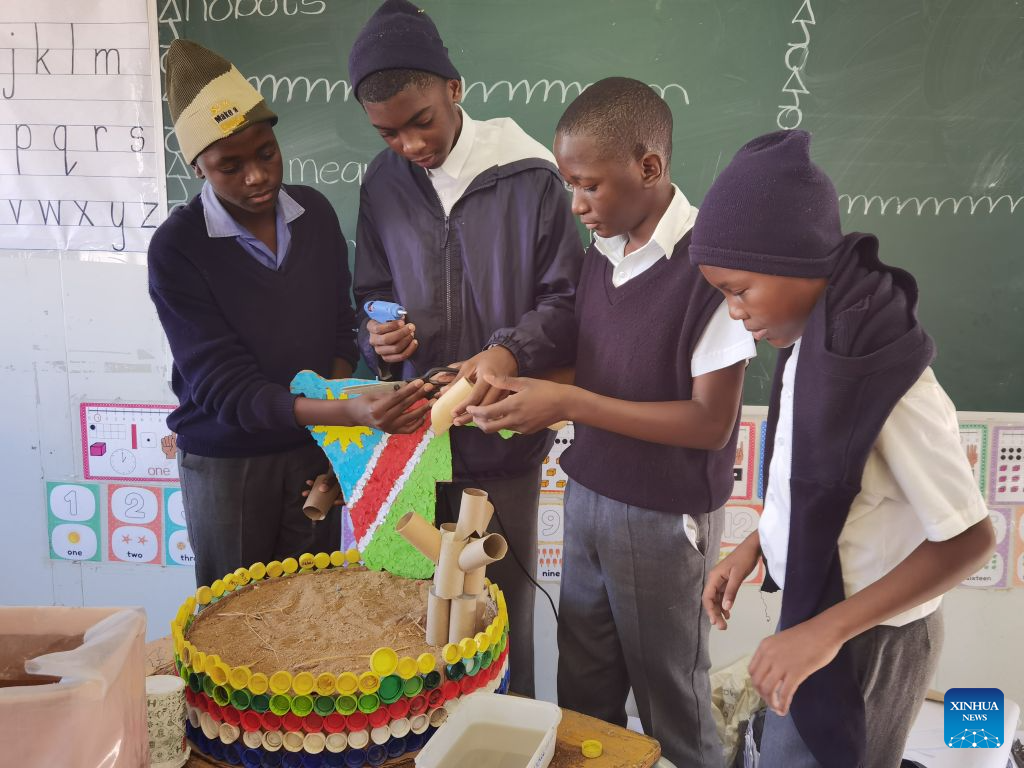
This photo taken with a mobile phone shows members of an environmental club making an artwork featuring the map of Namibia from bottle caps, paper rolls and other waste at Tobias Hainyeko Primary School in Windhoek, Namibia, on Nov. 18, 2026. (Photo by Ndalimpinga Iita/Xinhua)