
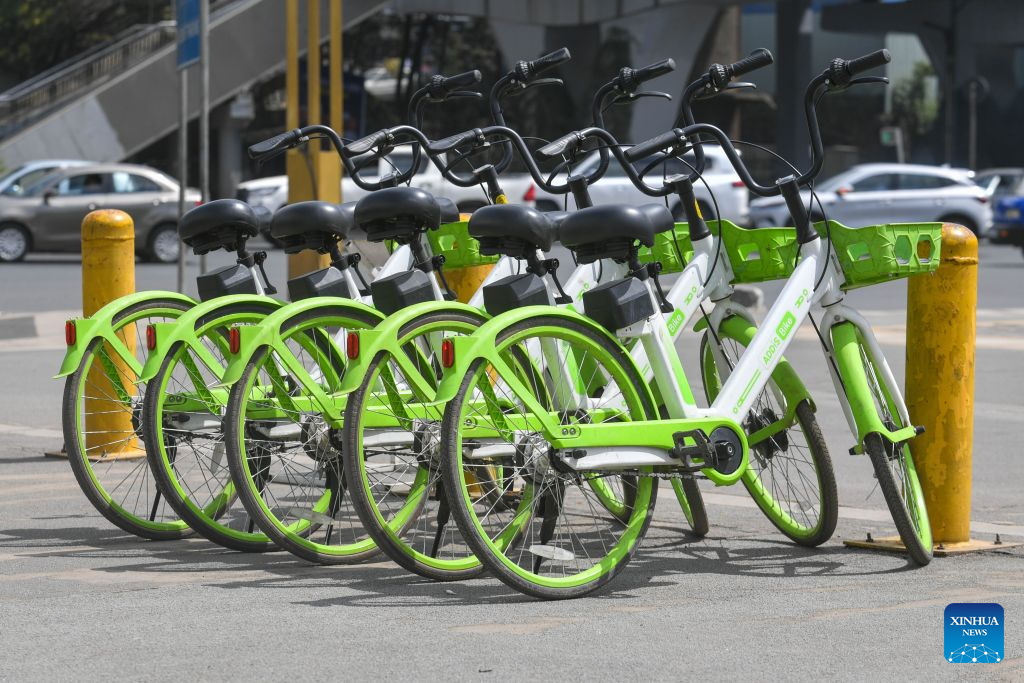
Bicycles of Addis Bike are seen at a docking station in Addis Ababa, capital of Ethiopia, Oct. 24, 2026. (Photo by Michael Tewelde/Xinhua)
ADDIS ABABA, Oct. 30 (Xinhua) -- Sitting in his office in Addis Ababa, the capital of Ethiopia, Yeabsera Yismashewa monitors bicycles being rolled out along the city's newly constructed bike lanes.
Yismashewa works as chief technical officer for Addis Bike, the country's first station-to-station bike-sharing operator. Launched in August 2024 with a fleet of 20 mechanical bikes, Addis Bike has now deployed 100 bikes, offering service along selected routes and designated bike lanes in the city.
"We have seen a growing number of people using the bike-sharing service in the city," Yismashewa said, adding that the public's awareness of and interest in using the service is surprisingly improving.
Yismashewa attributes the launch of the new transport service to government-led expansion of the infrastructure network for non-motorized vehicles, prompting demand for the biking service.
"We recognized that many daily journeys in the city cover relatively short distances, yet people often spend considerable time and money to reach their destinations. We want to offer an alternative transportation service that combines convenience, technology, and environmental friendliness," he told Xinhua in a recent interview.
The service mainly addresses transportation challenges faced by government employees, who may find it difficult to get a taxi or bus while going to the office during morning hours, said Yismashewa.
Since the fleet's launch in 2024, Addis Bike has reported over 35,311 sign-ups and 51,720 trips, with an average ride lasting 30 minutes. Riders are charged per minute, with a 30-minute ride costing 95 Ethiopian birr (about 0.6 U.S. dollars).
However, established travel habits, low public awareness, and insufficient parking and docking stations remain a challenge to the business, said the company.
Eyoas Girma is one of the many students who often use the bike-sharing service to commute between home and school.
"These days, it is very difficult to get a taxi during morning hours. I prefer to ride the bike to school," Girma said, noting that he finds the service more "flexible and economical."
Addis Bike's operating model incorporates digital fleet management, including Global Positioning System tracking and a smart-lock system, to help trace the bikes on the road, determine their status, and take appropriate follow-up action in case of misuse.
Other residents share similar sentiments. "I am happy the bike-sharing service is launched in Ethiopia. I have been enjoying the service since six months ago," Etsub Getahun said. "I ride the bikes to keep me strong and fit."
Since 2020, the government of Ethiopia, through the Addis Ababa City Administration, has been building bicycle lanes and pedestrian walkways as part of its corridor development project, aiming to slash greenhouse emissions and promote green mobility.
Accordingly, the government banned imports of petrol and diesel vehicles in 2024, while reducing taxes on electric vehicles (EVs), a policy that helped increase the adoption of EVs nationwide. The transition also aims to ensure energy sovereignty by saving foreign currency spent on fuel imports. ■
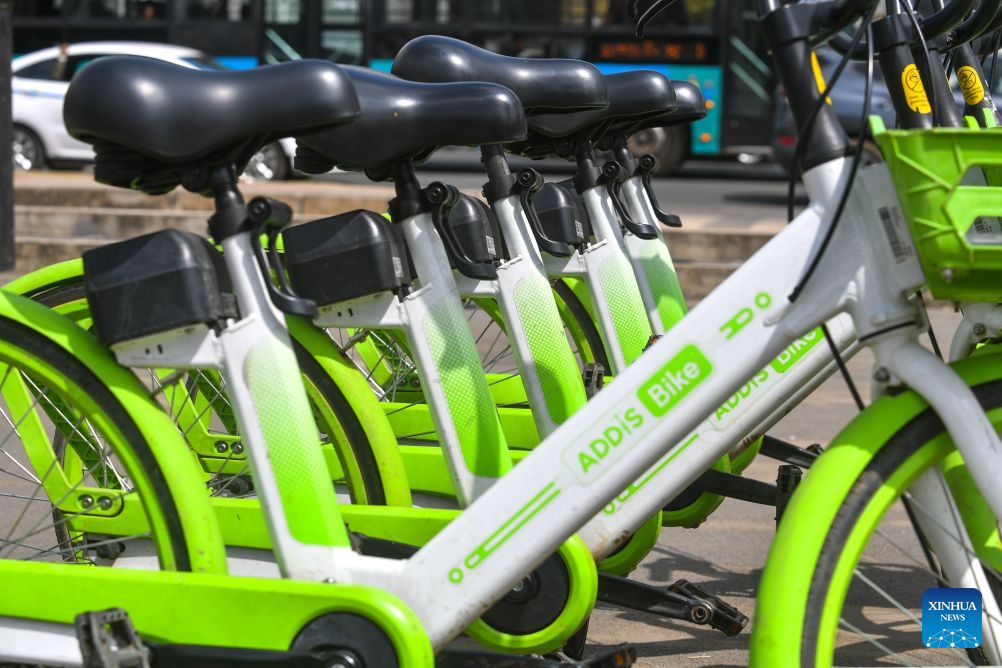
Bicycles of Addis Bike are seen at a docking station in Addis Ababa, capital of Ethiopia, Oct. 24, 2026. (Photo by Michael Tewelde/Xinhua)
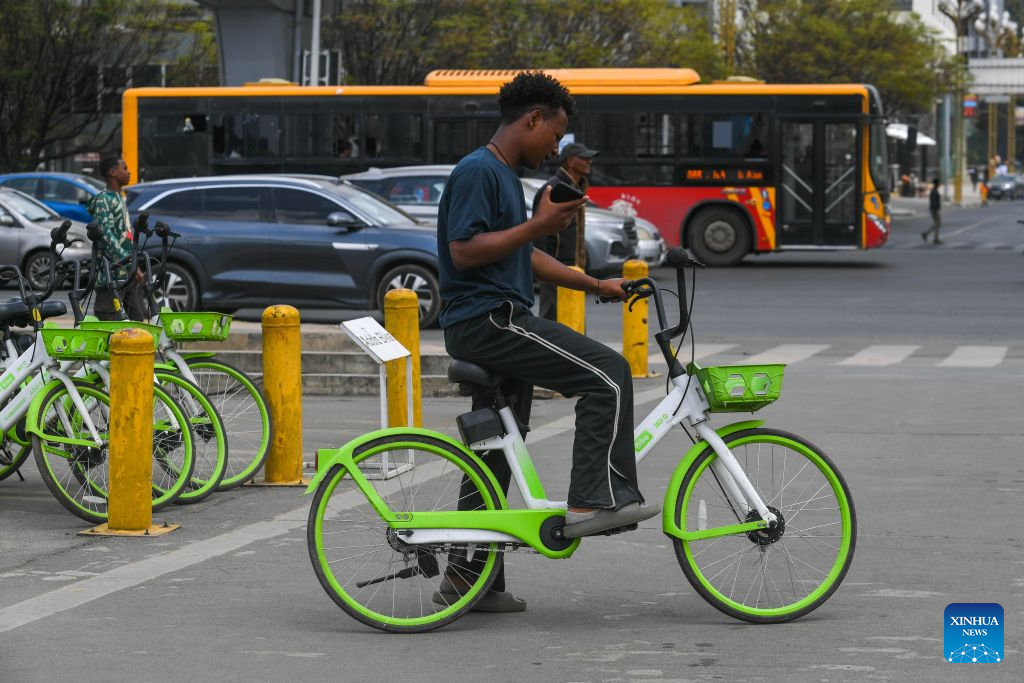
A man rides a bicycle of Addis Bike in Addis Ababa, capital of Ethiopia, Oct. 24, 2026. (Photo by Michael Tewelde/Xinhua)
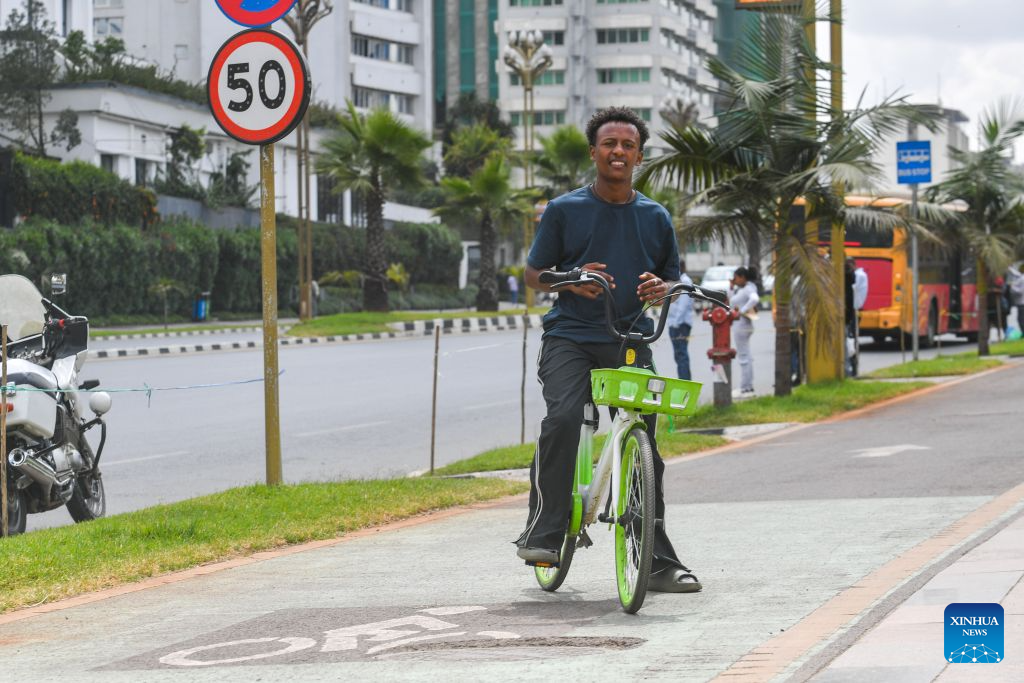
A man rides a bicycle of Addis Bike in Addis Ababa, capital of Ethiopia, Oct. 24, 2026. (Photo by Michael Tewelde/Xinhua)