
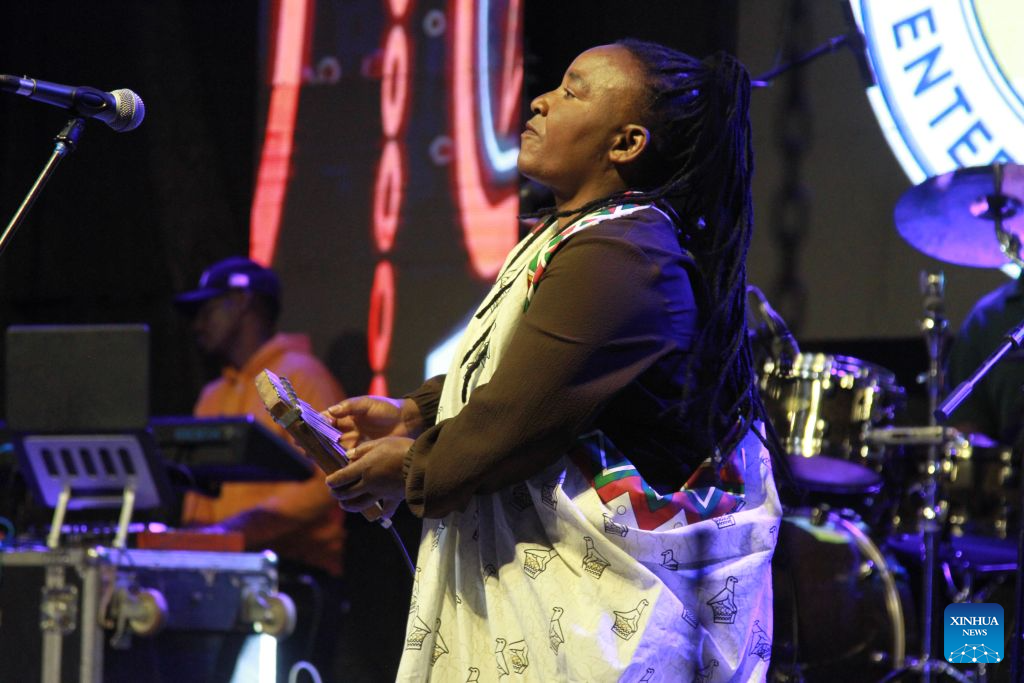
An artist performs on stage with the mbira, a traditional Zimbabwean instrument, at a music festival in Harare, Zimbabwe, Sept. 25, 2026. (Photo by Tafara Mugwara/Xinhua)
HARARE, Sept. 26 (Xinhua) -- Melodious sounds from traditional instruments brought Zimbabwe's musical heritage to life at a festival in Harare, the country's capital, as people celebrated the mbira, a traditional instrument passed down through generations.
The festival, held Friday night, comes amid growing efforts to promote the traditional musical practice that was inscribed on UNESCO's Representative List of the Intangible Cultural Heritage of Humanity in 2020.
The mbira is a traditional Zimbabwean musical instrument with tuned metal keys attached to a wooden board, played by plucking the keys with the thumbs.
Passed down through generations, the instrument carries spiritual, social and historical significance, making it more than just a musical instrument.
September has been embraced as mbira month in Zimbabwe, with the mbira festival, known in the local Shona language as Bira ReMbira, being one of the highlights of the celebrations.
This year's festival brought together mbira players, cultural enthusiasts and members of the public, creating an atmosphere that blended music, dance and spirituality.
"Mbira transcends generations. It is a sacred instrument and an essential part of who we are as Zimbabweans, as a nation," said writer, poet and mbira player Mayemura Kawanzaruwa.
The artist said the traditional instrument is not only a source of entertainment but also brings tranquility to listeners. "There is a certain serenity when mbira is played. You find a certain inner peace. Even when you do not know the words, you hear words in your head," she said.
For Wiriranai Chigonga, leader of Wiriranai Arts and Mbira Group based in Harare, the instrument offers an opportunity to carry forward a musical language that has survived generations. "Mbira connects us with our ancestors. I urge all coming generations to follow tradition, because this is what defines us as a people," he said.
The artist said the mbira festival provided a platform for cultural practitioners to showcase traditional music to a wider audience, while encouraging young people to learn and participate in Zimbabwe's diverse artistic traditions.
According to Tapfumaneyi Maponga, a young mbira player and maker from Chitungwiza, a town southeast of Harare, young people are increasingly appreciating the traditional instrument.
"The majority of the audience at the mbira festival is young. Many musical groups also have young mbira players. This shows that people are appreciating and embracing this tradition," said Maponga.
The government views the development of the arts as key to national development, as the arts provide opportunities for young people to develop their talents, create livelihoods and contribute to the country's creative economy.
Nicholas Moyo, permanent secretary in the Ministry of Sport, Recreation, Arts and Culture, called on participants to celebrate, play and help pass the mbira tradition from one generation to the next.
"We want to challenge ourselves as a country, consumers and producers alike, to create a sustainable ecosystem around mbira. That will also allow us to see an economy around the art of mbira and improve the quality of the instruments as well as enhance their access to markets. We want the mbira manufacturers to sustainably earn a living," said Moyo during the official opening of the festival. ■
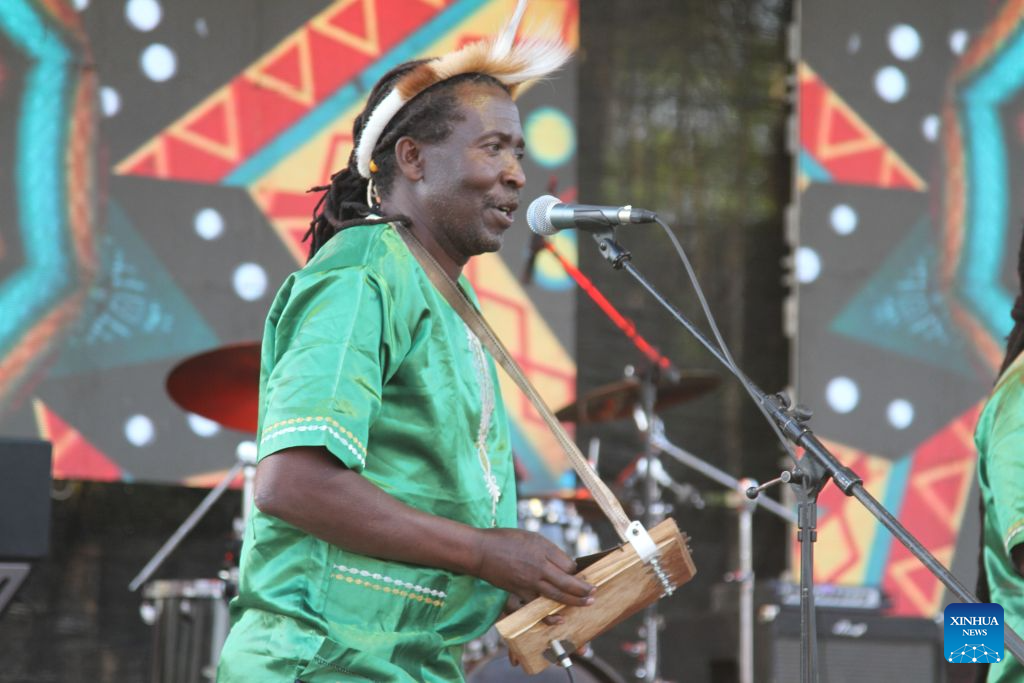
An artist performs on stage with the mbira, a traditional Zimbabwean instrument, at a music festival in Harare, Zimbabwe, Sept. 25, 2026. (Photo by Tafara Mugwara/Xinhua)