
* As China-Africa trade continues to expand, the RMB is being used not only for trade settlement, but increasingly for payment and clearing and, more recently, for financing.
* Deepening economic ties between China and Africa are providing stronger support for the wider use of the RMB in cross-border transactions.
* The continued development of payment infrastructure is an important factor in expanding the cross-border use of the RMB in Africa.
* The expansion from trade settlement to bond financing shows that the RMB is taking on a broader role in international economic activities.
by Xinhua writers Xu Jiatong, Wang Yue
NAIROBI, Sept. 6 (Xinhua) -- China's currency, the renminbi (RMB), is playing a bigger role in Africa as trade with the continent flourishes. From the launch of direct RMB settlement services in Tanzania to expanded connectivity with the Cross-Border Interbank Payment System (CIPS) in Kenya and Namibia, as well as the establishment of RMB clearing arrangements for Africa, such recent developments highlight the growing role of the Chinese currency in cross-border transactions.
As China-Africa trade continues to expand, the RMB is being used not only for trade settlement, but increasingly for payment and clearing and, more recently, for financing. This expansion is driven by growing demand from China-Africa trade and investment, while an improved financial infrastructure is making cross-border RMB transactions more accessible.
CROSS-BORDER RMB
The international use of a currency is closely linked to demand generated by trade and investment. Deepening economic ties between China and Africa are providing stronger support for the wider use of the RMB in cross-border transactions.
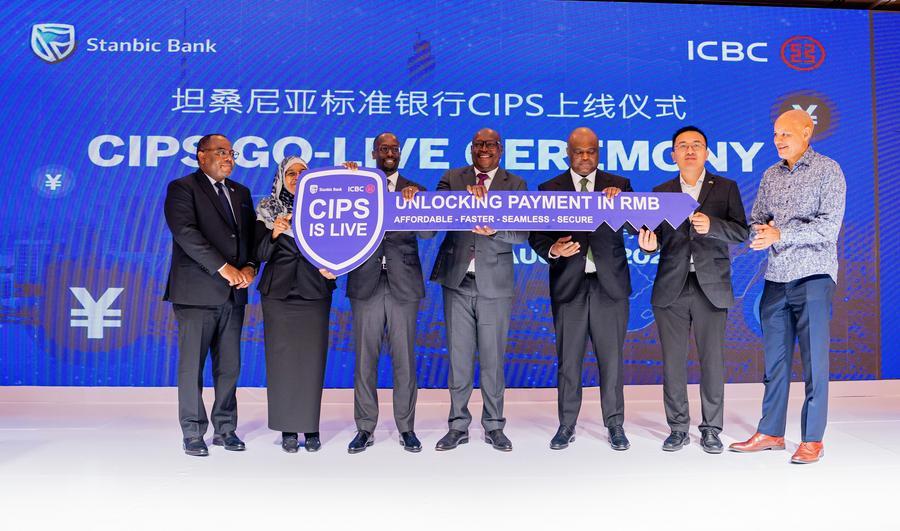
In August, Stanbic Bank Tanzania launched a direct RMB settlement service, allowing Tanzanian businesses trading with China to make and receive payments directly in RMB.
Direct RMB settlement can reduce unnecessary currency conversions and provide businesses with an additional payment option, Tanzanian Deputy Minister for Industry and Trade Dennis Londo said.
In Zambia, the RMB has also been used for mining tax payments. The country's central bank began accepting RMB payments for mining taxes in October 2025.
For Zambia, where copper exports are a major economic pillar and China is a key trading partner, the RMB payment channel provides businesses and the government with another option for managing foreign exchange needs.
According to the People's Bank of China's RMB Internationalization Report 2025, cross-border RMB receipts and payments between China and Africa totaled 155.33 billion yuan (23.14 billion dollars) in 2024, up 28.1 percent year on year. RMB receipts and payments related to trade in goods reached 56.37 billion yuan (8.4 billion dollars), up 35.9 percent.
From 2020 to 2024, cross-border RMB settlement between China and Africa nearly doubled, rising from 80.02 billion yuan (11.92 billion dollars) to 155.33 billion yuan (23.14 billion dollars), representing an average annual growth rate of 18.1 percent.
For businesses, the appeal of using the RMB is straightforward. When trading partners have regular RMB payment and receipt needs, settling transactions directly in RMB can reduce conversion costs and help mitigate exchange-rate risks.
With China granting zero-tariff treatment to 53 African countries with which it has diplomatic relations, trade facilitation between China and Africa is expected to improve further, potentially generating additional demand for cross-border RMB services.
IMPROVING RMB ACCESSIBILITY
While trade explains why businesses choose a currency, financial infrastructure determines how easily they can use it.
Africa provides a clear example of this process. In late July, Stanbic Bank Kenya launched CIPS services, followed in August by Standard Bank Namibia, which became the first bank in the country to provide such services. Standard Bank of South Africa was previously the first African commercial bank to join CIPS.
In June, the People's Bank of China authorized Standard Bank of South Africa and the Industrial and Commercial Bank of China to serve as joint RMB clearing banks for Africa, further strengthening the region's cross-border RMB payment and clearing network.
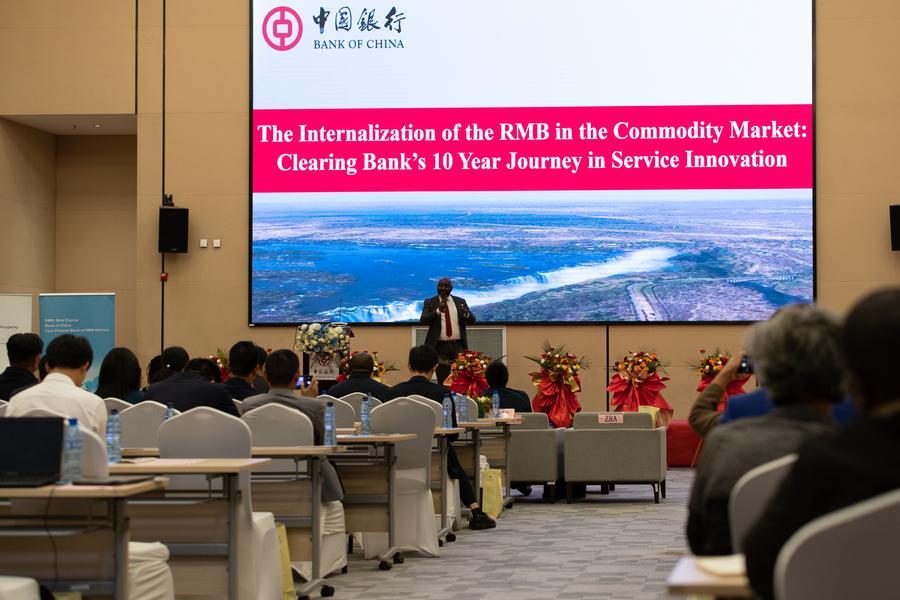
Bank of China said its RMB business currently covers more than 20 African countries, with the bank serving as an RMB clearing bank in South Africa, Zambia and Mauritius.
Huang Meibo, dean of the Institute for International Development Cooperation at Shanghai University of International Business and Economics, told Xinhua that improved payment infrastructure is making cross-border RMB transactions more convenient in African markets.
As more local banks connect with RMB cross-border payment systems, businesses are gaining broader access to RMB services, while links between the RMB and local financial markets are becoming closer, Huang said.
These developments mark a transition from individual banks providing RMB services to a broader ecosystem involving payment systems, clearing banks and commercial banks.
For market participants, payment convenience, transfer efficiency and access to RMB liquidity can all influence their willingness to use the currency.
The continued development of payment infrastructure is therefore an important factor in expanding the cross-border use of the RMB in Africa.
GROWING FINANCING
If trade settlement provides the foundation for international RMB use, financing and asset allocation represent a deeper stage of currency internationalization.
This trend is emerging in African financial markets. According to Kenya's 2026/2027 Annual Borrowing Plan, the Kenyan government plans to explore issuing RMB-denominated panda bonds as part of efforts to diversify external financing sources and ease fiscal pressures.
Egypt issued 3.5 billion yuan (521.5 million dollars) in panda bonds in 2023, becoming the first African country to issue panda bonds in China's domestic bond market. In 2025, the African Export-Import Bank issued a 2.2 billion yuan (327.8 million dollars) panda bond, the first such issuance by an African multilateral development bank.
The expansion from trade settlement to bond financing shows that the RMB is taking on a broader role in international economic activities.
For African countries, access to China's RMB-denominated capital markets can diversify financing sources and provide new options for entities with trade and investment links with China. For RMB internationalization, participation by overseas governments and financial institutions in China's bond market expands the currency's role in financing and investment.
At the same time, RMB internationalization remains a long-term process. Wider global use of a currency depends not only on trade volumes, but also on financial market depth, availability of RMB-denominated assets, payment network efficiency and overseas investors' willingness to hold RMB assets over time.■