
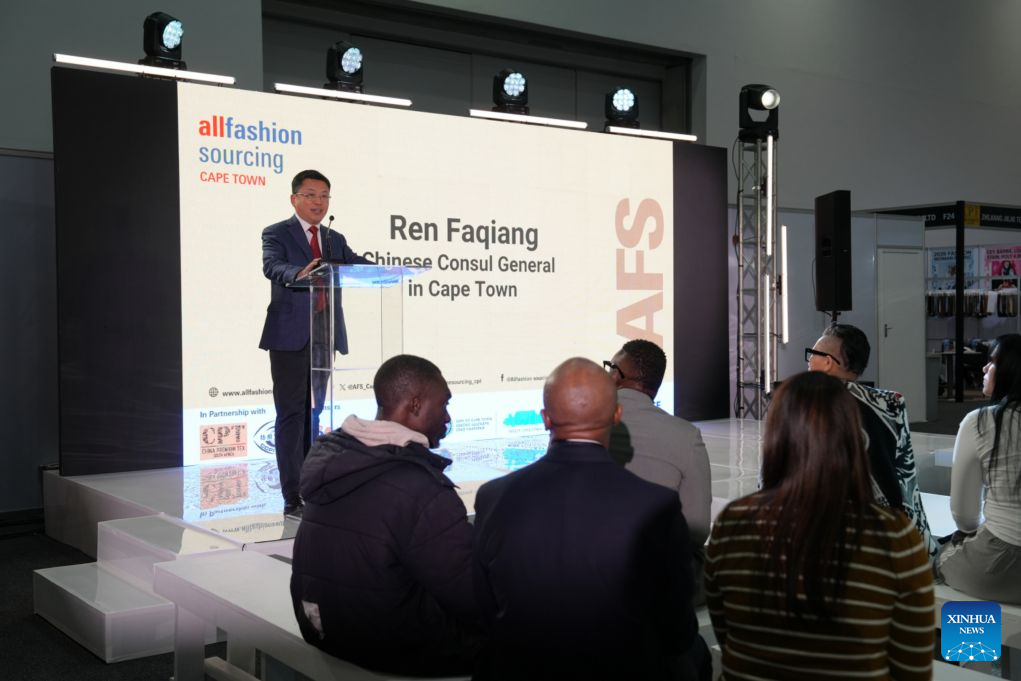
Chinese Consul-General in Cape Town Ren Faqiang addresses the opening ceremony of the China Premium Textile South Africa and Allfashion Sourcing 2026 in Cape Town, South Africa, July 14, 2026. China Premium Textile South Africa and Allfashion Sourcing 2026, one of Africa's major textile and fashion trade exhibitions, kicked off on Tuesday in Cape Town, with participants from China and South Africa upbeat about expanding bilateral cooperation in the industry.(Xinhua/Wang Lei)
CAPE TOWN, July 15 (Xinhua) -- China Premium Textile South Africa and Allfashion Sourcing 2026, one of Africa's major textile and fashion trade exhibitions, kicked off on Tuesday in Cape Town, with participants from China and South Africa upbeat about expanding bilateral cooperation in the industry.
Held at the Cape Town International Convention Center from Tuesday to Thursday, the annual event serves as a major sourcing platform for the textile, apparel, footwear, and fashion industries, bringing together manufacturers, suppliers, designers, retailers, buyers, and other industry stakeholders to explore business opportunities, forge partnerships, and showcase future-oriented solutions.
This year's event features around 150 exhibitors, with nearly half of them from China. The program also includes fashion shows, thematic forums, panel discussions, and industry talks.
Addressing the opening ceremony, Chinese Consul-General in Cape Town Ren Faqiang noted that South Africa is China's largest trading partner in Africa, while China has remained South Africa's largest trading partner for 17 consecutive years, with bilateral trade reaching 53.58 billion U.S. dollars in 2025.
"The textile industry is a traditional area of China-South Africa economic cooperation, and also a key sector for industrial capacity coordination and market connectivity between the two sides," Ren said.
He also noted that China's zero-tariff policy for 53 African countries, including South Africa, took effect on May 1, covering South African-grown cotton, textile raw materials, and other related products.
"This policy will substantially cut export costs for South African textile and garment manufacturers, expand their access to the Chinese market, unleash greater trade momentum, and inject robust impetus into China-Africa trade, investment, cooperation, and Africa's development," Ren added.
One of the exhibitors, Ziev Shani, a young South African entrepreneur fluent in Chinese, runs a local company that sources products from China, provides private-label manufacturing services for South African businesses, and helps connect companies from the two countries.
Shani said he has worked with Chinese companies for five years, while his family's business ties with China date back to his father's generation.
"I believe that there are excellent prospects for Chinese companies and South African companies to work together for a win-win situation. There should be good collaboration, good partnership and just growth and prosperity for two great countries," he added.
Among the Chinese exhibitors, Hangzhou Golden Shell Import and Export Co., Ltd., participated in the event for the fourth time. Having cultivated the South African textile market for more than a decade, the company continued to strengthen its local presence, underscoring its long-term confidence in the African market.
General Manager Chen Fangli said she is optimistic about the future of China-South Africa and China-Africa economic and trade cooperation. Supported by favorable policies and industrial upgrading, she believes Chinese textile enterprises, backed by integrated industrial chains, advanced manufacturing equipment, and strong innovation capabilities, will further expand cooperation with South African partners.
"We have established a company in Cape Town and are exploring the possibility of setting up a factory in Durban. We hope to use South Africa as a base to gradually expand into the broader African market," Chen added.
First-time exhibitor Zhejiang Huida Textile and Garment Co., Ltd. also reported a promising start.
Wang Lihong, general manager of the Chinese company, told Xinhua that she spent the morning of the opening day meeting potential clients and reached preliminary cooperation agreements with three South African companies, strengthening her confidence in expanding into both the South African and broader African markets.
Wang said Chinese textile manufacturers have long outgrown the stereotype of competing solely on low prices.
"People overseas used to associate Chinese products with good quality at low prices. Today, however, our competitiveness comes not only from affordability but, more importantly, from reliable product quality and continuous innovation, which will create broad opportunities for development in South Africa and across Africa," Wang said.
The South African Footwear and Leather Export Council (SAFLEC), a national organization mandated by the South African government to represent and promote the country's footwear, leather, handbags, belts, and allied industries in international markets, hosted a collective industry pavilion at the exhibition.
SAFLEC Executive Director Nerisha Jairaj said China supplies footwear and leather components, including soles, insoles, and hardware, to more than 50 African countries, including South Africa, while South African companies can offer Chinese consumers niche and limited-edition products. She said companies from the two countries are highly complementary and enjoy enormous potential for cooperation.
"Collaboration is important. By working together, we can go forward," Jairaj said. "We can only do it by communicating and talking to each other and helping each other, so I'm very excited about the prospect."
Speaking about China's zero-tariff policy for African countries, Jairaj said it would create new opportunities for smaller African exporters to enter the Chinese market.
"When the major producer and exporter to the rest of the world opens up its doors and says you can bring your products in duty-free... that enables smaller countries and smaller suppliers like us to enter the market. So I'm very encouraged by it," she said. ■
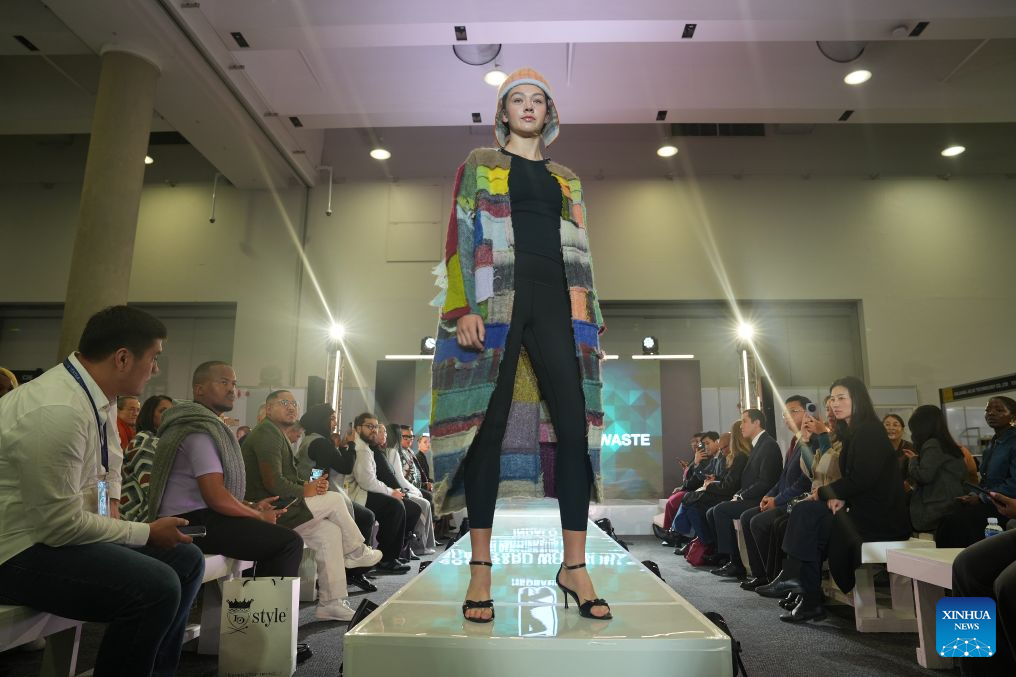
People watch a fashion show at the China Premium Textile South Africa and Allfashion Sourcing 2026 in Cape Town, South Africa, July 14, 2026. China Premium Textile South Africa and Allfashion Sourcing 2026, one of Africa's major textile and fashion trade exhibitions, kicked off on Tuesday in Cape Town, with participants from China and South Africa upbeat about expanding bilateral cooperation in the industry.(Xinhua/Wang Lei)
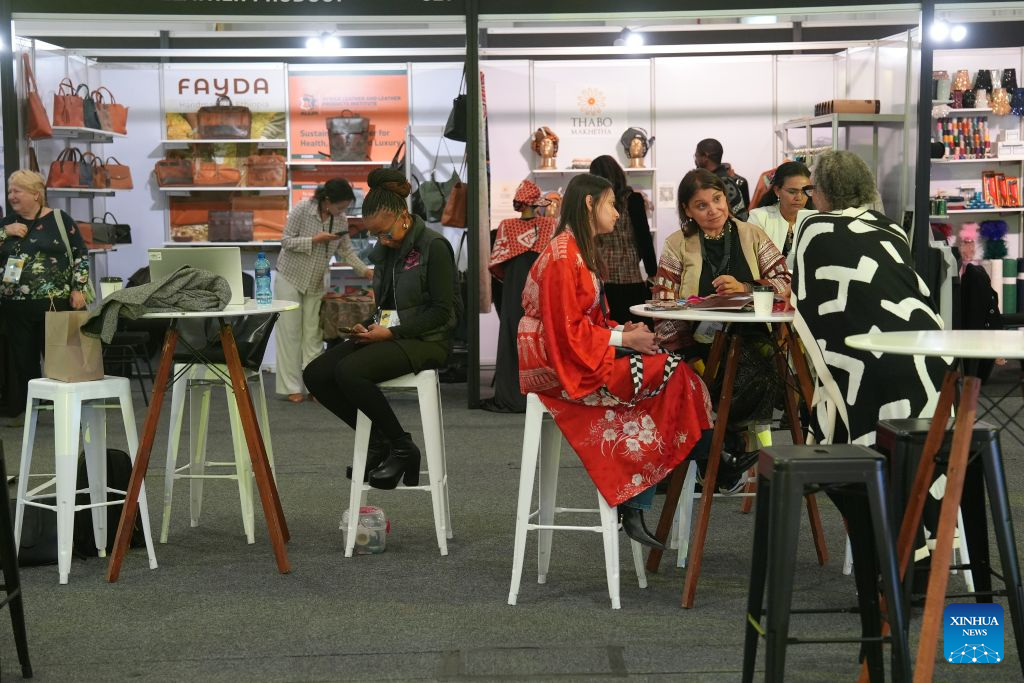
People attend the China Premium Textile South Africa and Allfashion Sourcing 2026 in Cape Town, South Africa, July 14, 2026. China Premium Textile South Africa and Allfashion Sourcing 2026, one of Africa's major textile and fashion trade exhibitions, kicked off on Tuesday in Cape Town, with participants from China and South Africa upbeat about expanding bilateral cooperation in the industry.(Xinhua/Wang Lei)
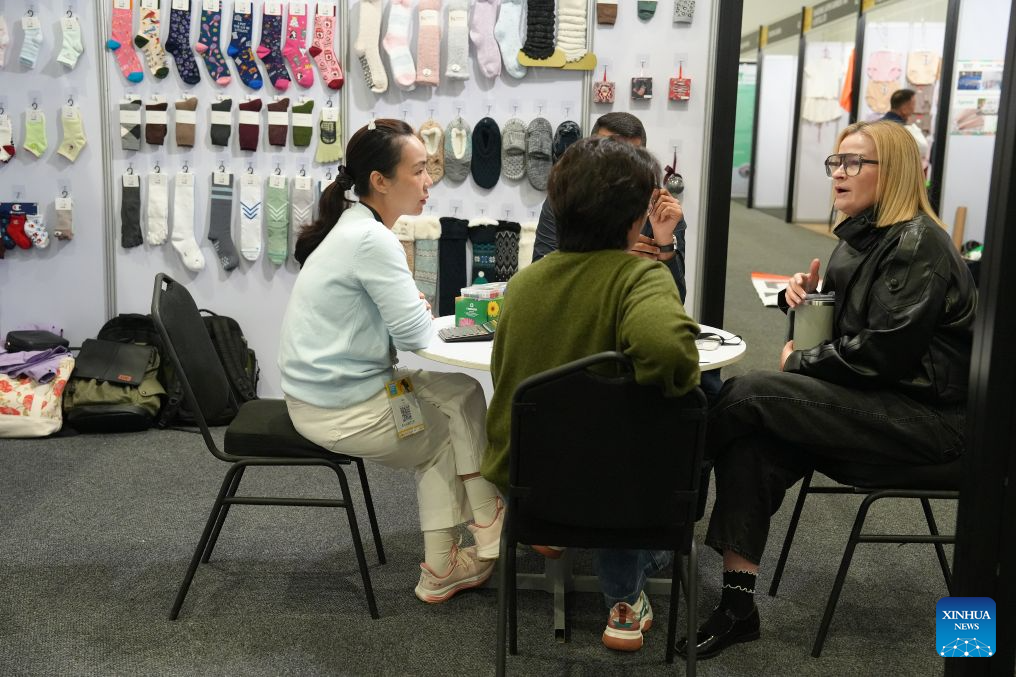
People visit the booth of a Chinese exhibitor at the China Premium Textile South Africa and Allfashion Sourcing 2026 in Cape Town, South Africa, July 14, 2026. China Premium Textile South Africa and Allfashion Sourcing 2026, one of Africa's major textile and fashion trade exhibitions, kicked off on Tuesday in Cape Town, with participants from China and South Africa upbeat about expanding bilateral cooperation in the industry.(Xinhua/Wang Lei)
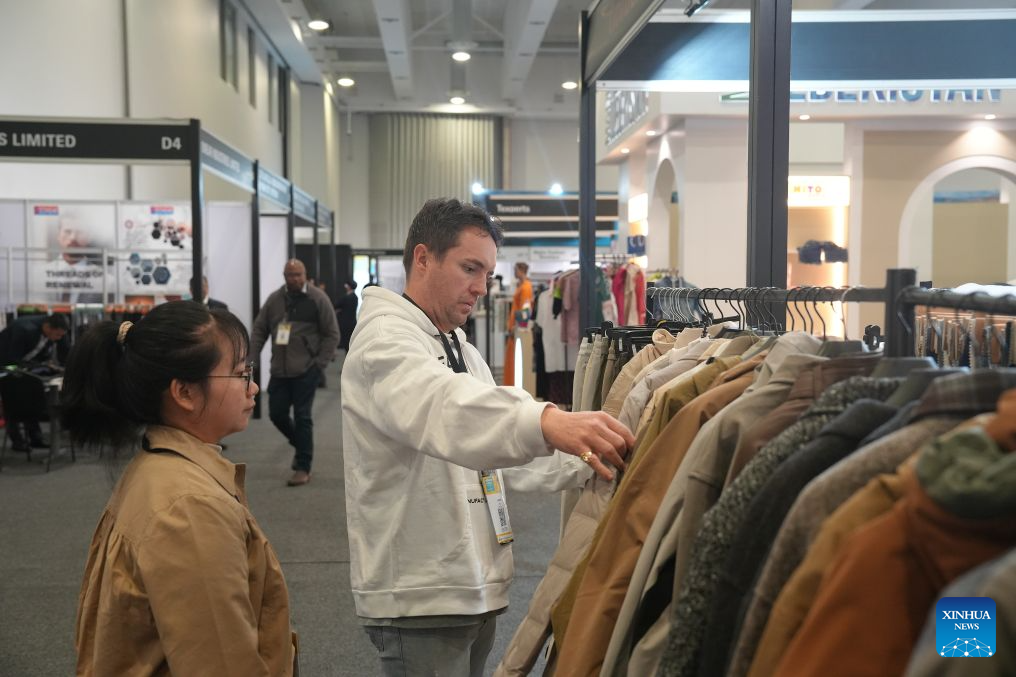
A visitor visits the booth of a Chinese exhibitor at the China Premium Textile South Africa and Allfashion Sourcing 2026 in Cape Town, South Africa, July 14, 2026. China Premium Textile South Africa and Allfashion Sourcing 2026, one of Africa's major textile and fashion trade exhibitions, kicked off on Tuesday in Cape Town, with participants from China and South Africa upbeat about expanding bilateral cooperation in the industry.(Xinhua/Wang Lei)