
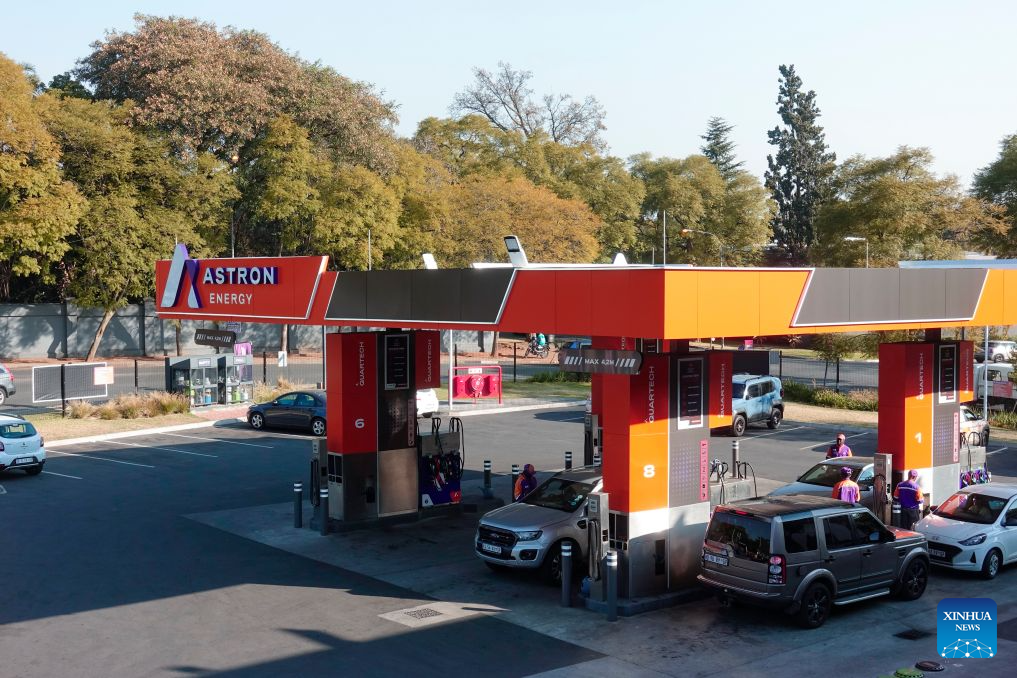
This photo taken on July 6, 2026 shows vehicles getting refueled at a petrol station in Johannesburg, South Africa. For the first time in several months, South Africans are paying less at the fuel pump, offering modest but welcome relief to households and businesses grappling with persistently high living costs. (Xinhua/Chen Wei)
by Ntandoyenkosi Ncube
JOHANNESBURG, July 6 (Xinhua) -- For the first time in several months, South Africans are paying less at the fuel pump, offering modest but welcome relief to households and businesses grappling with persistently high living costs.
The latest adjustment came after several consecutive monthly fuel price increases that steadily raised transport costs and squeezed household budgets. The Department of Mineral and Petroleum Resources announced last week that petrol and diesel prices would be reduced from July 1, marking the first fuel price cut in months.
Although the reductions are relatively small, many Johannesburg residents say every rand saved matters as they continue to juggle transport costs, groceries, school expenses and utility bills.
At a filling station in Soweto, sales representative Thabo Mokoena said the lower price came at a welcome time.
"I spend a lot on fuel every month just getting to work," he said. "The saving isn't huge, but every little bit helps these days. It means I can use that money for something else at home."
For Boitumelo Molefe, who commutes daily between Katlehong on Johannesburg's East Rand and the city center, the reduction eases some of the financial pressure facing her family.
"Things are just getting more expensive -- rent, electricity, food, everything keeps going up," she said, adding that saving even a little on fuel every month makes a difference.
In Diepsloot, delivery driver Hlengani Baloyi said fuel accounts for one of his biggest business expenses.
"When prices go up, I feel it straight away because I'm on the road every day. This drop means I can keep a bit more of what I earn instead of putting it back into the tank," said Baloyi.
For many households, the significance of the latest adjustment is measured less by economic indicators than by everyday budgeting.
"We've been under pressure for a long time and had to watch every rand lately," said Alexandra resident Nokukhanya Gqirana.
"Sometimes it's the small savings that make the biggest difference. If I spend less on fuel, I can buy bread, milk or something the kids need. That's what people think about every day," she said.
Small business owners also expect the lower fuel prices to reduce operating costs.
Self-employed electrician Kgaogelo Mashabela in Tembisa, who drives across Johannesburg to visit clients, said fuel is a significant part of his daily expenses. "If I spend less on fuel, it's easier to keep my business running without constantly raising my prices," he said.
Small grocery shop owner Collins Ncube in Ivory Park echoed Mashabela's view. "I drive to the wholesalers every week, so fuel is always part of my costs. If I can save a bit there, it makes running the shop a little easier, and hopefully I won't have to put my prices up," said Ncube.
The transport sector, where fuel represents a major operating cost, also welcomed the latest adjustment.
Operating a minibus taxi route between Vosloorus and Johannesburg's central business district, Lindokuhle Mkhize said the reduction would help offset rising operating costs.
"Fuel has been killing us for months," he said, adding, "Servicing, tyres and spare parts, they all cost more now. So even though this isn't a big drop, we'll take some relief."
Truck hire business owner Mpho Ramaila, based in Jet Park, said the lower diesel price would reduce operating costs but noted that freight companies were still recovering from recent disruptions caused by nationwide anti-immigration protests, which temporarily affected deliveries and business activity.
"We are happy diesel has come down because fuel is one of our biggest costs, and the lower fuel price definitely helps," he said. "Now we need business activity to recover, so companies start moving goods normally again."
Business analysts said the fuel price adjustment could gradually help moderate inflation by lowering transport and distribution costs, although the overall impact will continue to depend on international oil prices and movements in the rand exchange rate.
"Fuel prices affect almost every sector because goods have to be transported," Raymond Rutendo Mafunga, director of Ruemaf Development Projects, a Johannesburg-based consultancy and construction firm, told Xinhua.
"When fuel becomes cheaper, businesses receive some relief, and over time consumers can also benefit through lower costs," he added. ■
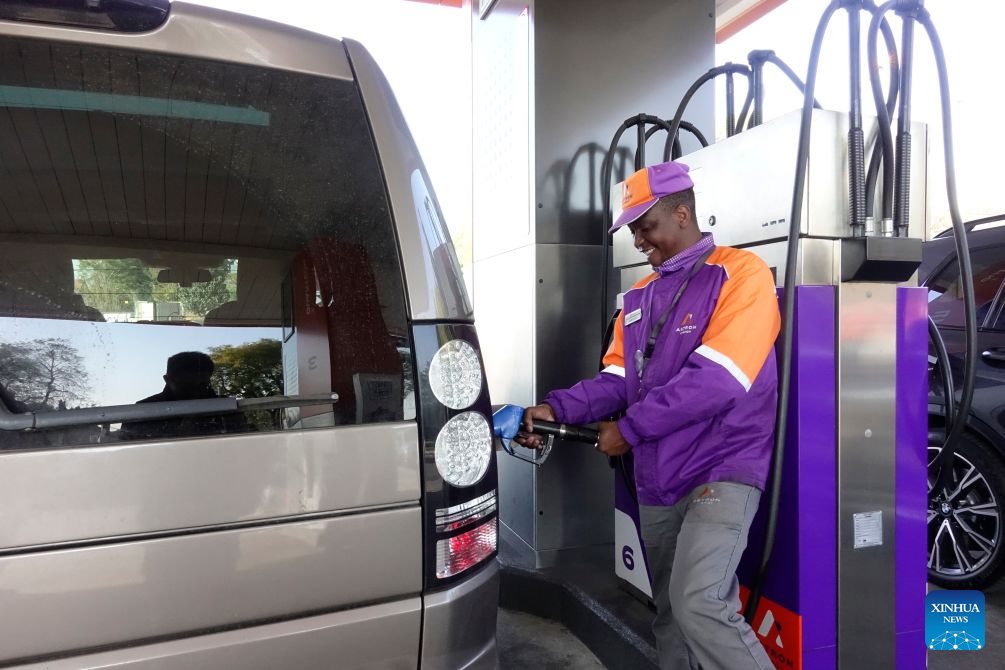
A staff member refuels a car at a petrol station in Johannesburg, South Africa, July 6, 2026. For the first time in several months, South Africans are paying less at the fuel pump, offering modest but welcome relief to households and businesses grappling with persistently high living costs. (Xinhua/Chen Wei)