
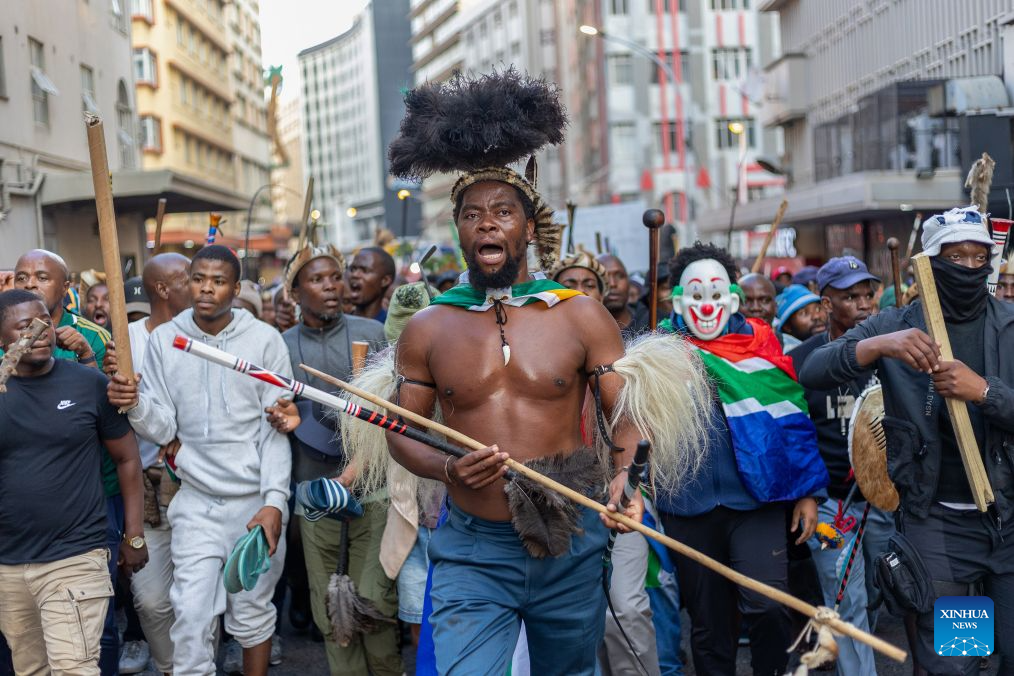
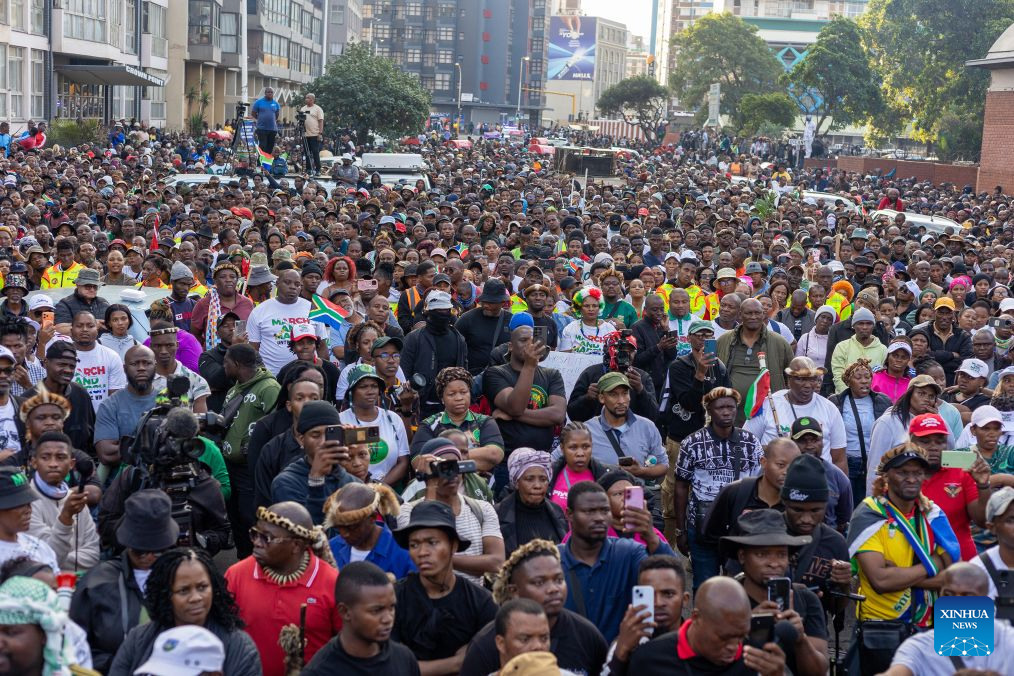
Protesters march during a demonstration against illegal immigration in Durban, South Africa, June 30, 2026. South Africa saw nationwide demonstrations against illegal immigration on Tuesday, as thousands of protesters marched through major cities under heightened security. (Photo by Mbuthi Msweli/Xinhua)
JOHANNESBURG, June 30 (Xinhua) -- South Africa saw nationwide demonstrations against illegal immigration on Tuesday, as thousands of protesters marched through major cities under heightened security.
Authorities said most gatherings remained peaceful, though isolated incidents of violence and looting were reported.
The coordinated protests, organized by the March and March, Operation Dudula and other anti-immigration groups, followed an ultimatum issued by organizers setting June 30 as the deadline for undocumented migrants to leave the country.
Demonstrators called for tighter border controls, tougher enforcement of immigration laws and faster deportation of undocumented migrants.
Authorities had deployed thousands of police officers nationwide ahead of the demonstrations, supported by specialized Public Order Policing units, while the military remained on standby.
The National Joint Operational and Intelligence Structure activated operational centers in all nine provinces, warning that any attempts to loot businesses, intimidate communities or disrupt critical infrastructure would be dealt with decisively.
Gauteng Provincial Police Commissioner Tommy Mthombeni said on Monday that about 13,000 South African Police Service officers, more than 10,000 metro police officers, around 8,000 traffic wardens and over 217,000 private security personnel were mobilized across the province to monitor the demonstrations and maintain public order.
Most demonstrations proceeded peacefully under heavy police presence, although authorities reported several isolated criminal incidents. In KwaZulu-Natal Province, police arrested at least 10 suspects for looting and attempted looting in Durban and surrounding areas.
In Gauteng Province, two people were injured by gunshots in Johannesburg's Hillbrow during the protests. Provincial police spokesperson Brenda Muridili said the suspects opened fire on the victims during the march against undocumented foreign nationals.
"The three suspects were arrested and two licensed firearms, believed to have been used in the incident, were seized for further investigation," said Muridili.
In his weekly newsletter published on Monday, South African President Cyril Ramaphosa called on South Africans to exercise their constitutional right to protest peacefully while warning that violence, intimidation and vigilantism would not be tolerated during the demonstrations.
The country's Minister of Justice and Constitutional Development, Mmamoloko Kubayi, who chairs the Inter-Ministerial Committee on Migration, reiterated that immigration enforcement remains the responsibility of the state and warned that violence, intimidation, vigilantism, xenophobia, hate speech and attempts by civilians to demand identity documents from members of the public would not be tolerated.
Later on Tuesday, the government welcomed the largely peaceful conduct of the nationwide demonstrations and thanked South Africans for exercising their constitutional right to protest responsibly. It also commended community leaders, civil society organizations, religious leaders, protest organizers and law enforcement agencies for helping ensure that most gatherings concluded without major violence.
The demonstrations followed weeks of heightened tensions over illegal immigration, during which authorities repeatedly warned against vigilantism and xenophobic violence.
The protests, which have spread to different parts of the country since April, have also heightened concerns across the region.
In recent weeks, Malawi, Zimbabwe, Mozambique, Nigeria, Ghana and Uganda have advised their nationals in South Africa to remain vigilant, while some governments have offered voluntary repatriation assistance to citizens wishing to return home.
By Tuesday evening, authorities said most demonstrations had dispersed peacefully despite isolated incidents reported mainly in Gauteng and KwaZulu-Natal, while security forces remained on high alert overnight as they continued monitoring identified hotspots across the country.
The government reaffirmed that anyone responsible for violence, looting or other criminal acts during the demonstrations would be arrested and prosecuted. ■
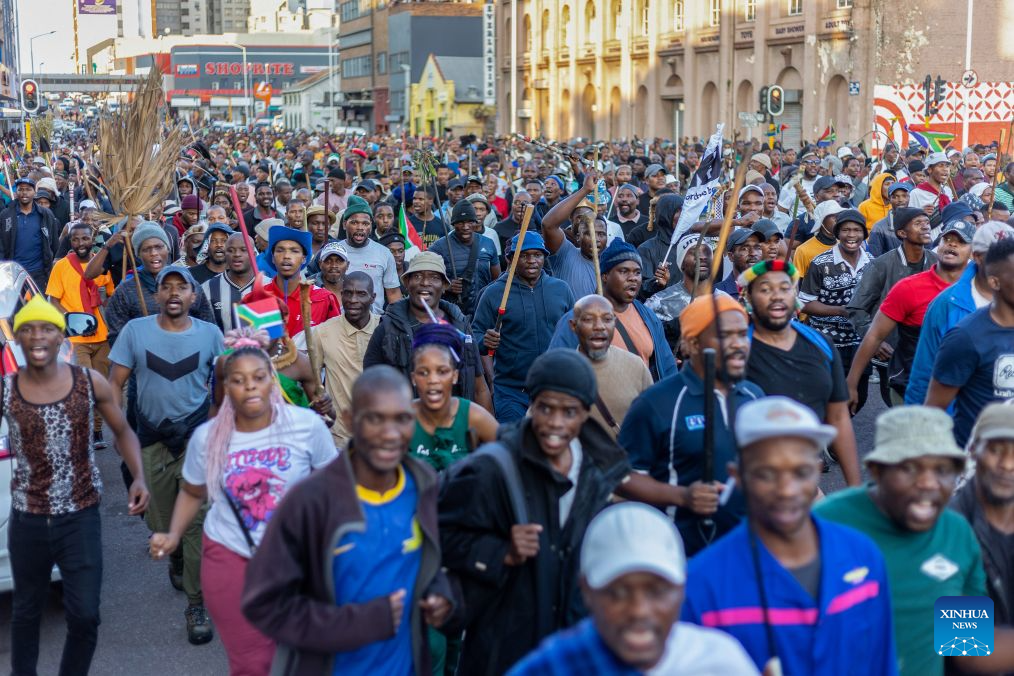
Protesters march during a demonstration against illegal immigration in Durban, South Africa, June 30, 2026. South Africa saw nationwide demonstrations against illegal immigration on Tuesday, as thousands of protesters marched through major cities under heightened security. (Photo by Mbuthi Msweli/Xinhua)
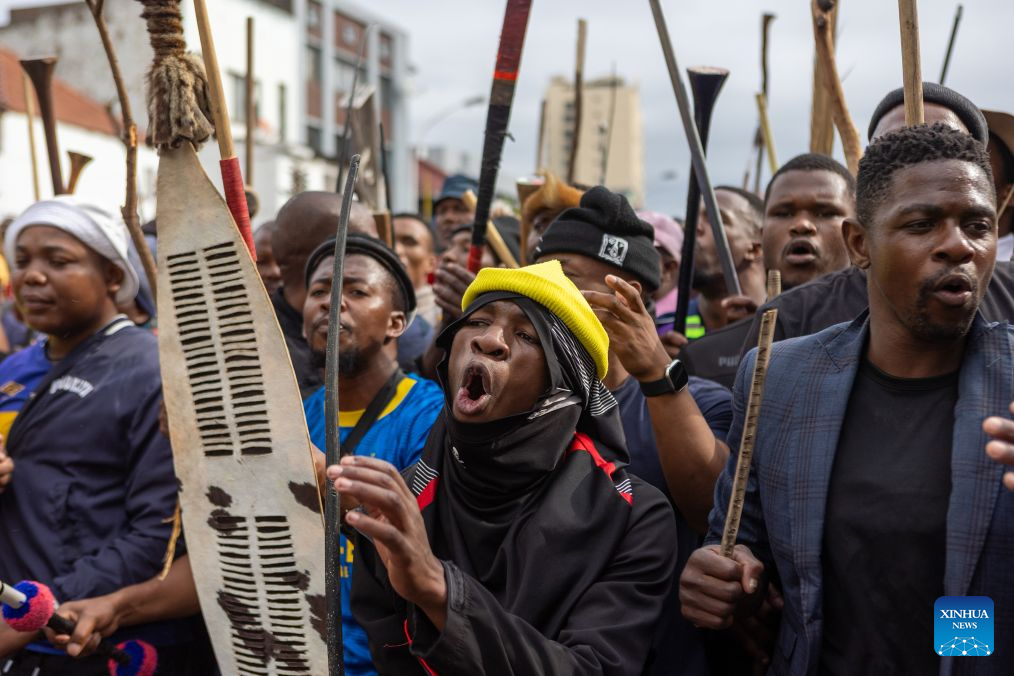
Protesters march during a demonstration against illegal immigration in Durban, South Africa, June 30, 2026. South Africa saw nationwide demonstrations against illegal immigration on Tuesday, as thousands of protesters marched through major cities under heightened security. (Photo by Mbuthi Msweli/Xinhua)
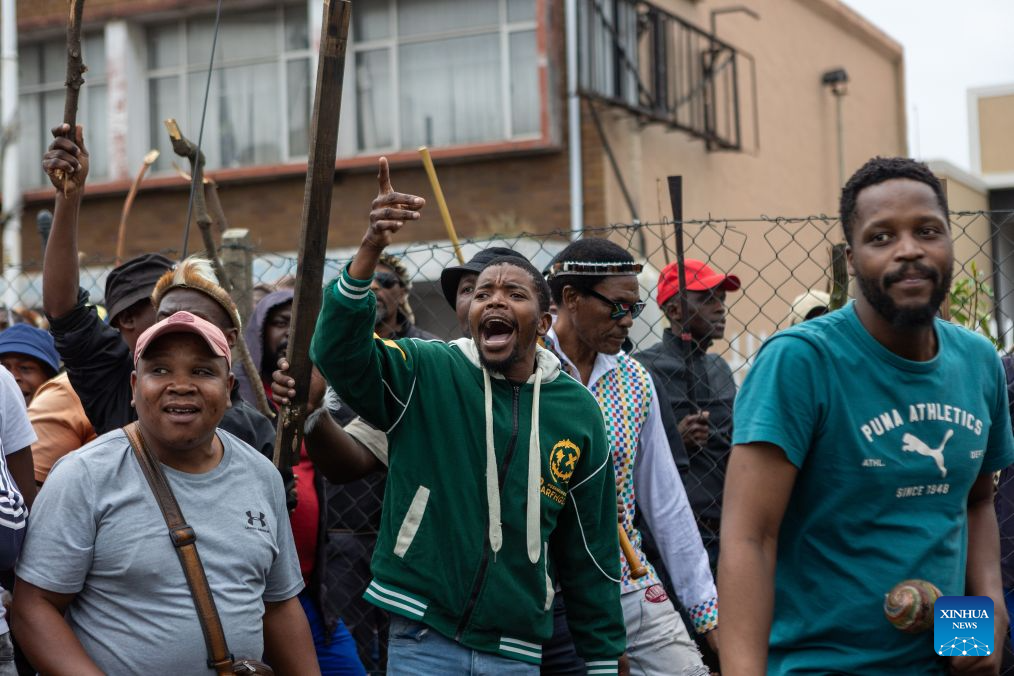
Protesters march during a demonstration against illegal immigration in Durban, South Africa, June 30, 2026. South Africa saw nationwide demonstrations against illegal immigration on Tuesday, as thousands of protesters marched through major cities under heightened security. (Photo by Mbuthi Msweli/Xinhua)
Protesters march during a demonstration against illegal immigration in Durban, South Africa, June 30, 2026. South Africa saw nationwide demonstrations against illegal immigration on Tuesday, as thousands of protesters marched through major cities under heightened security. (Photo by Mbuthi Msweli/Xinhua)