
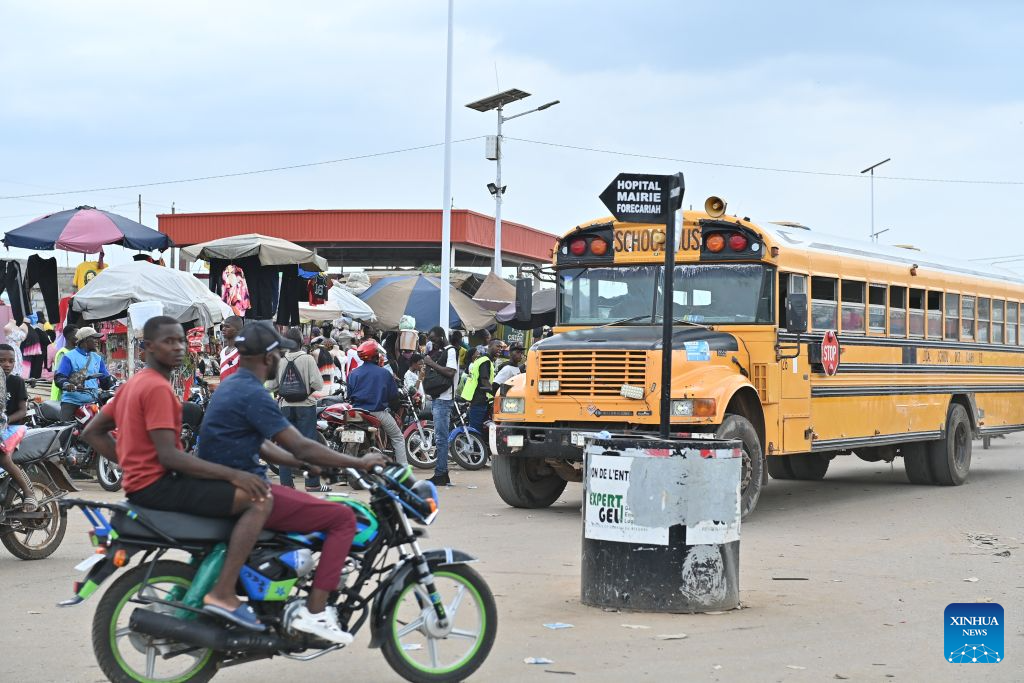
This photo taken on June 6, 2026 shows a street view of a small town near the Morebaya Port in Forecariah Prefecture, Kindia Region, Guinea. (Xinhua/Liu Qiong)
CONAKRY, June 24 (Xinhua) -- As the morning sun rises over the Maferinya sub-prefecture in Guinea's Forecariah Prefecture, a steady stream of trucks, motorcycles, and pedestrians moves along the newly built road leading to Morebaya Port. Roadside stalls display an array of fish products, fruits, vegetables, and daily necessities, while the sounds of bargaining shoppers mingle with vendors' calls.
The once-quiet fishing villages have taken on a new sense of vibrancy. Just a few years ago, the scene was markedly different. At that time, the area was sparsely populated and hampered by poor transportation links.
Today, driven by the development of the Simandou iron ore project and the rise of Morebaya Port, local communities are experiencing profound changes in transportation, employment, commerce, and daily life.
Located in southeastern Guinea, the Simandou iron ore project, which officially entered production in November last year, is one of the world's largest mining projects and contains some of the highest-quality iron ore resources.
As a key participant in the project, China Baowu Steel Group Corporation Limited (Baowu) has undertaken major construction and operational support tasks and plays a significant role in advancing operations related to Morebaya Port.
"Morebaya Port is an important component of the entire Simandou project. At present, the overall construction of the port has been basically completed," said Liu Feng, a port operation manager assigned by Baowu to the project.
According to Liu, Morebaya Port mainly consists of two parts: an ore terminal and a general-purpose terminal. The ore terminal is designed to handle an annual throughput capacity of 60 million to 70 million tonnes.
A significant milestone was reached at the end of May when a large oil tanker successfully berthed at Morebaya Port and completed unloading operations, marking the port's entry into a new stage of receiving and handling vessels of more than 10,000 tonnes.
Today, the port not only serves as a transportation hub for materials needed for the construction and operation of the Simandou project but is also becoming an important gateway connecting local communities with the outside world.
One of the most immediate benefits brought by the port has been the increase in employment opportunities.
"During the construction phase of the project, we hired more than 7,000 local employees in total. After entering the production and operation stage, we have recruited nearly 300 local employees who are now working long-term in port production and operations," Liu said.
Looking ahead, Liu said that with the Simandou project's further advancement, the port is expected to become an important integrated logistics hub for Guinea and even the wider West African region.
Aboubacar Yarie Camara, principal of Maferinya Central Primary School, recalled that employment opportunities for young people were once scarce in the area. With Baowu's involvement in the Simandou project, more and more local youth have secured jobs.
"Today, they are working on the project, and their families are benefiting from it as well," he said.
Moreover, employment growth has also boosted local markets.
Camara said that in the past, local markets were relatively quiet due to residents' limited incomes. As more young people found jobs through the project, their purchasing power increased, and markets gradually became busier.
For local resident N'Famoussa Soumah, the most visible change has been the improvement in infrastructure, particularly transportation.
"The Simandou project has brought us a lot of help," said Soumah. "In the past, it was very difficult to travel between villages. Now it has become much more convenient."
Beyond infrastructure and employment, the project has also opened new avenues for learning and personal development.
Born in 1992, Mamady Conde studied the Chinese language at China's Sichuan University. After returning to Guinea, he joined Morebaya Port as a logistics engineer, responsible for coordinating the transportation of personnel and materials. In his view, the project's impact extends far beyond the port itself.
"Port construction is a rare development opportunity for the local community," Conde said. "There were not so many people in the villages before, but now, wherever you look, there are people everywhere. The area around the port and the local communities have undergone tremendous changes."
After graduating with a master's degree from Nanjing University of Information Science and Technology in China, 27-year-old Abdoul Gadiri Sow returned to Guinea and now serves as assistant manager of the port's ore berth, overseeing ore loading operations.
"During my studies in China, I hoped to have the opportunity to participate in this project and contribute to the development of my country," he said. ■
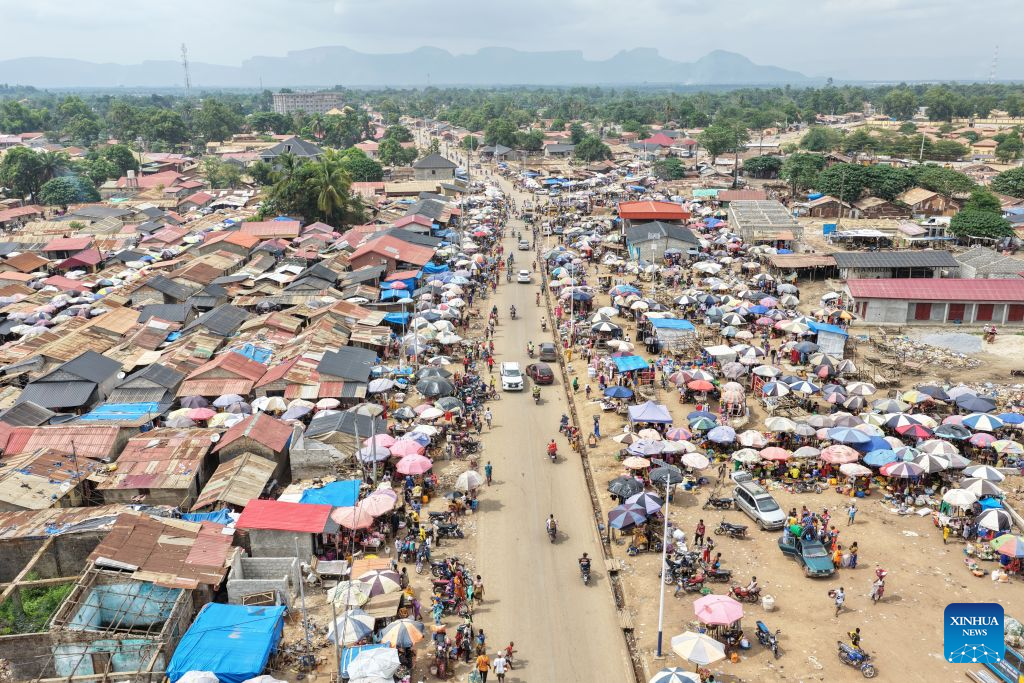
An aerial drone photo taken on June 6, 2026 shows a small town near the Morebaya Port in Forecariah Prefecture, Kindia Region, Guinea. (Xinhua/Liu Qiong)
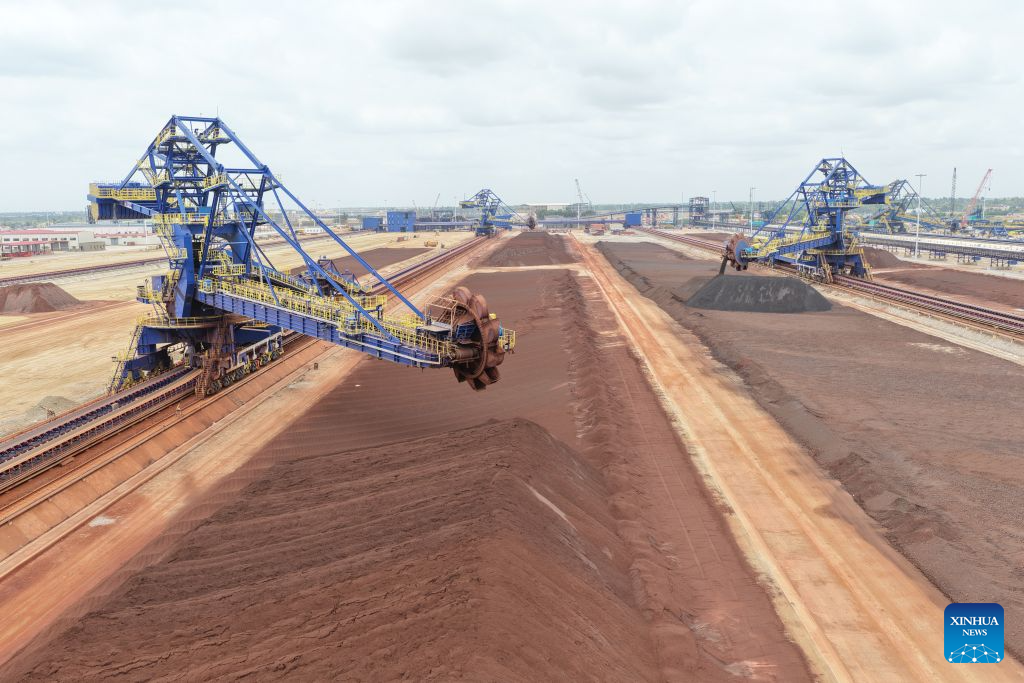
A drone photo taken on June 6, 2026 shows the Morebaya Port logistics hub serving the Simandou iron ore project in Forecariah Prefecture, Kindia Region, Guinea. (Xinhua/Liu Qiong)
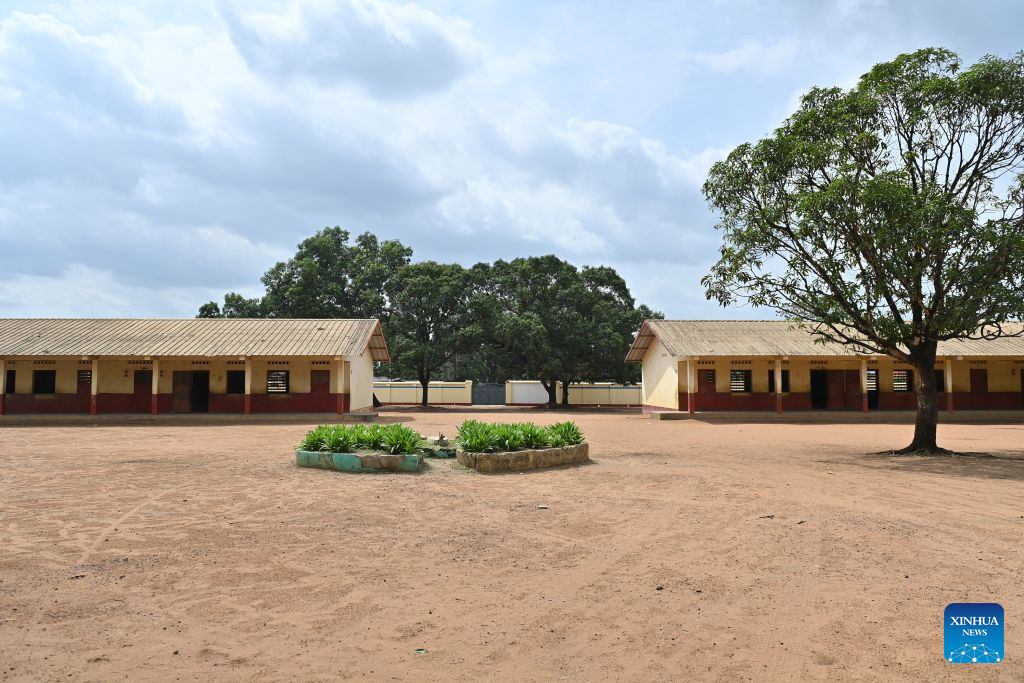
This photo taken on June 6, 2026 shows the Maferinya Central Primary School near the Morebaya Port in Forecariah Prefecture, Kindia Region, Guinea. (Xinhua/Liu Qiong)