
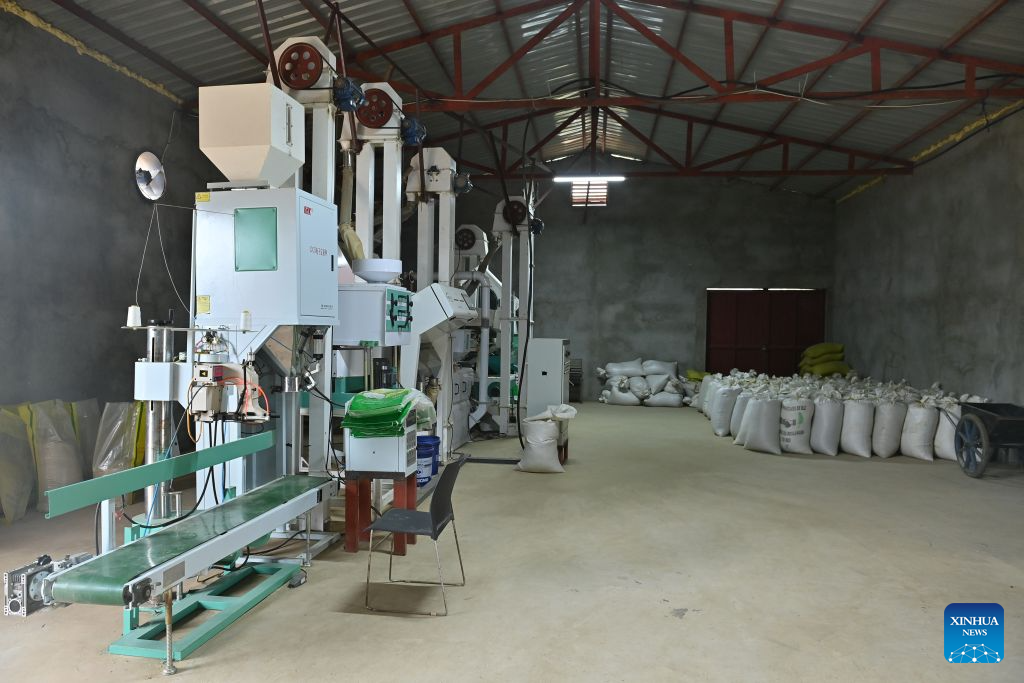
This photo taken on June 4, 2026 shows rice-processing equipment inside a rice processing plant operated by a Chinese company in Boffa Prefecture, Guinea. (Xinhua/Liu Qiong)
CONAKRY, June 20 (Xinhua) -- As the harvest season is in full swing in June, bags of rice labeled "Chinese Hybrid Rice, Made in Guinea" are ready to be transported to markets at a rice processing plant near golden paddy fields in Koba, a sub-prefecture in Guinea's western prefecture of Boffa.
For local farmers, the sight of a bumper harvest marks a significant change. The West African country, though endowed with abundant water resources and fertile land, has long seen limited improvements in crop yields due to inadequate agricultural infrastructure and a lack of modern farming techniques.
To explore new ways to increase food production, China and Guinea launched a pilot hybrid rice project in Koba in 2019, with Chinese agricultural experts and Guinea's Ministry of Agriculture jointly carrying out varietal trials and promoting suitable cultivation techniques.
"The country has favorable natural conditions, and rice is one of the most important staple foods for the local population," said Zhang Zhengrong, general manager of Yilonghe Agricultural Company in Guinea.
In 2021, the Chinese company introduced three hybrid rice varieties to Koba, where technicians conducted field trials and evaluations.
"The results showed that all three varieties adapted well to Koba's natural conditions. Two of them, in particular, demonstrated outstanding performance, with strong adaptability and high yields," said Souleymane Diawara, head of the Koba Agricultural Research Station in Boffa Prefecture.
After years of experimentation and demonstration, Chinese hybrid rice has gradually adapted to the local ecological environment. The number of varieties introduced at the demonstration base has increased to six, with the highest yield reaching nine tonnes per hectare, a level that has greatly impressed local agricultural stakeholders.
Beyond its yield advantage, the quality of Chinese hybrid rice has also won recognition.
"We conducted taste tests as well. We believe Chinese hybrid rice not only offers high yields but also good quality," Diawara said.
The increase in production achieved through Chinese hybrid rice is not solely attributable to the seeds themselves. At the beginning of the project, many farmland plots in Koba suffered from clogged irrigation canals and aging drainage systems, while traditional cultivation methods remained widely practiced.
After arriving in Guinea, Chinese agricultural experts participated in the rehabilitation of agricultural water infrastructure and introduced complementary techniques such as seedling cultivation, transplanting, scientific fertilization, and pest and disease control, gradually helping farmers establish a modern agricultural management model.
According to Zhang, the team trains about 100 local farmers each planting season, enabling them to participate in the entire production process and directly observe the benefits of modern agricultural technologies.
"During the harvest season each year, we organize rice-tasting events and invite neighboring farmers as well as local officials. When they see our harvest, they are just as happy as if it were their own," he said.
Liu Guangyou, an agricultural expert with more than 40 years of experience in hybrid rice cultivation, has been working in Guinea since 2020 and has actively participated in local technical training.
"After years of effort, local farmers who have adopted our technical methods see their agricultural income more than double," he said. "The area cultivated with improved seeds and modern farming techniques has expanded four to five times compared with when we first arrived."
For local agricultural authorities, improvements in technical capacity are even more important than increased output.
Seydouba Sylla, director of agriculture and livestock in Boffa Prefecture, believes that the introduction of Chinese agricultural technologies has created favorable conditions for cultivating local agricultural talent and enabled more farmers to gain access to the concepts and methods of modern agriculture.
"In particular, the arrival of Yilonghe in Koba has allowed us to access many advanced agricultural technologies and created favorable conditions for technology transfer," Sylla said.
In April, Guinean Prime Minister Amadou Oury Bah sent a bag of hybrid rice produced in Koba to China, writing on it: "This bag of rice is the perfect symbol of cooperation between Guinea and China."
According to him, the promotion of hybrid rice in Boffa Prefecture is not only an achievement of agricultural cooperation but also an illustration of the deepening practical cooperation between the two countries in the fields of food security and agricultural development.
As the sun sets, calm gradually returns to the rice fields of Koba. Freshly harvested rice is transported to warehouses and processing facilities, while farmers are already preparing for the next planting season.
From demonstration cultivation to technical training, from the introduction of improved varieties to their adaptation to local conditions, Chinese hybrid rice continues to take root in this West African country, offering new prospects for local agricultural development. ■
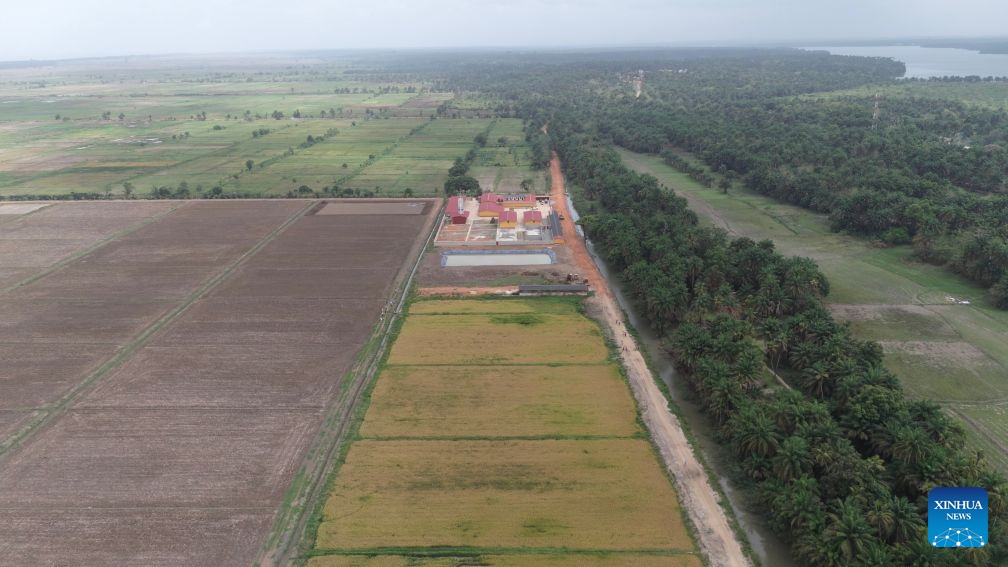
An aerial drone photo taken on June 4, 2026 shows experimental paddy fields in Boffa Prefecture, Guinea. (Xinhua/Liu Qiong)
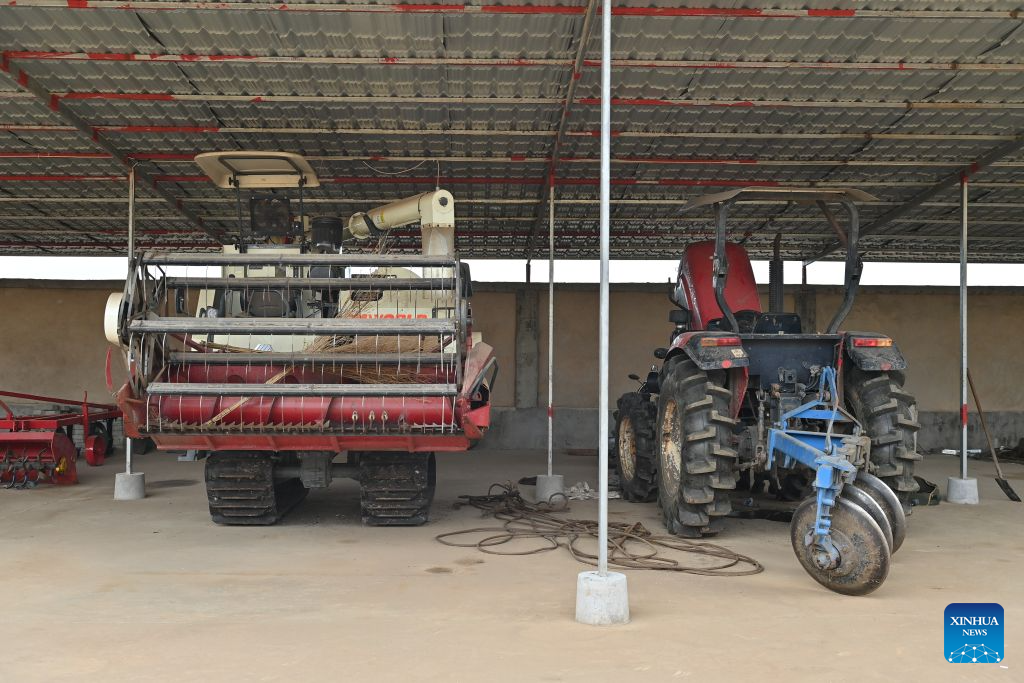
This photo taken on June 4, 2026 shows agricultural machinery inside a rice processing plant operated by a Chinese company in Boffa Prefecture, Guinea. (Xinhua/Liu Qiong)
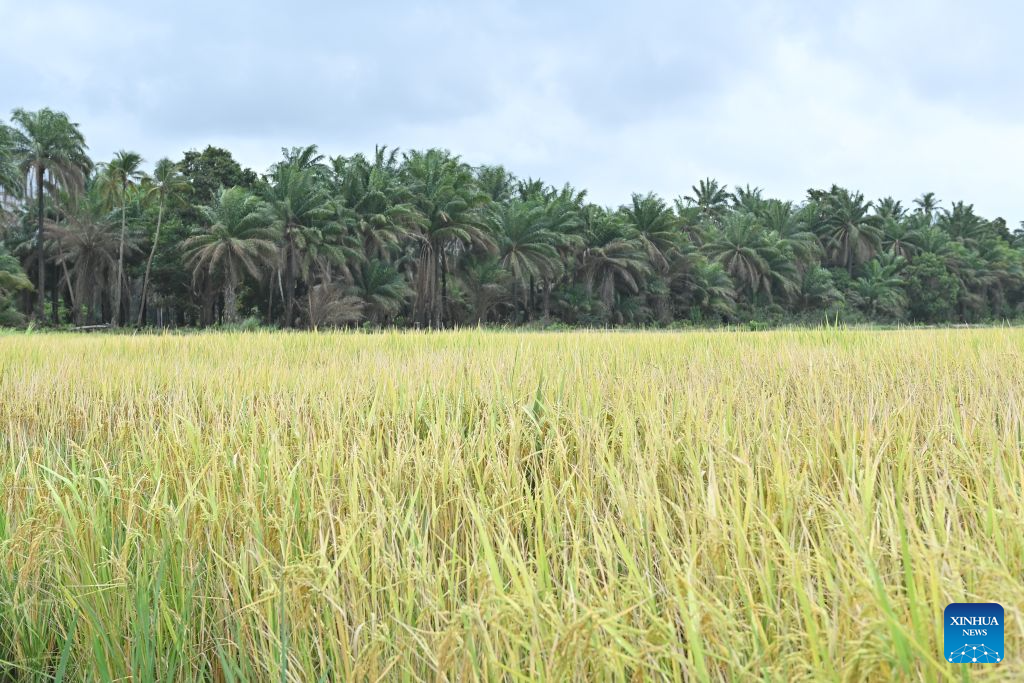
This photo taken on June 4, 2026 shows an experimental paddy field in Boffa Prefecture, Guinea. (Xinhua/Liu Qiong)
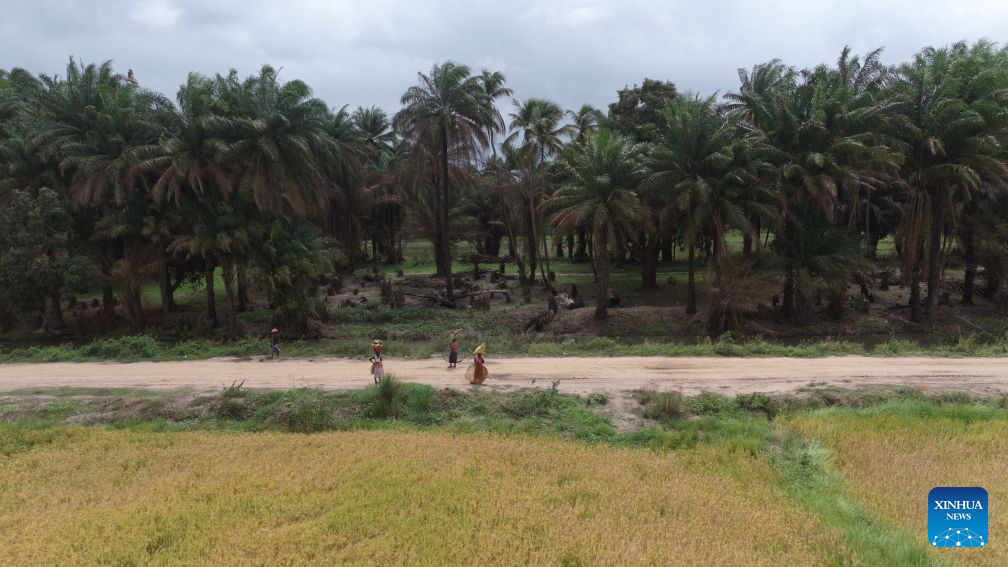
A drone photo taken on June 4, 2026 shows experimental paddy fields in Boffa Prefecture, Guinea. (Xinhua/Liu Qiong)