
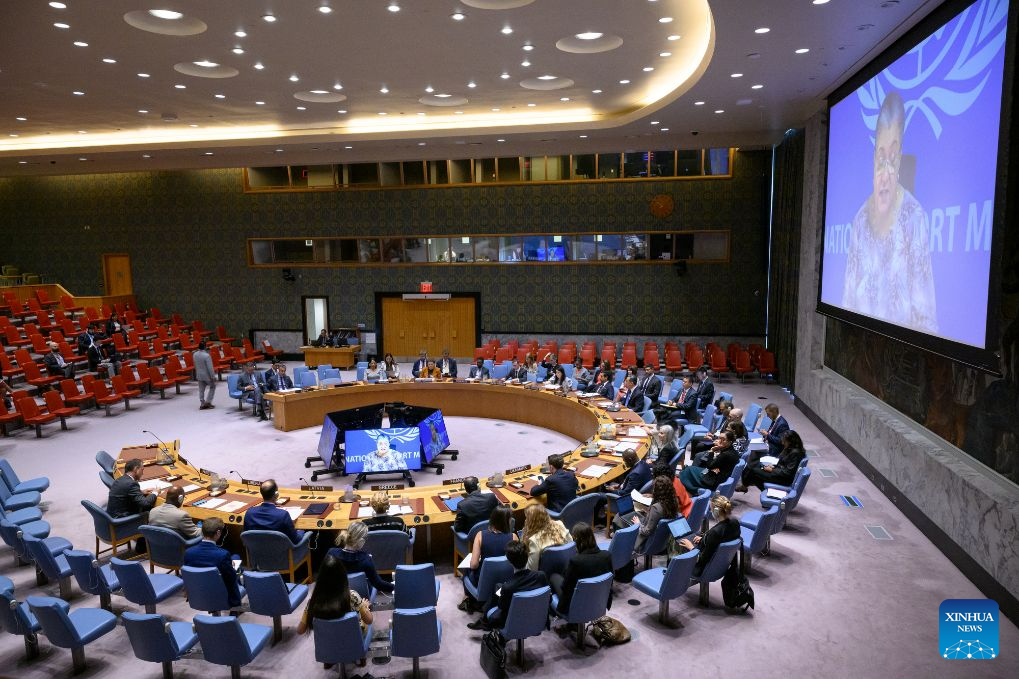
The Security Council holds a meeting on the situation in Libya at the UN headquarters in New York, June 18, 2026. The top UN envoy for Libya on Thursday called for advancing the political process in the country, building on the conclusion of a six-month-long structured dialogue. (Loey Felipe/UN Photo/Handout via Xinhua)
UNITED NATIONS, June 18 (Xinhua) -- The top UN envoy for Libya on Thursday called for advancing the political process in the country, building on the conclusion of a six-month-long structured dialogue.
The recommendations from the structured dialogue provide a credible Libyan-owned foundation for advancing the political process toward elections, strengthening state institutions and economic governance, as well as addressing the structural causes of instability in Libya, said Hanna Tetteh, the UN secretary-general's special representative for Libya and head of the UN Support Mission in Libya.
The structured dialogue, a central pillar of the UN-led Libyan political roadmap, concluded on June 7 after six months of sustained engagement, she told the Security Council during a briefing via video link.
"The task now is to ensure that this effort translates into action and structured, sequenced, Libyan-led implementation," she said.
Tetteh unveiled the political roadmap in August 2025, which is built around three core pillars: an electoral framework for presidential and legislative elections, unifying institutions through a new unified government and a structured dialogue.
In parallel with the conclusion of the structured dialogue, Tetteh said she continued to facilitate the "smaller convening" between representatives of the Government of National Unity, which controls the western part of Libya, and the General Command of the Libyan National Army, which controls the central and eastern parts of the country. This convening also includes members of the two competing legislative chambers.
"The objective is to advance the first two milestones of the political roadmap: the reconstitution of the High National Elections Commission board and the agreement on politically contested issues of the electoral legal framework. These issues have not been resolved," she said.
"I would like to emphasize that if Libyan political actors and institutions are unable to work together to create the political and security conditions for holding elections and completing the remaining legal and institutional steps within a reasonable timeframe, continued reliance on this process alone will not be sufficient to deliver the Libyan people's right to have a government of their choice which would have democratic legitimacy," she warned.
The responsibility lies, first and foremost, with Libyan stakeholders. However, international commitment to supporting the country at this time is critical to converting processes into outcomes, said Tetteh. ■
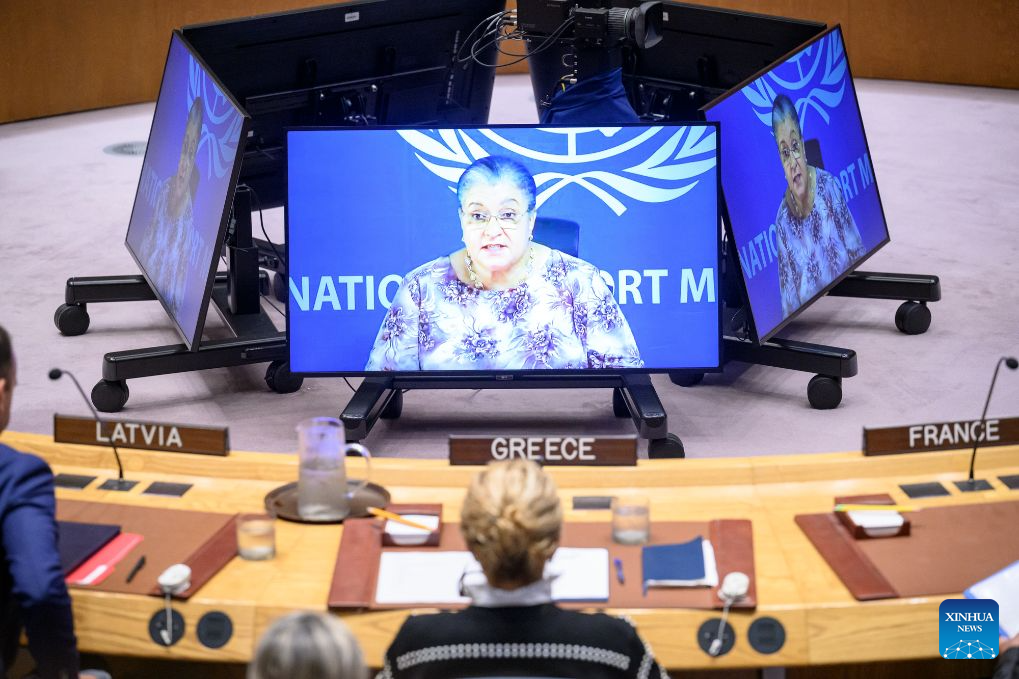
The UN secretary-general's special representative for Libya and head of the UN Support Mission in Libya, Hanna Tetteh (on screens), speaks via video link at a Security Council meeting at the UN headquarters in New York, June 18, 2026. The top UN envoy for Libya on Thursday called for advancing the political process in the country, building on the conclusion of a six-month-long structured dialogue. (Loey Felipe/UN Photo/Handout via Xinhua)