
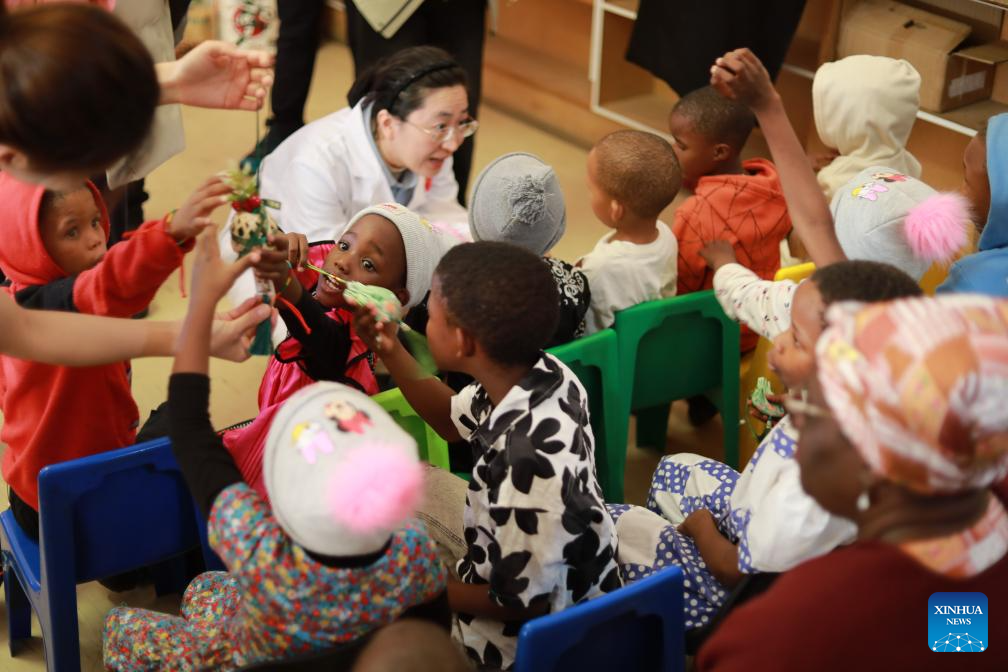
Children interact with staff members of the China Henan International Cooperation Group (CHICO) and the 17th batch of the Chinese medical team in Namibia during a Dragon Boat Festival cultural event at the SOS Children's Villages in Windhoek, Namibia, June 13, 2026. (Xinhua/Lin Jing)
WINDHOEK, June 13 (Xinhua) -- Laughter and curiosity filled the grounds of the SOS Children's Villages in Windhoek, capital of Namibia, on Saturday as children gathered around tables covered with bamboo leaves, sticky rice, and colorful threads, embarking on a cultural journey that carried them thousands of kilometers away to China.
For many of the children, it was their first encounter with the ingredients and traditions of China's Dragon Boat Festival. Under the guidance, small hands carefully folded bamboo leaves around sticky rice to make zongzi, the festival's signature delicacy. Others threaded colorful bracelets around their wrists or examined fragrant sachets, eager to learn the stories and blessings embedded in these centuries-old customs.
The event, themed "Sharing the Warmth of the Dragon Boat Festival, Promoting Health and Well-being," was organized by the China Henan International Cooperation Group (CHICO) together with the 17th batch of the Chinese medical team in Namibia. It combined cultural exchange with community outreach, offering children a glimpse into Chinese traditions and access to free healthcare services.
Home to orphaned and vulnerable children, the SOS Children's Villages provides family-like care, education, and support. On this occasion, it became a vibrant venue for cultural exchange, where Chinese festive traditions met gestures of care and friendship.
The Dragon Boat Festival, one of China's most celebrated traditional holidays, commemorates the ancient patriotic poet Qu Yuan. The festival is marked by customs such as eating zongzi, wearing protective sachets and five-colored bracelets, and watching dragon boat races.
As this year marks the China-Africa Year of People-to-People Exchanges, organizers also introduced the symbolism behind these traditions. Fragrant sachets are believed to ward off illness, while five-colored bracelets carry wishes for peace, health, and happiness.
For Ben Gariseb, one of the children from the global child-focused organization, the experience was both eye-opening and memorable.
"It is my first time participating in an activity related to Chinese culture. I made zongzi, had my health checked, and witnessed acupuncture being administered for the first time. I wish to learn more about Chinese culture," Gariseb said.
The cultural activities were complemented by practical support, with organizers donating food and other essential supplies to help improve the children's daily lives and well-being.
Julieta Ferreira, national director of SOS Children's Villages Namibia, said the Chinese community in Namibia has supported the organization for many years, helping it care for orphaned and vulnerable children.
"Hosting the Dragon Boat Festival solidifies the impact already made by Chinese companies and their support for the people of Namibia. It builds a bridge for grassroots interaction between China and Namibia. We carry China's contribution within us," she said.
Cui Yunke, managing director of CHICO in Namibia, said the event aimed to introduce the origins, traditions, and meaning of the festival while extending care to children at the organization.
"A cultural journey to China opens a window not only to China's history but also fosters a deeper understanding between our two peoples," said Cui.
Meanwhile, members of the Chinese medical team provided free health examinations and traditional Chinese medical services, including acupuncture consultations. They also held health education sessions featuring demonstrations on proper handwashing, personal hygiene, and disease prevention.
Guan Hao, leader of the 17th Chinese medical team, said the team hoped to use the event to bring healthcare services closer to local communities while raising awareness of traditional Chinese medicine.
"In Namibia, traditional Chinese medicine has helped many patients manage pain and alleviate clinical discomfort," Guan said. "We hope to share knowledge of traditional Chinese medicine and its health preservation practices among the people of Namibia through cultural outreach activities." ■
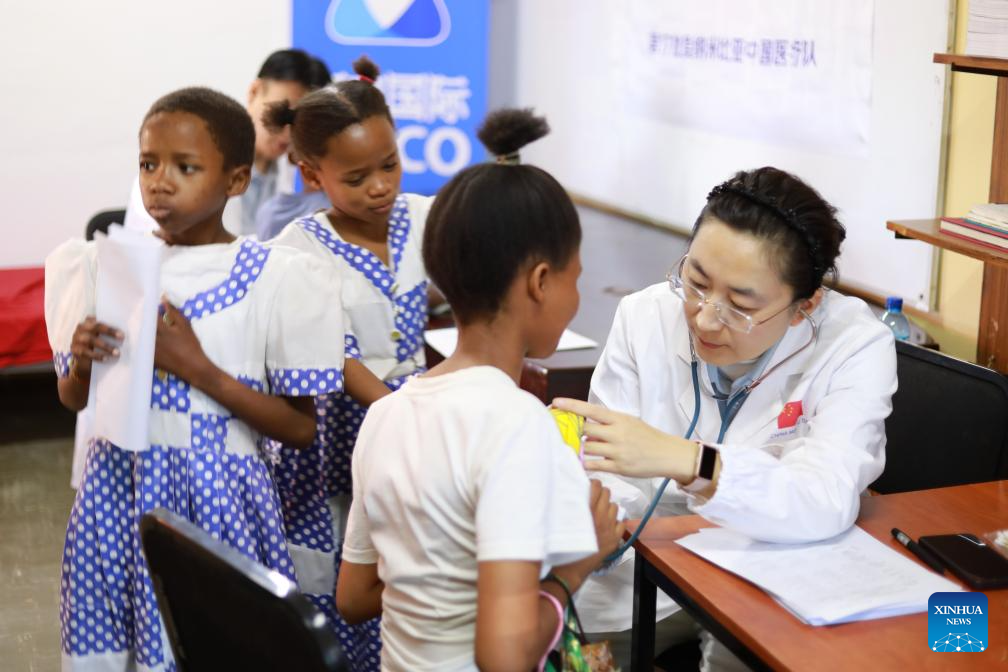
Guan Hao, leader of the 17th Chinese medical team in Namibia, gives a health check to a child at the SOS Children's Villages in Windhoek, Namibia, June 13, 2026. (Xinhua/Lin Jing)
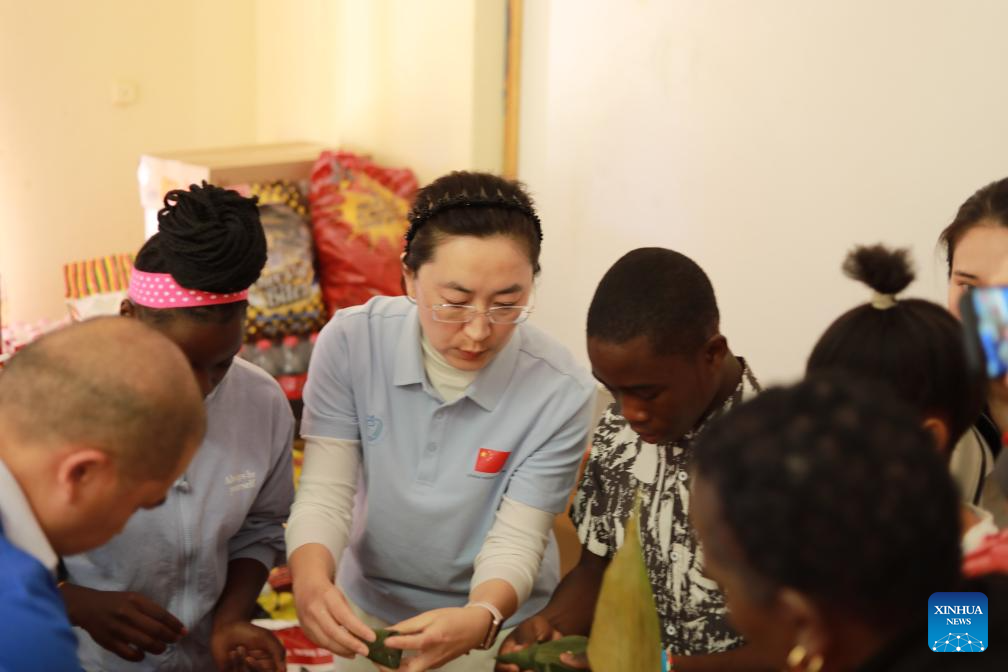
People learn to make zongzi, a traditional Chinese food to mark the Chinese Dragon Boat Festival, at the SOS Children's Villages in Windhoek, Namibia, June 13, 2026. (Xinhua/Lin Jing)
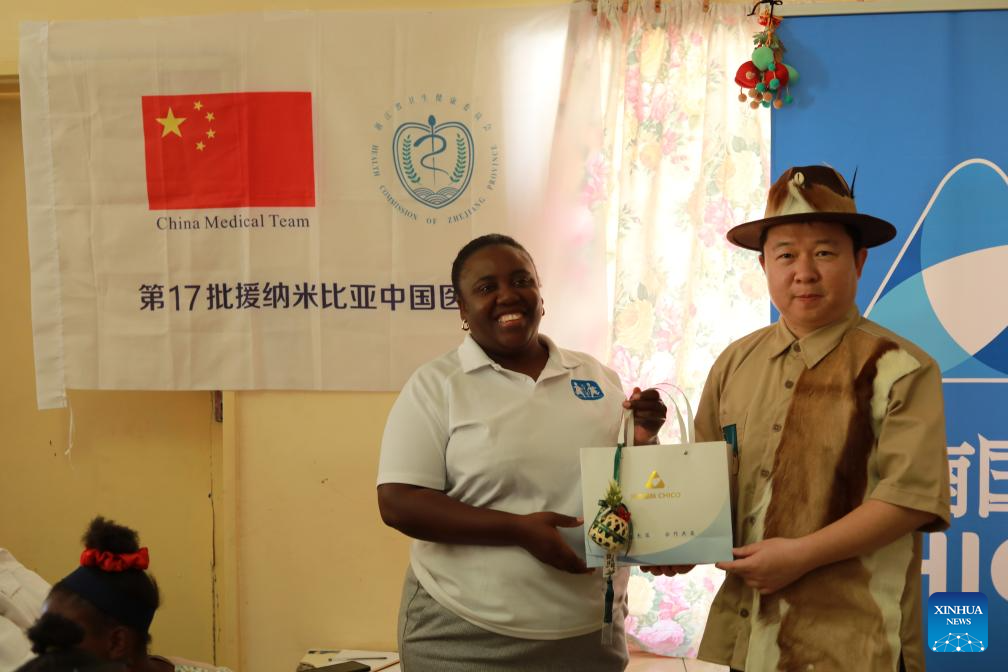
Cui Yunke (R), managing director of the China Henan International Cooperation Group (CHICO) in Namibia, presents Chinese Dragon Boat Festival gifts to Julieta Ferreira, national director of SOS Children's Villages Namibia, in Windhoek, Namibia, June 13, 2026. (Xinhua/Lin Jing)