
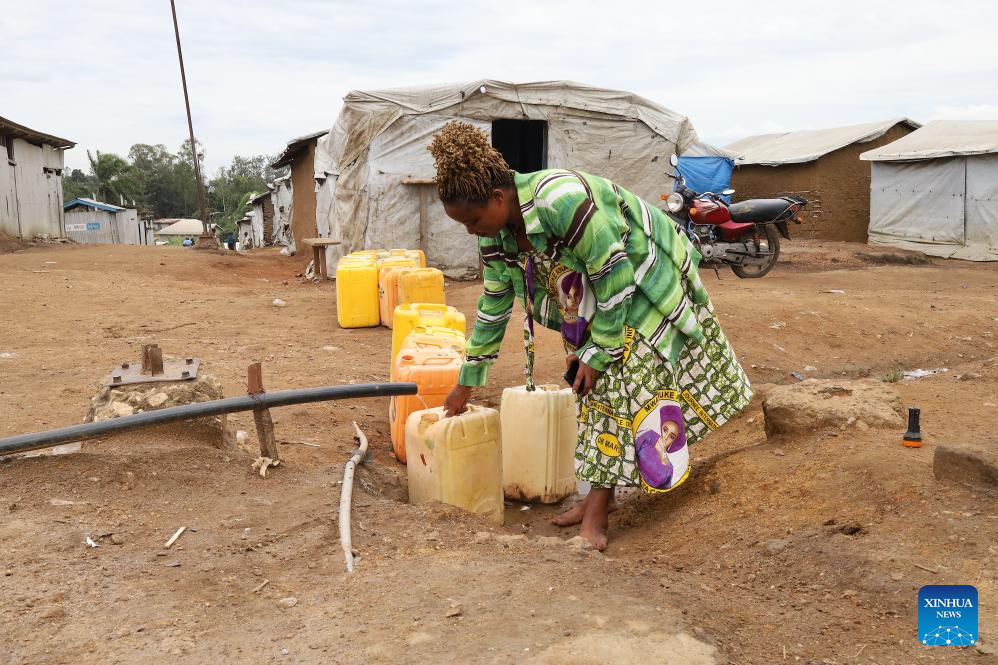
A woman fetches water from a tap in the Kigonze camp for internally displaced people (IDP) on the outskirts of Bunia, Ituri Province, the Democratic Republic of the Congo, June 9, 2026. (Xinhua)
KINSHASA, June 12 (Xinhua) -- At the Kigonze camp for displaced people on the outskirts of Bunia, the capital of Ituri Province in eastern Democratic Republic of the Congo (DRC), the daily struggle against Ebola begins with something as basic as water.
Since early morning, Furha Jeannette, a displaced mother of four, had been waiting at a water point alongside other women and children. The taps were dry. Rows of yellow jerrycans lined up beside them remained empty after hours of waiting.
"You see how we live here," she said. "Since 6 o'clock in the morning, we have not even found one jerrycan of water. There is no water. We do not know how to wash our hands. The taps are dry."
Bunia is one of the epicenters of the Ebola outbreak, which has so far infected 676 people and killed 136. Response has been hampered by uncertainty surrounding the initial cases, the absence of an approved vaccine for the Bundibugyo strain, community mistrust, and persistent insecurity.
In Kigonze, those challenges are compounded by overcrowded shelters, chronic water shortages, and poor sanitation.
Local media, citing camp officials, estimate that at least 11,700 people live in the camp, spread across about 2,600 households, though local sources say the actual population may be significantly higher.
According to Nzodjo Lusi Etienne, head of the camp, Kigonze has not recorded any confirmed Ebola cases. However, as the outbreak spreads across Ituri and neighboring provinces, the camp's living conditions have made prevention an increasingly urgent concern.
"Here we have no Ebola case. But our situation is complicated." Etienne said.
Etienne now spends most of the day walking through the camp carrying a megaphone, urging residents to remain vigilant. His voice echoes along narrow pathways lined with makeshift shelters, where families live in cramped conditions and seasonal rains frequently turn the ground into mud.
"When we heard the information about Ebola, we started raising awareness so that we would not be contaminated by this virus," he said through the speaker. "Everyone must wash their hands regularly and keep a distance."
Across the camp, shelters were patched together with worn tarpaulins and pieces of wood. Residents say rainwater often seeps into their homes, while many latrines are damaged, overflowing, or unusable. Wastewater flows close to living areas, heightening fears of disease transmission.
Standing outside her shelter, Bi Kanza Caudine, a displaced mother of seven, pointed to the muddy ground surrounding her home.
"Look at where we live. How can we avoid disease in these conditions?" she said. "When it rains, water enters the house and turns everything into mud."
She said many shelters needed urgent rehabilitation. "They could help us reinforce these shelters or give us the means to build others," she said. "This situation has lasted too long, and it increases the risk of contamination."
For Gerare Mbocho, a displaced father of six, sanitation remains the camp's most pressing challenge.
"For the moment, the big problem here is our toilets. They are in bad condition," he said. "Our hygiene facilities should be improved to protect us from Ebola."
The DRC government declared the Ebola outbreak on May 15 after laboratory tests confirmed cases of Ebola virus disease caused by the Bundibugyo strain in Ituri Province. Since then, the virus has spread across health zones in Ituri, North Kivu, and South Kivu, regions already burdened by years of armed conflict, displacement, and recurring disease outbreaks.
The situation in Kigonze reflects broader vulnerabilities in eastern DRC, where years of conflict have forced large numbers of civilians from their homes.
According to the World Food Program, 7.8 million people are internally displaced across the country, while 26.5 million face acute food insecurity.
The emergency in the DRC is one of the most complex humanitarian crises in the world, the United Nations High Commissioner for Refugees warned. ■
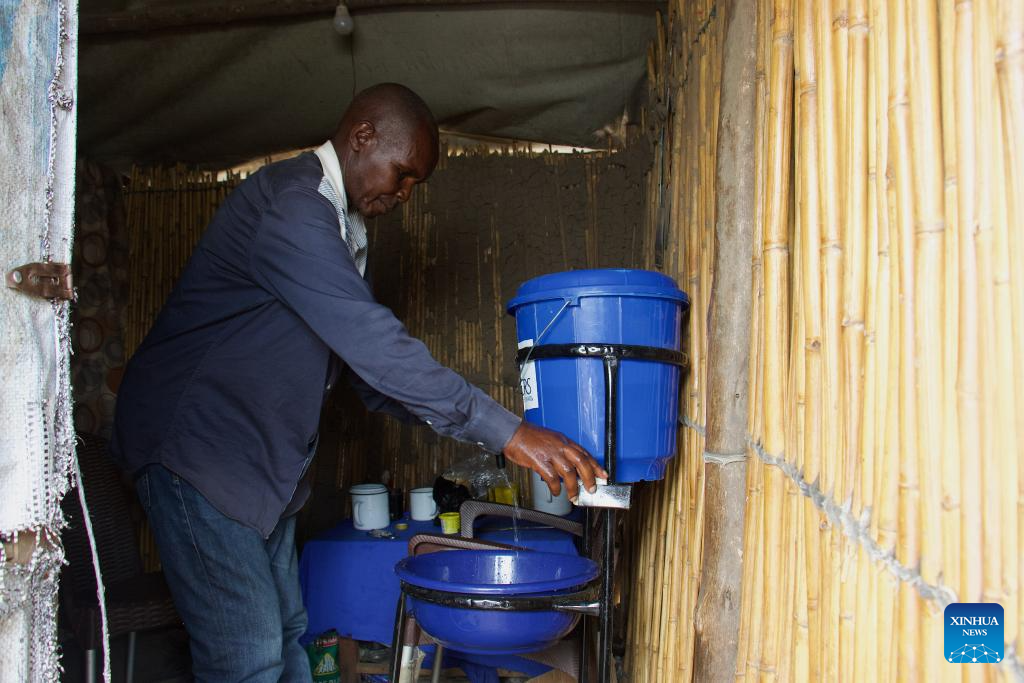
A man installs a hand-washing station in the Kigonze camp for internally displaced people (IDP) on the outskirts of Bunia, Ituri Province, the Democratic Republic of the Congo, June 9, 2026. Bunia is one of the epicenters of the Ebola outbreak, which has so far infected 676 people and killed 136. Response has been hampered by uncertainty surrounding the initial cases, the absence of an approved vaccine for the Bundibugyo strain, community mistrust, and persistent insecurity.
In Kigonze, those challenges are compounded by overcrowded shelters, chronic water shortages, and poor sanitation. (Xinhua)
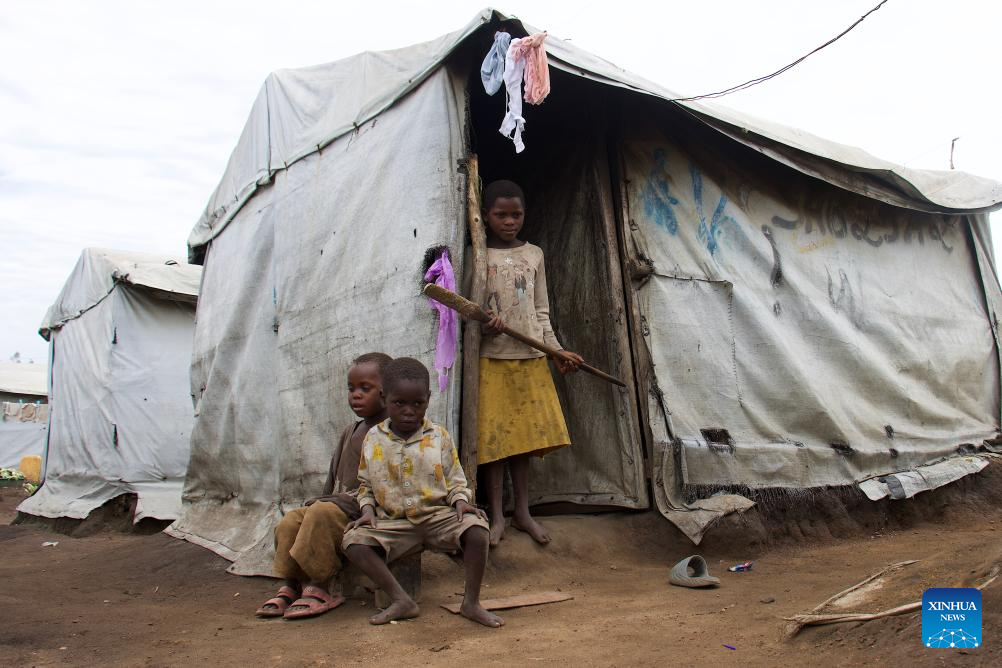
Children are seen in the Kigonze camp for internally displaced people (IDP) on the outskirts of Bunia, Ituri Province, the Democratic Republic of the Congo, June 9, 2026. Bunia is one of the epicenters of the Ebola outbreak, which has so far infected 676 people and killed 136. Response has been hampered by uncertainty surrounding the initial cases, the absence of an approved vaccine for the Bundibugyo strain, community mistrust, and persistent insecurity.
In Kigonze, those challenges are compounded by overcrowded shelters, chronic water shortages, and poor sanitation. (Xinhua)
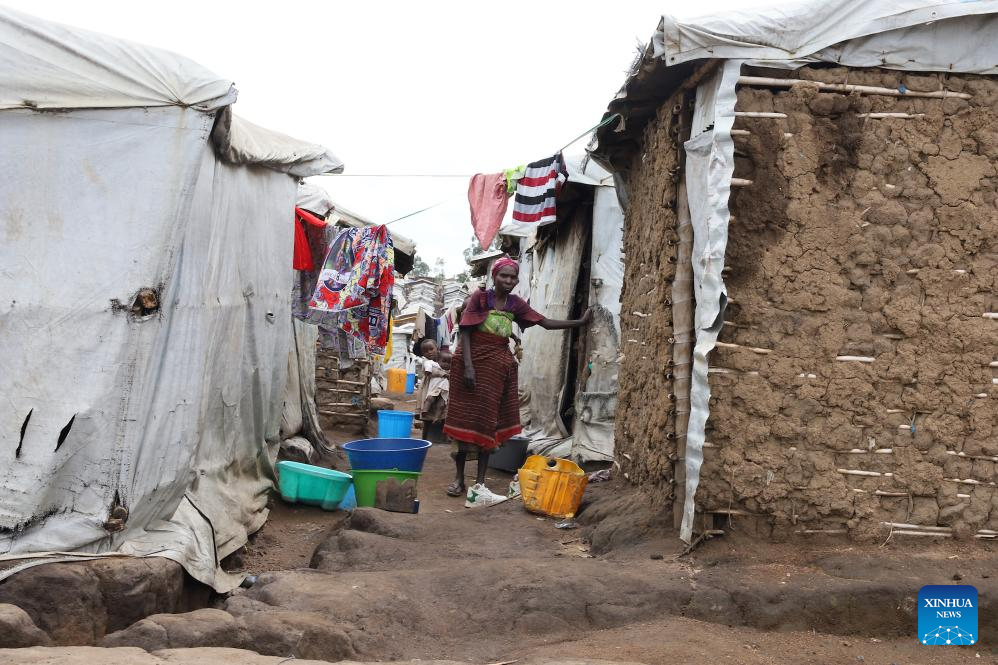
A woman and her children are seen in the Kigonze camp for internally displaced people (IDP) on the outskirts of Bunia, Ituri Province, the Democratic Republic of the Congo, June 9, 2026. Bunia is one of the epicenters of the Ebola outbreak, which has so far infected 676 people and killed 136. Response has been hampered by uncertainty surrounding the initial cases, the absence of an approved vaccine for the Bundibugyo strain, community mistrust, and persistent insecurity.
In Kigonze, those challenges are compounded by overcrowded shelters, chronic water shortages, and poor sanitation. (Xinhua)
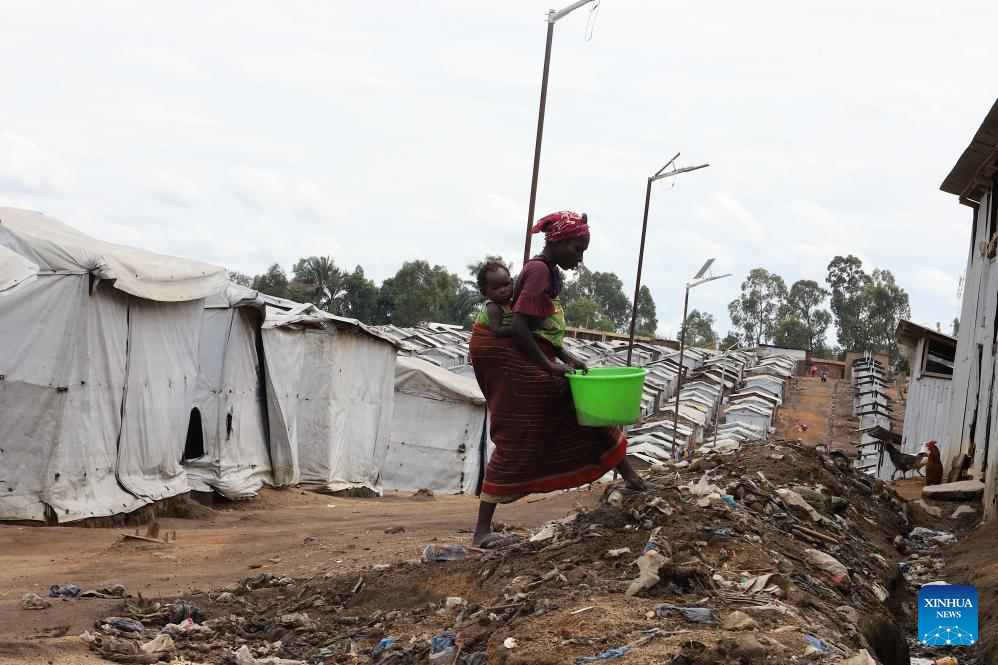
A woman and her child are seen in the Kigonze camp for internally displaced people (IDP) on the outskirts of Bunia, Ituri Province, the Democratic Republic of the Congo, June 9, 2026. Bunia is one of the epicenters of the Ebola outbreak, which has so far infected 676 people and killed 136. Response has been hampered by uncertainty surrounding the initial cases, the absence of an approved vaccine for the Bundibugyo strain, community mistrust, and persistent insecurity.
In Kigonze, those challenges are compounded by overcrowded shelters, chronic water shortages, and poor sanitation. (Xinhua)
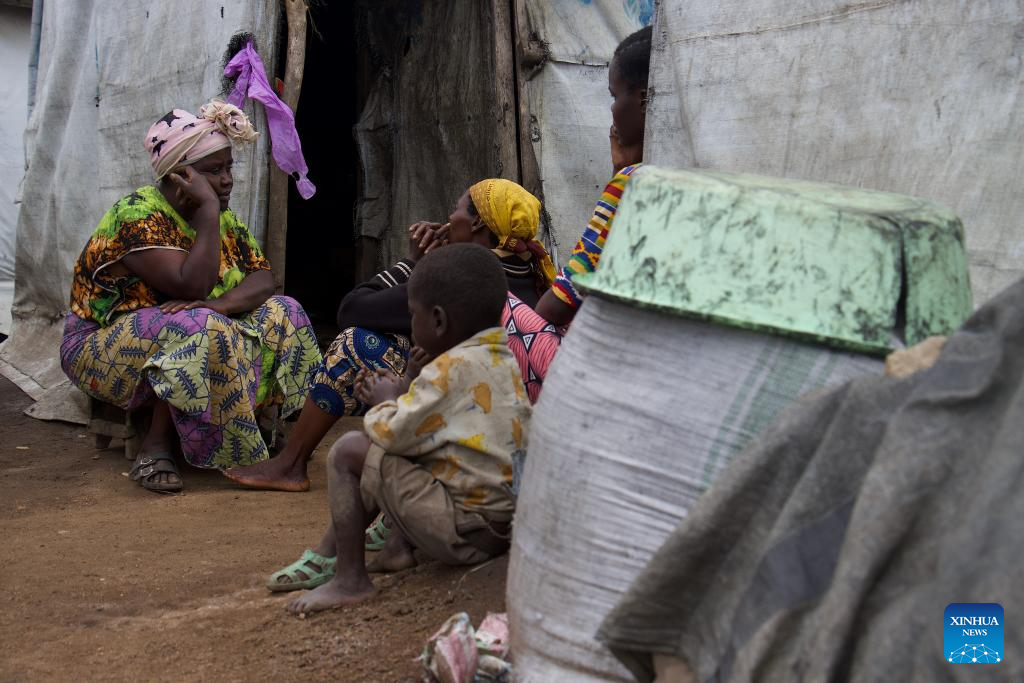
Asylum seekers rest in the Kigonze camp for internally displaced people (IDP) on the outskirts of Bunia, Ituri Province, the Democratic Republic of the Congo, June 9, 2026. Bunia is one of the epicenters of the Ebola outbreak, which has so far infected 676 people and killed 136. Response has been hampered by uncertainty surrounding the initial cases, the absence of an approved vaccine for the Bundibugyo strain, community mistrust, and persistent insecurity.
In Kigonze, those challenges are compounded by overcrowded shelters, chronic water shortages, and poor sanitation. (Xinhua)
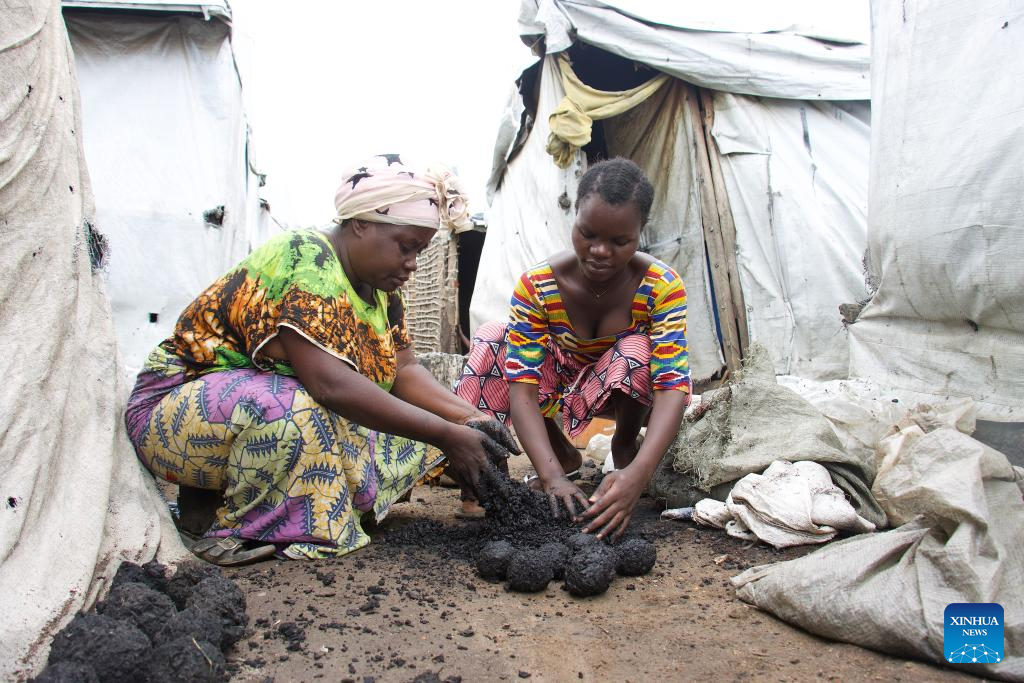
Women make fuel briquettes from charcoal dust in the Kigonze camp for internally displaced people (IDP) on the outskirts of Bunia, Ituri Province, the Democratic Republic of the Congo, June 9, 2026. Bunia is one of the epicenters of the Ebola outbreak, which has so far infected 676 people and killed 136. Response has been hampered by uncertainty surrounding the initial cases, the absence of an approved vaccine for the Bundibugyo strain, community mistrust, and persistent insecurity.
In Kigonze, those challenges are compounded by overcrowded shelters, chronic water shortages, and poor sanitation. (Xinhua)