
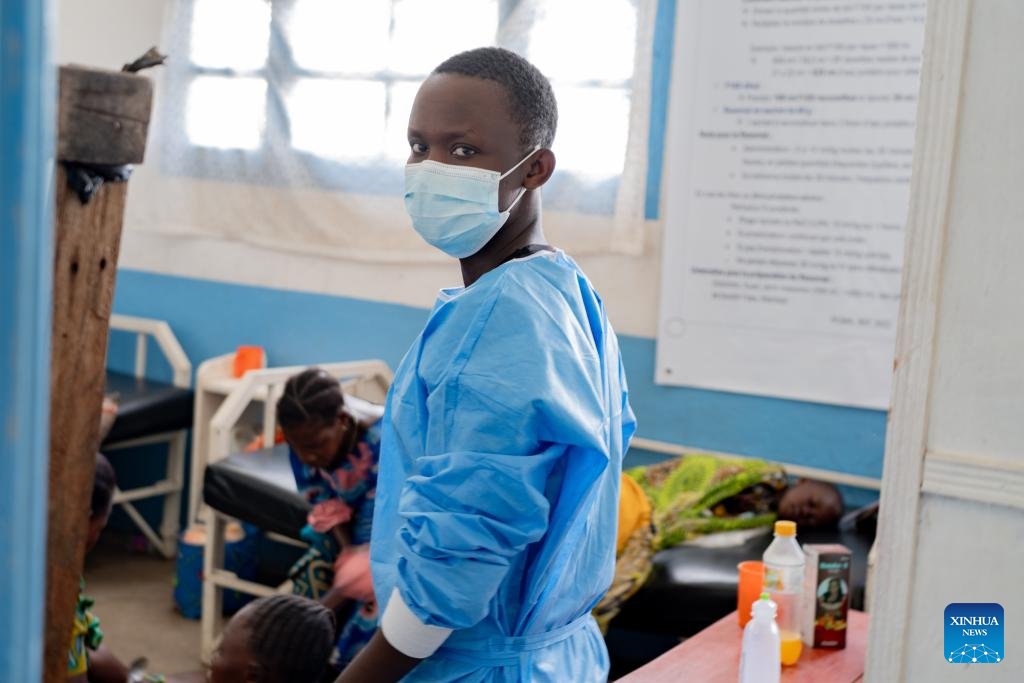
A health worker wearing a mask is seen at the general reference hospital in Rwampara in eastern Democratic Republic of the Congo, on May 16, 2026. The death toll from the latest Ebola outbreak in the Democratic Republic of the Congo (DRC) has risen to 87, the Africa Centers for Disease Control and Prevention (Africa CDC) said Saturday, warning that the outbreak is driven by the Bundibugyo strain, for which no strain-specific vaccine is currently available, and that it carries a high risk of regional spread. (Str/Xinhua)
KINSHASA, May 16 (Xinhua) -- The death toll from the latest Ebola outbreak in the Democratic Republic of the Congo (DRC) has risen to 87, the Africa Centers for Disease Control and Prevention (Africa CDC) said Saturday, warning that the outbreak is driven by the Bundibugyo strain, for which no strain-specific vaccine is currently available, and that it carries a high risk of regional spread.
A STRAIN THAT HAS NO VACCINE
A total of 336 cases, including both suspected and confirmed infections, and 87 deaths have been reported in the latest outbreak in Ituri Province in eastern DRC -- the country's 17th Ebola outbreak since 1976, said Jean Kaseya, director general of Africa CDC, during an online press briefing.
"During the Ebola outbreak, we cannot confirm all cases," Kaseya said, noting that the outbreak is caused by the Bundibugyo strain, only the third time it has been identified in history. The strain was first detected in western Uganda in 2007 and "has no confirmed strain-specific vaccine."
DRC Health Minister Roger Kamba earlier told a press briefing in Kinshasa that the strain has "a very high lethality rate which can reach 50 percent."
Ngashi Ngongo, principal advisor for program management at Africa CDC, said the Bundibugyo strain was not new, noting that previous outbreaks were recorded in Uganda in 2007 and in the DRC in 2012.
However, he said the long absence of Bundibugyo outbreaks had left research less advanced than for the Zaire strain, which has caused many more outbreaks and the development of vaccines, therapeutics, and diagnostics.
He described the re-emergence of Bundibugyo as "a wake-up call," adding that research teams had already begun planning studies to support the response.
Shanelle Hall, principal advisor to the Africa CDC director general for management and operations, said some vaccine candidates were being considered for study, with protocols still being developed, but cautioned that the process was "early stage right now."
Kamba said the Bundibugyo strain differs from the Zaire strain in some symptoms. It often begins with fever, while hemorrhagic signs appear later. Health authorities have urged residents to promptly report any suspected case involving symptoms such as fever, vomiting, fatigue, or bleeding.
According to authorities in Kinshasa, the presumed index case, a nurse in the Rwampara health zone, died after developing symptoms. However, Kaseya said the true index case has not yet been identified.
"This outbreak started in April. So far, we don't know the index case. It means we don't know how far the magnitude of this outbreak is, said Kaseya.
HIGH REGIONAL RISK
The outbreak has raised regional alarm after Uganda reported an imported Bundibugyo case from the DRC, while Africa CDC warned that cross-border movement, mining-related mobility, and weak surveillance could hamper containment.
Uganda confirmed an imported case involving a 59-year-old Congolese man who died in Kampala on Thursday and tested positive for the Bundibugyo strain.
"This is an imported case from the DRC. The country is yet to confirm a local case," said Diana Atwine, permanent secretary at Uganda's health ministry.
Africa CDC rated the latest Ebola outbreak at Grade 3, with the risk assessed as very high in the DRC, high for eastern Africa, and moderate for the continent. It cited a four-week detection delay, active community transmission in a peri-urban mining hub, weak contact tracing, infection-control gaps, and multiple health-care worker deaths.
Kamba said health teams had been deployed to trace contacts of confirmed cases and contain the disease in Ituri, neighboring provinces, and border areas.
"This is a disease transmitted from human to human. The affected health zone of Mongwalu is a commercial area marked by intense mobility, exposing North Kivu, Tshopo, Uganda, and South Sudan," he said.
Ngongo said it was too early to determine how fast the outbreak was spreading or multiplying, citing weak surveillance and contact tracing.
"Once we get good surveillance data," he said, health authorities would be able to calculate the rate at which cases were increasing and the outbreak's doubling time.
"For now, we are not recommending countries to have tougher measures in place," Kaseya said, adding that Africa CDC was instead urging countries to strengthen public health measures such as surveillance, contact tracing, infection prevention and control, risk communication, and cross-border coordination.
The Ebola virus is highly contagious and can cause symptoms including fever, vomiting, diarrhea, generalized pain or malaise, and, in severe cases, internal and external bleeding. According to the World Health Organization, Ebola fatality rates vary, depending on the viral subtype. ■
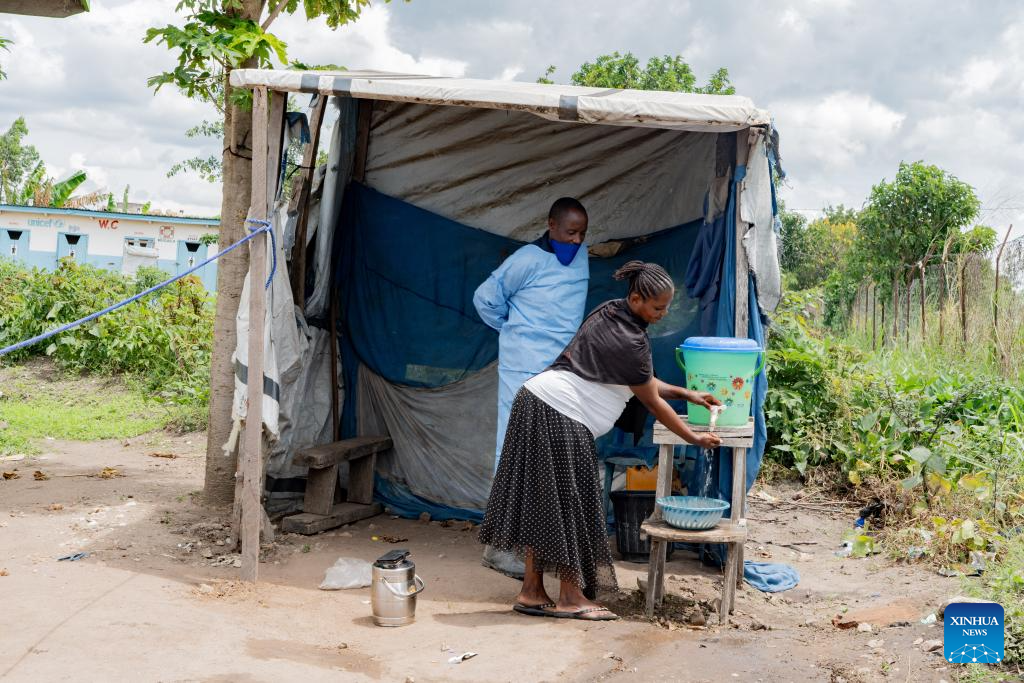
A health worker instructs a local resident to wash hands at the general reference hospital in Rwampara in eastern Democratic Republic of the Congo, on May 16, 2026. The death toll from the latest Ebola outbreak in the Democratic Republic of the Congo (DRC) has risen to 87, the Africa Centers for Disease Control and Prevention (Africa CDC) said Saturday, warning that the outbreak is driven by the Bundibugyo strain, for which no strain-specific vaccine is currently available, and that it carries a high risk of regional spread. (Str/Xinhua)
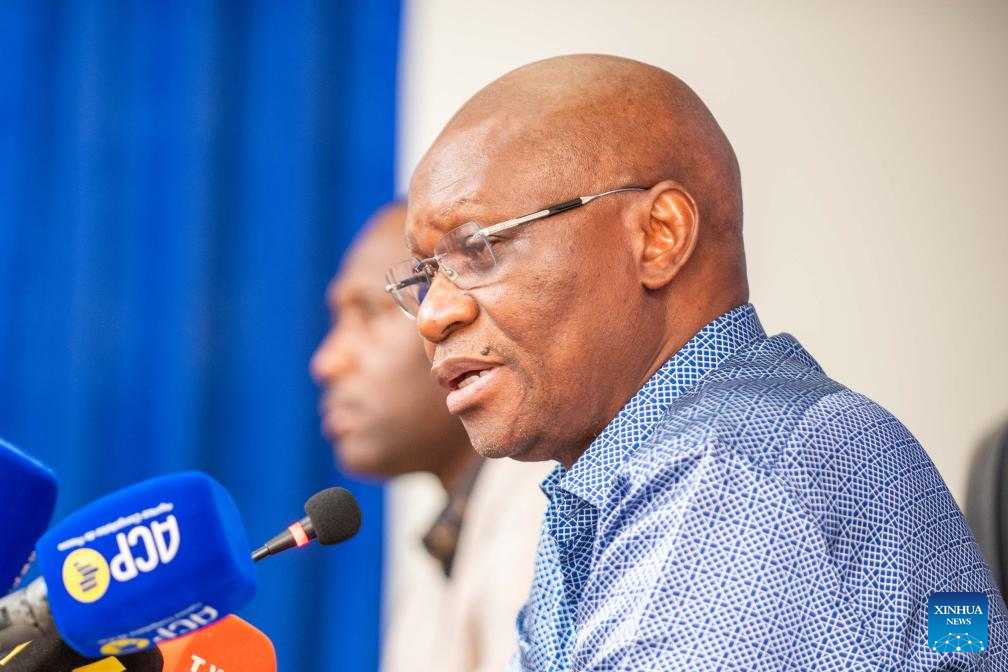
Roger Kamba, health minister of the Democratic Republic of the Congo (DRC), speaks at a press briefing on the latest Ebola outbreak in Ituri Province in eastern DRC, May 16, 2026. (Str/Xinhua)