
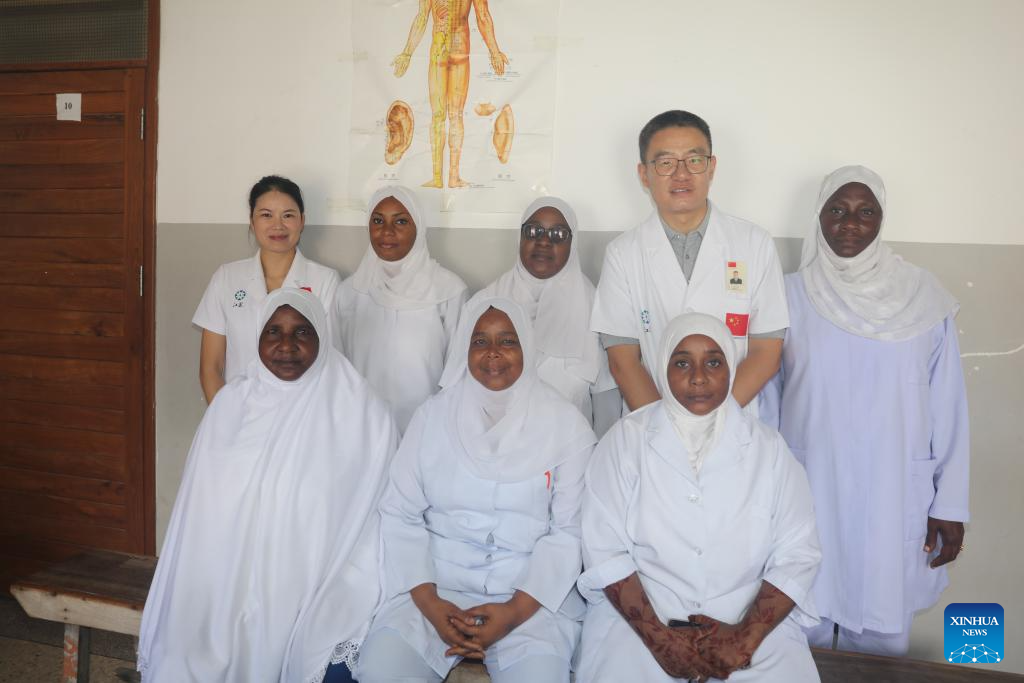
Two doctors with the 35th Chinese medical team to Zanzibar pose for a group photo with local nurses at Mnazi Mmoja Hospital in Zanzibar, Tanzania, May 12, 2026. (The 35th Chinese medical team to Zanzibar/Handout via Xinhua)
by Xinhua writers Hua Hongli, Lin Guangyao and Lucas Liganga
ZANZIBAR, Tanzania, May 13 (Xinhua) -- On a rainy morning, 35-year-old fisherman Ali Haji Nassor trudged into the acupuncture clinic at Mnazi Mmoja Hospital, hoping for relief from the back and neck pain that had troubled him for more than a decade.
The father of three struggled to continue his daily fishing work as the pain gradually worsened over the years. Simple tasks such as lifting fishing nets or rowing his boat became increasingly difficult.
But less than 30 minutes after receiving acupuncture treatment from doctors with the 35th Chinese medical team to Zanzibar, Nassor said he felt a sense of relief.
"I have no proper words to thank the Chinese doctors," he said with a smile after the treatment session. "They treated me using acupuncture, and I could not believe the pain was relieved."
Mnazi Mmoja Hospital is the region's main public healthcare facility, where some members of the Chinese medical team are based.
Nassor sought treatment at the hospital after a neighbor encouraged him to visit the acupuncture clinic, with the traditional Chinese medical technique increasingly popular among locals.
Inside the clinic, Tanzanian nurse Muhaymina Abdalla Salim worked alongside successive Chinese medical teams for more than nine years. She said that the experience has improved both her professional skills and her outlook on healthcare.
"I have already become an expert in providing this Chinese treatment," Salim said proudly. "The Chinese doctors who come every year teach us patiently and guide us in serving patients through traditional Chinese medicine."
She recalled the journey of mastering the complex techniques of acupuncture, including identifying pressure points and tailoring treatment to each patient's condition.
"They teach us how to understand the points on the body and how to treat different problems," she said. "Their cooperation is very good, and I enjoy working with them both inside and outside the hospital. Patients enjoy their presence very much."
Bao Zengtao, head of the medical team, said growing local demand for acupuncture and rehabilitation services prompted the team to send two specialists in traditional Chinese medicine this year to better align with local needs and improve service delivery.
One reason traditional Chinese medicine has gained acceptance in Zanzibar is its affordability and accessibility, he said. "It consumes very few resources, causes minimal harm and matches local economic conditions."
Bao also expressed appreciation for the strong support provided by local medical staff, noting that their cooperation has been essential in ensuring the smooth delivery of traditional Chinese medicine services.
"Local doctors and nurses have helped us a lot, not only in our daily work but also in bridging language and cultural gaps," he said. "Their dedication and willingness to learn have made it much easier for us to introduce and expand acupuncture and other traditional Chinese treatments here."
The acupuncture clinics have gradually taken root in Zanzibar, offering an alternative form of treatment that many residents now warmly embrace.
For Nassor, the fisherman from Nungwi, the results were immediate. As rain continued to fall outside the hospital building, he slowly rotated his neck and stretched his back, movements that had once caused sharp pain.
"I feel much better now," he said. "I did not expect such a change in just one visit." ■
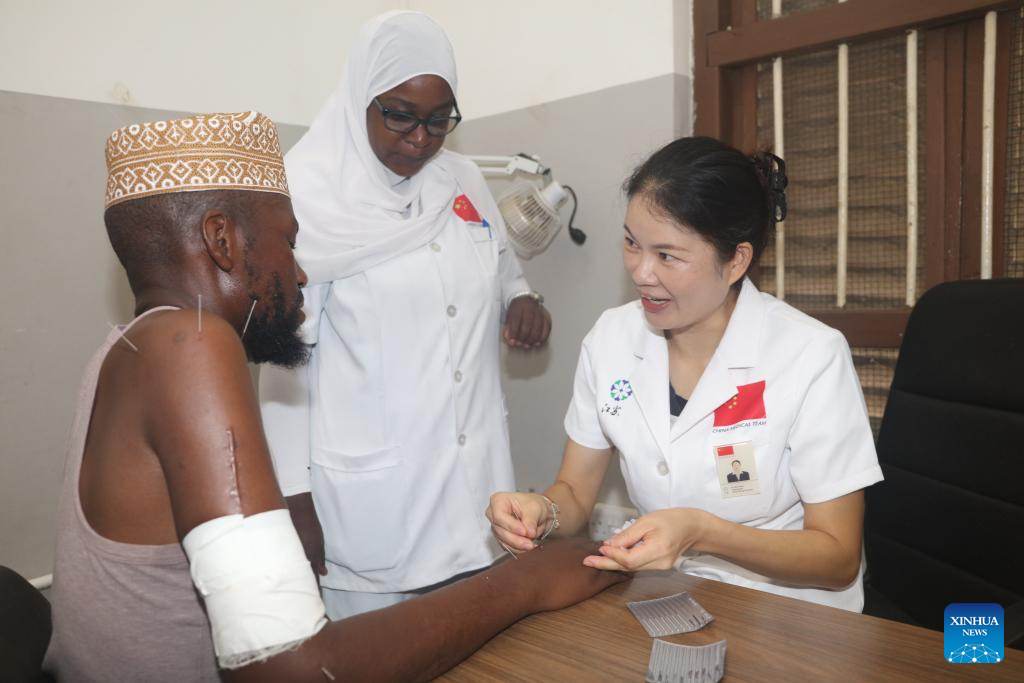
A doctor with the 35th Chinese medical team to Zanzibar (R) performs acupuncture treatment on a patient at Mnazi Mmoja Hospital in Zanzibar, Tanzania, May 12, 2026. (The 35th Chinese medical team to Zanzibar/Handout via Xinhua)
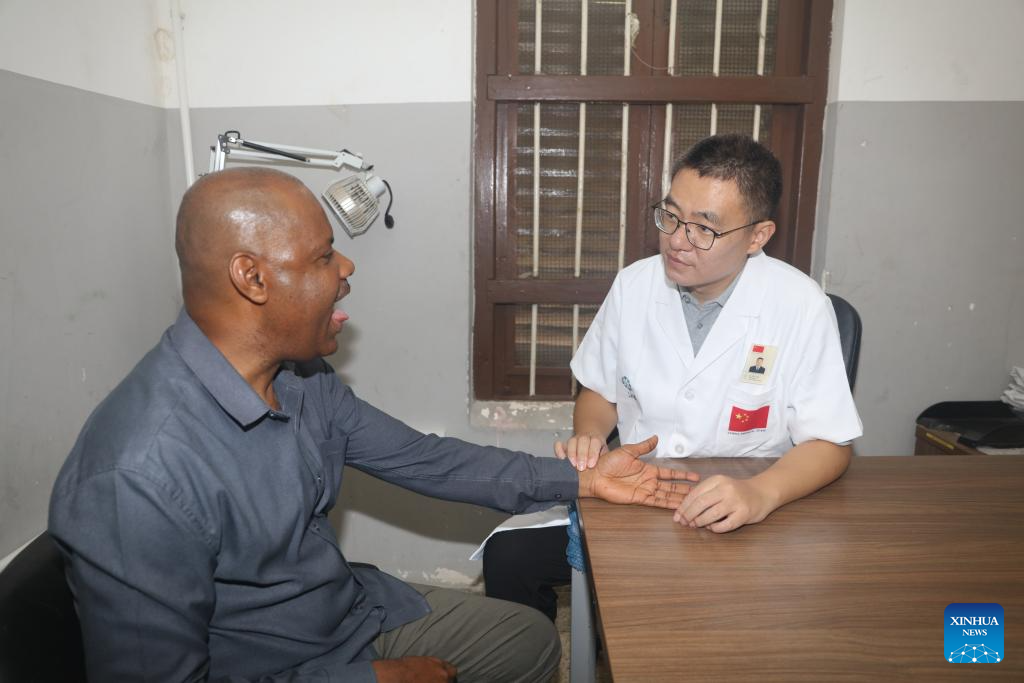
A doctor with the 35th Chinese medical team to Zanzibar (R) consults a patient at Mnazi Mmoja Hospital in Zanzibar, Tanzania, May 12, 2026. (The 35th Chinese medical team to Zanzibar/Handout via Xinhua)
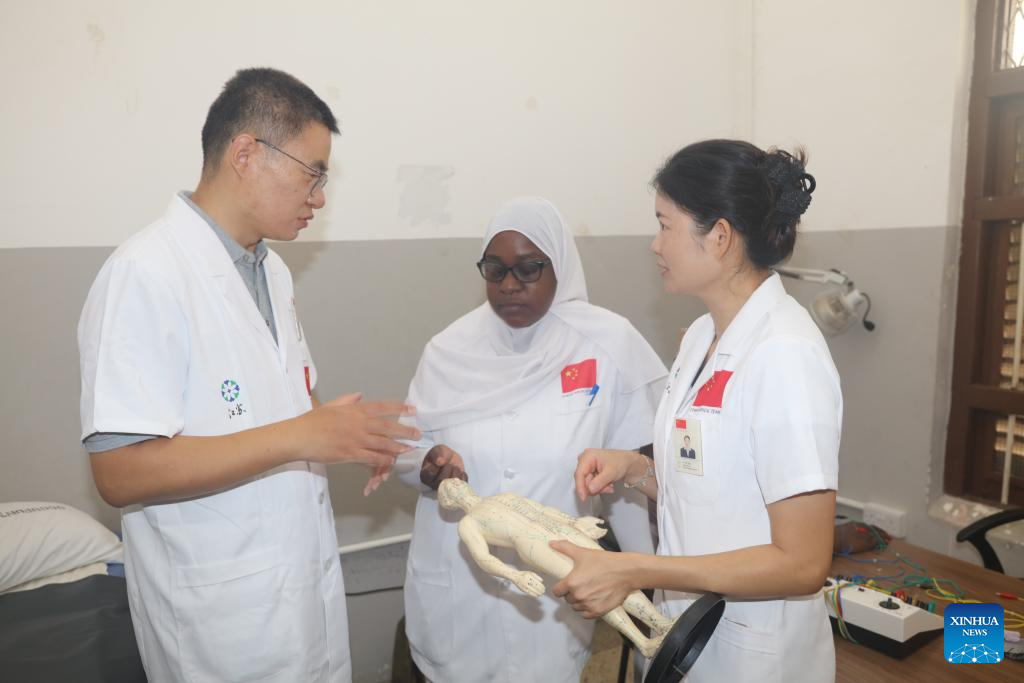
Two doctors with the 35th Chinese medical team to Zanzibar communicate with a local nurse (C) while demonstrating acupuncture techniques at Mnazi Mmoja Hospital in Zanzibar, Tanzania, May 12, 2026. (The 35th Chinese medical team to Zanzibar/Handout via Xinhua)