
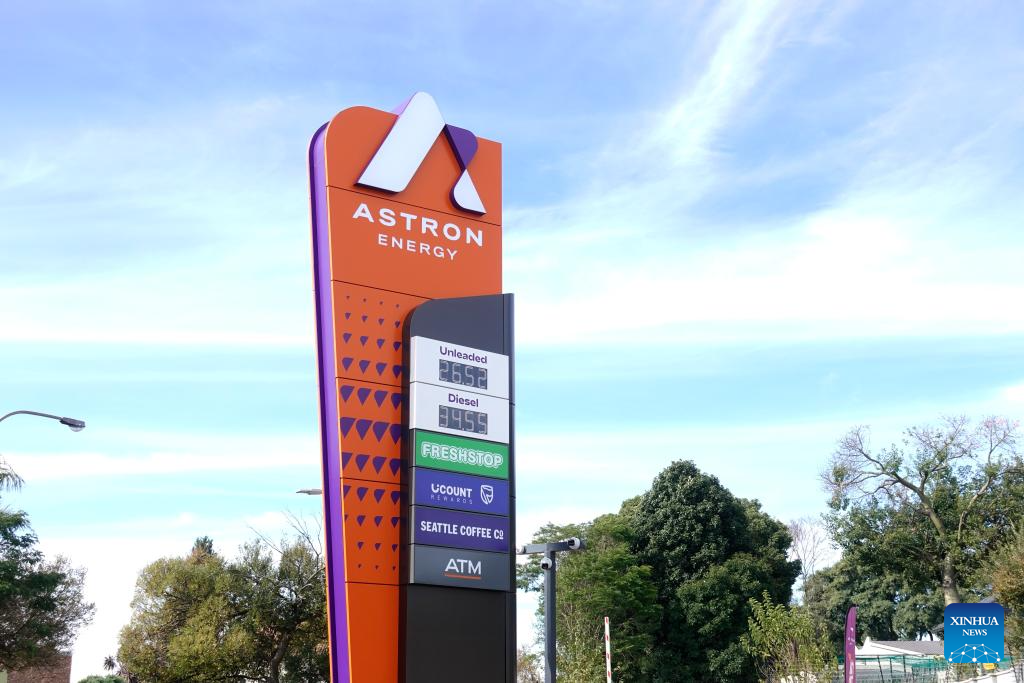
Gas prices are displayed on an outdoor sign at a petrol station in Johannesburg, South Africa, May 9, 2026. Taxi operators in several parts of the country began implementing new fares this month, with increases ranging from 2 rand (about 0.12 U.S. dollars) to 6 rand on local routes and up to 13 rand on some long-distance trips. The fare adjustments followed another fuel price increase that took effect on Wednesday, as higher international oil prices, global supply disruptions, and a weaker rand continued to push up petrol and diesel costs in South Africa. (Xinhua/Chen Wei)
by Ntandoyenkosi Ncube
JOHANNESBURG, May 9 (Xinhua) -- Long queues formed early mornings at the busy Faraday Taxi Rank in Johannesburg's central business district as commuters grappled with another increase in minibus taxi fares, driven largely by rising fuel prices.
"It's like I'm now working for transport, almost 75 percent of my salary is to transport," Ndumiseni Ndhela said while waiting for a taxi at the rank.
For millions of South Africans like Ndhela who rely on taxis daily, the latest fare hikes are adding pressure to already strained household budgets amid broader cost-of-living challenges.
Taxi operators in several parts of the country began implementing new fares this month, with increases ranging from 2 rand (about 0.12 U.S. dollars) to 6 rand on local routes and up to 13 rand on some long-distance trips.
The fare adjustments followed another fuel price increase that took effect on Wednesday, as higher international oil prices, global supply disruptions, and a weaker rand continued to push up petrol and diesel costs in South Africa.
South Africa's Department of Mineral and Petroleum Resources announced on Monday that petrol prices would rise by 3.27 rand per liter and diesel would increase by 6.19 rand. On March 31, the department confirmed the first round of rise in fuel prices -- petrol prices rose by 3.06 rand per liter and diesel by between 7.37 rand and 7.51 rand per liter from April 1.
Expressing the frustration and anxiety at Noord Taxi Rank in downtown Johannesburg, 28-year-old retail worker Thandiwe Manomano, who commutes daily between Soweto and Johannesburg's city center, told Xinhua: "I already spend almost a quarter of my salary on transport. Now I have to pay more while food and electricity prices are also rising."
Industry groups say fuel remains one of the largest operating expenses for taxi owners, with the latest increases making it difficult for operators to absorb rising costs.
"The taxi industry has historically adjusted fares whenever fuel costs rise sharply," a member of the Johannesburg Midrand Tembisa Taxi Association, who declined to be named, told Xinhua.
South Africa's minibus taxi industry carries an estimated 15 million passengers daily and accounts for nearly 70 percent of public transport trips nationwide, particularly in townships and low-income communities where alternative transport options remain limited.
"We understand the pain commuters are going through, but operators are also under severe pressure. Fuel is one of our biggest expenses, and when diesel and petrol prices go up, it directly affects our business," a member of the United Taxi Association Front, who requested to be anonymous, told Xinhua.
At Bara Taxi Rank in Soweto, university student Siphesihle Mokoena said the fare hikes could affect his studies.
"My parents are already struggling to pay my fees and accommodation, and now my transport money has increased too," he said, adding that sometimes he has to skip classes because he couldn't afford the fare.
For Agnes Mhundwa, who takes two taxis daily from Rosettenville to Kempton Park for work, the issue has become part of a broader struggle with rising living costs.
"We don't have a choice," she said while waiting for the taxi. "We must travel to work, but every month life becomes more expensive." ■
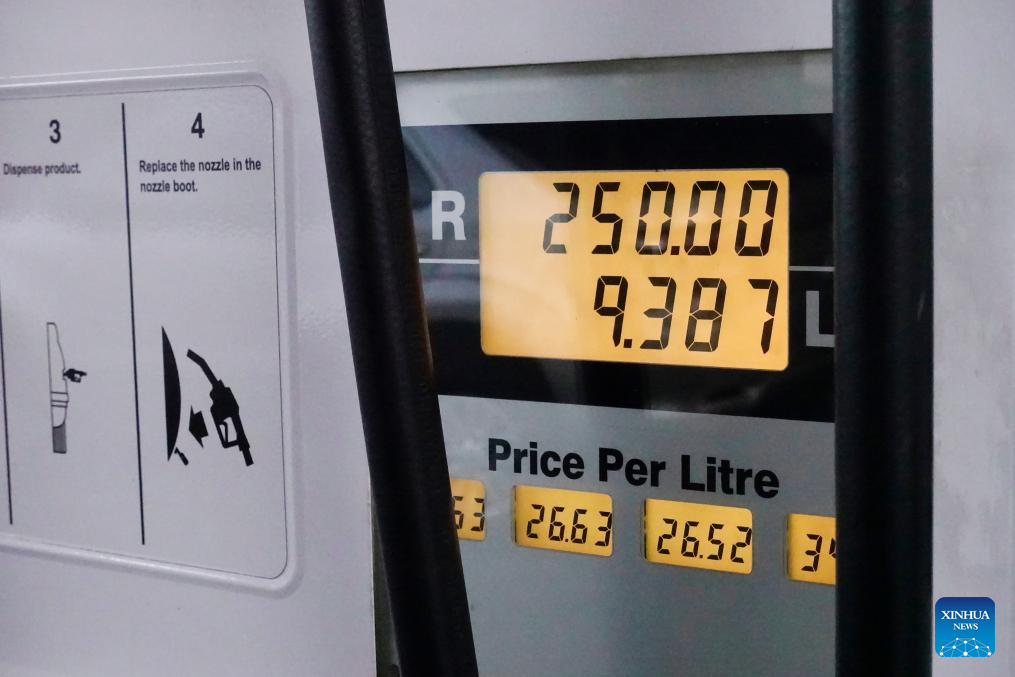
Prices are displayed on a fuel pump screen at a petrol station in Johannesburg, South Africa, May 9, 2026. Taxi operators in several parts of the country began implementing new fares this month, with increases ranging from 2 rand (about 0.12 U.S. dollars) to 6 rand on local routes and up to 13 rand on some long-distance trips.
The fare adjustments followed another fuel price increase that took effect on Wednesday, as higher international oil prices, global supply disruptions, and a weaker rand continued to push up petrol and diesel costs in South Africa. (Xinhua/Chen Wei)