
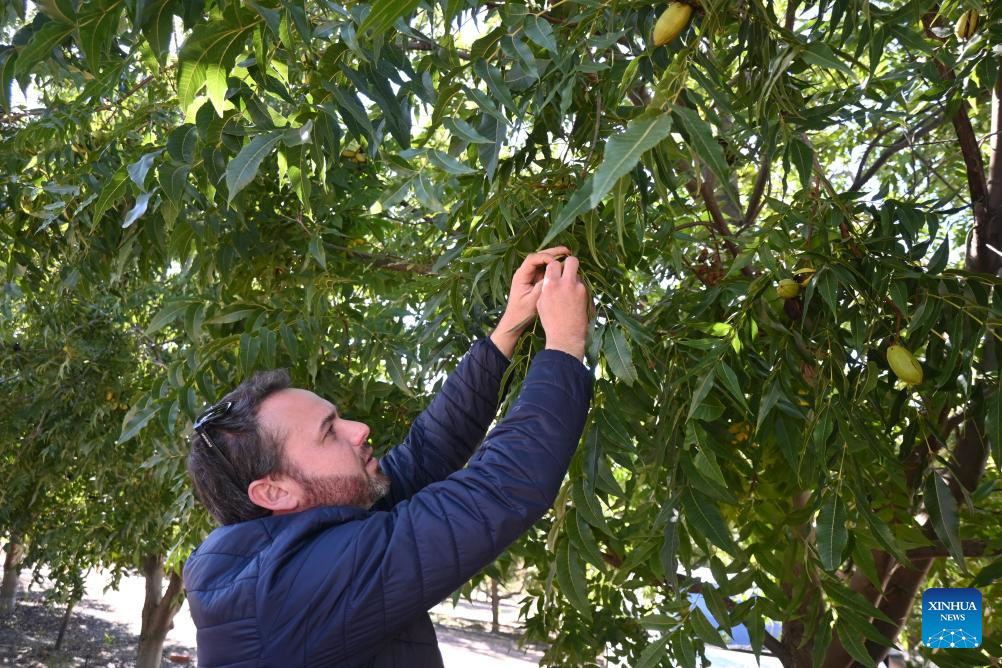
Cobus van Rensburg, general manager of the South African Pecan Nut Producers Association (SAPPA), picks a fresh pecan from a tree at Bovenland Farm in Paarl, Western Cape Province, South Africa, April 24, 2026. (Xinhua/Deng Bingxue)
by Xinhua writers Wang Lei, Wang Xiaomei and Deng Bingxue
CAPE TOWN, April 25 (Xinhua) -- China's upcoming zero-tariff measures will bring greater certainty and confidence to South Africa's pecan industry and represent a win-win policy for both countries, an industry association leader has said.
Cobus van Rensburg, general manager of the South African Pecan Nut Producers Association (SAPPA), made the remarks in an interview with Xinhua on Friday at the organization's office in Paarl, a town about 60 kilometers northeast of Cape Town.
China is set to implement a zero-tariff policy on imports from 53 African countries starting May 1. For South African pecans, the tariff is expected to drop from the current 7 percent to zero.
"We're very excited about that," Van Rensburg said, saying the policy would bring benefits across the entire value chain, improve margins and strengthen trade ties.
"It adds a lot of security, especially from a supply point of view, as well as from a demand point of view, because it creates a better bond between South Africa and China," he said.
Van Rensburg emphasized that in an increasingly uncertain global trade environment, the biggest advantage of the policy is not short-term profit but long-term predictability.
"I think it is certainty," he said. "It creates a certainty for demand in China because of the lower tariffs."
That certainty, he added, is critical for an industry characterized by long investment cycles. "A tree can live up to 200 years. You're basically planting trees for the next generation," he said.
"It will definitely give a lot of confidence going forward and then making sure that both parties can grow together."
South Africa is currently the world's third-largest pecan producer and the largest in the Southern Hemisphere. The country exports the vast majority of its pecans, with China as its dominant market.
Over 90 percent of South Africa's pecans are exported to China, "making it a very good market for us," Van Rensburg said.
According to SAPPA, South Africa exported 47,597 tons of in-shell pecans to China in 2025, accounting for 94.7 percent of total production and 99.3 percent of its in-shell pecan exports.
Exports to China began years ago but expanded rapidly from the mid-2010s. One key advantage, Van Rensburg said, is South Africa's counter-seasonal production cycle.
"We harvest from May to September, so you get fresh pecans ready for the Chinese New Year," he said, noting that this timing allows Chinese consumers to access newly harvested nuts rather than cold-stored products.
He also highlighted quality as a major competitive edge. "South Africa has the best quality pecans in the world, purely because we get a lot of sunshine," he said, adding that high kernel fill rates make the product particularly attractive to Chinese buyers.
Demand in China has grown significantly in recent years, with consumption expanding from around 40,000 tons to about 70,000 tons, according to Van Rensburg. While in-shell pecans were traditionally dominant, kernel products are gaining ground as a year-round snack and ingredient.
"We have also seen that the industry has moved into some new areas," he said, citing uses such as toppings in bubble tea and inclusion in small-pack mixed nuts popular among health-conscious and fitness-focused consumers.
Looking ahead, Van Rensburg said South Africa's pecan production is expected to continue rising. Output is projected to reach about 53,000 tons in 2026, up from roughly 50,000 tons last year, with further growth anticipated as newly planted orchards mature.
"We expect our harvest volume to grow to about 70,000 tons within the next four years," he said.
Against this backdrop, the zero-tariff policy is expected to support long-term investment and expansion.
"It gives us a lot of certainty to make sure that we do the investments, and we know that we will have a market to supply in the future," Van Rensburg said.
In response to the policy, the industry plans to deepen engagement with Chinese partners while continuing to upgrade quality and compliance.
SAPPA is encouraging investment in advanced processing technologies such as artificial intelligence and X-ray sorting to ensure top-quality exports, according to Van Rensburg.
"We'll continue building our relationships with our buyers in China and make sure we supply them top-quality product," he added.
Marketing and brand-building efforts are also being stepped up. Earlier this month, Van Rensburg led a delegation to the 19th Nuts and Dried Fruit Food Exhibition in Hefei, the capital of east China's Anhui Province, where the association promoted South African pecans and explored co-branding opportunities.
"It was a very valuable visit," he said.
Van Rensburg described China's zero-tariff initiative as a mutually beneficial policy not only for South Africa but for Africa as a whole.
"It's definitely a win-win situation," he said, adding that closer trade ties would help both sides develop together in a changing global landscape.
"We are very optimistic about the future," he said. "China is growing and developing quite quickly, so it's a massive privilege for South Africa to be part of that and to ... grow with them in the process." ■
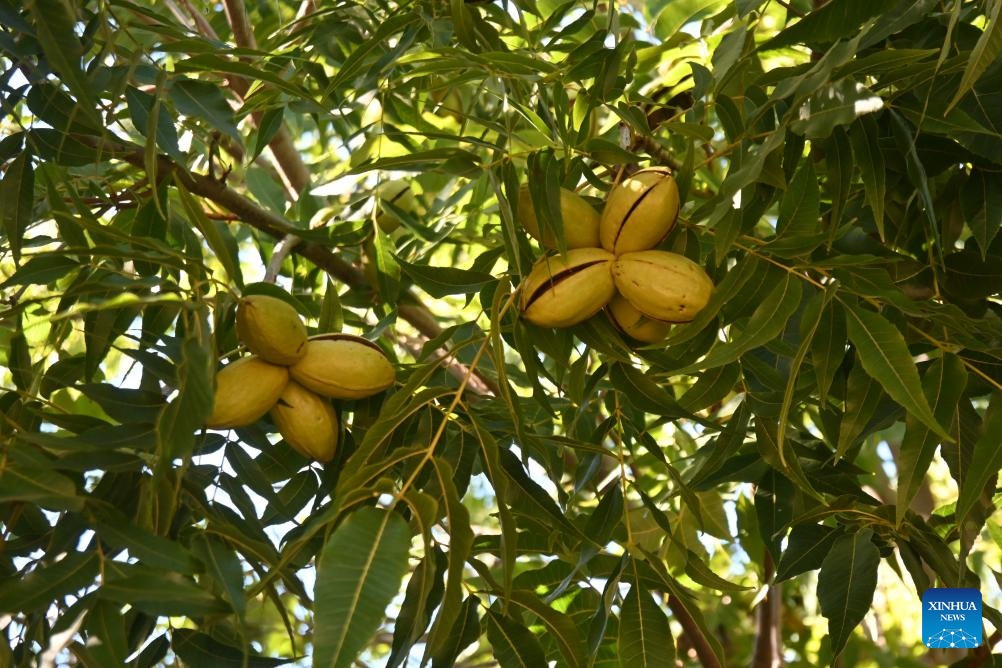
Fresh pecans are seen on a tree at Bovenland Farm in Paarl, Western Cape Province, South Africa, April 24, 2026. (Xinhua/Deng Bingxue)
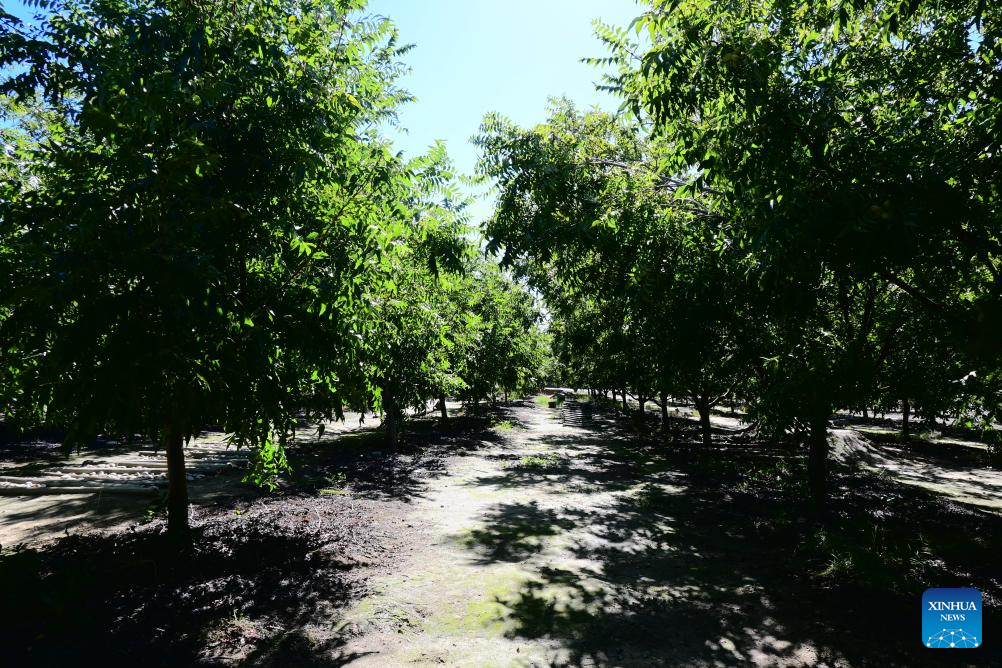
Pecan trees are seen at Bovenland Farm in Paarl, Western Cape Province, South Africa, April 24, 2026. (Xinhua/Deng Bingxue)