
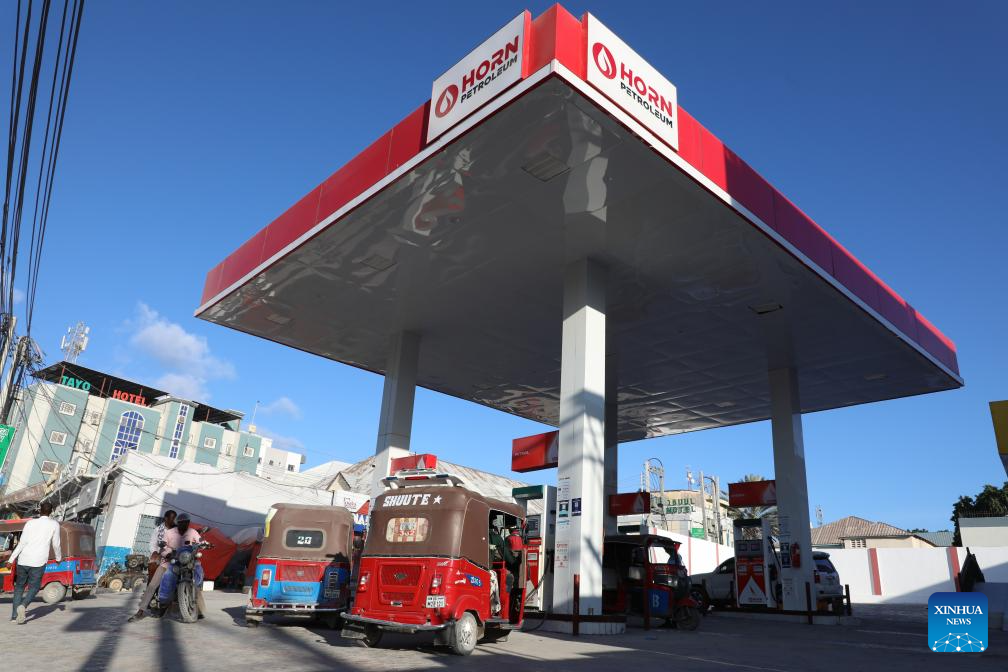
Three-wheeler drivers queue for fuel at a petrol station in Mogadishu, capital of Somalia, April 2, 2026. Since the United States and Israel launched airstrikes against Iran on Feb. 28, the conflict has pushed up international oil prices. As a result, fuel prices across Somalia have more than doubled.(Photo by Hassan Bashi/Xinhua)
MOGADISHU, April 3 (Xinhua) -- Abdulkadir Sharif pulled his tuk-tuk to the curb and scanned the street, where two similar three-wheelers sat nearby, out of fuel, their drivers leaning against the frames with nowhere to go.
"I see two to three tuk-tuks every day that have run out of fuel and are parked along the roadside. Drivers tell me that due to the lack of fuel, they cannot continue their journeys," Sharif said.
Since the United States and Israel launched airstrikes against Iran on Feb. 28, the conflict has pushed up international oil prices. As a result, fuel prices across Somalia have more than doubled.
According to Save the Children, an international aid organization, fuel prices in Mogadishu, the capital of the East African country, surged by 150 percent in March, rising from 0.6 to 1.5 U.S. dollars per liter. The spike is squeezing an industry on which tens of thousands of young Somalis depend to support their families.
With youth unemployment hovering at around 34 percent, according to the World Bank estimates, tuk-tuks have become one of the few available sources of livelihood in the Somali capital.
Many drivers do not even own their vehicles. Instead, they rent them from owners for about 15 dollars a day and keep whatever remains after covering fuel costs. That math no longer works.
Ahmed Mohamud, a tuk-tuk driver who rents his vehicle, said his daily fuel bill has doubled while his earnings have fallen sharply.
"I used to earn 15 to 20 dollars after paying fuel and rental fees, but now I make only seven to 10 dollars. I also used to spend about eight dollars on fuel for the whole day, but now it has doubled to 16 dollars for fuel alone," Mohamud said. "If this continues, I don't think I will be able to carry on."
He is not alone. Sharif said some of his fellow drivers have already left the business.
"Some of my friends who used to drive rented tuk-tuks have now quit. Fewer people are using our services, and this has affected us, but we have no choice but to be patient," he said.
The crisis has rippled beyond the drivers. Residents who once relied on tuk-tuks for daily transport said they can no longer afford the higher fares.
"I have stopped using tuk-tuks because they have become too expensive. A trip that used to cost one dollar now costs two to three dollars, and this is because of the war in the Middle East," said Hassan Mohamed, a Mogadishu resident and former regular user.
Fuel sellers, caught between frustrated drivers and a global market beyond their control, have also borne the brunt of the anger.
"Drivers complain about the prices all the time, but we do not control them. They depend on market changes," said Malin Hassan, a fuel dealer in Mogadishu.
The frustration boiled over on March 11, when hundreds of tuk-tuk drivers blocked Maka Al-Mukarama Road, a major artery leading to the presidential palace, demanding government intervention.
The protest led to the arrest of Saadia Moalim Ali, a female driver and university graduate who had turned to driving tuk-tuks after failing to secure formal employment. The case drew national attention and underscored the desperation of Somalia's young transport workers.
Somalia imports most of its food, and about 6.5 million people, nearly a third of the population, face acute food insecurity amid drought and economic strain, according to the United Nations. Rising transport costs are now feeding into food prices, further limiting access to basic goods for already struggling families.
For young Somalis like Mohamud, the tuk-tuk is more than just a job. It is proof that hard work could still put food on the table. But as fuel costs rise and passenger numbers decline, that reality is becoming increasingly harsh for many drivers. ■
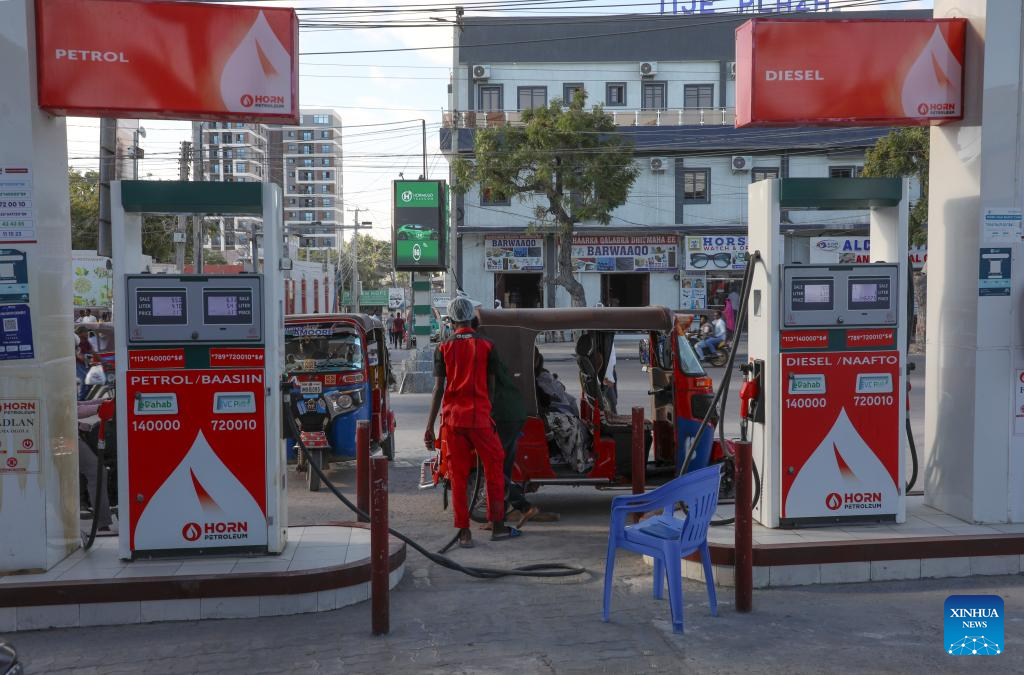
A staff refuels a three-wheeler at a petrol station in Mogadishu, capital of Somalia, April 2, 2026. Since the United States and Israel launched airstrikes against Iran on Feb. 28, the conflict has pushed up international oil prices. As a result, fuel prices across Somalia have more than doubled.(Photo by Hassan Bashi/Xinhua)
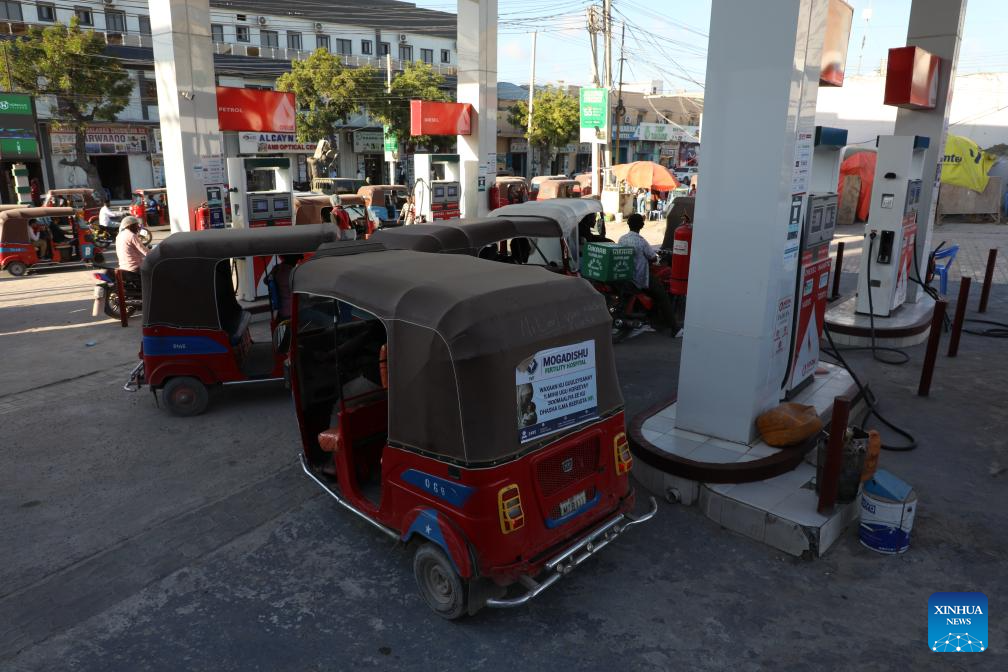
Three-wheeler drivers queue for fuel at a petrol station in Mogadishu, capital of Somalia, April 2, 2026. Since the United States and Israel launched airstrikes against Iran on Feb. 28, the conflict has pushed up international oil prices. As a result, fuel prices across Somalia have more than doubled.(Photo by Hassan Bashi/Xinhua)
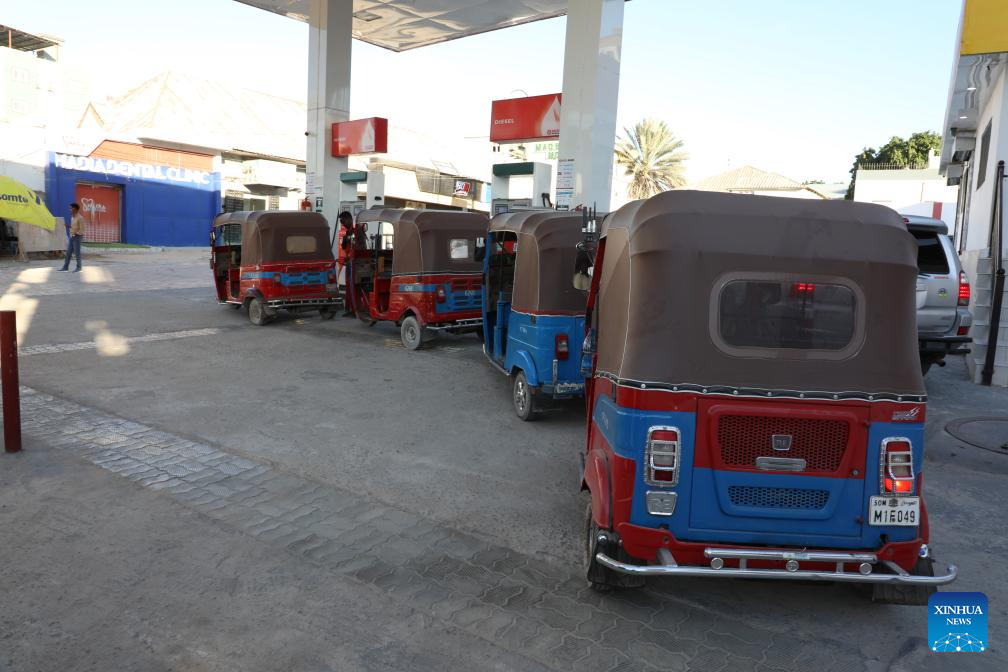
Three-wheeler drivers queue for fuel at a petrol station in Mogadishu, capital of Somalia, April 2, 2026. Since the United States and Israel launched airstrikes against Iran on Feb. 28, the conflict has pushed up international oil prices. As a result, fuel prices across Somalia have more than doubled.(Photo by Hassan Bashi/Xinhua)