
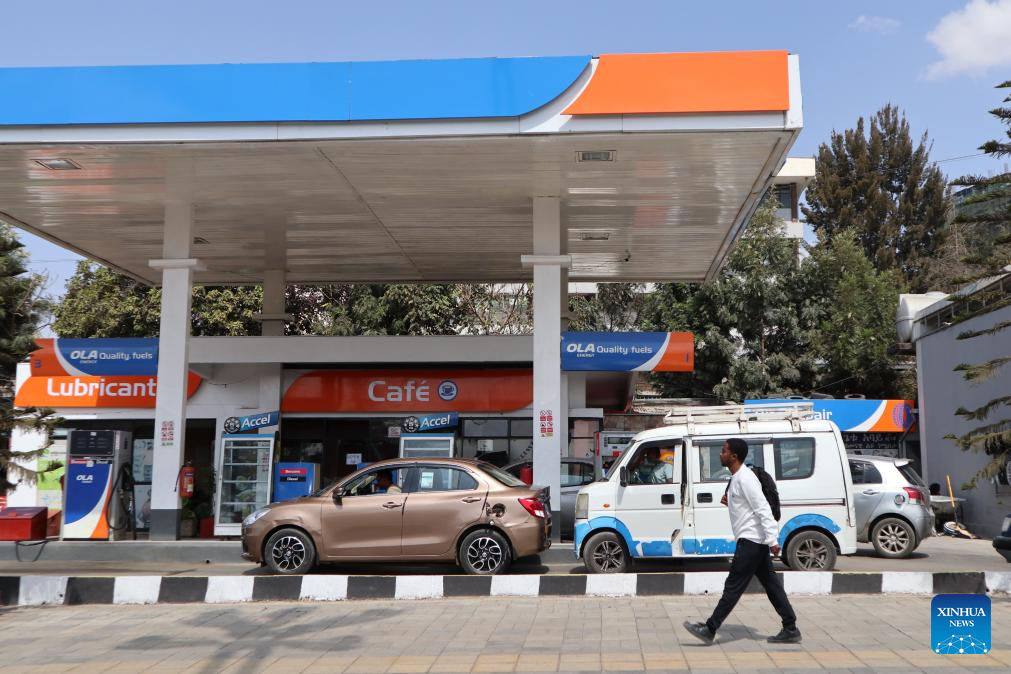
A man walks past a fuel station in Addis Ababa, the capital of Ethiopia, March 17, 2026. (Xinhua/Liu Fangqiang)
ADDIS ABABA, March 13 (Xinhua) -- Ethiopians are feeling the pinch of rising oil prices worsened by the ongoing conflict in the Middle East, which has led to an almost full closure of the Strait of Hormuz.
Tasew Tesfaye, who drives buses that cross Ethiopian cities, said soaring fuel prices impact transport services, particularly in the countryside.
He said petrol station operators are hoarding fuel products and selling them on black markets, pushing up prices.
"The problem is more widely felt in the countryside where petrol stations 'deliberately' hide fuel products or sell them at exaggerated prices," exacerbating transport and food price hikes outside major towns, Tesfaye told Xinhua.
On Wednesday, Finance Minister Ahmed Shide said the surge in fuel prices worldwide was "frightening" and urged citizens and institutions to use fuel products wisely.
The government has increased its subsidies to ensure that the fuel supply remains reliable and aligned with citizens' purchasing power, the minister told a media briefing.
The government is also carrying out additional fuel purchases to prevent a supply shortage caused by the closure of the Strait of Hormuz, he said.
In addition, Shide said a nationwide crackdown has been launched on illegal fuel trading, where petroleum products are sold outside the official supply chain.
Ethiopia, like many other East African countries, relies heavily on fuel and basic commodities transported through the Strait of Hormuz. The instability in the Strait of Hormuz, a vital, narrow waterway in the Middle East, has raised concerns among Ethiopians over higher inflation and declining household purchasing power.
The Ministry of Trade and Regional Integration recently announced higher retail fuel prices for gasoline, kerosene, diesel and jet fuel, following the conflict in the Middle East. Meanwhile, the government is making emergency purchases and releasing oil supplies from strategic reserves to address the situation.
Moges Mekonnen, an energy expert at the Ethiopian Electric Power, told Xinhua that the soaring oil prices triggered by the conflict are already putting pressure on Ethiopia's economy.
The instability in the Strait of Hormuz has already raised shipping costs and disrupted trade, directly affecting economies reliant on these routes, including Ethiopia.
"Disruptions to supply chains have delayed the arrival of essential goods and food supplies in Ethiopia and other African markets," he said.
However, Mekonnen said the consequences may not be too "severe" for Ethiopia as the country is moving away from fossil fuel-powered transport to electric vehicles.
"Large numbers of electric-powered cars are being driven in major cities in Ethiopia, and unlike before, several industries in the country use electric power to operate," he said.
The situation is a wake-up call for African governments to focus on the adoption of electric vehicles and look for alternative energy sources, mainly renewables, Mekonnen said.
In 2024, the Ethiopian government banned fossil fuel-powered vehicle imports and cut tariffs on electric models to encourage electric mobility.
Duties were reduced to 15 percent for completed electric vehicles imported into Ethiopia, 5 percent for semi-assembled units and zero for completely knocked-down kits assembled locally. ■
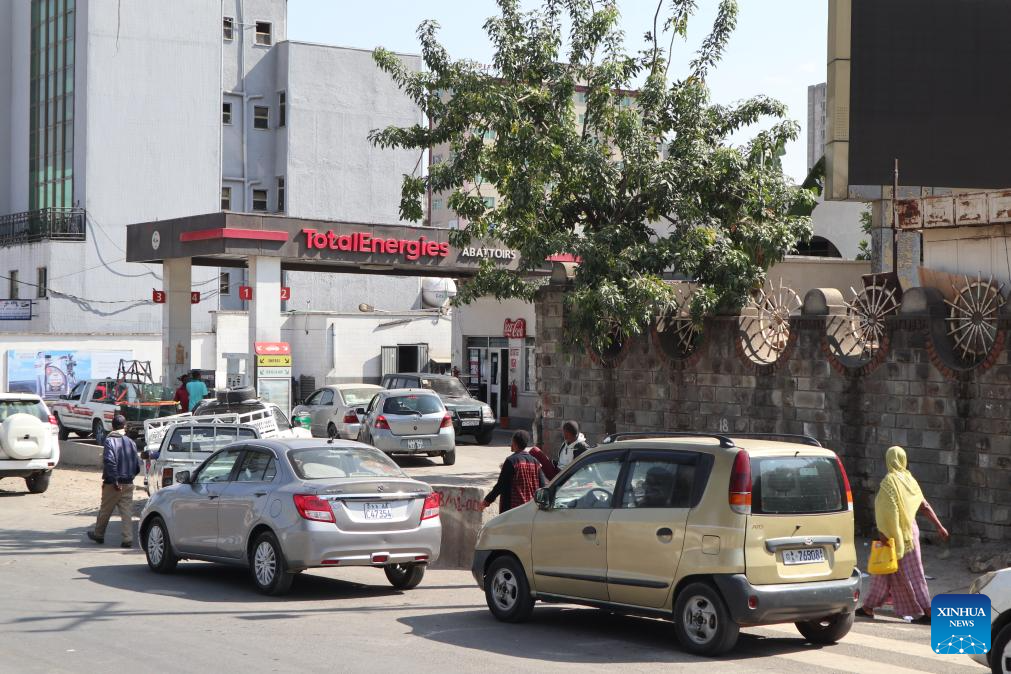
Vehicles line up outside a fuel station for refueling in Addis Ababa, the capital of Ethiopia, March 17, 2026. (Xinhua/Liu Fangqiang)
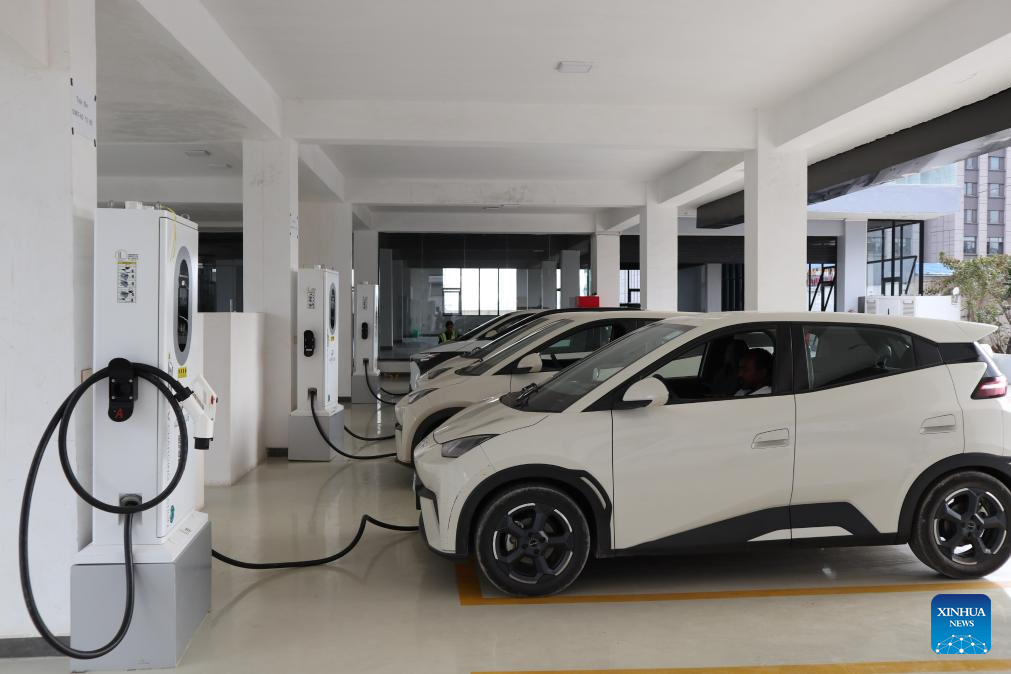
Electric vehicles charge at a power station in Addis Ababa, the capital of Ethiopia, March 16, 2026. (Xinhua/Liu Fangqiang)