
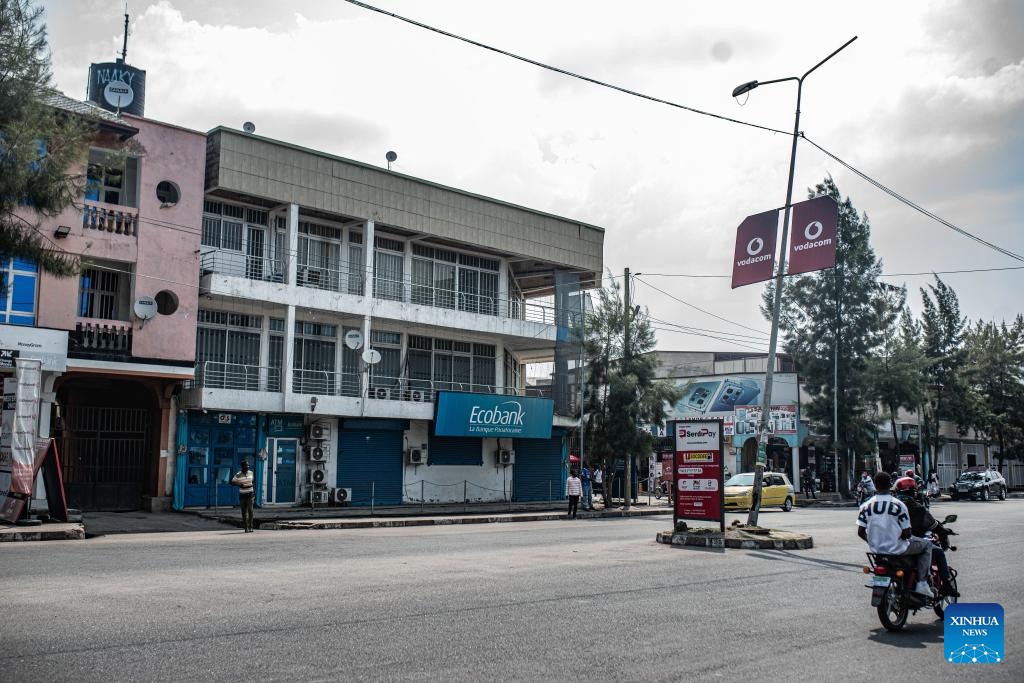
Local residents ride motorcycle past a bank in Goma, eastern Democratic Republic of the Congo (DRC), Jan. 27, 2026. (Str/Xinhua)
GOMA, DR Congo, Jan. 27 (Xinhua) -- One year after Goma, a regional urban hub in the eastern Democratic Republic of the Congo (DRC), fell to the March 23 Movement (M23) rebel group, the conflict continues to shape daily life in the region.
In the early hours of Jan. 27, 2025, M23 rebels took control of large parts of Goma, also the capital of North Kivu Province, with a population of two million, after intense fighting with government forces.
For many, the shock of that day remains vivid. Parfait Famba, a resident, recalled being awakened by the sound of heavy weapons across the city.
"Between 11:00 a.m. and noon, the situation worsened dramatically, and everyone was forced to remain locked inside their homes," he said.
"We found bodies almost everywhere. There was no way to pass. We were so afraid that we stayed indoors for almost the entire week," Famba said. "I thought we would all die."
Beyond immediate violence, the conflict shattered daily life. Prolonged closure of the airport and banks has deepened the city's economic isolation, pushing daily transactions and livelihoods to the brink of collapse.
"Business has almost come to a standstill," said Adeline Muhanzi, a downtown shopkeeper. "Without banks and regular flights, everything has become more expensive."
Traveling to the Congolese capital, Kinshasa, now requires transiting through Uganda or Rwanda on international flights -- an option financially out of reach for much of the population.
Sylvain Kasidika described the situation as a fragile calm overshadowed by deep economic hardship.
"We are suffering intensely because there is no circulation of money in the city. Almost all organizations and agencies that used to provide cash no longer function. The airport remains closed, and there are no banks," said Kasidika.
Buyana Batende, a mother of several children, said that the war immediately triggered an economic crisis in her household.
"We started lacking food at home," she said. With support from a local association, she obtained a small loan to start a petty trading business. "But there is still very little money in the city. I am just trying to find enough to feed my children."
According to Paul Kashanvu, a local wounded by the fighting, the secret of Goma's resilience is courage, intelligence, and reducing expenses.
"Where we used to spend 1,000 francs (0.44 U.S. dollars), we now spend 500 francs. Where we used to eat fish, we now eat vegetables," he said.
Over the year since Goma's fall, the M23, now part of the political-military Alliance Fleuve Congo, has claimed changes in its organizational structure, while reinforcing its presence in certain territories where parallel administrative arrangements have been put in place.
The group said that it has strengthened its chain of command and improved the training of its fighters.
On the ground, the rebel presence has become firmly established around Goma, particularly in the territories of Rutshuru, Masisi, and Nyiragongo in North Kivu.
In Goma, the M23 group controls the main border crossing with Rwanda, as well as the Bunagana post linking to Uganda, transit points estimated to generate hundreds of thousands of dollars in monthly revenue.
According to a report by the United Nations Group of Experts published in December 2025, the M23 has continued to expand its control over strategic mining areas in South Kivu Province, consolidating its access to mineral resources that finance its armed activities.
The DRC government has condemned the situation, describing it as "an illegal occupation and an attempt to legitimize an externally supported armed group," said Patrick Muyaya, government spokesperson.
For its part, the M23 has stressed that it "will not withdraw from any entity in the liberated territories," according to a statement released Monday.
Despite repeated ceasefire announcements and successive rounds of diplomatic mediation over the past year, hostilities have never fully ceased.
Sporadic clashes continue to be reported across several fronts in North Kivu, particularly in Masisi and Rutshuru.
"The situation remains volatile, with a constant risk of large-scale fighting resuming," said a Congolese army officer interviewed by Xinhua. "Politicians will continue talking, and the army will do its part."
On the political front, diplomatic efforts have multiplied without producing a lasting settlement. Mediation initiatives facilitated by the African Union and other African actors have failed to bring positions closer together.
The United States and other international partners, with regular calls for de-escalation and dialogue, have struggled to significantly alter the conflict's trajectory on the ground.
In direct talks under Qatari mediation, Kinshasa demanded M23's full withdrawal and the restoration of state authority, while the rebellion insisted on direct dialogue to address what it describes as the "root causes" of the conflict, particularly governance issues.
A new attempt led by Angola has been floated as a possible way to revive dialogue. Yet many observers remain skeptical.
"The M23 feels it holds the upper hand, and the government refuses any concession that could be seen as capitulation," said a North Kivu notable and former government official, speaking on condition of anonymity.
The conundrum made the situation on the ground more complicated, even though there was no credible alternative to a genuine political process, he said.
One year after Goma's fall, between entrenched rebel control, diplomatic deadlock, and the enduring suffering of civilians, eastern DRC continues to sink deeper into a conflict with no clearly defined exit. ■
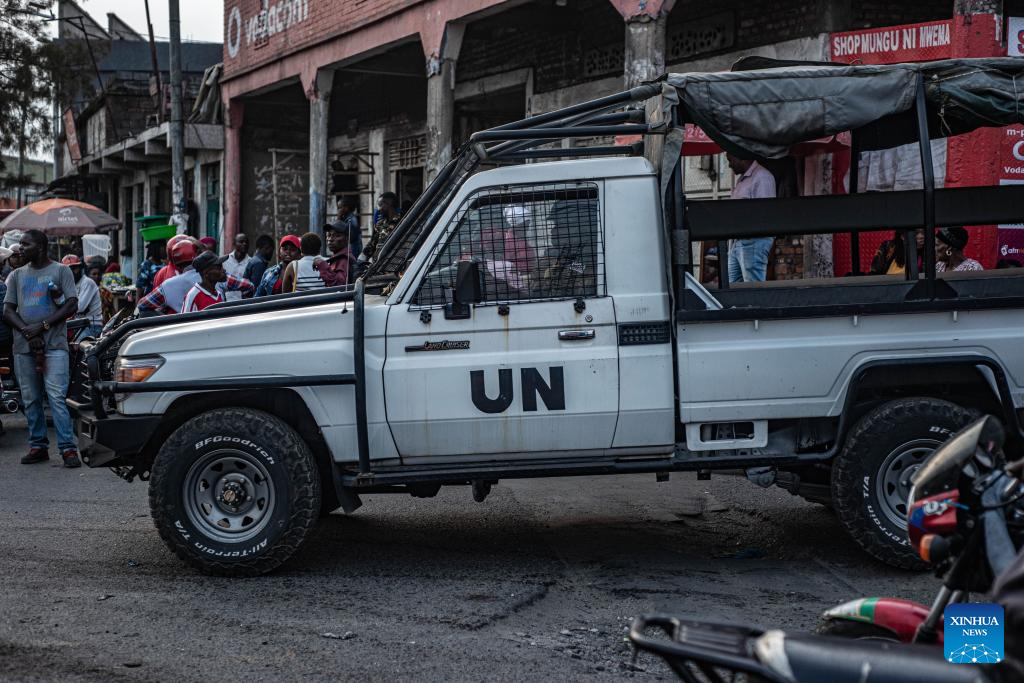
An armored vehicle of the United Nations is seen in Goma, eastern Democratic Republic of the Congo (DRC), Jan. 27, 2026. (Str/Xinhua)
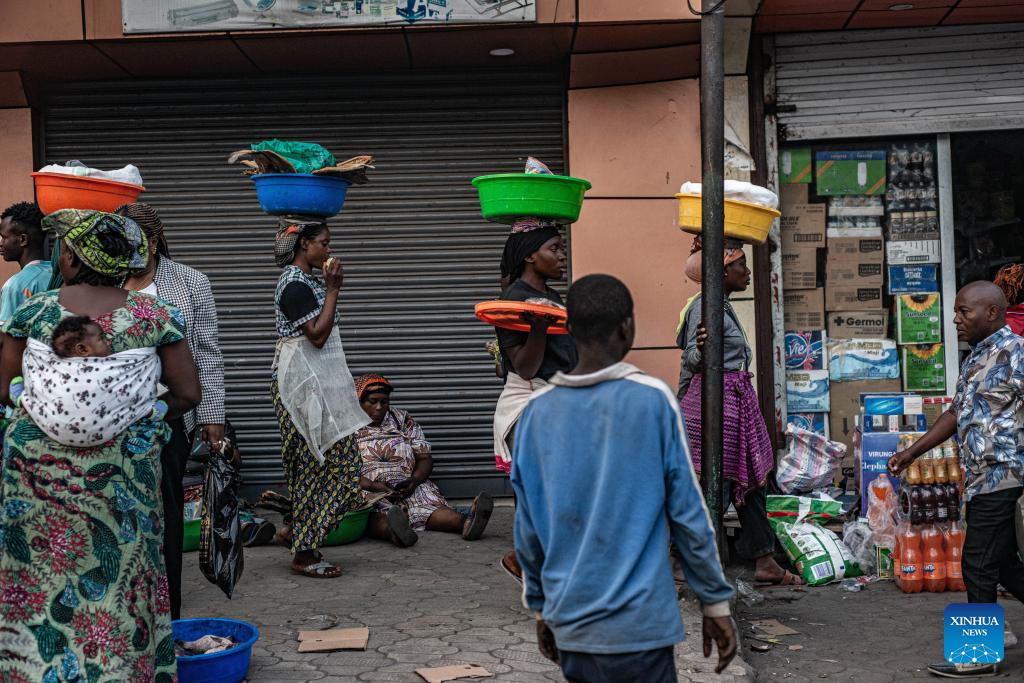
Local vendors are pictured in Goma, eastern Democratic Republic of the Congo (DRC), Jan. 27, 2026. (Str/Xinhua)
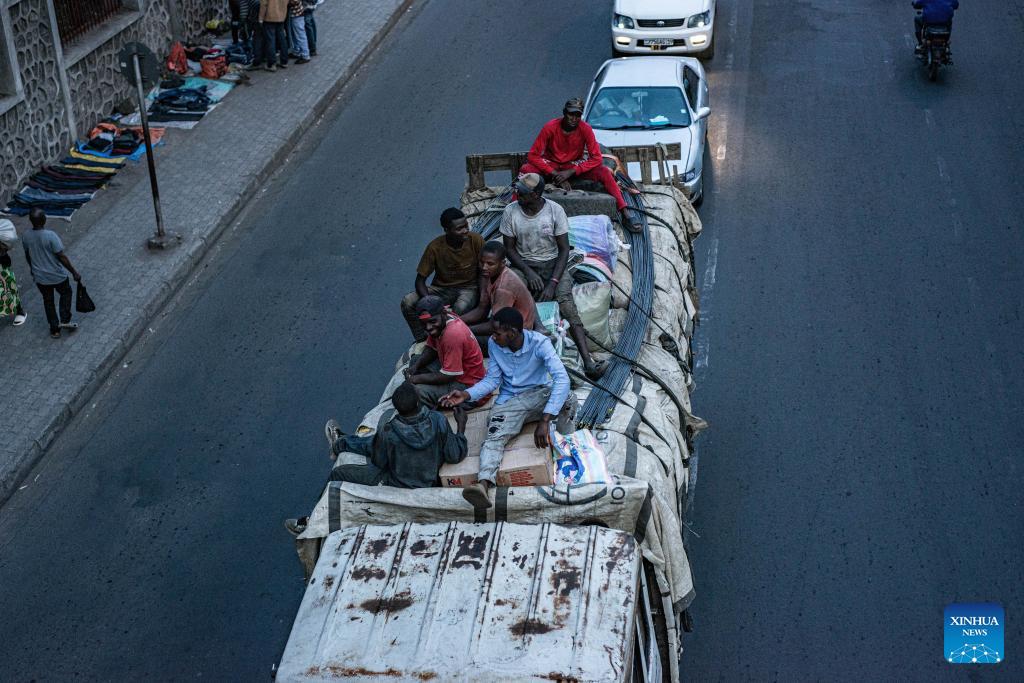
Local workers are seen on a loaded truck in Goma, eastern Democratic Republic of the Congo (DRC), Jan. 27, 2026. (Str/Xinhua)
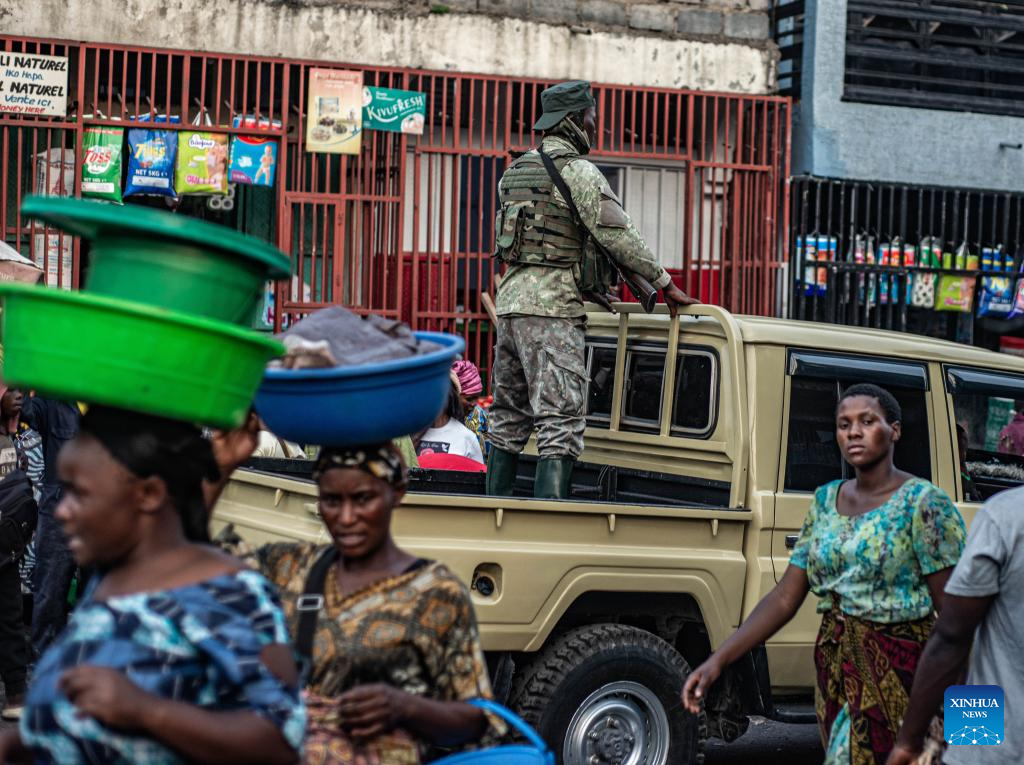
A member of the March 23 Movement (M23) rebel group is seen on patrol in Goma, eastern Democratic Republic of the Congo (DRC), Jan. 27, 2026. (Str/Xinhua)