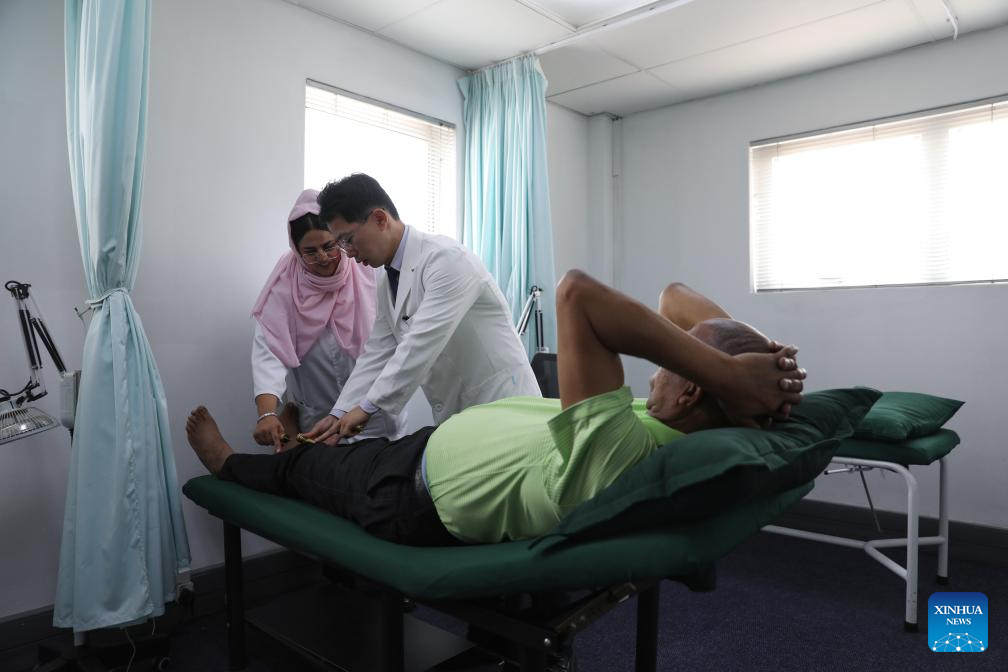
South African patient Jabulane Ngwenwa (front) receives Pestle Needle treatment at the African Center for Traditional Chinese Medicine and Acupuncture in Johannesburg, South Africa, Jan. 21, 2026. (Xinhua/Chen Wei)
by Xinhua writers Hang Zebo, Bai Ge
JOHANNESBURG, Jan. 22 (Xinhua) -- For 71-year-old Jabulane Ngwenwa, years of battling hypertension had been a long search for relief. After conventional treatments brought little improvement, the South African resident turned to a traditional Chinese medicine (TCM) clinic, hoping for a new approach to managing his condition.
Inside a sunlit clinic in Johannesburg, Ngwenwa sat before a sleek digital screen that captured images of his face and tongue. In about 10 seconds, a comprehensive artificial intelligence (AI)-powered TCM health report appeared, analyzing his tongue coating and complexion and identifying risks linked to his chronic hypertension and persistent foot swelling.
"I was amazed," Ngwenwa said. "I have never had a medical experience like this."
According to Hu Zijing, a 39-year-old associate professor at the University of Johannesburg and head of the African Center for Traditional Chinese Medicine and Acupuncture, the system is the first AI-powered TCM diagnostic tool introduced in Africa.
Developed in cooperation with China's Anhui University of Chinese Medicine, the AI technology transforms the traditionally experience-based practice of TCM into a standardized and visualized process, improving efficiency and consistency.
Beyond the digital assessment, Ngwenwa's consultation combined traditional practice with modern technology. Hu conducted a traditional pulse diagnosis, followed by an online consultation with Fu Li, a hypertension specialist at Chengdu Second People's Hospital in southwest China.
Based on the AI analysis and clinical expertise from both sides, the doctors developed a holistic treatment plan tailored to Ngwenwa's condition.
As part of the plan, Ngwenwa received Pestle Needle (Chuzhen) treatment, a non-invasive TCM technique. Performed under Hu's supervision, the painless therapy allowed students to gain hands-on clinical experience while providing care.
"AI makes diagnosis simpler," said Tasneem Patel, one of Hu's students from the University of Johannesburg who previously studied TCM in China. "Online consultations with specialists help us connect classroom learning with real patients."
The integration of technology, clinical practice, and teaching reflects Hu's broader mission in South Africa. The acupuncture program established in 2020 at the University of Johannesburg has enrolled about 50 undergraduates and 20 postgraduates each year, while the teaching clinic serves local communities, particularly low-income patients.
Hu also places strong emphasis on medical ethics. Each year, he leads students to conduct outreach services at orphanages, nursing homes, and underprivileged communities around Johannesburg, as well as in neighboring Lesotho.
These initiatives not only provide care but also help students understand that while TCM is a profession, its true purpose lies in giving back to society.
"In the beginning, locals didn't truly understand TCM," Hu recalled. "Now patients like Ngwenwa come in without needing basic theories explained. AI has become a powerful tool in spreading health awareness."
Through this integration of digital innovation and ancient wisdom, the TCM is giving more South African families access to holistic healthcare, Hu said. ■
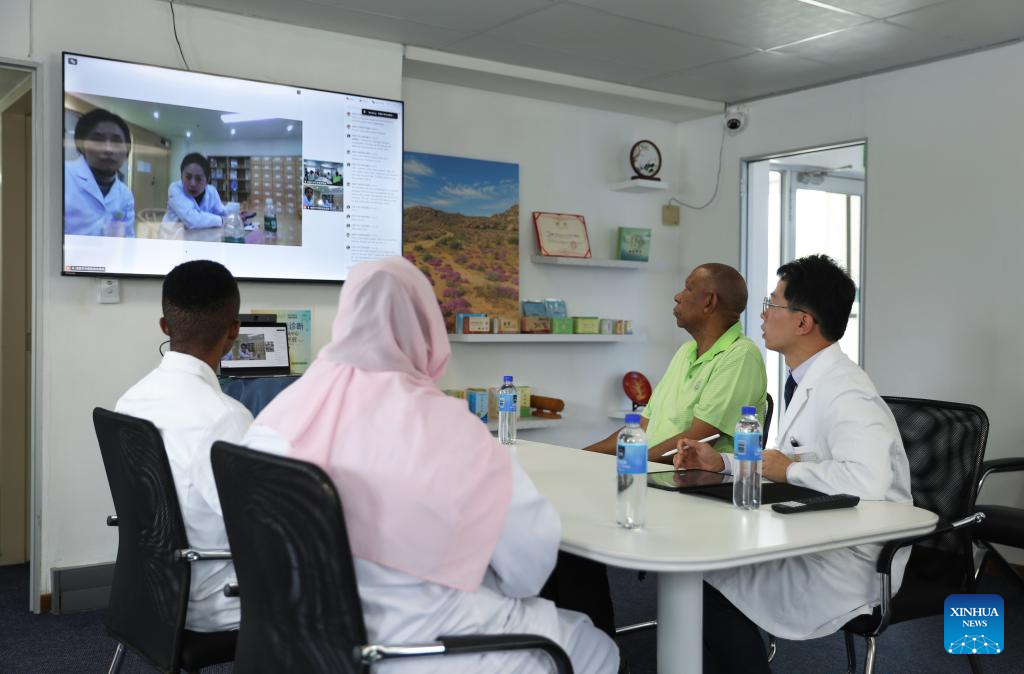
Experts from the Chengdu Second People's Hospital in China participate remotely in an online consultation for patient Jabulane Ngwenwa (2nd R) at the African Center for Traditional Chinese Medicine and Acupuncture in Johannesburg, South Africa, Jan. 21, 2026. (Xinhua/Chen Wei)
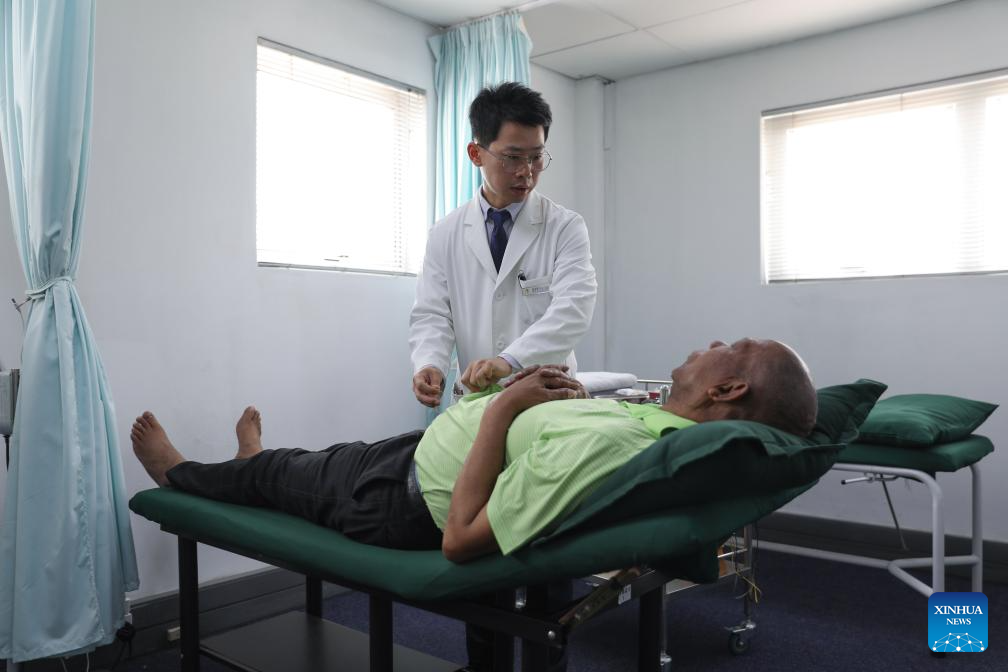
Hu Zijing (back), an associate professor at the University of Johannesburg and head of the African Center for Traditional Chinese Medicine and Acupuncture, gives acupuncture treatment to South African patient Jabulane Ngwenwa at the center in Johannesburg, South Africa, Jan. 21, 2026. (Xinhua/Chen Wei)