
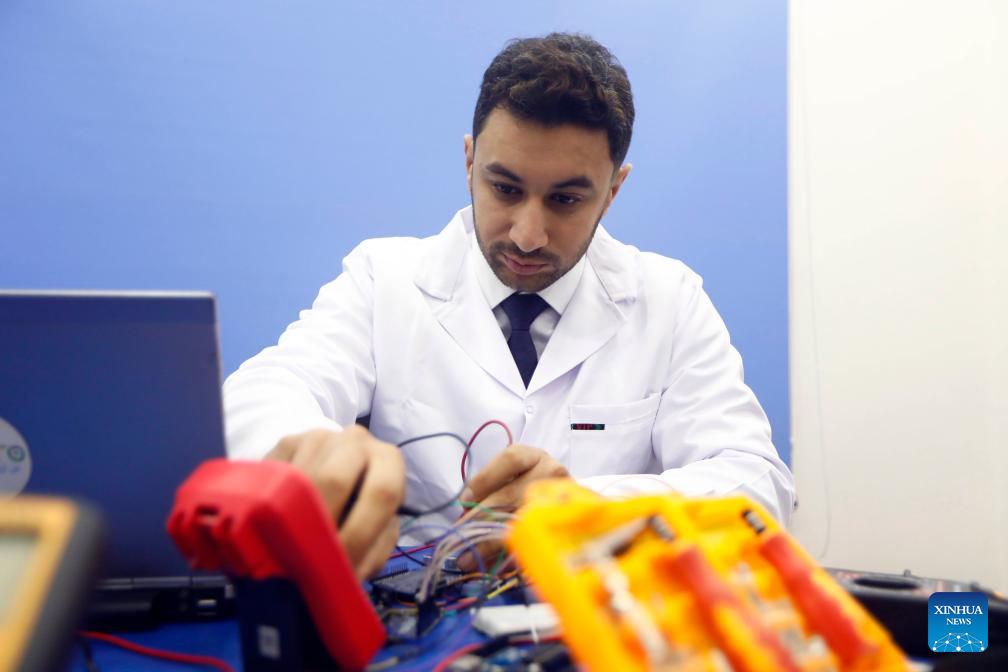
Mahmoud El-Koumy, a 32-year-old mechatronic engineer and robotics expert, works in his lab in Cairo, Egypt, on Jan. 17, 2026. From robots that can diagnose viruses to smartphone apps that translate ancient Egypt's hieroglyphs in real time, Egypt's young generation of tech entrepreneurs is turning artificial intelligence from a futuristic concept into practical tools for daily life.(Xinhua/Ahmed Gomaa)
by Mahmoud Fouly
CAIRO, Jan. 22 (Xinhua) -- From robots that can diagnose viruses to smartphone apps that translate ancient Egypt's hieroglyphs in real time, Egypt's young generation of tech entrepreneurs is turning artificial intelligence from a futuristic concept into practical tools for daily life.
"Artificial intelligence accelerated the path I always envisioned," said Mahmoud El-Koumy, a 32-year-old mechatronic engineer and robotics expert. "It allows me to turn ideas into solutions that serve people."
El-Koumy's work spans both practical and experimental applications. His inventions include Cira, a robot designed to assist with COVID-19 medical screenings, and a generator that extracts potable water from atmospheric moisture.
Beyond his lab, he is focused on cultivating the next generation of innovators. El-Koumy founded an academy that has trained more than 7,000 students in robotics and programming.
"AI is no longer optional," he said, surrounded by 3D printers and VR headsets at his facility. "Anyone who does not adapt will have no place in the future."
The shift is visible in Egyptian households. Rahma Ibrahim, the academy's manager, said parents increasingly view coding as a core literacy rather than a niche hobby.
"Teaching children programming is an investment in their mindset and critical thinking," Ibrahim said. "These skills are no longer confined to engineering; they are becoming essential across nearly every profession."
This grassroots interest aligns with a government push to integrate AI into university curricula and digital infrastructure, positioning technology as a pillar of national development.
In 2025, Egypt's AI market value reached nearly 490 million U.S. dollars and is expected to grow strongly in the coming years, with forecasts suggesting it could contribute about 7.7 percent of national GDP by 2030. Analysts also estimate that investments in AI and related infrastructure in Egypt have topped 1 billion U.S. dollars as the sector expands.
While El-Koumy focuses on the future of work, other innovators are using AI to explore the past.
Ibram Anwar, a 2024 computer science graduate and co-founder of Dark Pyramid for AI Solutions, helped launch Manetho, a smartphone app that translates ancient Egyptian hieroglyphs at museums and archaeological sites.
The app uses augmented reality to bring history to life, allowing historical figures to "narrate" their own stories.
"Translating a 'dead language' poses unique technical challenges," Anwar said. The project required two years of data collection and close collaboration between engineers and archaeologists to train the AI models.
Supported by the government's Technology Innovation and Entrepreneurship Center (TIEC), the 24-year-old engineer sees AI as a tool to sharpen human talent, not replace it.
"AI should expand human creativity by reducing repetitive work," he said. "It creates space for us to innovate." ■
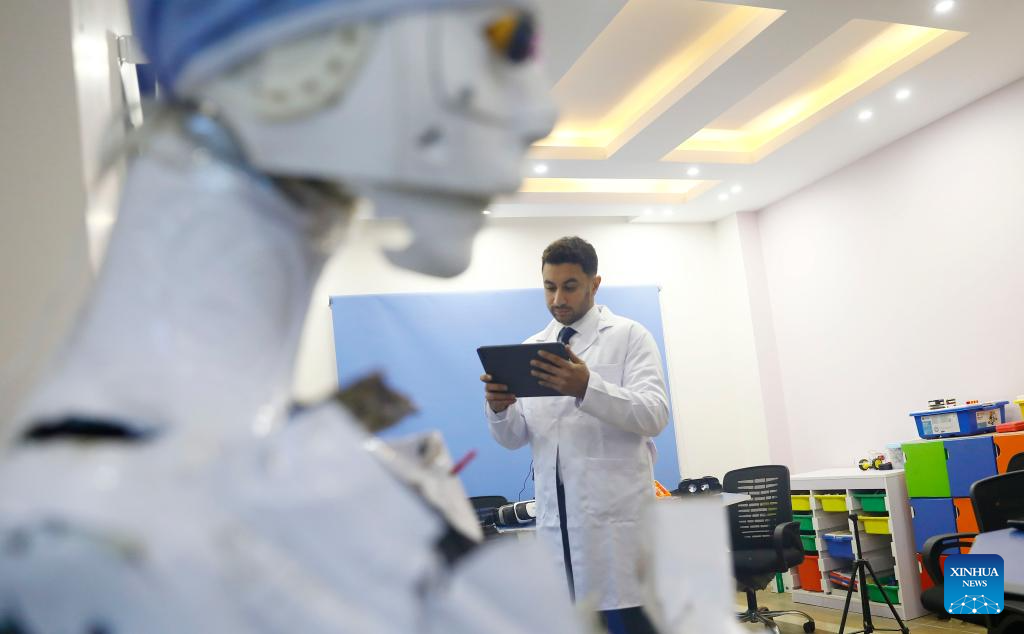
Mahmoud El-Koumy, a 32-year-old mechatronic engineer and robotics expert, works in his lab in Cairo, Egypt, on Jan. 17, 2026. From robots that can diagnose viruses to smartphone apps that translate ancient Egypt's hieroglyphs in real time, Egypt's young generation of tech entrepreneurs is turning artificial intelligence from a futuristic concept into practical tools for daily life.(Xinhua/Ahmed Gomaa)