
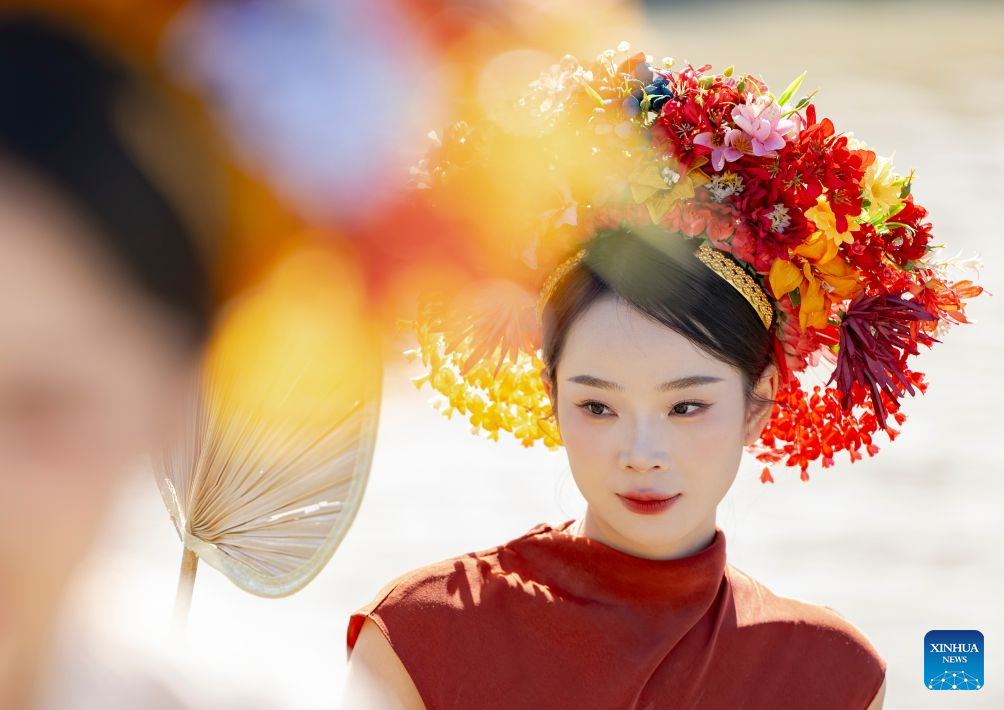
A tourist wearing flowery headwear poses for photo at Xunpu Village of Quanzhou City, southeast China's Fujian Province, Nov. 28, 2026. Xunpu Village, once a small fishing village in Quanzhou, is famous for its traditional flowery headwear worn by local women. This centuries-old custom, inscribed on China's national intangible cultural heritage list in 2008, has become a major draw for cultural tourism.
Today, nearly 300 travel photography studios operate in and around the village, which welcomes around 20,000 visitors daily. The booming folk-custom related businesses have brought new life to this ancient fish village. (Xinhua/Wei Peiquan)

Tourists wearing flowery headwear pose for photo at Xunpu Village of Quanzhou City, southeast China's Fujian Province, Nov. 28, 2026. Xunpu Village, once a small fishing village in Quanzhou, is famous for its traditional flowery headwear worn by local women. This centuries-old custom, inscribed on China's national intangible cultural heritage list in 2008, has become a major draw for cultural tourism.
Today, nearly 300 travel photography studios operate in and around the village, which welcomes around 20,000 visitors daily. The booming folk-custom related businesses have brought new life to this ancient fish village. (Xinhua/Wei Peiquan)
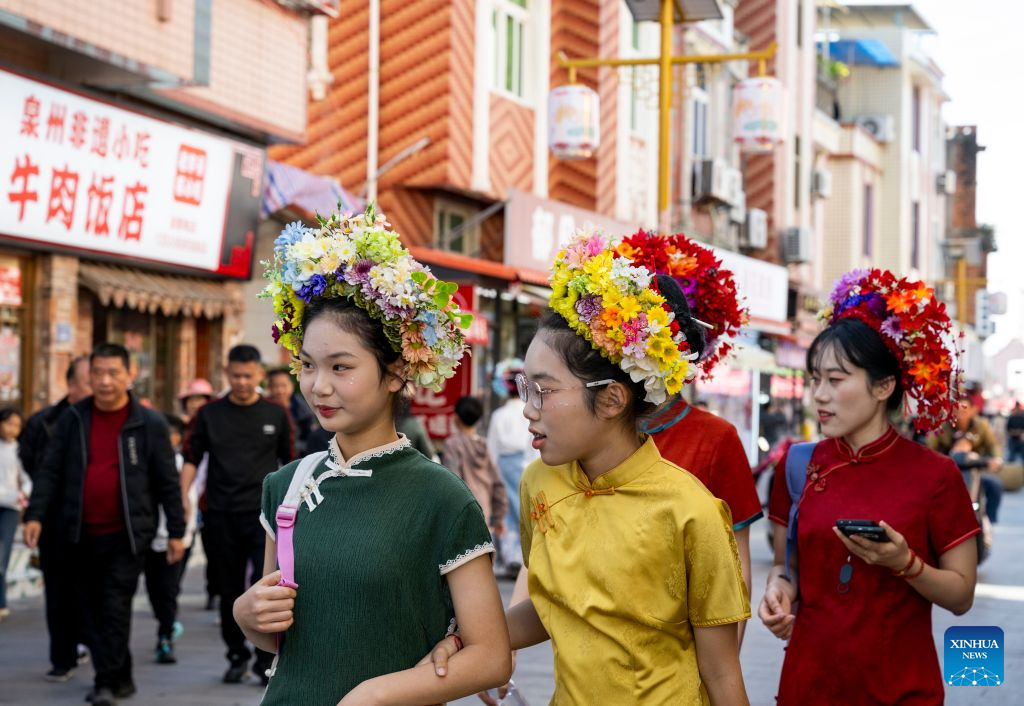
Tourists wearing flowery headwear are seen at Xunpu Village of Quanzhou City, southeast China's Fujian Province, Nov. 28, 2026. Xunpu Village, once a small fishing village in Quanzhou, is famous for its traditional flowery headwear worn by local women. This centuries-old custom, inscribed on China's national intangible cultural heritage list in 2008, has become a major draw for cultural tourism.
Today, nearly 300 travel photography studios operate in and around the village, which welcomes around 20,000 visitors daily. The booming folk-custom related businesses have brought new life to this ancient fish village. (Xinhua/Wei Peiquan)
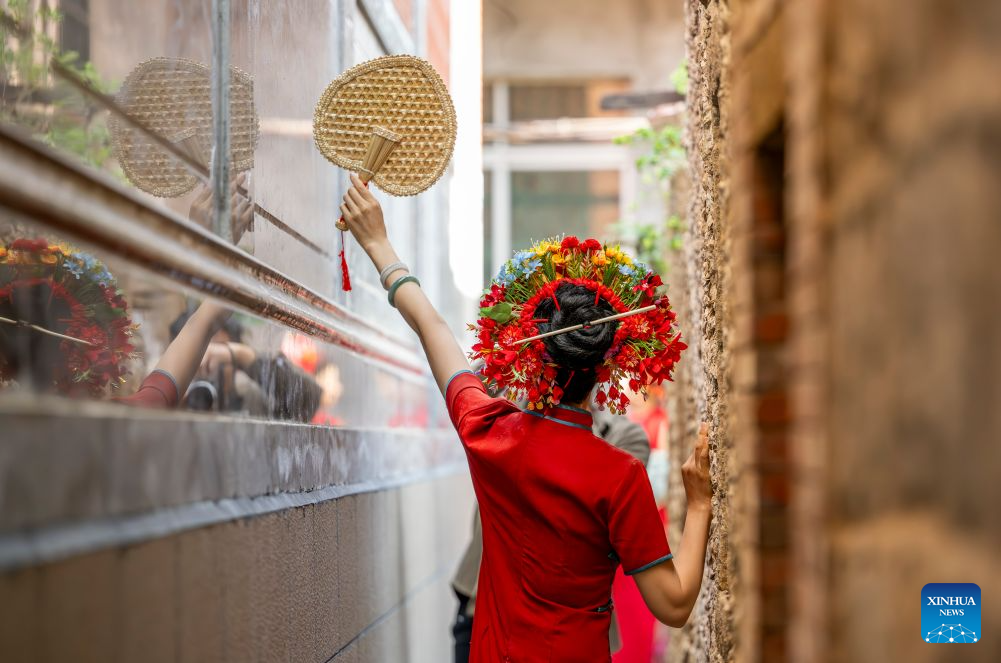
A tourist wearing flowery headwear poses for photo at Xunpu Village of Quanzhou City, southeast China's Fujian Province, Nov. 28, 2026. Xunpu Village, once a small fishing village in Quanzhou, is famous for its traditional flowery headwear worn by local women. This centuries-old custom, inscribed on China's national intangible cultural heritage list in 2008, has become a major draw for cultural tourism.
Today, nearly 300 travel photography studios operate in and around the village, which welcomes around 20,000 visitors daily. The booming folk-custom related businesses have brought new life to this ancient fish village. (Xinhua/Wei Peiquan)
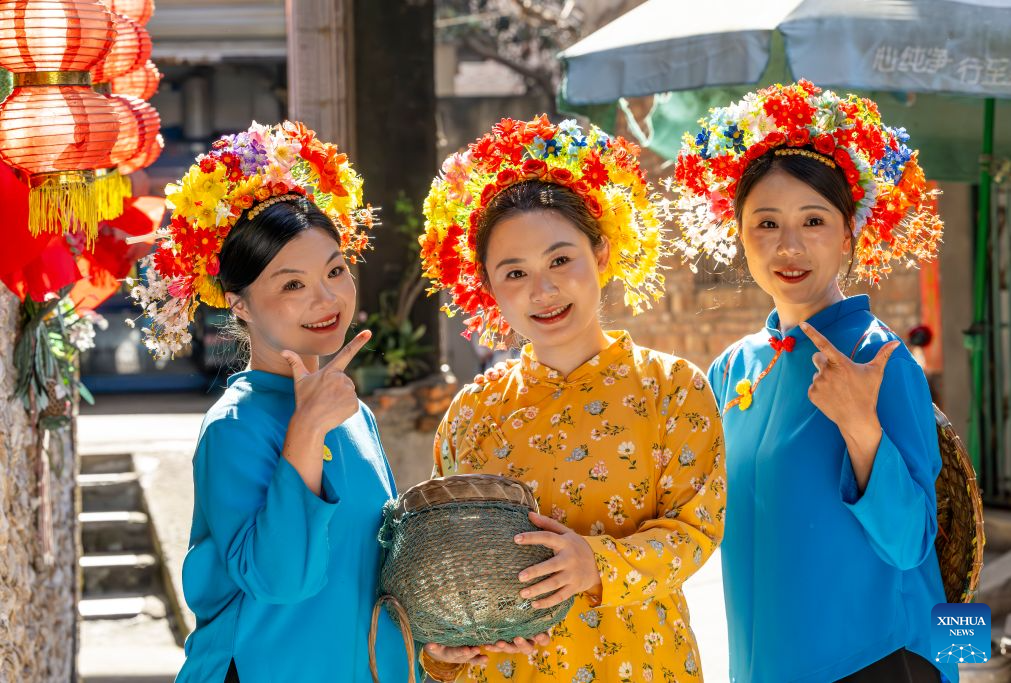
Tourists wearing flowery headwear pose for photo at Xunpu Village of Quanzhou City, southeast China's Fujian Province, Nov. 28, 2026. Xunpu Village, once a small fishing village in Quanzhou, is famous for its traditional flowery headwear worn by local women. This centuries-old custom, inscribed on China's national intangible cultural heritage list in 2008, has become a major draw for cultural tourism.
Today, nearly 300 travel photography studios operate in and around the village, which welcomes around 20,000 visitors daily. The booming folk-custom related businesses have brought new life to this ancient fish village. (Xinhua/Wei Peiquan)
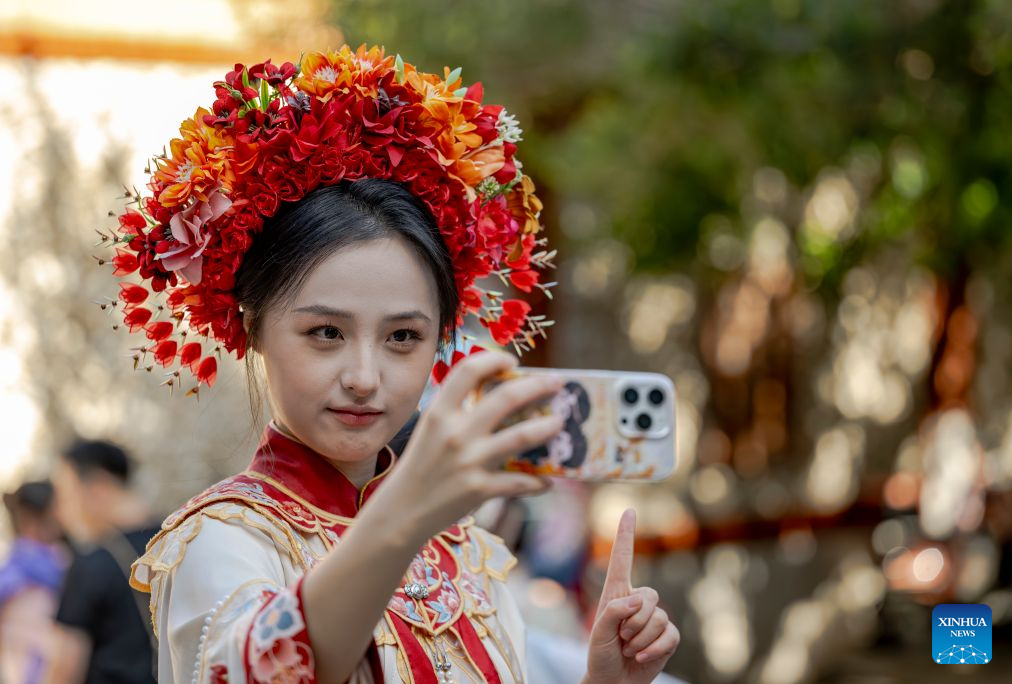
A tourist wearing flowery headwear takes a selfie at Xunpu Village of Quanzhou City, southeast China's Fujian Province, Nov. 28, 2026. Xunpu Village, once a small fishing village in Quanzhou, is famous for its traditional flowery headwear worn by local women. This centuries-old custom, inscribed on China's national intangible cultural heritage list in 2008, has become a major draw for cultural tourism.
Today, nearly 300 travel photography studios operate in and around the village, which welcomes around 20,000 visitors daily. The booming folk-custom related businesses have brought new life to this ancient fish village. (Xinhua/Wei Peiquan)
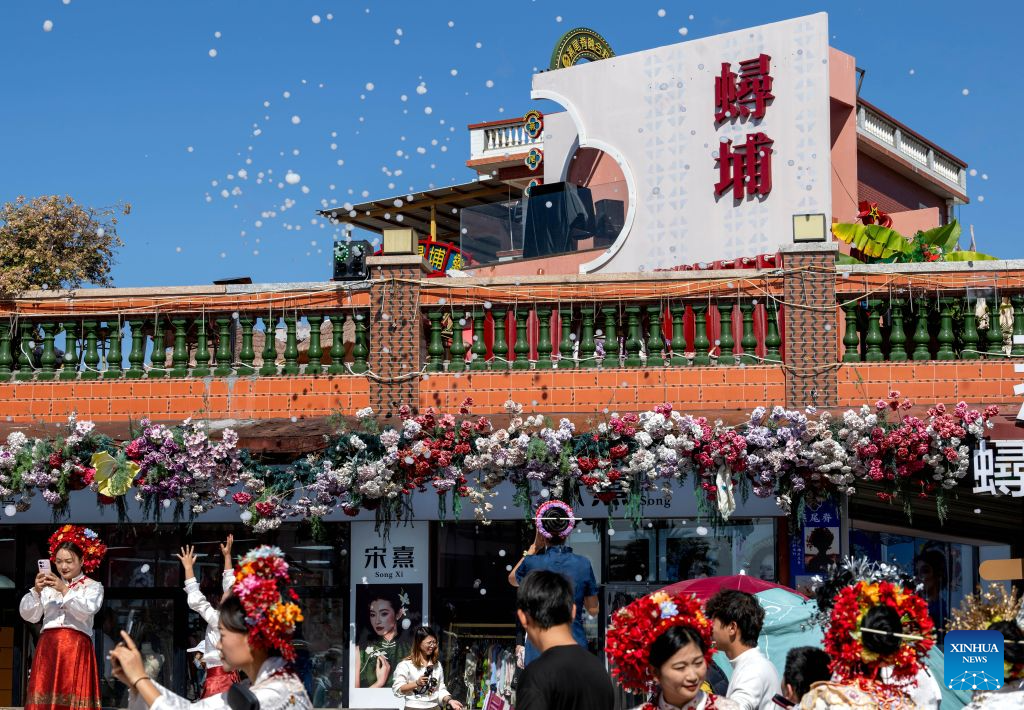
This photo taken on Nov. 28, 2026 shows a view of Xunpu Village, Quanzhou City, southeast China's Fujian Province. Xunpu Village, once a small fishing village in Quanzhou, is famous for its traditional flowery headwear worn by local women. This centuries-old custom, inscribed on China's national intangible cultural heritage list in 2008, has become a major draw for cultural tourism.
Today, nearly 300 travel photography studios operate in and around the village, which welcomes around 20,000 visitors daily. The booming folk-custom related businesses have brought new life to this ancient fish village. (Xinhua/Wei Peiquan)


