* Today, China and ASEAN have established 66 cooperation mechanisms across various fields and at all levels -- the highest number among all of ASEAN's dialogue partners, according to the Chinese Mission to ASEAN.
* In recent years, a series of landmark infrastructure projects, including the China-Laos Railway and the Jakarta-Bandung High-Speed Railway in Indonesia, have been completed and put into operation, significantly enhancing regional connectivity, driving economic growth, and improving people's livelihoods.
* "People are the makers and drivers of long-lasting relationships. Our partnership should be defined by peace, by our people, and by shared prosperity," ASEAN Secretary-General Kao Kim Hourn told Xinhua.
by Xinhua writers Zhang Yisheng, Cao Kai
JAKARTA, Nov. 27 (Xinhua) -- At the 29th China-ASEAN Summit held in the Philippine capital Manila, leaders from China and the Association of Southeast Asian Nations (ASEAN) welcomed the upcoming entry into force of the China-ASEAN Free Trade Area (FTA) 3.0 Upgrade Protocol on Dec. 1, encouraging businesses to fully seize the opportunities it brings.
This year marks the 35th anniversary of their dialogue relations and the fifth anniversary of their comprehensive strategic partnership.
Amid a complex and evolving international landscape, China-ASEAN cooperation has forged ahead against headwinds, achieving both quantitative growth and qualitative upgrades through strengthened strategic mutual trust, booming economic and trade ties, and vibrant people-to-people exchanges, scholars and experts have told Xinhua.
STRATEGIC MUTUAL TRUST
For a long time, China has remained committed to the principles of amity, sincerity, mutual benefit and inclusiveness in its neighborhood diplomacy to build a shared home of peace and prosperity with ASEAN countries.
In November 2021, China and ASEAN elevated their ties to a comprehensive strategic partnership at a special summit commemorating the 30th anniversary of their dialogue relations.
Over the past five years, leaders from both sides have continued their time-honored friendship, upheld the right path of openness and win-win cooperation, and followed the trend of innovation and development.
Today, China and ASEAN have established 66 cooperation mechanisms across various fields and at all levels -- the highest number among all of ASEAN's dialogue partners, according to the Chinese Mission to ASEAN. Meanwhile, China has reached important common understanding with eight ASEAN member states on forming a community with a shared future bilaterally.
"Over the past five years, under the strategic guidance of the leaders of both sides, China and ASEAN have taken the building of a peaceful, safe and secure, prosperous, beautiful and amicable home as their shared vision," Chinese Ambassador to ASEAN Wang Qing told Xinhua in a recent interview.
"This has guided China-ASEAN cooperation to stay at the forefront, advance steadily, and move at a fast pace, continuously deepening and substantiating the building of a closer China-ASEAN community with a shared future," he added.
Similarly, Humprey Arnaldo Russel, head of the ASEAN-China Research Center at the University of Indonesia, noted that ASEAN countries and China "have every reason to" continue their tradition of friendship, focus on shared interests and keep bilateral cooperation moving forward.
SHARED PROSPERITY
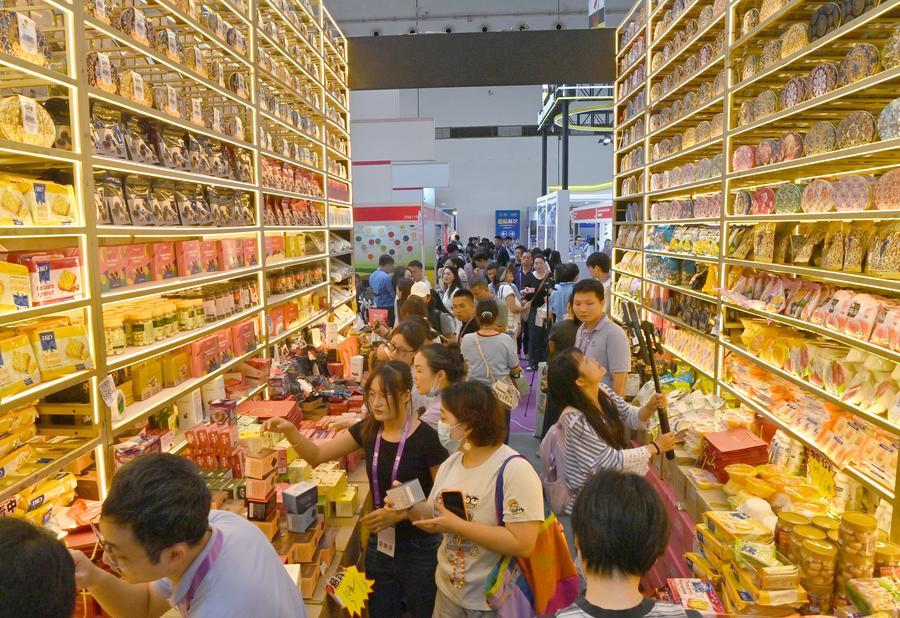
The vitality of China-ASEAN relations lies in shared interests and their ability to deliver tangible benefits to both sides. With the China-ASEAN FTA 3.0 Upgrade Protocol set to take effect in December, more opportunities will emerge for businesses to make long-term plans, expand investment, and strengthen cooperation.
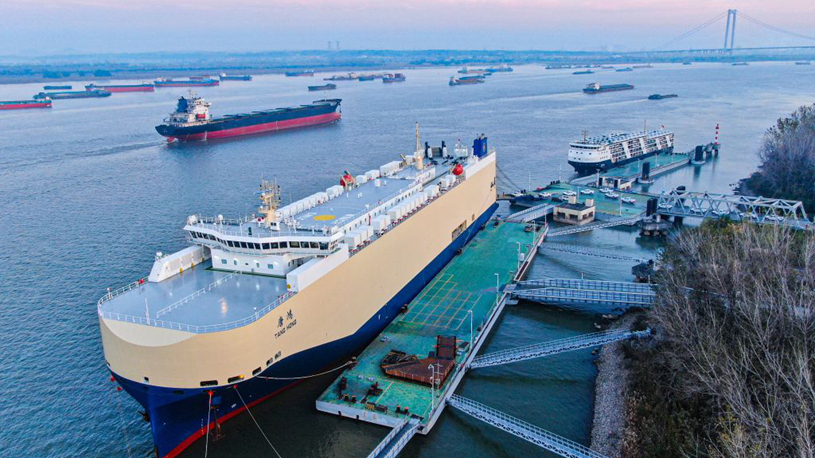
In recent years, a series of landmark infrastructure projects, including the China-Laos Railway and the Jakarta-Bandung High-Speed Railway in Indonesia, have been completed and put into operation, significantly enhancing regional connectivity, driving economic growth, and improving people's livelihoods.
China has remained ASEAN's largest trading partner for 17 consecutive years, while ASEAN has been China's largest trading partner for six years in a row. Bilateral trade surpassed 1 trillion U.S. dollars for the first time in 2025. As of July this year, both the cumulative two-way investment between China and ASEAN and the cumulative turnover of Chinese enterprises' contracted projects in ASEAN have exceeded 515 billion dollars.
As a new round of technological revolution and industrial transformation accelerates, digital and green transitions are reshaping regional industrial development, unlocking vast potential for cooperation in emerging sectors.
For instance, the ASEAN Digital Economy Framework Agreement was signed on Nov. 14, marking a major milestone in the 11-member bloc's journey toward an open, secure, interoperable, competitive and inclusive digital economy.
"ASEAN's expanding market demand and advantages in resource endowments can be aligned with and complement China's accumulated experience in cross-border e-commerce, mobile payments, and cloud computing, bringing immense opportunities for China-ASEAN cooperation," Wang said.
The prospects for China-ASEAN digital economy cooperation are promising, said Lye Liang Fook, associate senior fellow at the ISEAS-Yusof Ishak Institute in Singapore.
Lye suggested that both sides step up efforts to build secure digital infrastructure, such as 5G networks and undersea cables, backed by reliable renewable energy supplies, while accelerating cross-border digitalization through electronic certificates and documents to lower transaction costs for micro, small and medium-sized enterprises, which account for over 90 percent of all businesses in Southeast Asia.

GOOD NEIGHBORS
Connected by mountains and rivers with deep cultural affinity, China and ASEAN countries have been bound by strong people-to-people ties. Multiple public opinion polls have shown a steady rise in mutual goodwill and widespread optimism regarding the prospects of China-ASEAN relations.
As ASEAN prepares to celebrate its 60th anniversary in 2027, ASEAN Secretary-General Kao Kim Hourn told Xinhua earlier this year that people-to-people connectivity and mutual trust will remain fundamental to the future of ASEAN-China relations.
"People are the makers and drivers of long-lasting relationships. Our partnership should be defined by peace, by our people, and by shared prosperity," Kao said. "Trust is always the most powerful factor in our relationship, and we must focus on it as the key to our long-term relations."
Over the past five years, anchored by the China-ASEAN Year of People-to-People Exchanges, the two sides have built a multi-tiered exchange framework while rolling out visa facilitation measures, injecting fresh vitality into cultural interactions, according to the Chinese Mission to ASEAN.
"People-to-people connectivity serves as the most foundational, solid, and enduring bond," Russel said, pointing out a growing trend of Indonesian students aspiring to pursue higher education in China.
He added that maintaining the momentum of cultural and educational exchanges while expanding practical cooperation in tourism, media, youth and other fields will help cultivate lasting friendship for the future.
"ASEAN will always be China's neighbor, and China will always be ASEAN's. I think we already have very strong and smooth cooperation, both with individual member states and with ASEAN as a whole. So going forward, this cooperation will certainly continue to strengthen," said Michael Tene, a senior Indonesian diplomat who had served as deputy secretary-general of ASEAN for the ASEAN Political-Security Community.
"I remain very optimistic that we, ASEAN countries, will continue to enjoy deep cooperation with China, because it serves the mutual interests of both sides," Tene added. ■