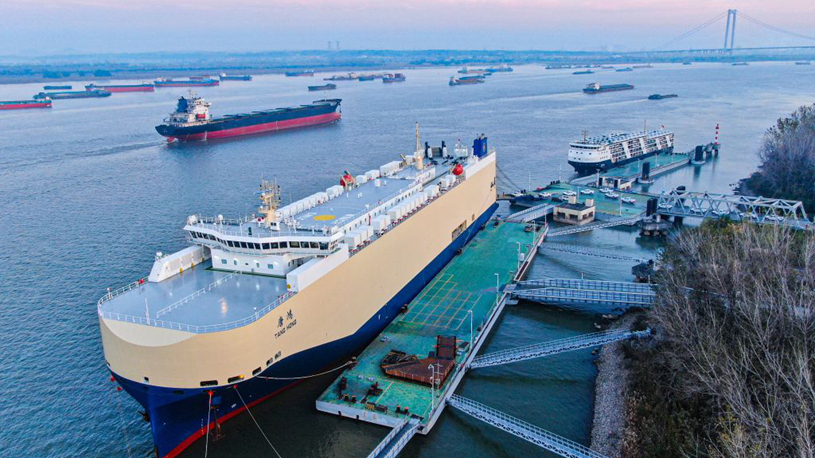
* Despite a complex external environment, China's goods imports and exports grew 20 percent year on year in the first 10 months of 2026. Imports rose 23.6 percent, continuing to outpace export growth amid China's ongoing efforts to advance voluntary and unilateral opening up.
* From drone-based crop-protection services for cotton fields in Central Asia, to the international expansion of domestically developed smart in-vehicle systems, more Chinese companies are moving beyond individual product exports to providing integrated technological solutions and services.
* Beyond facilitating the flow of goods and production factors, China is steadily advancing its institutional opening up in terms of rules, regulations, management and standards, seeking closer alignment with high-standard international economic and trade rules.
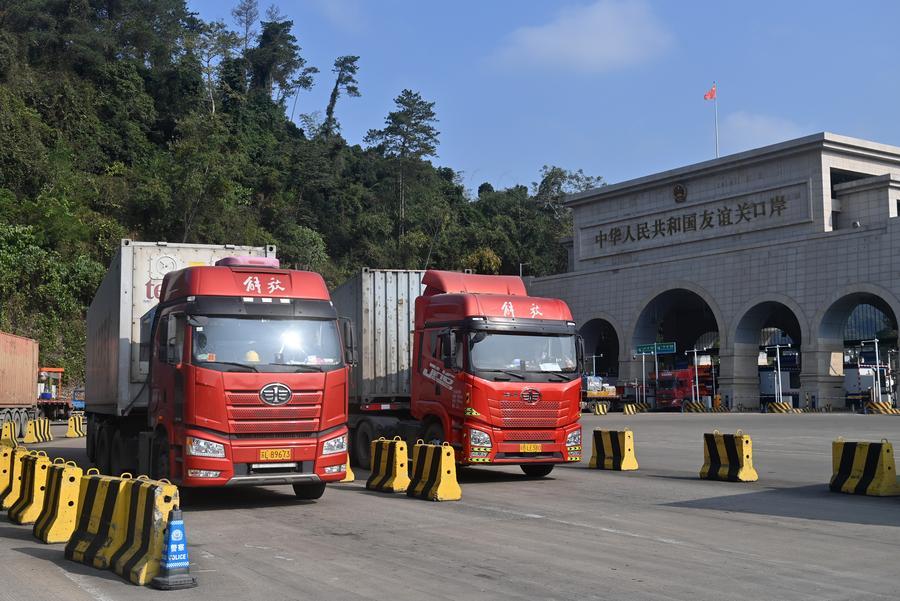
BEIJING, Nov. 26 (Xinhua) -- At Friendship Pass on the China-Vietnam border in south China's Guangxi Zhuang Autonomous Region, an improved customs inspection system has cut the time needed to identify pests in imported fruit to 36 hours or less, down from three to five days.
This port handled durian imports worth 17.61 billion yuan (about 2.62 billion U.S. dollars) in the first eight months of 2026, up 27.9 percent year on year, with China and Vietnam now jointly developing a smart border port to further facilitate cross-border trade.
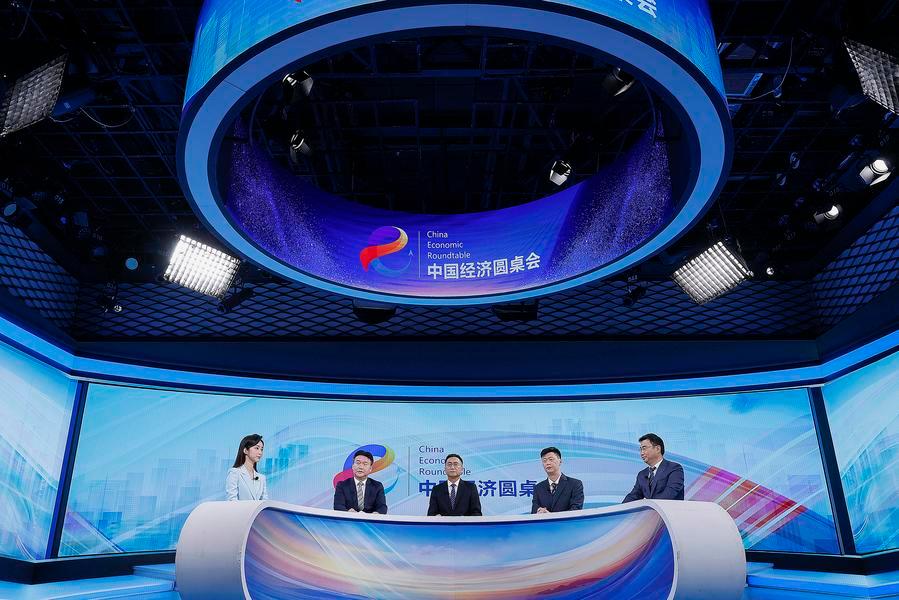
These efforts reflect China's broader push to expand high-standard opening up and develop new competitive advantages, a theme explored in the latest episode of China Economic Roundtable, an all-media talk show hosted by Xinhua News Agency.
BROADENING THE SCOPE OF OPENING UP
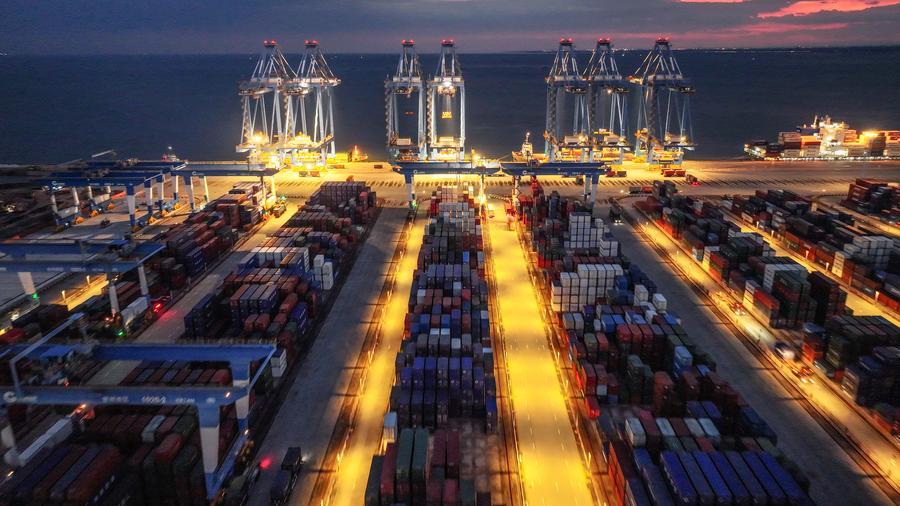
Despite a complex external environment, China's goods imports and exports grew 20 percent year on year in the first 10 months of 2026. Imports rose 23.6 percent, continuing to outpace export growth amid China's ongoing efforts to advance voluntary and unilateral opening up.
The country's trading partners are becoming increasingly diverse. In the first three quarters of the year, China's goods trade with Belt and Road partner countries rose 17.1 percent year on year, accounting for 51 percent of its total trade in goods.
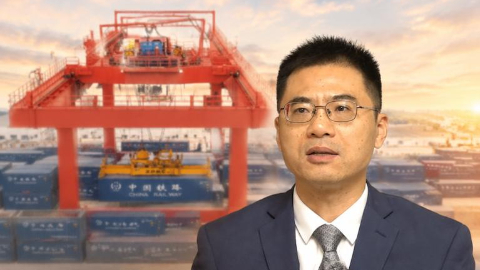
Expanding into emerging markets has helped mitigate risks arising from slowing demand and mounting trade barriers in some traditional markets, making China's foreign trade more resilient, said Zhang Yan, a researcher at a research center under the National Development and Reform Commission.
In northwest China's Ningxia Hui Autonomous Region, trade with Belt and Road partner countries surged 35.3 percent year on year in the first nine months, according to Li Kaiyi, head of Yinchuan Customs.
To overcome the region's geographical constraints, local customs authorities have piloted a new customs supervision model for rail-sea intermodal transport, boosting logistics efficiency by more than 30 percent.
Local customs authorities have also helped wine producers resolve difficulties in obtaining certificates for exports to the European Union, with the value of Ningxia's wine exports to Germany and Spain more than tripling in the first three quarters of 2026, Li said.

The potential for cooperation extends beyond the wine industry. Speaking in Ningxia, New Zealand's ambassador to China pointed to opportunities for technical exchanges between the two countries in wine production, livestock farming and crop cultivation.
China's opening up is also creating new opportunities for foreign investors. In Hainan Province in south China, the number of newly established foreign-invested enterprises rose 31.1 percent year on year in the first nine months of 2026, with new projects including a Siemens Energy gas turbine assembly base and service center, said Wang Fengli, deputy director of the Office of the Free Trade Port Working Committee of the Communist Party of China Hainan Provincial Committee.
DEVELOPING NEW COMPETITIVE ADVANTAGES
China's advances in science and technology and the development of its digital economy are also creating new opportunities for international economic cooperation.
From drone-based crop-protection services for cotton fields in Central Asia, to the international expansion of domestically developed smart in-vehicle systems, more Chinese companies are moving beyond individual product exports to providing integrated technological solutions and services, Zhang said.
The country's exports of knowledge-intensive services grew 11.7 percent year on year to 1.2 trillion yuan in the first three quarters of 2026, accounting for 53.7 percent of its total services exports.
Opening-up policies are also helping develop new businesses in high-value-added services. In Hainan, for instance, bonded maintenance and expedited customs clearance can reduce aircraft maintenance costs for foreign airlines by around 10 percent to 15 percent, Wang said.
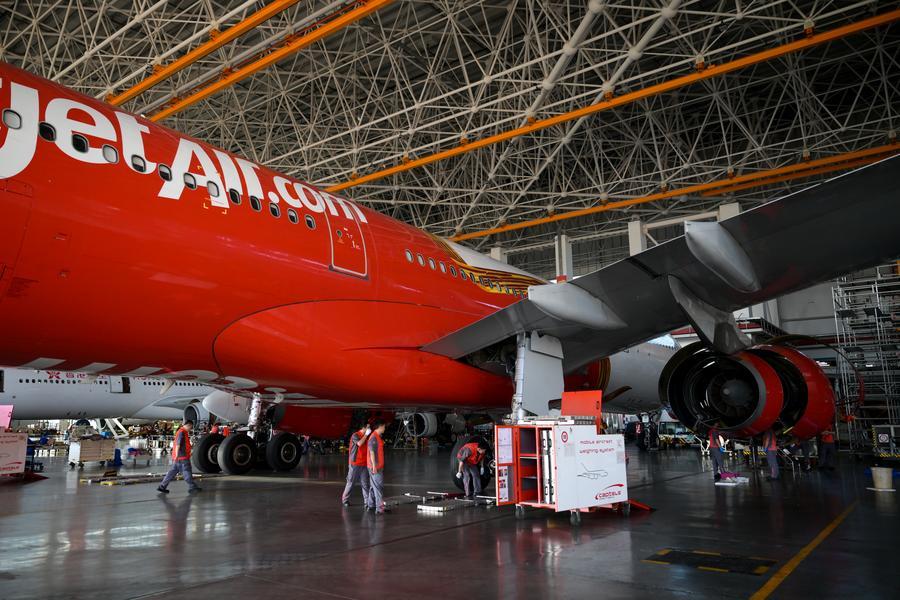
Meanwhile, digital cultural products, including online literature, video games and online dramas, are another growing area in China's services exports, Zhang noted.
In Hainan's Chengmai County, a public service platform helps game developers overcome barriers to international expansion, such as cross-border network latency, regulatory compliance and payment settlement. The platform has attracted 125 enterprises and has more than 40 million registered overseas users.
Under the policies of the Hainan Free Trade Port (FTP) on secure and orderly cross-border data flows, this platform provides dedicated data links, reducing the costs developers would otherwise incur in arranging such connections themselves.
DEEPENING INSTITUTIONAL OPENING UP
Beyond facilitating the flow of goods and production factors, China is steadily advancing its institutional opening up in terms of rules, regulations, management and standards, seeking closer alignment with high-standard international economic and trade rules.
The Hainan FTP serves as a testing ground for such reforms. Following the launch of island-wide special customs operations in December 2025, the share of tariff lines eligible for zero-tariff treatment on qualifying imports increased from 21 percent to 74 percent, Wang said.
At the regional level, the China-ASEAN Free Trade Area 3.0 Upgrade Protocol brings cooperation in the digital economy, green economy and supply chain connectivity into an institutional framework, moving regional cooperation beyond tariff reductions toward greater coordination of rules, Zhang said.
Greater openness also requires stronger risk management capabilities, Zhang said, suggesting that pilot free trade zones and free trade ports conduct stress tests in areas like cross-border data flows, financial opening up and cross-border services trade.
Looking ahead, the outline of China's 15th Five-Year Plan (2026-2030) sets out measures to further expand the areas and geographical scope of opening up in an orderly manner, promote innovation in trade, and attract and utilize more foreign investment.
"Regardless of changes in the international landscape, China will continue to counter external uncertainties with the certainty of steadily expanding its voluntary opening up," Zhang said, adding that China's high-quality development will create new opportunities for countries around the world. ■