by Park Soong-chan
The global economy is confronting a triple challenge: rising protectionism, supply chain restructuring and geopolitical tensions. Amid growing uncertainty and deepening economic fragmentation, the Asia-Pacific faces the pressing task of safeguarding the foundations of its prosperity while seeking new engines of growth.
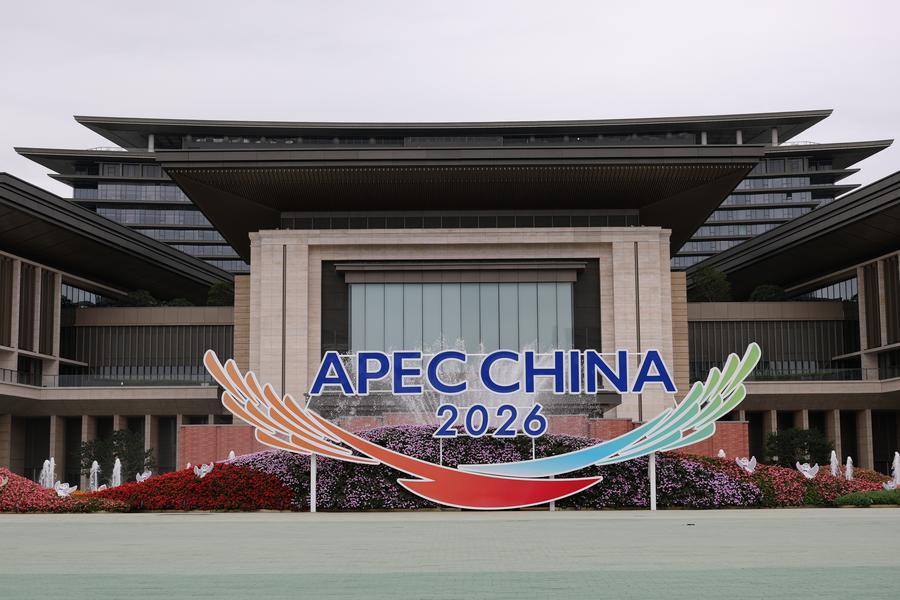
Against this backdrop, the just-concluded Asia-Pacific Economic Cooperation (APEC) Economic Leaders' Meeting in Shenzhen, China, took on particular significance. It offered a timely opportunity for regional economies to seek common ground, strengthen economic ties and explore ways to address shared challenges through cooperation.
The three priorities China championed during its APEC host year -- openness, innovation and cooperation -- speak directly to these challenges. Far from being separate policy objectives, they are mutually reinforcing: openness creates opportunities, innovation generates new growth momentum, and cooperation enables the benefits of development to be more widely shared.
Together, they offer a practical way forward for the Asia-Pacific in an increasingly uncertain world.
Shenzhen itself provides a compelling illustration of this vision.
Since becoming one of China's first special economic zones in 1980, Shenzhen has grown into a global innovation hub in just over four decades, giving rise to internationally renowned companies such as Huawei, Tencent, BYD and DJI.
In the city's Huaqiangbei electronics market, a sophisticated hardware ecosystem enables entrepreneurs to turn innovative ideas into prototypes within days. Startups and business incubators from across the region, including South Korea, have established a presence in Shenzhen to tap into this ecosystem.
The remarkable transformation of Shenzhen demonstrates how openness and innovation can reinforce each other and generate new opportunities for development.

Another telling example is Chinese company DeepSeek's decision to make its artificial intelligence (AI) models openly available, enabling developers worldwide to benefit from its technological advances. It illustrates how the benefits of innovation can extend far beyond national borders when innovation is combined with openness.
At a time when the global economy is searching for new engines of growth, deeper cooperation in AI, digital trade and other emerging fields holds considerable potential for the Asia-Pacific.
China's growing role in promoting trade and investment liberalization is equally noteworthy. Through its participation in regional economic integration and its contributions to infrastructure connectivity, China is helping create new development opportunities for economies across the region.
The Regional Comprehensive Economic Partnership, which entered into force in 2022 and encompasses around 30 percent of the world's population and GDP, exemplifies what regional economies can achieve through collective efforts.
Infrastructure projects such as Peru's Chancay Port, the China-Laos Railway and the Jakarta-Bandung High-Speed Railway in Indonesia have improved regional connectivity, facilitated the movement of goods and people, and created new business opportunities in Southeast Asia and Latin America.

The economic dynamism of the Asia-Pacific owes much to the ability of its economies to leverage their comparative advantages and build closely interconnected industrial and value chains. Greater connectivity and deeper economic integration are essential to sustaining this dynamism.
History also shows that cooperation is not only a source of prosperity but an effective buffer against economic shocks -- including beyond APEC.
Following the aftermath of the 1997 Asian financial crisis, ASEAN members, China, Japan and South Korea established the Chiang Mai Initiative in 2000, strengthening the region's collective capacity to respond to financial crises.
This experience carries important lessons for today's world. In an era of heightened uncertainty, upholding multilateralism and pursuing mutually beneficial cooperation are among the most practical strategies for managing shared risks.
Since its establishment in 1989, APEC has played a pivotal role in advancing regional economic integration. Its approach, based on voluntary cooperation, consensus and mutual trust, enables economies with different economic systems and at different stages of development to find common ground.
In the face of growing economic fragmentation, I believe APEC should continue advancing the Free Trade Area of the Asia-Pacific agenda, strengthen practical cooperation on trade facilitation, and serve as a bridge for regulatory coordination in emerging areas such as digital trade and AI.
Green development is another area where China's experience and technologies can contribute to building an Asia-Pacific community.
China's manufacturing capabilities and technological competitiveness in solar and wind power, batteries and electric vehicles have helped make green technologies more affordable and accessible. Shenzhen, with its extensive electrification of public buses and taxis, provides a vivid example of what a green transition can achieve.
Looking ahead, APEC economies should deepen joint research and industrial cooperation in clean energy technologies, promote greater alignment of green standards, certification and carbon accounting systems, and expand financial support to help developing economies accelerate their green transitions.
The more fragmented the global economy becomes, the greater the value of a platform like APEC. The more uncertain the international environment becomes, the more important it is to uphold multilateralism, strengthen mutual trust and pursue mutually beneficial cooperation.
China's vision of openness, innovation and cooperation resonates precisely because it reflects both the historical experience and the future needs of the Asia-Pacific.
The region's prosperity has been built not on isolation, but on economic interdependence and collective endeavor. By promoting openness, innovation and cooperation, the Asia-Pacific can better navigate uncertainties, unlock new sources of growth and translate the vision of shared prosperity into reality.
Editor's note: Park Soong-chan is chairman of Korea-China Association and a professor of China studies at Yong In University in South Korea.
The views expressed in this article are those of the author and do not necessarily reflect those of Xinhua News Agency. ■