by Xinhua writers Lodro Gyatso, Ji Yu and Purbu Tsering
LHASA, Nov. 25 (Xinhua) -- Our glasses fogged up as soon as we stepped into Sonam Dondrup's temporary home. Outside, the wind was bitterly cold, but inside a new stove was burning brightly, with a kettle bubbling away on top of it.
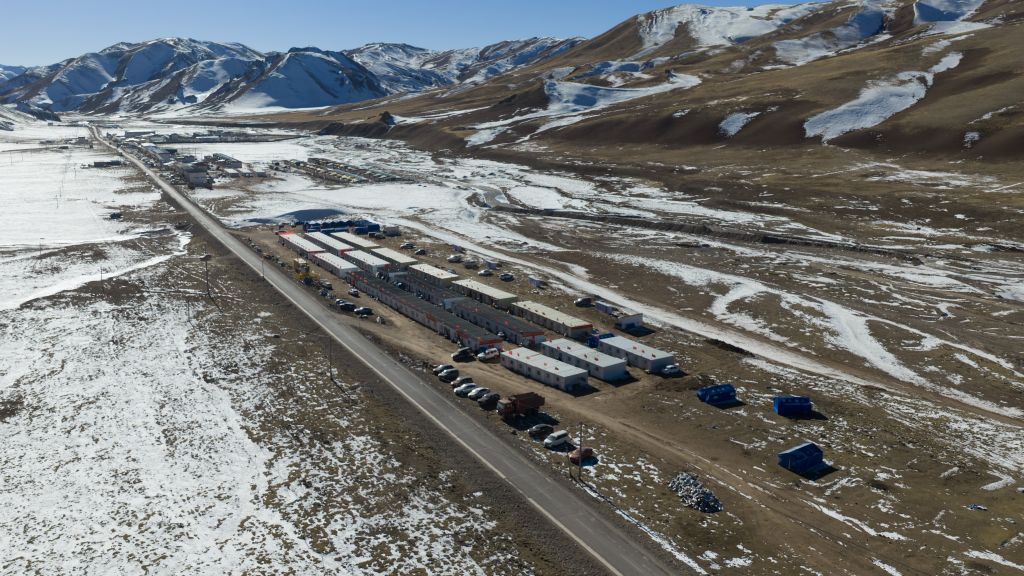
Sonam Dondrup, a 54-year-old herder, poured us cups of steaming butter tea and added a small piece of butter, as is customary here. He had grown used to welcoming guests into his new home, a prefabricated shelter on the northern Qinghai-Tibet Plateau.
A month earlier, on Oct. 22, a 7.0-magnitude earthquake struck Baqen County in southwest China's Xizang Autonomous Region. At an average elevation of more than 4,500 meters, the area was facing a long, bitter winter.
After moving into the shelter, Sonam Dondrup's family received a new stove and cooking utensils, and stocked up on heating fuel.
"Now we can have hot tea whenever we want," he told us. "I feel at ease knowing we can spend the winter here."
Over the course of our visit, we learned how much work had gone to make these shelters habitable for the winter.
Namkha Wangpo, head of Nagong Village, told us that village workers had gone door to door checking for gaps in the prefabricated units and sealing them against the cold. They had also settled disputes over living space and tried to find bunk beds for families who needed them.
On the doors of the shelters are contact cards in both Tibetan and Chinese, while each household has designated officials to turn to whenever supplies or repairs are needed.
By Nov. 22, all residents who needed to be relocated in Maru and Gangchen, the two hardest-hit townships, had moved into temporary shelters.
We saw piles of dried yak dung and coal neatly stacked outside the shelters during our trip. Indoors, people took off their heavy winter coats. Nearly 5,500 stoves and more than 1,000 tonnes of heating fuel had been distributed across the earthquake-hit areas, along with some 50,000 bags of rice and flour and over 130 tonnes of fresh vegetables.
Around noon in Zaqinda Village of Maru Township, the smell of meat frying with green peppers drew our attention to Gyalpo Dondrup's kitchen. Beside his chopping board he had fresh fruit, vegetables and milk, all supplied by the government.
"We even got fresh mutton recently," he told us. "It tasted perfect."
Despite the earthquake and the move into temporary housing, people kept up many of their old habits, making yogurt and frying Kasai, a traditional Tibetan pastry made of flour and butter. One young father was particularly happy that he could get infant formula for his baby.
The herders also had their animals to worry about as winter approached. A 90-minute drive took us to a pasture in northern Gangchen Township, almost 5,000 meters above sea level. There we met Tsering Loden, 46, who has grazed his animals on this land for 30 years.
"Our livestock weren't affected by the earthquake, and we've already stored enough fodder," he said. "We'll be fine this winter."

When snow covers the pastures, herders have to rely on the fodder they have stored. The local government has offered subsidies to help herders buy fodder and reached supply agreements with suppliers in neighboring Qinghai Province in northwest China.
At a fodder storage facility in Nagong Village, Namkha Wangpo showed us more than 100 tonnes of feed. If severe weather struck, he said, there would be enough emergency feed for every animal in the village.
Baqen County head Phuntsog Dondrup described the preparations for winter as securing the "three bags" -- one for heating fuel, one for food and one for fodder. The aim, he said, was to help families get through the winter and rebuild their lives and livelihoods.
Nov. 22 was also Minor Snow, one of the 24 solar terms in the traditional Chinese calendar. Snow had already settled on the grasslands and surrounding mountains.
As dusk fell over the plateau, the wind picked up. Inside his new home, Sonam Dondrup fed a few more pieces of dried yak dung into the stove, and the tea in the kettle soon bubbled again. Outside, meanwhile, smoke rose from chimneys in the fading light. ■