by Xinhua writers Chen Qianci, Zhao Cailin and Liu Yang
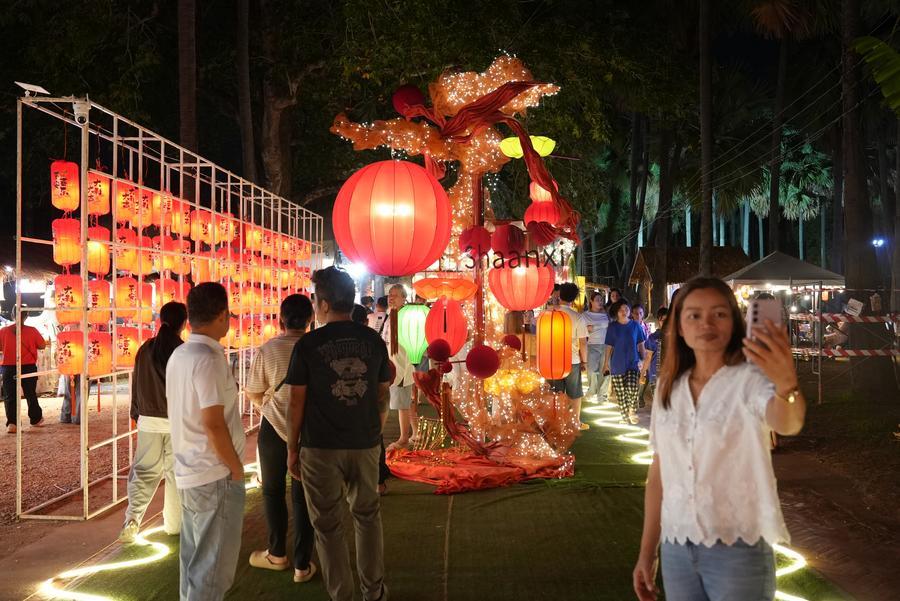
SUKHOTHAI, Thailand, Nov. 25 (Xinhua) -- Across from Wat Mahathat in the center of UNESCO-listed Sukhothai Historical Park, traditional lanterns from China's Shaanxi Province have emerged as a major draw for festivalgoers, adding a distinctive Chinese touch to this year's Loy Krathong celebrations.
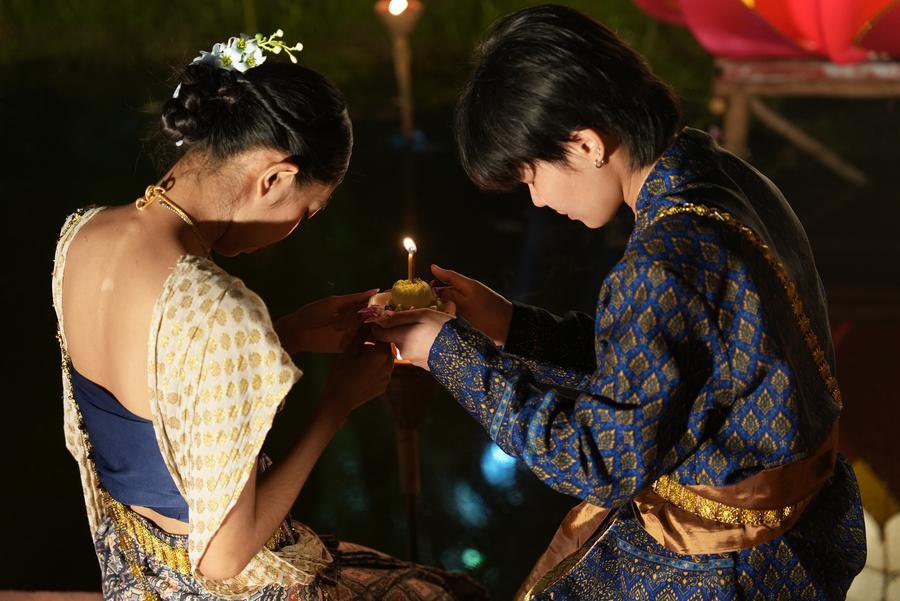
Recognized as part of Thailand's national intangible cultural heritage, Loy Krathong is celebrated on the full moon night of the 12th Thai lunar month, when people float small, elaborately decorated baskets, known as krathong, along rivers and canals to pay respect to the water spirits and symbolically wash away misfortune.
Held as part of the Sukhothai Loy Krathong and Candle Festival 2026, which runs from Nov. 15 to 24, the lantern exhibition from Shaanxi highlighted the longstanding friendship and sister-province ties between Shaanxi and Sukhothai, which date back more than two decades.
"The participation of Shaanxi's lanterns marks a prominent highlight of this year's festival," Noparit Sirikosol, governor of Sukhothai province, told Xinhua, noting that his earlier working visit to Shaanxi had facilitated this participation.
Noparit said Sukhothai and Shaanxi, particularly its provincial capital Xi'an, share many similarities, including their use of lighting to showcase cultural characteristics and drive tourism development.
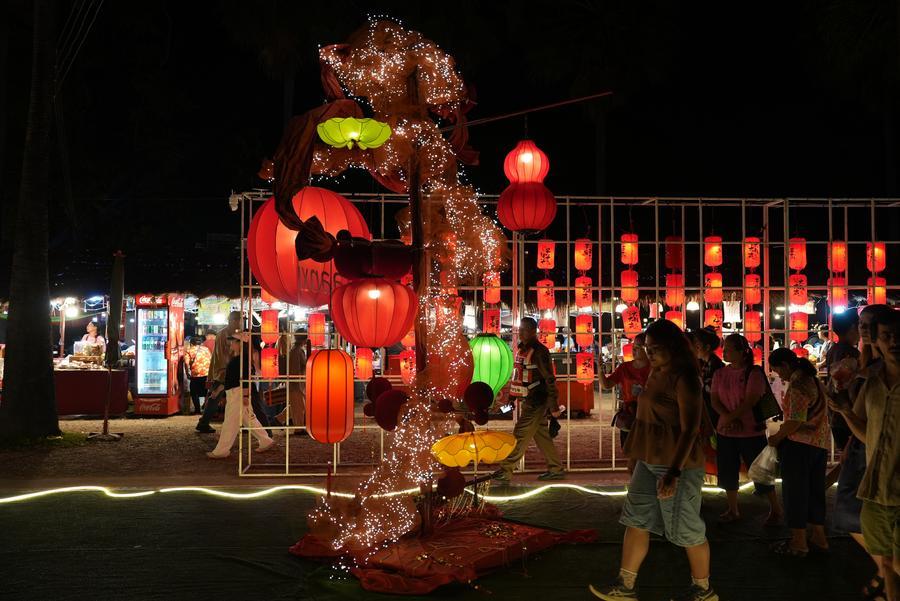
According to Chang Yunfeng, organizer of the Shaanxi lantern exhibition, the displays preserve the distinctive artistic features of traditional Chinese lantern-making while highlighting the craftsmanship involved in their creation through a range of handmade techniques.
"We have also incorporated a variety of traditional lantern shapes, including gourds and lotus flowers, to convey cultural wishes for good fortune, prosperity, and auspiciousness," Chang added.
"You can tell at a glance from their colors and shapes that these lanterns come from China," said Pornjiras Prachuapchan, a visitor from neighboring Uttaradit province.
Dressed in traditional Thai attire, Pornjiras enthusiastically posed for photographs against the colorful lantern displays, describing them as "impressively beautiful."
Beyond the Chinese lantern exhibition, Sukhothai Historical Park offered visitors a wide range of cultural activities throughout the festival, including traditional krathong processions, the lighting of ancient local lamps, spectacular light-and-sound performances, and other attractions celebrating Sukhothai's artistic heritage and living traditions.
"Sukhothai is regarded as the birthplace of the Loy Krathong festival," said Phanuvat Khatnak, director of the Tourism Authority of Thailand Sukhothai Office, attributing the festival's distinctive character to the province's rich historical heritage.
Phanuvat said local data showed that attendance at the main festival venue in Sukhothai exceeded 361,000 in the nine days leading up to Loy Krathong Day, which fell on Tuesday this year. Visitor numbers for the entire festival period were estimated at 400,000 to 450,000, generating at least 200 million baht (about 5.89 million U.S. dollars) in economic value.
"The Shaanxi lanterns in Sukhothai have been warmly received by local residents and visitors alike, with many coming to admire the displays, take photographs and capture the moment," Noparit noted.
He also expressed hope that Shaanxi would continue to participate in the Sukhothai Loy Krathong Festival every year, adding that Sukhothai would likewise be delighted to take part in the lantern festivals held in Xi'an.
Looking ahead, the governor said he hoped to further deepen cooperation with Shaanxi in a broader range of fields, including culture and tourism, education, trade and investment, and agriculture.
"I believe that the sister-province relationship between Sukhothai and Shaanxi, built over more than two decades, will continue to translate into more tangible benefits for the people of both Thailand and China," Noparit said.■