by Xinhua writer Xu Zeyu
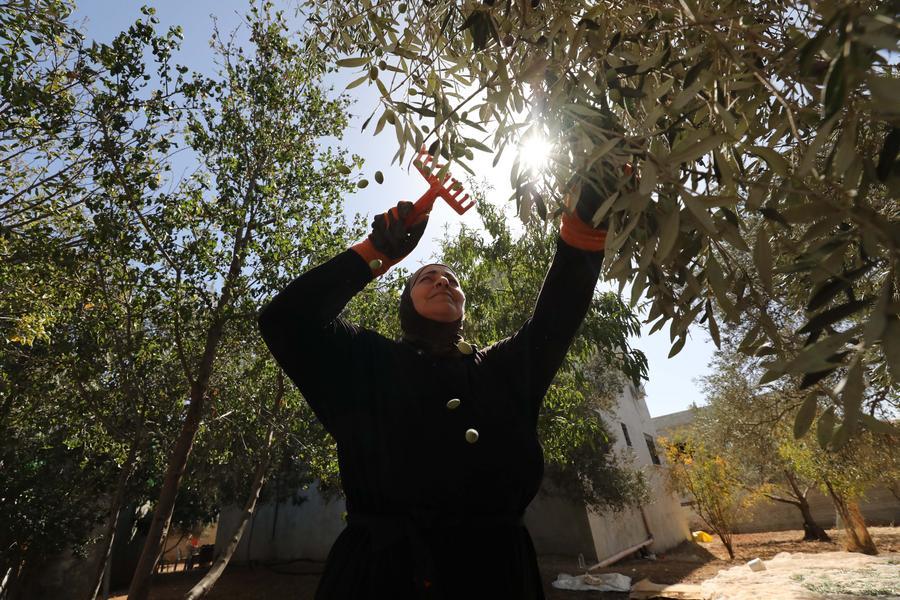
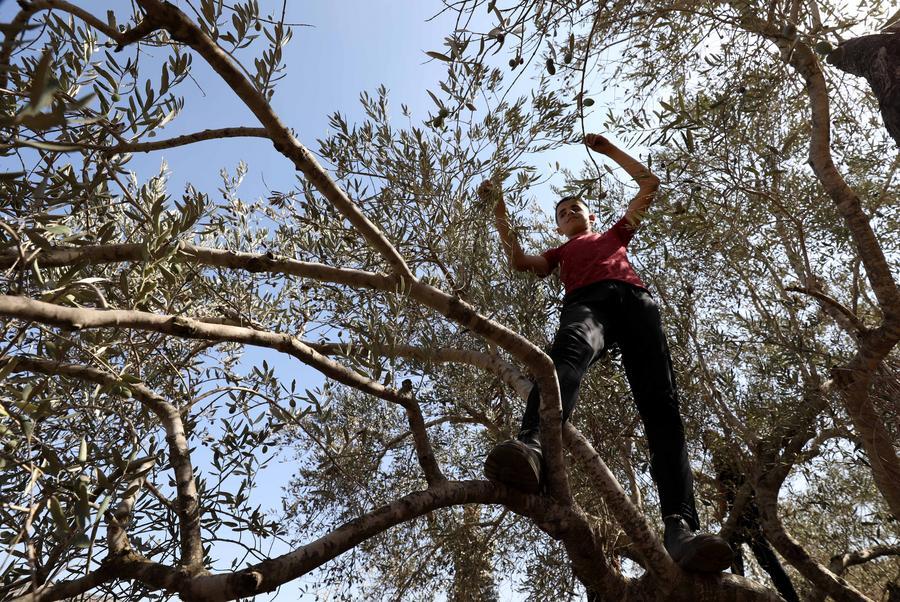
RAMALLAH, Nov. 23 (Xinhua) -- In the village of East Lubban in the West Bank, Palestinian farmer Ghaleb Abdelrahman is busy harvesting olives. He runs his hands along the branches, sending purple-black and green olives tumbling onto nets spread beneath the trees.
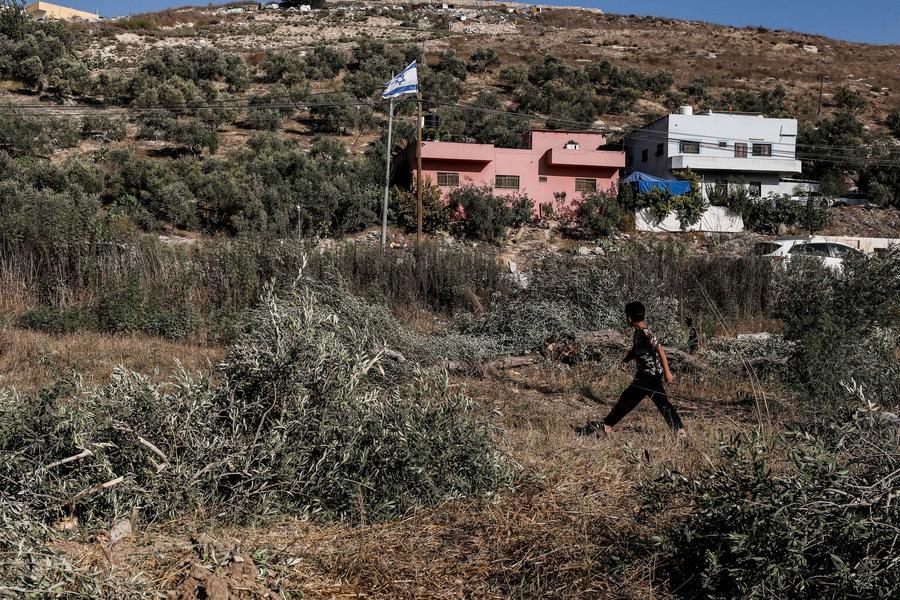
Across the terraced olive groves, an Israeli settlement is clearly visible on a hilltop.
"Nowadays, Palestinians become targets of attacks by Israeli settlers everywhere, whether or not our land is near settlements," Abdelrahman told Xinhua.
He said settlers have not only cut down olive trees and burned crops, but also frequently stolen olives that Palestinian farmers have worked hard to harvest.
Since October 15, the West Bank has entered the annual Nabali olive harvest season. Known for its plump fruit and distinctive flavor, Nabali olives are an important part of Palestinian agricultural heritage.
Today, at least eight out of every 10 fruit trees in Palestine are olive trees.
Yet an agricultural tradition that has sustained generations of families is increasingly overshadowed by violence and uncertainty.
According to Palestine's Colonization and Wall Resistance Commission, Israeli settlers carried out 1,369 attacks in the West Bank in October alone, up 111.6 percent from September. The commission also reported that at least 356 Palestinians were directly affected and 4,498 olive trees were damaged.
"What Israeli settlers are doing now is an attempt to drive the land's original owners out," Abdelrahman said.
Behind him, his elderly mother-in-law moved slowly but steadily between the trees, trying to gather as many olives as possible. Nearby, a young girl from the family held onto an olive branch, swinging playfully as it swayed.
The scene offered a glimpse of what the harvest has traditionally meant to Palestinian families: not simply a season of agricultural work, but a gathering of generations around a shared inheritance.
For 78-year-old Fayad Fayad, head of the Palestinian Olive and Olive Oil Council, olive cultivation has shaped the lives of Palestinian families for generations.
He recalled that the income from his father's olive trees enabled him and his three brothers to receive university education. For many Palestinians of his generation, he said, olives were "almost the only source of income."
"But for us Palestinians, olive trees are far more than an economic resource," Fayad said.
The olive tree represents Palestinians' connection to the land, their culture and heritage, playing an important role in Palestinian life.
Fayad said that Palestine has approximately 13 million olive trees, while more than one million have been destroyed by Israel in the West Bank since 1967.
Olive cultivation accounts for around 15 percent of Palestine's agricultural output and supports nearly 100,000 Palestinian families.
The repeated attacks have damaged both production and the livelihoods built around it. Mahmoud al-Hajj, a resident of Jalud village near Nablus, told Xinhua that equipment used for olive harvesting is frequently destroyed by settlers, forcing many farmers to purchase new tools almost every year.
The loss of access to farmland is an equally serious problem. According to Fayad, the West Bank has around 80,000 hectares of Palestinian agricultural land. Since 2006, however, more than 12,000 hectares have become inaccessible to Palestinian landowners because they are located beyond Israel's separation barrier or near settlements.
Marzouq Abu Naim, an olive grower from the village of al-Mughayyir, told Xinhua that although the village covers approximately 4,300 hectares, residents can currently use only around 95 hectares.
Since the latest outbreak of the Israeli-Palestinian conflict in 2023, he has been unable to access his land in the northern part of the village. Even reaching the olive groves in the south requires him to enter discreetly to avoid attacks by settlers and Israeli forces.
The restrictions are gradually transforming the relationship between Palestinian farmers and their ancestral land. In many cases, settlers do not need to formally acquire property to prevent its owners from using it. Attacks, threats and roadblocks can be enough to make farmland effectively inaccessible.
As the harvest season continues, Abdelrahman remains among his trees, carefully tending to branches that have survived generations of hardship.
"We have only one choice: to remain here and hold on to our land," he said.■