by Xinhua writers Yang Shilong, Liu Yanan
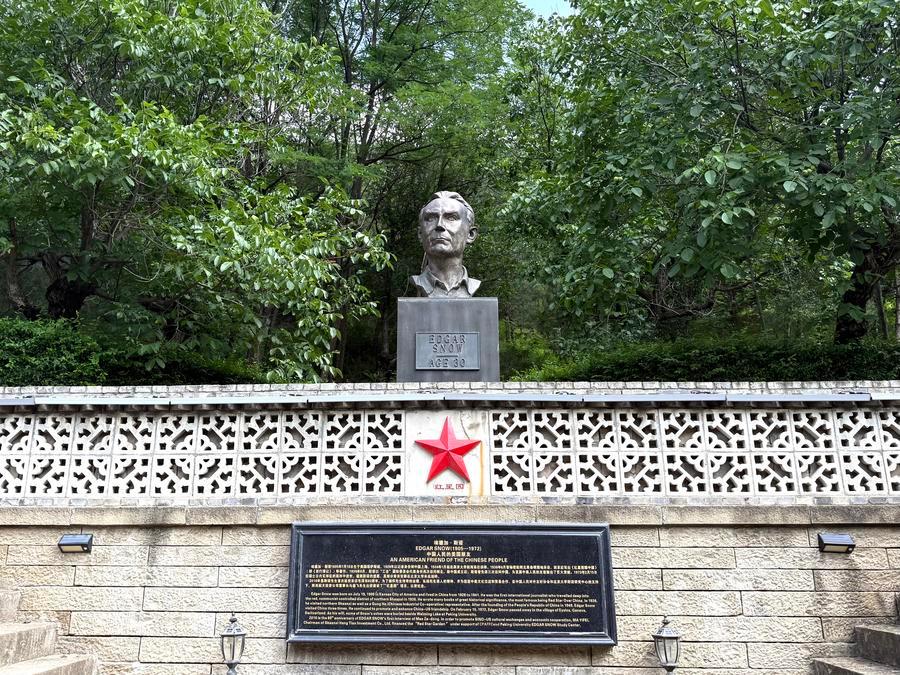
NEW YORK, Nov. 22 (Xinhua) -- Nearly 90 years ago, American journalist Edgar Snow challenged the assumptions surrounding China's little-known Communist movement with a simple question: "How did they know? They had never been to Red China."
Rather than relying on secondhand accounts, Snow broke through layers of blockade and traveled into northwestern China in 1936 to find out for himself. His reporting led to Red Star Over China, a landmark book that introduced the movement and its leaders to a wide international audience.
Nine decades later, Snow's question remains relevant: How much do people really know about other countries, and how much do they simply assume?
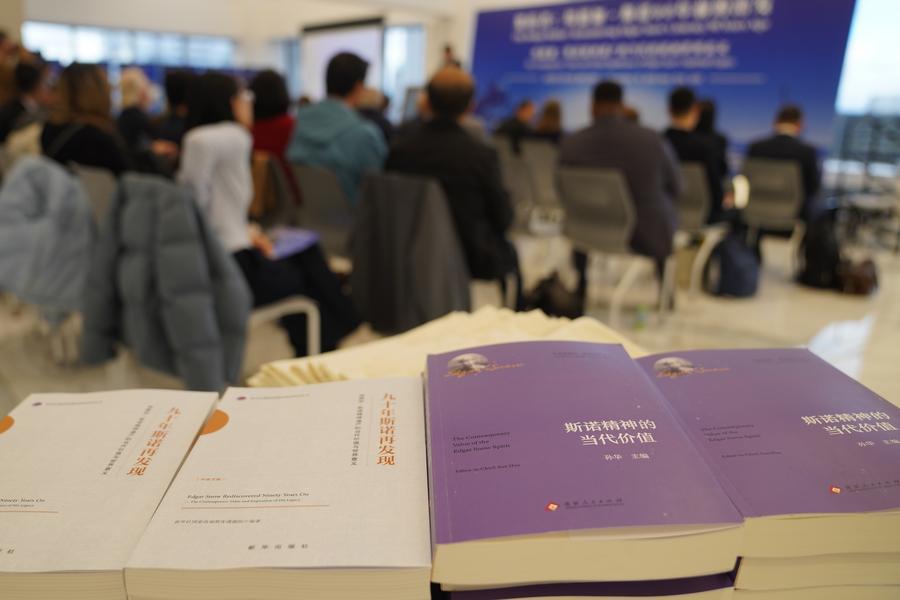
At a symposium held in New York early this month, American and Chinese scholars and representatives of organizations preserving Snow's legacy reflected on the continuing importance of independent, fact-based journalism in a world marked by growing mistrust and competing political narratives.
The event was jointly hosted by Xinhua News Agency, Peking University and the Edgar Snow Memorial Foundation, focusing on the contemporary value and global significance of Snow's spiritual legacy.

"Everyone has in their mind a picture of another country," said Brad Kleindl, co-president of the Edgar Snow Memorial Foundation.
Snow and his companion, Helen Foster Snow, helped shape the world's understanding of China at a crucial moment in its history, he said, adding that younger Americans today need more opportunities to learn about China and the history of relations between the two countries.
Zhang Hong, professor at Beijing Institute of Technology, said Snow's achievements were rooted in years of reading, travel and engagement with ordinary people before his 1936 journey.
"The power of communication ultimately depends on the depth of understanding," she said.
Snow's handwritten interview questions, preserved among his papers -- part of the Edgar Snow Collection at the University of Missouri-Kansas City, illustrate that approach.
Preparing to interview Mao Zedong, he asked about land reform, private property, foreign investment and China's relations with the outside world.
He wanted to understand not only what the Communists believed, but how their ideas would work in practice.
Snow also sought to distinguish his reporting from his personal political sympathies.
"Wherever my personal sympathies may lie, I continue to be from Missouri," he wrote in a February 1937 letter to Nelson T. Johnson, the then U.S. ambassador to China.
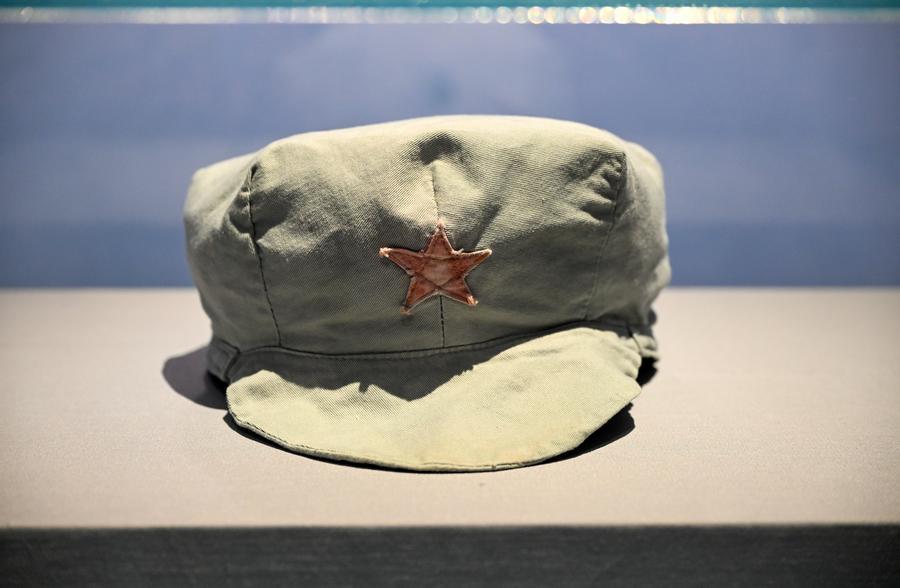
Missouri, known as the "Show-Me State," is associated with a demand for evidence rather than unsupported assertions.
John Phillips, vice president of the Edgar Snow Memorial Foundation, drew a similar distinction between discovering facts and influencing how they are presented.
"Journalism is about discovery of facts but not putting your thumb on the scale," he said.
Nancy Hill, president emeritus of the foundation, emphasized the importance of firsthand experience and the limits of individual observation.
"You have to go to the place, know the people, know the culture, invest the time to fully understand the story," she said.
Hill said each experience and observation provides only "one small biopsy," cautioning against drawing overly broad conclusions.
Snow himself acknowledged errors in the original English edition of Red Star Over China in his 1938 preface to the Chinese edition, noting that some had been corrected.
His work also reflected an awareness of journalism's lasting historical value.
In the 1968 preface to a revised edition of Red Star Over China, Snow described the book as containing "not only a 'scoop' of perishable news but likewise of many facts of durable history."
Chen Gang, dean of Peking University's School of Journalism and Communication, said Snow's reporting demonstrated the influence a journalist could have by investigating a political movement that was poorly understood abroad but would profoundly shape China's future.
Chen called for training journalists with the historical perspective, social responsibility, independent judgment and practical skills that characterized Snow's work.
The symposium also examined how new technologies could help preserve and study Snow's legacy.
Wang Tianfu, a researcher at Peking University, proposed connecting digitized Snow archives held by institutions in different countries, allowing researchers to compare historical documents, photographs, interviews and accounts of the same events.
He stressed that artificial intelligence could assist in such research but should not replace original historical evidence.
Speakers also discussed efforts to introduce younger generations to the history of exchanges between China and the United States.
Gao Minna, deputy director of China's Shaanxi Center for Edgar Snow Studies, pointed to youth exchange programs inspired by the work of Edgar and Helen Snow, including those bringing American students to China.
She said the Helen Foster Snow Foundation has pledged to bring 5,000 American students to China and engage 30,000 students online over the next five years.
Zhang, who first encountered Snow's archives while studying in Kansas in 2014, said the American journalist's legacy offered a continuing basis for exchanges between researchers and institutions in the two countries.
"A bridge can connect two sides only when it has a solid foundation at both ends," she said.
Zhang called for rigorous academic research and open international dialogue to carry forward Snow's legacy of crossing borders, understanding different societies and respecting facts.
(Xinhua correspondents in New York Shi Chun, Xu Jing, videographer Vivien Liu also contributed to the report) ■