* The 33rd Asia-Pacific Economic Cooperation (APEC) Economic Leaders' Meeting has just wrapped up in China's Shenzhen, and the leaders did not leave the host city without a comment. On various occasions, they praised the city's futuristic vibe and meteoric rise.
* Shenzhen is often seen as the epitome of China's development over more than four decades. It has risen from a small fishing village to the window of China's reform and opening up, and then to an innovation hub and home to tech giants such as Huawei, BYD, Tencent and DJI.
* In 2025, Shenzhen's GDP soared to 3.87 trillion yuan (about 576.58 billion U.S. dollars), 14,000 times its GDP in 1980, a pace rare in the history of global urbanization. The same year, Shenzhen's total R&D investment reached 245.31 billion yuan, or 6.67 percent of its GDP, with enterprises accounting for more than 93 percent of total R&D investment.
* Shenzhen's trade with other APEC economies has grown more than tenfold in nearly three decades, surging from 267.5 billion yuan in 1996 to 3.13 trillion yuan in 2025. Multinational companies are placing not only R&D centers and regional headquarters in Shenzhen, but also their long-term strategic commitments.
SHENZHEN, Nov. 23 (Xinhua) -- The 33rd Asia-Pacific Economic Cooperation (APEC) Economic Leaders' Meeting has just wrapped up in China's Shenzhen, and the leaders did not leave the host city without a comment. On various occasions, they praised the city's futuristic vibe and meteoric rise.
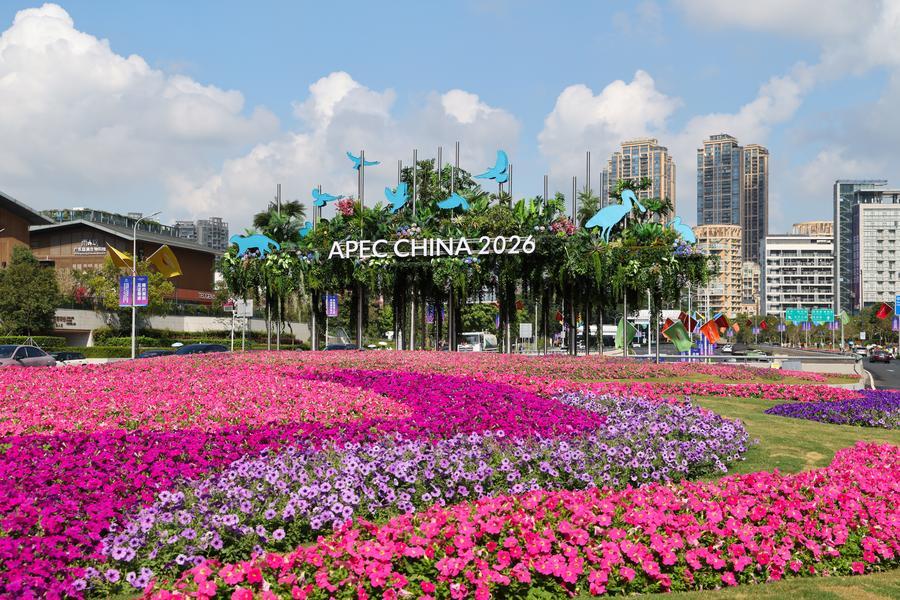
During his stay in Shenzhen, Russian President Vladimir Putin called the southern Chinese city in Guangdong Province "impressive," hailing it as one of the world's most advanced and dynamic metropolises. He noted that the city organically combines a high level of urbanization, a comfortable urban environment and an innovative production base.
As one of the key investment centers in the Asia-Pacific, Shenzhen reflects the profound technological, economic and social transformations taking place in China and across Asia, Putin said.
U.S. President Donald Trump, back in Washington after his APEC trip, spoke highly of Shenzhen at a White House press conference. "When you were there, you could see it. It was amazing energy," he said, adding that the city is clean and immaculate, and it has been built in a short period of time.
Recalling his first visit to Shenzhen in 1998, Australian Prime Minister Anthony Albanese described the city as an example of the Asia-Pacific region's extraordinary rise.
"If you had put two photos together, 1998 and 2026, you would not think it was the same place," the prime minister said. China's achievement "is worth celebrating and should certainly not be taken for granted," he added.
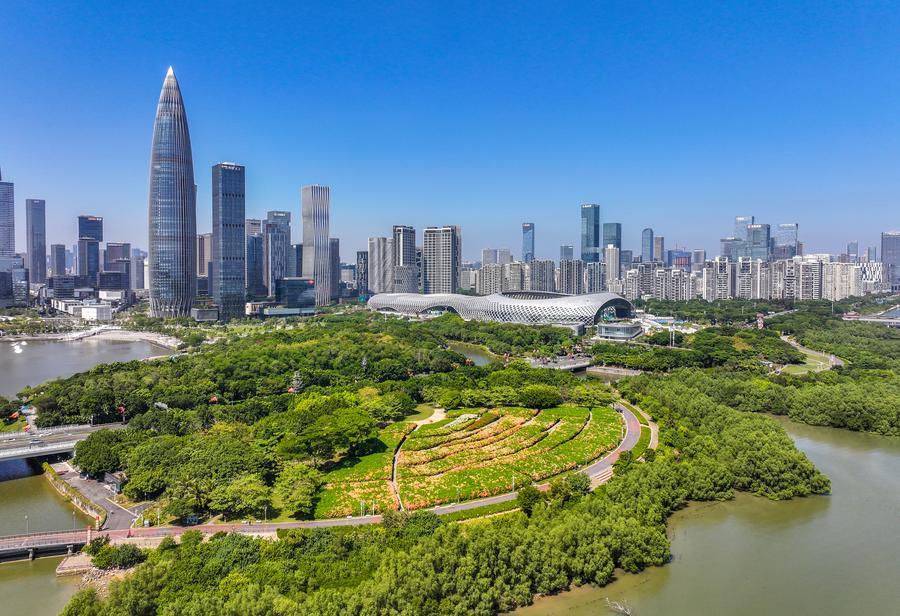
Shenzhen is often seen as the epitome of China's development over more than four decades. It has risen from a small fishing village to the window of China's reform and opening up, and then to an innovation hub and home to tech giants such as Huawei, BYD, Tencent and DJI.
Even before hosting the APEC event, Shenzhen had already become one of China's top spots for international tourists, while drawing global media spotlight for its rapid growth and technological prowess.
ENGINE OF INNOVATION
When Shenzhen, adjacent to Hong Kong, was designated a special economic zone in 1980, it was a border town of just over 300,000 people, its roads narrow and its industrial base virtually nonexistent. Today, it is a megacity of more than 18 million residents, its skyline dense with high-rises and its streets thick with traffic.
In 2025, Shenzhen's GDP soared to 3.87 trillion yuan (about 576.58 billion U.S. dollars), 14,000 times its GDP in 1980, a pace rare in the history of global urbanization.
"Shenzhen's success offers many lessons. In many ways, it is China's own success story in miniature," said Ameen Muneer Mohammed Al-Obaidi, a reporter with China Arab TV.
More recently, the city has evolved from a world factory into an innovation and advanced manufacturing hub with vibrant industry clusters spanning sectors from new energy to artificial intelligence (AI).
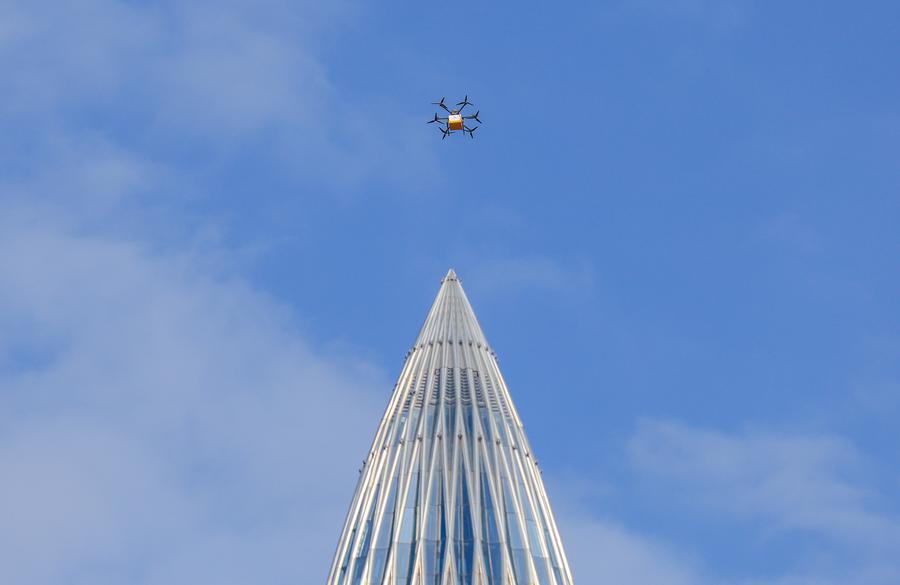
Drones zip across city blocks, streets buzz with electric vehicles, and an AI industry booms -- this is the Shenzhen that President of the Republic of Korea Lee Jae Myung saw during the APEC meeting.
The city serves as a vivid testament to how future technologies can transform our lives, and technologies once considered part of the distant future have already become part of daily life here, Lee said.
Experts have accredited Shenzhen's leading position in multiple technological fronts to the city's heavy investment in research and development (R&D).
Data shows that in 2025, Shenzhen's total R&D investment reached 245.31 billion yuan, or 6.67 percent of its GDP, with enterprises accounting for more than 93 percent of total R&D investment.
The city also draws strength from the manufacturing prowess in the Pearl River Delta and integrated growth in the Guangdong-Hong Kong-Macao Greater Bay Area. The Shenzhen-Zhongshan Link, a major cross-sea transportation project that opened to traffic in 2024, has prompted Shenzhen companies to set up factories in cities like Zhongshan to benefit from their manufacturing capacity and larger industrial space.
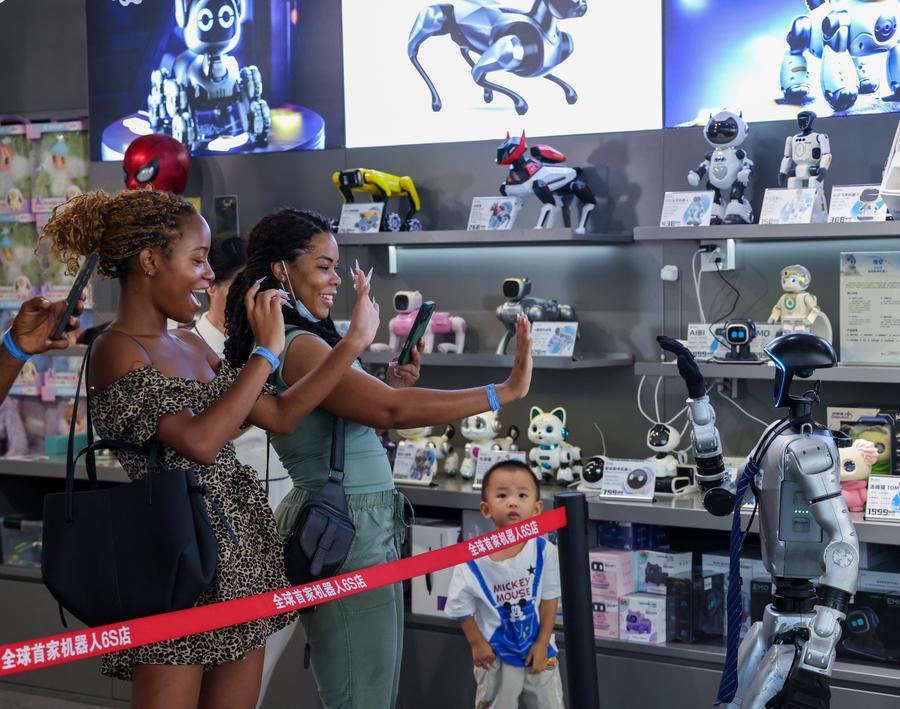
At Huaqiangbei, Shenzhen's mega electronics marketplace, a design can be sketched in the morning, turned into a prototype by afternoon, mass-produced the next day, and shipped overseas within a week. About 3 million parcels leave the area every day.
Huaqiangbei welcomed nearly 8,000 foreign buyers on an average day this year, according to local government. Janwick Hattingh, from South Africa, bought a power bank there. "It's quite advanced here," he said. "You can find any tech product you can think of."
MODEL OF COOPERATION
Addressing the APEC CEO Summit, held on Nov. 17-18 on the sidelines of the APEC meeting, Thai Prime Minister Anutin Charnvirakul named Shenzhen the best-fitting place for Asia-Pacific economies to discuss how to adapt to a changing world and build a more prosperous future together. The city, he said, shows what transformation can achieve when an economy opens itself to the world.
Openness is in Shenzhen's DNA. For more than four decades, Shenzhen has kept opening wider to the world. In the first 10 months of this year, its imports and exports reached 5.25 trillion yuan, up 40.9 percent year on year.
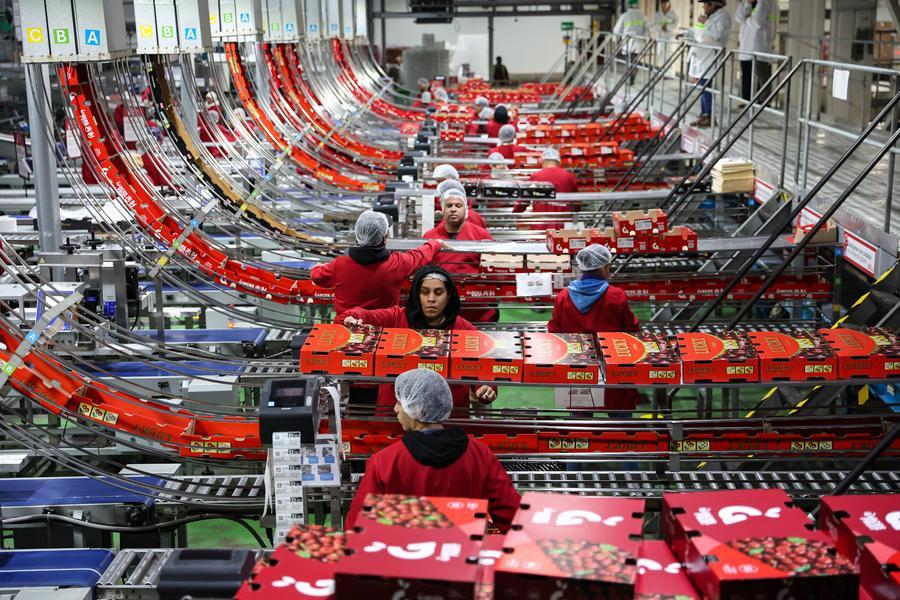
During the Shenzhen meeting, Chilean President Jose Antonio Kast and his wife visited a local fruit shop to celebrate the arrival in China of new-season Chilean cherries and invited Chinese consumers to taste them.
The timing was no accident. China is currently the largest export destination for Chilean cherries. Kast noted that Chile will expand the scale of trade and investment cooperation with China, broaden collaboration in agriculture, mining, new energy vehicles, infrastructure development and AI, and promote exchanges in education and culture.
Cherries are just one part of a much larger flow in Asia-Pacific cooperation. Shenzhen's trade with other APEC economies has grown more than tenfold in nearly three decades, surging from 267.5 billion yuan in 1996 to 3.13 trillion yuan in 2025.
Multinational companies are placing not only R&D centers and regional headquarters in Shenzhen, but also their long-term strategic commitments. Apple has set up an applied research lab in the city, while DHL Express has put its Shenzhen super gateway into operation, its largest single investment project in the Chinese mainland to date. Cooperation between Shenzhen and other APEC economies is shifting from "bringing in" to "creating together."
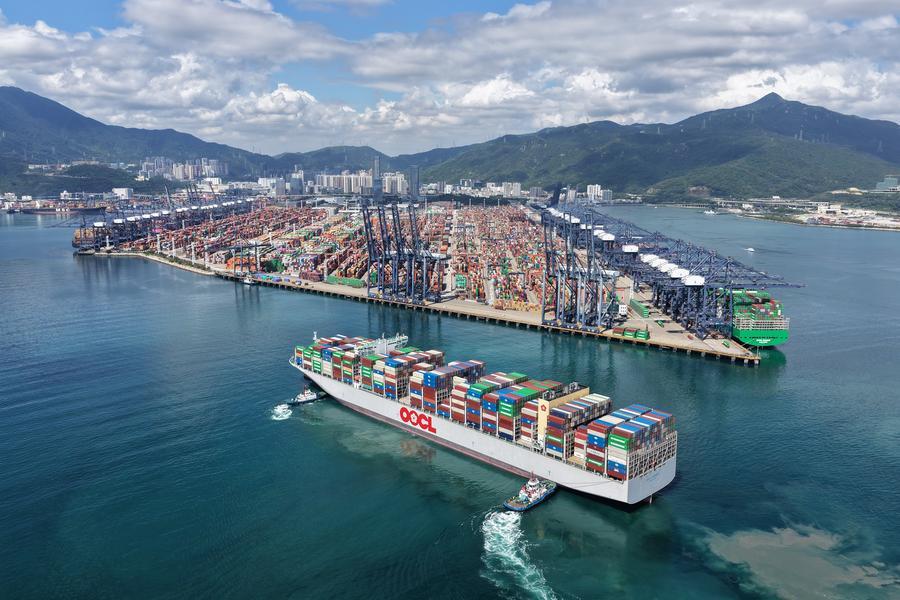
Teo Siong Seng, executive chairman of Pacific International Lines in Singapore, noted that six of the world's ten largest container ports, including Shenzhen, are in China. He expressed hope that APEC will further expand regional connectivity and make the connections among its members more resilient and sustainable.
"As the Chinese proverb reminds us, 'hai na bai chuan,' which means the sea is vast because it embraces the waters of many rivers," said Kristalina Georgieva, managing director of the International Monetary Fund. "When we pull together, what comes into view is shared prosperity and peace."
(Reporting by Cui Enhui, Wang Jian, Yao Yuan, Wang Pan and Sun Fei; Video reporters: Huo Siying and Wang Ruiping; Video editors: Zheng Xin, Mu Xuyao, Zheng Qingbin, Hong Liang and Hong Yan) ■