SINGAPORE, Nov. 21 (Xinhua) -- There is an explosion of cultural confidence in Asian societies in the 21st century, according to Singaporean scholar Kishore Mahbubani, who identifies Asia's rapid economic growth as a key factor behind this resurgence.
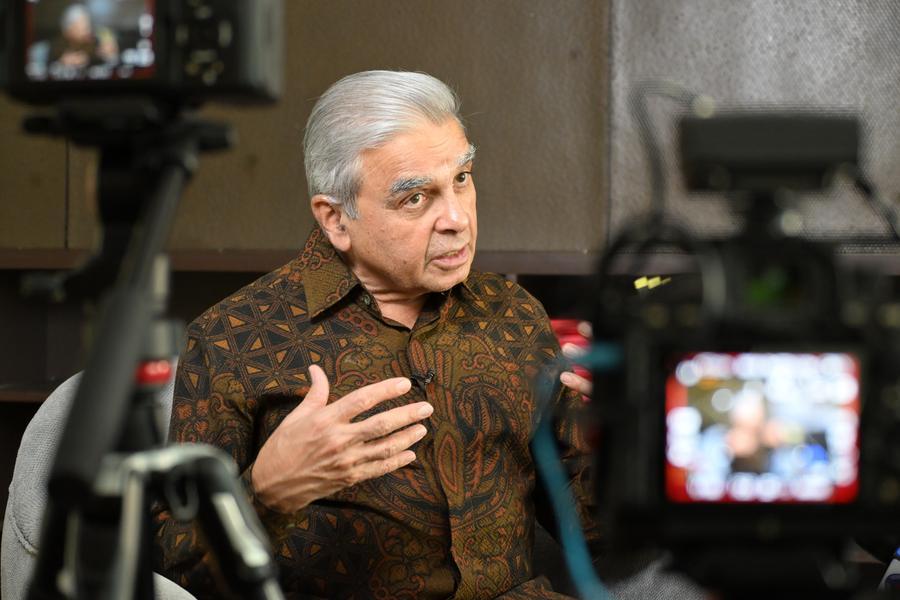
"The fact that many Asian societies have done so well in the last few decades means that people have more time and countries have more resources to devote to cultural growth and renaissance," said Mahbubani, a distinguished fellow at the Asia Research Institute of the National University of Singapore and a former permanent representative of Singapore to the United Nations, in an interview with Xinhua ahead of his trip to Beijing for the Orchid Awards.
The 2026 Orchid Awards ceremony, the third of its kind, was held in Beijing on Friday. Established by China International Communications Group, the awards honor international friends who have contributed to fostering cultural exchanges between China and the rest of the world. Mahbubani is among this year's recipients.
Mahbubani has witnessed what he described as "a sudden rediscovery of the previous cultural identities that Asian societies used to have."
He pointed to the batik shirt he was wearing, made using a traditional Indonesian batik technique. Batik textiles are widely worn across Southeast Asia. "Clothes are the first manifestation of a person's identity. In the past, we would make an effort to dress like the West, but now we say, 'No, we have our own forms of dress and we can grow and adapt in them,'" he said.
Mahbubani also recalled visiting a history museum in Beijing a few months earlier. "I saw thousands of people in this museum, including very ordinary Chinese people, enjoying seeing what a great culture and civilization China had."
He said that different societies should be free to make their own choices and follow their own cultural paths, rather than simply model themselves on the West. Many societies, he noted, have already succeeded by pursuing development paths of their own.
Against a backdrop of political and economic uncertainty, Mahbubani called for greater intercultural exchanges to help societies better understand one another.
"It's very important for there to be more people-to-people exchanges," he said, stressing the importance of encouraging young people from Western countries to visit China and experience the country for themselves.
"Once they enter a city in China and see the new infrastructure and the dynamism of young Chinese, they'll say, 'Hey, this is a society that is clearly thriving and doing well.' But you can only succeed in persuading them if they can see with their own eyes," he said.
Mahbubani described China-proposed Global Civilization Initiative, which aims to promote exchanges and mutual learning among civilizations, as "timely and necessary."
"In this multi-civilizational world, the different civilizations need to talk to each other and understand each other better. I hope that the Global Civilization Initiative will gain momentum, and more countries will join it and say, 'What can we learn from each other?'" he said.■