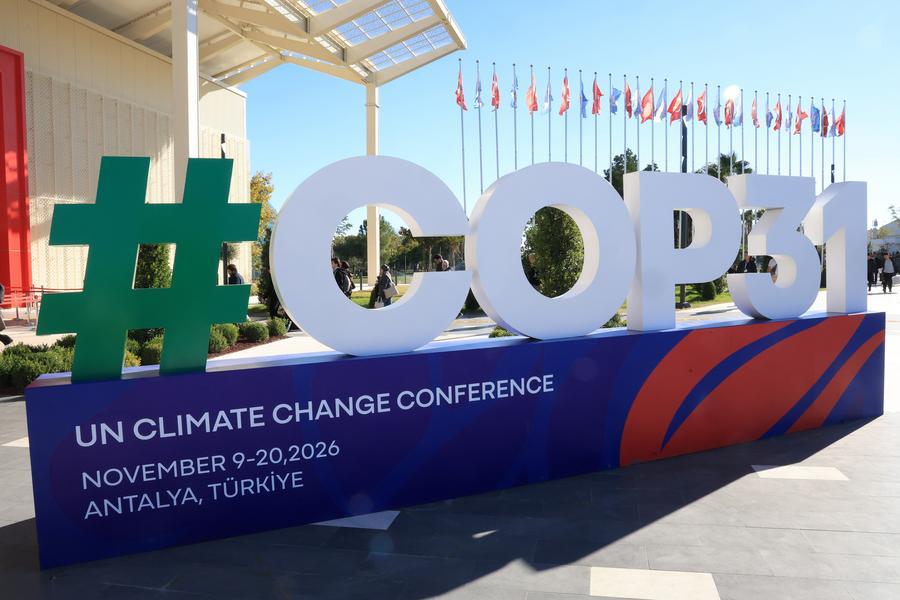
ANTALYA, Türkiye, Nov. 19 (Xinhua) -- Outside the rooms where delegates debate emission cuts and climate finance, some 20,000 tropical butterflies flutter among lush plants in an indoor garden at the 31st United Nations Climate Change Conference (COP31), offering a living reminder of what is at stake.
Built across 2,600 square meters by specialists from central Türkiye's Konya Tropical Butterfly Garden, the conservatory is kept at a steady 28 degrees Celsius and 80 percent humidity. Ten tropical species from Latin America, Africa, and Asia -- including bright Blue Morphos and giant owl butterflies -- were brought to the venue as pupae. They emerge as adult butterflies inside glass cabinets before being released into the garden.
It has become a timely symbol of a growing push at the two-week conference in southern Türkiye's Antalya, which nears its scheduled conclusion on Friday: treating biodiversity and wildlife protection not as a side issue, but as an essential part of climate action.
Butterfly lifespans vary widely among species, ranging from about a week to as long as a year. For the biologists tending the garden, their real value lies in how quickly they respond to environmental changes.
"Insects are the living creatures that react fastest to small changes in nature," Pinar Oge, a specialist biologist from the Konya conservatory, told Xinhua.
Because butterflies feed on flower nectar, any decline in flowering or plant health can quickly reduce their numbers or drive them away, providing early warning signs of ecological stress, Oge said.
Even currently widespread species such as the Blue Morpho face a high risk of becoming endangered if negative environmental trends persist, she warned.
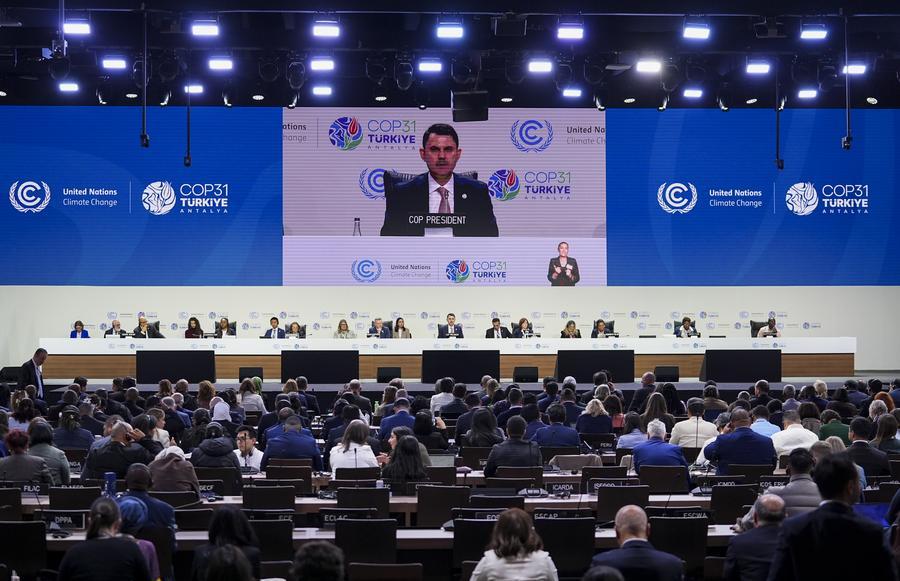
For participants stepping out of tense negotiation rooms, the garden reconnects policy debates with reality on the ground.
"One of the things we are missing from negotiations and the COP space in general is green space and nature, what we are trying to protect," said Skw'akw'as Dunstan-Moore, a Canadian observer with the David Suzuki Foundation. "Having these little beings here reminds people that this is what we are trying to work for."
Beyond the conservatory walls, the link between ecosystems and climate stability has drawn attention at COP31 this week.
At a high-level forest panel, UN Under-Secretary-General for Economic and Social Affairs Li Junhua called on countries to put "forest resilience at the center" of climate action.
Wildlife also plays an important role in maintaining healthy ecosystems, including forests that absorb and store carbon, according to Matthew Collis, senior director of policy at the International Fund for Animal Welfare.
"Too often we've just seen wildlife as a victim of climate change rather than as a contributor to the solutions," Collis said.
Back inside the conservatory, delegates pause to photograph Blue Morphos resting on tropical leaves before returning to the negotiation halls.
For Oge, the message from the garden extends beyond the conference itself.
"Nature is constantly in motion and changing," she said. "If we change it positively, every living creature on Earth thrives, but if we change it negatively, we will lose them one by one."■