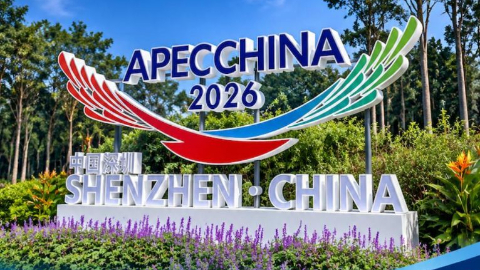

BISHKEK, Nov. 17 (Xinhua) -- The 33rd APEC Economic Leaders' Meeting will be an important opportunity for strengthening regional cooperation and promoting economic development, Kyrgyz economist Iskender Sharsheev told Xinhua in an interview ahead of the meeting.
China's role has grown significantly over the years as host of APEC meetings, with the latest one scheduled for Wednesday and Thursday in the city of Shenzhen, a coastal economic hub in south China, said Sharsheev.
"From hosting the APEC Economic Leaders' Meeting for the first time in Shanghai in 2001 to holding it for the second time in Beijing in 2014, and now preparing to host the upcoming meeting in Shenzhen, China has played an active role in developing the APEC mechanism, promoting trade and investment liberalization, and contributed to its effective functioning, as a responsible participant," he said.
The expert recalled that the 2014 APEC Economic Leaders' Meeting adopted the Beijing Roadmap, marking the launch of a comprehensive and systematic process toward the eventual realization of the Free Trade Area of the Asia-Pacific (FTAAP), reflecting China's efforts to provide clearer direction for advancing regional economic integration and innovative development in the Asia-Pacific.
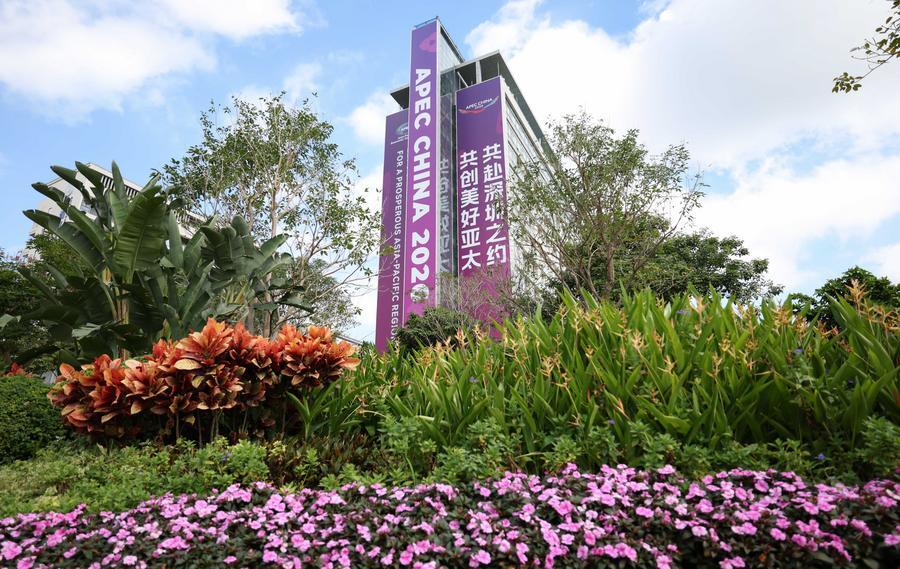
Against this backdrop, the upcoming meeting in Shenzhen will be themed "Building an Asia-Pacific Community to Prosper Together," and focus on three priority areas: openness, innovation and cooperation.
This evolution reflects China's transition from participating in APEC cooperation to shaping its processes, developing its agenda, and acting as a leading force in regional integration and innovative development in the Asia-Pacific, he said.
The economist also noted that cooperation within the Asia-Pacific region currently faces some major challenges, including the rise of protectionism, anti-globalization sentiment, the vulnerability of production and supply chains, slowing economic growth, climate change, and issues related to energy and food security.
"The Chinese leader's assertions that 'the region cannot and should not be an arena for geopolitical rivalry' and that 'the rougher the seas, the more we must pull together' remain highly relevant. They underscore the need to keep economic cooperation separate from bloc-based confrontation, so as not to undermine the mutual benefits and stability that underpin the 'Asia-Pacific miracle'," Sharsheev said.
These ideas have helped keep APEC focused on practical issues, such as growth, openness and resilience, rather than politicizing the mechanism, which fosters deeper regional cooperation, he said.
Sharsheev highlighted that China firmly advocates for strengthening mutual trust and working together in a spirit of mutual assistance within the APEC framework.
"This means prioritizing open dialogue, rejecting unilateral restrictions, and collectively addressing common challenges, rather than engaging in competition or isolation," he said.
For translating these principles into practical cooperation, the economist suggested that APEC members strengthen cooperation by toughening efforts to realize the FTAAP, improving the resilience of production and supply chains, pursuing joint projects in the digital economy and green technologies, sharing expertise in food and energy security, and coordinating policies to support small and medium-sized enterprises.
"China can act as a catalyst in this process by providing a platform for practical initiatives, sharing its own experience with openness and innovation, investing in infrastructure and technology, and promoting inclusive mechanisms that help the region's less-developed economies benefit from development and cooperation," he said.■