SHENZHEN, Nov. 16 (Xinhua) -- For decades, the Asia-Pacific has been one of the most important engines of global economic growth. Yet as globalization faces mounting headwinds, the region is confronting a fundamental question: can openness and cooperation, the very source of its success, continue to power its future?
Against this backdrop, leaders of APEC member economies will gather in Shenzhen, a city at the forefront of China's opening up, to chart a course for the region's future.
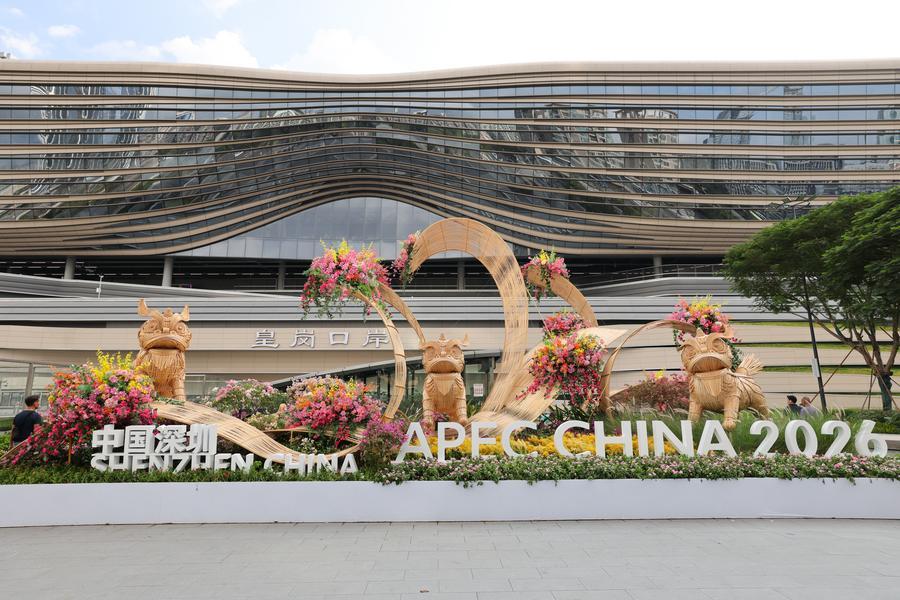
Chinese President Xi Jinping will chair the 33rd APEC Economic Leaders' Meeting, scheduled for Nov. 18-19. He has consistently championed deeper regional economic integration, greater openness and connectivity as part of his broader vision of building an Asia-Pacific community.
"We should stay true to APEC's founding mission to promote economic growth and improve people's lives, and champion open development where everyone shares opportunities and emerges a winner," Xi said at last year's APEC meeting in the Republic of Korea (ROK).
IDEAS SHAPING A CLOSER COMMUNITY
Founded in 1989, APEC now brings together 21 member economies, including China, Russia and the United States. China joined in 1991. The forum has helped expand trade and investment and strengthen economic ties across the Asia-Pacific.
Together, these economies account for nearly 40 percent of the world's population, more than 60 percent of global GDP and nearly half of world trade. Over the past three decades, per capita income across the region has more than quadrupled, while more than one billion people have been lifted out of poverty.
Behind this progress has been a sustained commitment to regional cooperation. Since 2013, Xi has put forward ideas and proposals through the APEC platform on how economies with diverse interests and development priorities can work together and shape the region's future.
At the 2013 APEC CEO Summit in Bali, Indonesia, Xi called for a strong sense of community of common destiny in the Asia-Pacific, advocating common development, open development, innovation-driven development and interconnected growth. "The Asia-Pacific economies are interdependent on each other, with shared interests and common destiny. The success or failure of one may ultimately lead to success or failure of all," he said.
The idea was further developed in the years that followed. In 2014, when China hosted APEC in Beijing, Xi advocated an Asia-Pacific partnership featuring mutual trust, inclusiveness, cooperation and win-win results.
That year, members launched the process toward a Free Trade Area of the Asia-Pacific (FTAAP) and endorsed the APEC Connectivity Blueprint, giving fresh impetus to regional economic integration.
In 2020, APEC members adopted the Putrajaya Vision 2040, setting a goal of building an open, dynamic, resilient and peaceful Asia-Pacific community. Xi described the vision as a new starting point for the next phase of regional cooperation, calling for a community with a shared future built on openness and inclusiveness, innovation-driven growth, greater connectivity and mutually beneficial cooperation.
At the 2025 meeting in Gyeongju, the ROK, Xi put forward five proposals on safeguarding the multilateral trading system, fostering an open regional economy, keeping industrial and supply chains stable and smooth, advancing digital and green trade, and promoting universally beneficial and inclusive development. Together, the proposals gave concrete shape to the idea of an Asia-Pacific community.
As China hosts APEC this year, its vision for Asia-Pacific cooperation remains rooted in Xi's concept of a community with a shared future for humanity, with shared prosperity as a common goal.
OPENNESS, INNOVATION, COOPERATION
China identified openness, innovation and cooperation as the priorities for its APEC chairmanship, seeking to inject fresh momentum into Asia-Pacific development.
Openness has long been central to APEC's pursuit of regional growth and prosperity. As Xi noted in Gyeongju last year, APEC was founded in response to economic globalization, with the goal of promoting trade and investment liberalization and facilitation and supporting economic growth and prosperity.
Over the years, openness has lowered barriers to trade and investment, deepening economic integration across the region through a growing network of trade arrangements and cooperation mechanisms.
The Regional Comprehensive Economic Partnership (RCEP) is now fully in force among its members, with tariffs on more than 90 percent of goods traded among them eventually set to be eliminated. China is also working to align with high-standard international economic and trade rules, including those embodied in the Comprehensive and Progressive Agreement for Trans-Pacific Partnership (CPTPP) and the Digital Economy Partnership Agreement. Last year, China and ASEAN signed the China-ASEAN Free Trade Area 3.0 Upgrade Protocol.
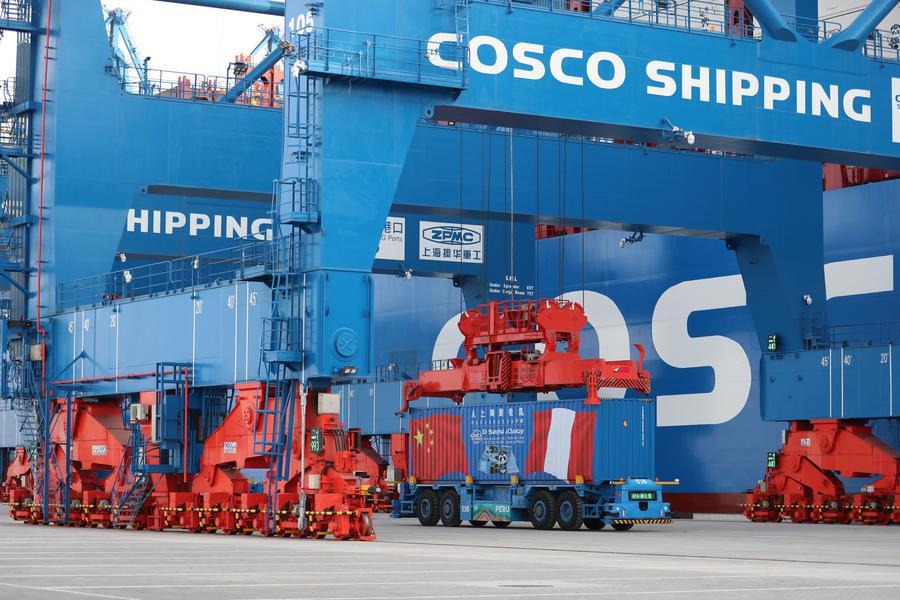
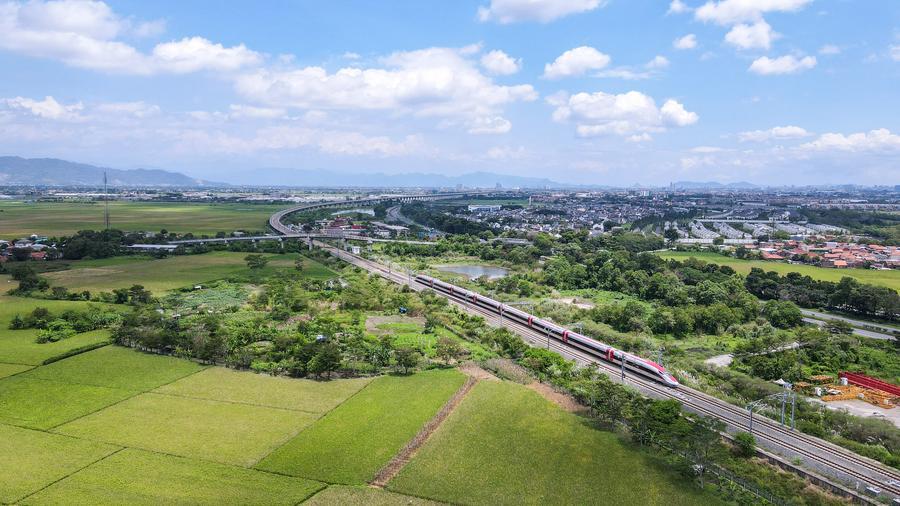
Greater openness has gone hand in hand with stronger connectivity, with railways, ports and other infrastructure helping deepen economic links and improve trade routes across the region. The Jakarta-Bandung High-Speed Railway, the China-Laos Railway and Peru's Chancay Port are among the projects driving this closer connectivity.
Innovation is opening up new sources of growth. As Xi said at the APEC CEO Summit in Vietnam in 2017, "To avoid the risk of the global economy entering a 'new mediocre,' we must sustain growth through innovation."
Areas such as digitalization and green transformation are creating new opportunities for the Asia-Pacific to overcome traditional growth constraints and tap new areas of cooperation.
APEC economies have embraced the digital transformation, with internet penetration rising from 52 percent to nearly 90 percent over the past 12 years. The region's green transition is also gaining momentum. Electric vehicles accounted for 25.5 percent of total motor vehicle sales in APEC economies in 2024, up from 7.4 percent in 2018. About 22 million EVs were sold across the region in 2024.
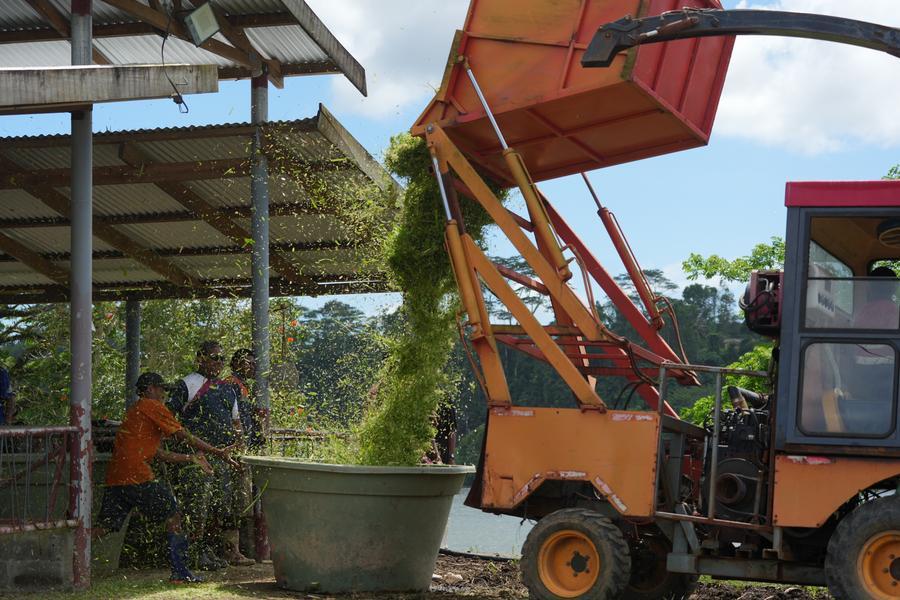
The benefits of innovation can also be seen in concrete projects across the region. Chinese enterprises are supporting the development of new-energy vehicle industries in Thailand, green technologies are helping transform urban transport in Chile, and Juncao technology has helped farmers in Fiji increase their incomes. Such cooperation demonstrates how technology and innovation can be turned into practical solutions for sustainable development.
Innovation creates new opportunities, while cooperation helps build community. The theme for APEC 2026, "Building an Asia-Pacific Community to Prosper Together," reflects China's longstanding commitment to pursuing win-win outcomes with its Asia-Pacific partners.
China has translated this vision into concrete action. It has granted zero-tariff treatment covering 100 percent of tariff lines to all least developed countries that have diplomatic relations with China.
"True development is development for all," Xi said in San Francisco in 2023. He urged members to "develop greater synergy in our development strategies and work together to resolve the global development deficit," highlighting cooperation as a pathway to more inclusive growth and a stronger sense of community across the region.
FUTURE OF ASIA-PACIFIC
China's APEC chairmanship has brought extensive engagement across the region, with more than 300 meetings and events held this year. These have included senior officials' meetings, ministerial meetings covering areas from trade and tourism to energy, transportation and finance, as well as high-level events under APEC Digital Weeks.
The focus now shifts to Shenzhen, where leaders of APEC economies will consider priorities for the next phase of regional cooperation.
The meeting comes at a time when protectionism and geopolitical tensions are testing regional economic ties, while advances in artificial intelligence (AI) and other technologies are creating new opportunities for growth.
Advancing regional economic integration will remain a central priority at the Shenzhen meeting. Twenty years after the FTAAP vision was put forward, leaders are expected to consider ways to advance the vision, including through closer coordination among existing trade agreements such as the RCEP and CPTPP. They are also expected to look at strengthening regional connectivity, building on the APEC Connectivity Blueprint for 2015-2025.
AI will be another major focus, as APEC economies seek to turn rapid advances in digital and intelligent technologies into new sources of growth. Discussions are likely to cover how to harness these technologies for growth while building broader common ground on their development and governance.
China has advanced that agenda during its chairmanship. At the APEC Digital and AI Ministerial Meeting in Chengdu, Sichuan, in July, open-source development was highlighted at the APEC ministerial level for the first time, alongside recognition of the importance of intellectual property protection.
China has also advanced practical cooperation through new regional platforms. It has announced plans for a center for APEC cooperation on cross-border data flows in Qianhai, Shenzhen, and launched initiatives to establish an Asia-Pacific cooperation center for AI empowerment of small and medium-sized enterprises (SMEs) in Guangzhou and an Asia-Pacific SME Cooperation Zone in Shenzhen.
As China advances its modernization drive, it will continue to deepen reform and expand high-standard opening up, creating new opportunities for the Asia-Pacific and the wider world.
As Xi put it at the APEC CEO Summit in Lima in 2024, "China's development is inseparable from the Asia-Pacific, and it will in turn further benefit the region." ■