
SHENZHEN, Nov. 16 (Xinhua) -- Thanks to a startup incubator located less than 1 km from the Nansha North high-speed rail station in Guangzhou, south China, entrepreneurs here can travel to Hong Kong in under 50 minutes and to the country's tech hub Shenzhen in about 20 minutes.
This incubator, aiming to attract global talent, is part of the local government's efforts to spur entrepreneurship across the Guangdong-Hong Kong-Macao Greater Bay Area (GBA), an increasingly significant global innovation hub.
The GBA's gross domestic product exceeded 15 trillion yuan (about 2.23 trillion U.S. dollars) in 2025. Meanwhile, the World Intellectual Property Organization's (WIPO) Global Innovation Index has once again ranked the Shenzhen-Hong Kong-Guangzhou innovation cluster first among the world's top 100 innovation clusters in 2026.
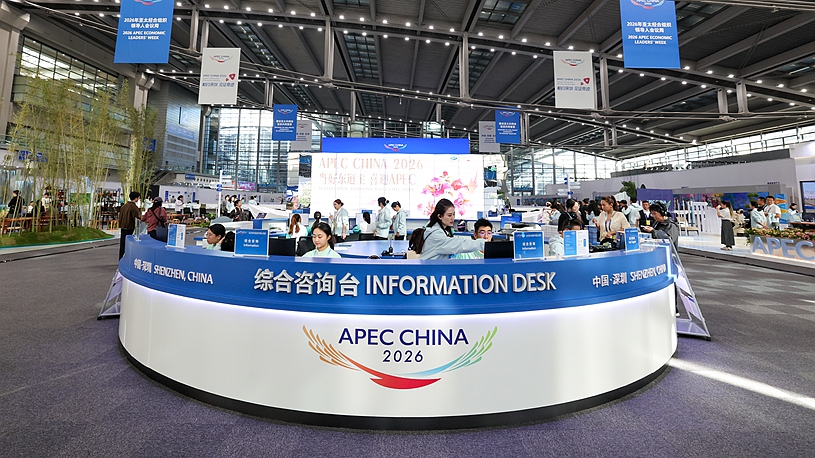
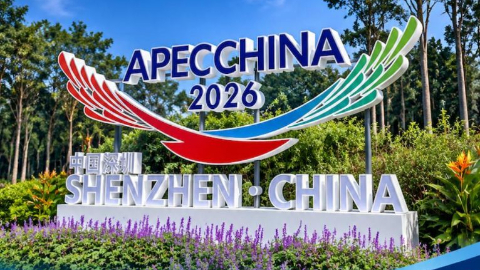
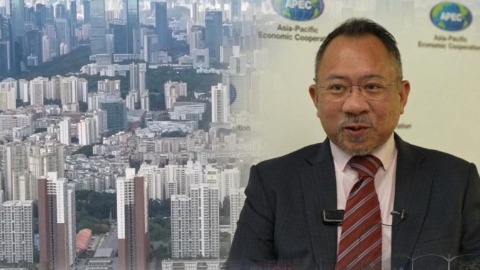
With the 33rd Asia-Pacific Economic Cooperation (APEC) Economic Leaders' Meeting set to take place later this week in Shenzhen, the GBA is expected to further open new space for international technology entrepreneurship and scientific research.
Guangzhou launched an innovation and entrepreneurship partnership program for Asia-Pacific youth in late September. At a dialogue on youth entrepreneurship, Mariia Rumiantseva, founder and CEO of medical tech startup Guangzhou Mekla Health Technology Co., Ltd., said she chose to start her business in Guangzhou's Nansha District because of its supportive policies and vibrant innovation ecosystem.
Rumiantseva and her team have developed an AI-powered home health management app for cancer patients. The company is now using Nansha as a base to reach international markets and explore partnerships with overseas universities and researchers.
At the TroubleMaker makerspace in Shenzhen's Futian District, foreign resident entrepreneurs are increasingly developing advanced hardware such as AI wearables, VR and AR devices, and precision sensors.
The platform has brought together innovators from most APEC economies, said Deng Jiefang, marketing supervisor of the hardware innovation center BlackArc, where the TroubleMaker platform operates.
"Unlike large companies that export standardized products in bulk, overseas makers on the TroubleMaker platform place small, frequent orders and iterate quickly," Deng said. Their work centers on testing samples, customized trial production and refining new products to meet the distinct niche demands of their home countries.
Entrepreneurs from Southeast Asia are the most active group stationed here to prototype and refine products, while innovators from Japan, the Republic of Korea, Australia, New Zealand and North America regularly pay a visit for technical collaboration, Deng added.
"Ideas, technologies and market needs from across the Asia-Pacific are constantly converging in Shenzhen," he said, while also noting that with the Greater Bay Area's well-developed manufacturing, research, testing and support services, ideas can be swiftly turned into products and solutions.
"After further refinement, those products and solutions return to Asia-Pacific markets, creating a cycle of innovation," Deng said.
OPEN SCIENCE COMMUNITY
In the Outline Development Plan for the Guangdong-Hong Kong-Macao Greater Bay Area issued in 2019, China set a strategic goal to build the area into an international center for scientific and technological innovation.
From mapping human proteins to sharing access to major research facilities, the GBA is building new connections for international scientific cooperation.
The area is hosting the China-led π-HuB Project to chart the vast diversity of human proteins and decode how bodies truly function. The project is the next grand endeavor in life sciences after the mapping of the human genome, and the π-HuB consortium has grown into a nearly 100-member international joint force.
In early November, Chinese ministries and departments announced 40 measures to further support the region's innovation development, including plans for a world-class cluster of major scientific facilities.
The GBA has 10 such facilities in operation or under construction. Among them, the China Spallation Neutron Source, dubbed a "super microscope" to probe the structure of the microscopic world, has hosted 112 experiments by overseas users since opening in 2018.
At a meeting there this month, researchers from the United States, Japan and other APEC economies exchanged ideas on shared challenges in operating major facilities.
"What we have here is not just a major scientific facility, but also a community," said Wang Sheng, director of the China Spallation Neutron Source Science Center.
The GBA's innovation clusters have shown "remarkable" dynamism across multiple fields, said Carsten Fink, Chief Economist of the WIPO, adding that the area's inventions and international outlook help drive technological progress around the world. ■