* The Beijing meeting endorsed a vision of an integrated, innovative, and interconnected Asia-Pacific, calling for closer links in infrastructure, trade, and people-to-people exchanges. Over the past 12 years, China has worked with other APEC economies to advance that vision, expanding cooperation from transport and trade facilitation to digital and green development.
* As regional connections have expanded, cooperation has moved beyond trade to encompass technologies and industries that will help shape future growth. At the 2014 Beijing meeting, APEC leaders and representatives endorsed the Accord on Innovative Development, Economic Reform and Growth, highlighting innovation and economic reform as drivers of regional growth.
* China's expanding market offers companies from other APEC economies opportunities to reach Chinese consumers and build lasting partnerships, while providing regional partners with much-needed expertise and capital.
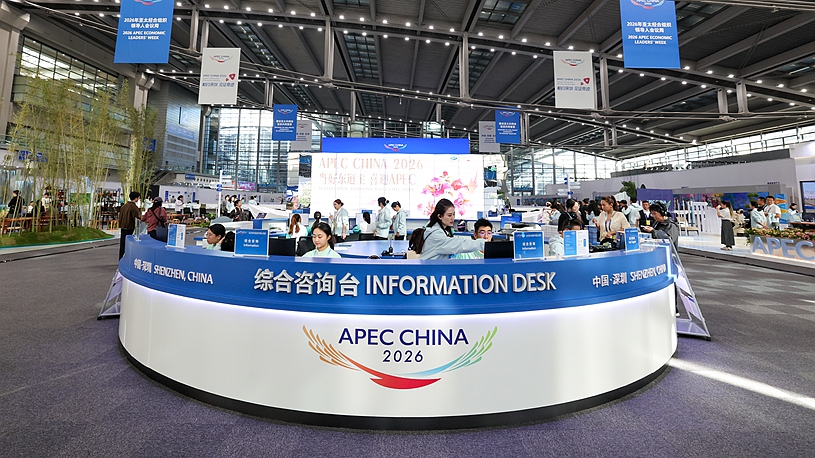
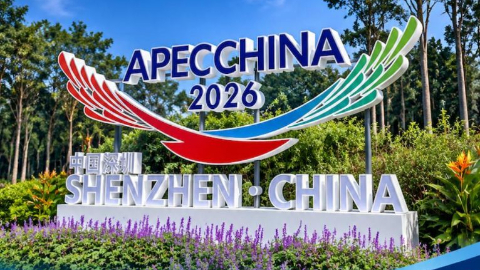
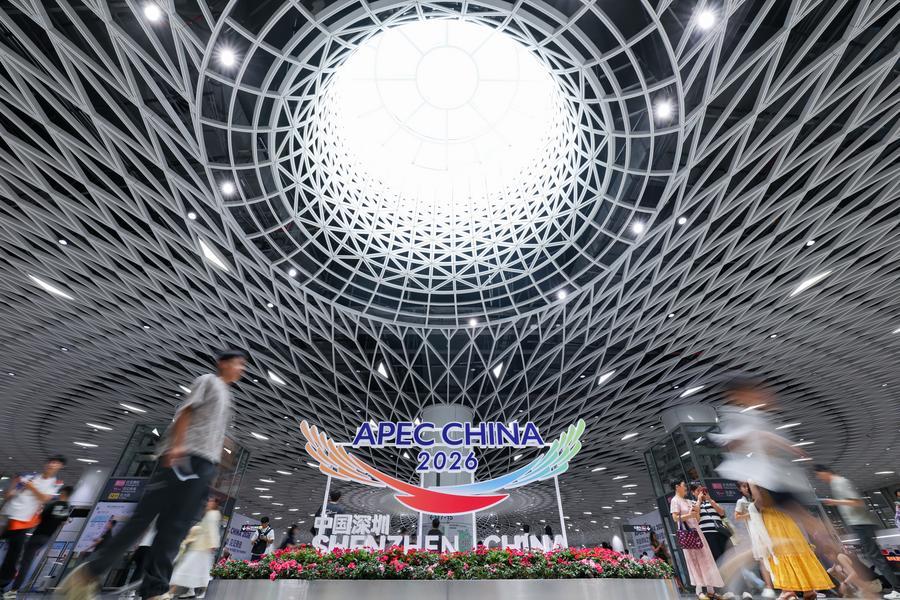
BEIJING, Nov. 15 (Xinhua) -- The 33rd Asia-Pacific Economic Cooperation (APEC) Economic Leaders' Meeting will be held in Shenzhen, south China, from Nov. 18 to 19, marking the first time in 12 years that China is hosting the APEC meeting, following Beijing in 2014.
The Beijing meeting endorsed a vision of an integrated, innovative, and interconnected Asia-Pacific, calling for closer links in infrastructure, trade, and people-to-people exchanges. Over the past 12 years, China has worked with other APEC economies to advance that vision, expanding cooperation from transport and trade facilitation to digital and green development.
This year's gathering, to be held under the theme "Building an Asia-Pacific Community to Prosper Together," will focus on three priority areas identified by China -- openness, innovation, and cooperation -- and is expected to help regional economies deepen economic ties and foster new drivers of growth.
ADVANCING CONNECTIVITY
At Yantian Port in Shenzhen, south China's Guangdong Province, nearly 100 international shipping routes operate each week, 53 of them connecting the port with other APEC economies. The flow of goods through the port reflects the growing connectivity and deepening economic ties between China and the wider region.
Connectivity was a priority of China's 2014 APEC host year. At the Beijing meeting, leaders and representatives endorsed China's proposal to establish the APEC Cooperation Network on Green Supply Chain and approved the establishment of its first pilot center in north China's Tianjin. The center officially opened in June 2015 to promote green procurement and supply-chain assessment. The Green Supply Chain Network has grown into a key platform for regional cooperation on green trade.
Trade agreements have also translated integration into business opportunities. The Regional Comprehensive Economic Partnership (RCEP), which came into force in 2022, has provided a foundation for deeper cooperation toward prosperity, resilience, and sustainability.
RCEP binds ASEAN's 10 members at that time with China, Japan, South Korea, Australia and New Zealand into the largest free trade zone in the world by population and GDP share. By lowering tariffs and harmonizing trade rules, RCEP is estimated to further boost intra-regional trade significantly and strengthen integrated regional supply chains.
Alongside RCEP, the China-ASEAN Free Trade Area (CAFTA) has been significantly upgraded under CAFTA 3.0, which was signed at the 28th ASEAN-China Summit in October 2025. The new version expands the traditional trade pact far beyond tariff reduction. With nine new areas covering the digital economy, green economy and supply chain connectivity, among others, CAFTA 3.0 marks a milestone in economic cooperation that strengthens collective resilience amid global uncertainty.
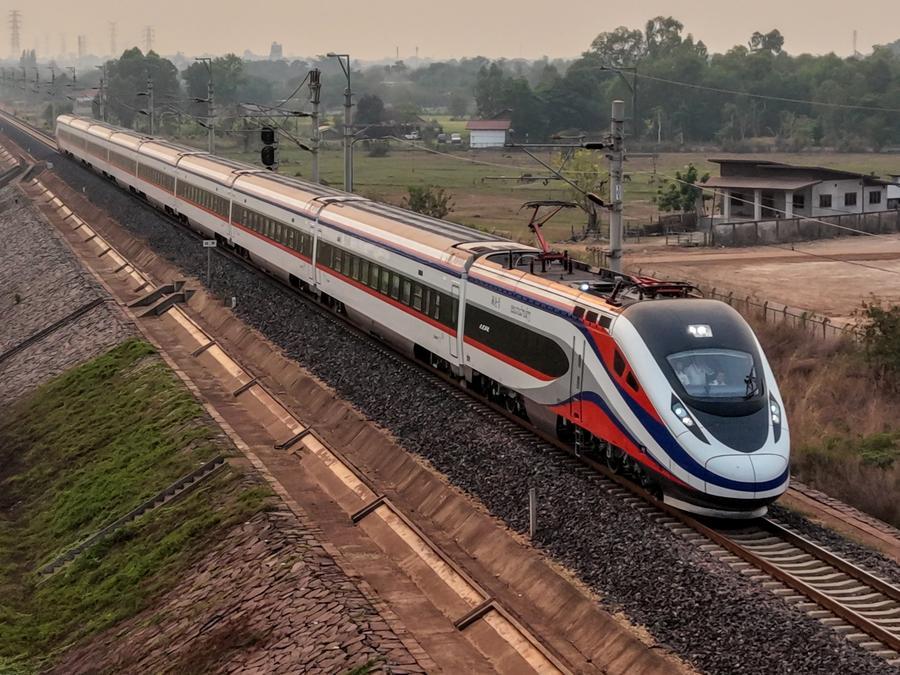
China has also actively promoted infrastructure in the region. Jointly built and operated by China and Laos, the China-Laos Railway links Kunming in southwest China's Yunnan Province with the Lao capital Vientiane, providing landlocked Laos with a rail link to China and access to wider regional markets. Since operation in December 2021, it has carried more than 20.77 million tonnes of import and export goods worth over 100.4 billion yuan (about 15 billion U.S. dollars).
The flow goes both ways: durians, mangosteens and other tropical fruits travel north, while Chinese machinery and electronics move south, bringing producers and markets across the region closer together.
FOSTERING NEW GROWTH
As regional connections have expanded, cooperation has moved beyond trade to encompass technologies and industries that will help shape future growth. At the 2014 Beijing meeting, APEC leaders and representatives endorsed the Accord on Innovative Development, Economic Reform and Growth, highlighting innovation and economic reform as drivers of regional growth.
Trade data point to the growing importance of technology in regional economic ties. In 2025, China's high-tech exports to other APEC economies rose 8.1 percent to 4.63 trillion yuan (about 694 billion dollars), according to the General Administration of Customs.
Shenzhen's growing AI sector offers a glimpse of the technological capabilities China can bring to regional cooperation. By the end of 2025, the city had more than 2,600 AI enterprises above designated size, with core AI industry revenue of about 220 billion yuan (about 32.97 billion dollars). At APEC business and AI forums in June 2026, participants from 13 APEC economies discussed AI applications and cross-border cooperation, while institutions from China, South Korea, Indonesia and other economies signed agreements on technology commercialization and cross-border industrial parks.

Antonio Basilio, director of the APEC Business Advisory Council Secretariat, said China's experience demonstrated the importance of translating technological innovation into practical economic applications, particularly in manufacturing, logistics, agriculture and services.
These technological advances are also reflected in Shenzhen's export mix. In 2025, electric vehicles, lithium-ion batteries, photovoltaic products, AI-powered products, and medical instruments and equipment together accounted for 25.6 percent of Shenzhen's exports to other APEC economies.
Chinese technology and investment are contributing to industrial development across the region. In Malaysia, Chinese battery maker EVE Energy has brought the second phase of its lithium battery plant into operation, the Southeast Asian country's first such large-scale factory. Located in northwestern Malaysia, the facility has an annual production capacity of 680 million cylindrical battery cells. In Thailand, BYD's Rayong plant has an annual production capacity of 150,000 vehicles and employs more than 6,000 people, about 95 percent of them Thai nationals.
Mackenzie Lang, CEO of the Australia-China Youth Group, described Shenzhen as "a city everybody across the world now associates with technological innovation and economic development." He expressed hope that this year's APEC meeting would foster stronger regional economic ties and investment.
SHARING PROSPERITY
China's expanding market offers companies from other APEC economies opportunities to reach Chinese consumers and build lasting partnerships, while providing regional partners with much-needed expertise and capital.
Shenzhen's growing economic ties with the region are a snapshot of this broader cooperation. In the first half of 2026, the city's trade with other APEC economies reached 1.98 trillion yuan (about 296.8 billion dollars), up 33 percent year on year, while investment by local enterprises in other APEC members accounted for nearly 60 percent of Shenzhen's total outbound investment.
Meanwhile, the China International Import Expo (CIIE), now in its ninth edition, has also provided a platform for companies from other APEC economies to enter the Chinese market.
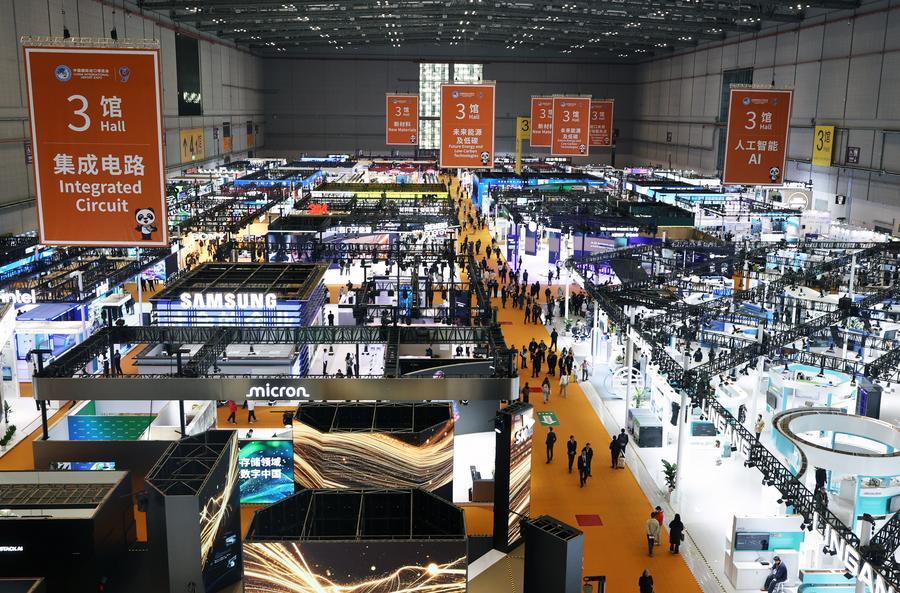
Australian dairy producer Bulla, which has participated in the expo every year since 2019, reached a direct-sourcing agreement with Chinese grocery platform Dingdong Fresh at the 2025 CIIE. Sam Zhang, who oversees international business at Bulla, said the company's exports to China exceeded 10 million Australian dollars (about 7 million dollars) in the financial year ended June 30, 2026.
Beyond expanding market access, China has also worked with other APEC economies to promote development cooperation that benefits local communities.
In Papua New Guinea, nearly three decades of cooperation with China on Juncao (the herbal plant for growing edible mushrooms) technology have created new income opportunities for rural households.
First introduced to the country's Eastern Highlands Province in 1997, the technology has since been promoted through demonstration centers and farmer training programs. With guidance from Chinese agricultural experts, local farmer Zaka Abori began cultivating edible mushrooms in February 2020.
China's International Development Cooperation Agency reported in 2022 that she earned an annual income of 15,000 kina (about 4,240 dollars) from mushroom cultivation, about seven times the annual income of most families in the area engaged in coffee and vegetable farming.
By March 2025, Juncao and upland rice technologies had been promoted in 20 districts across 10 provinces of Papua New Guinea, with 3,277 people trained. In April 2026, Prime Minister James Marape called for a major expansion of the partnership, citing its contributions to rural livelihoods and agricultural development.
Hans Hendrischke, professor of Chinese business and management at the University of Sydney Business School, said APEC's priorities of openness, innovation and cooperation address fundamental challenges facing the Asia-Pacific region, from resisting protectionism and embracing new technologies to developing common rules for cooperation.
(Video reporters: Shu Chang, Mao Pengfei; Video editors: Zhang Yichi, Zhang Ning, Zhao Tianlin) ■