* Shenzhen offers a snapshot of this vibrant high-tech trade story. Total R&D spending in the city grew at an average annual rate of 12.9 percent from 2020 to 2024, and R&D intensity reached 6.67 percent, the highest among Chinese cities. The Shenzhen-Hong Kong-Guangzhou innovation cluster has also topped the Global Innovation Index rankings.
* Cooperation between Shenzhen and its Asia-Pacific partners advances along a well-defined track, featuring manufacturing, research and talent development, and the practical application of technology, said Chen Jiaxi, vice president of the Shenzhen Reform and Opening Up Executive Leadership Academy.
* "The Shenzhen meeting will send a clear signal: China's commitment to high-standard opening up, to sharing opportunities with the Asia-Pacific, and to multilateralism remains firm," said Chen, who is also a professor at Shenzhen University.
SHENZHEN, Nov. 14 (Xinhua) -- From a battery anode materials plant built from scratch in Indonesia to a surgical robot in a Kuala Lumpur operating room and solar panels atop a century-old Thai university, companies from China's southern tech hub of Shenzhen have established a presence across the Asia-Pacific region.
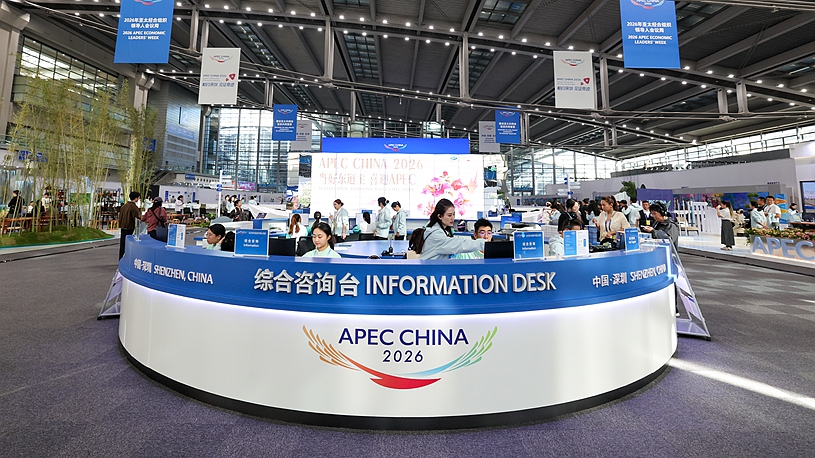
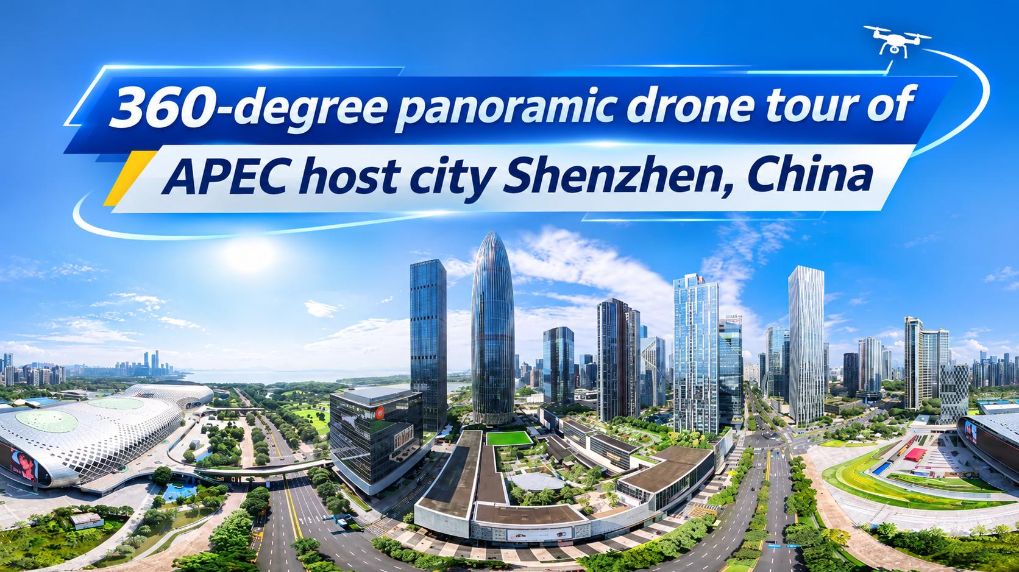
Next week, as Shenzhen in Guangdong Province hosts the 33rd APEC Economic Leaders' Meeting under the theme "Building an Asia-Pacific Community to Prosper Together," the innovative, collaborative approach that Shenzhen embodies will take center stage.
The numbers are significant. China's goods trade with other APEC members reached 26.29 trillion yuan (about 3.9 trillion U.S. dollars) in 2025, or nearly 60 percent of its total foreign trade, according to the General Administration of Customs. High-tech goods are an increasingly strong link: China's exports of such products to other APEC members rose 8.1 percent to 4.63 trillion yuan in 2025.
Shenzhen offers a snapshot of this vibrant high-tech trade story. Total R&D spending in the city grew at an average annual rate of 12.9 percent from 2020 to 2024, and R&D intensity reached 6.67 percent, the highest among Chinese cities. The Shenzhen-Hong Kong-Guangzhou innovation cluster has also topped the Global Innovation Index rankings.
Cooperation between Shenzhen and its Asia-Pacific partners advances along a well-defined track, featuring manufacturing, research and talent development, and the practical application of technology, said Chen Jiaxi, vice president of the Shenzhen Reform and Opening Up Executive Leadership Academy.
"The Shenzhen meeting will send a clear signal: China's commitment to high-standard opening up, to sharing opportunities with the Asia-Pacific, and to multilateralism remains firm," said Chen, who is also a professor at Shenzhen University.
BUILDING LOCALLY
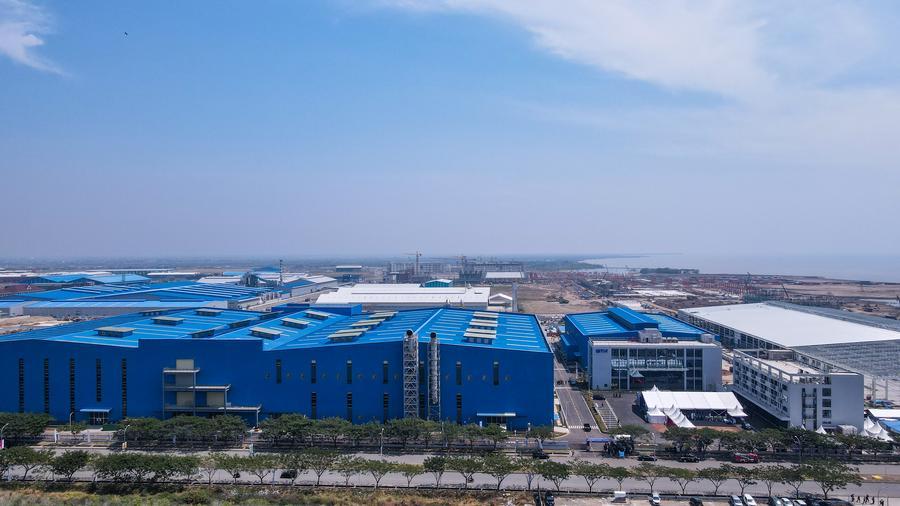
BTR New Material Group (BTR), a Shenzhen-based battery materials maker, opened an anode material plant in Indonesia's Kendal Industrial Park in August 2024 -- the first overseas anode production base built by a Chinese company in the sector, said He Xueqin, the group's chairman.
Before this plant, Indonesia had no lithium-ion battery anode manufacturing industry at all, He said. Then-Indonesian president Joko Widodo attended the opening, saying it brought the country a step closer to building an electric-vehicle ecosystem, the Economic Daily reported at the time.
Two years on, a second phase is in full operation, doubling annual capacity to 160,000 tonnes. The Indonesian subsidiary's revenue jumped 161 percent year on year to 1.71 billion yuan in the first half of 2026, supplying battery makers in Japan, the Republic of Korea, Europe and the United States.
Before the plant, Indonesia had already built a cathode materials industry from its nickel resources, and BTR added the anode link. "By 2026, separator and electrolyte production has also landed in Indonesia, completing the four main battery materials and laying a solid foundation for the electric-vehicle ecosystem," He said.
The deeper shift is what BTR calls "chain-style overseas expansion," with the company having urged its strategic suppliers to move with it, helping them with local research, assessment and site selection. Packaging and crucible suppliers have already set up operations in Indonesia.
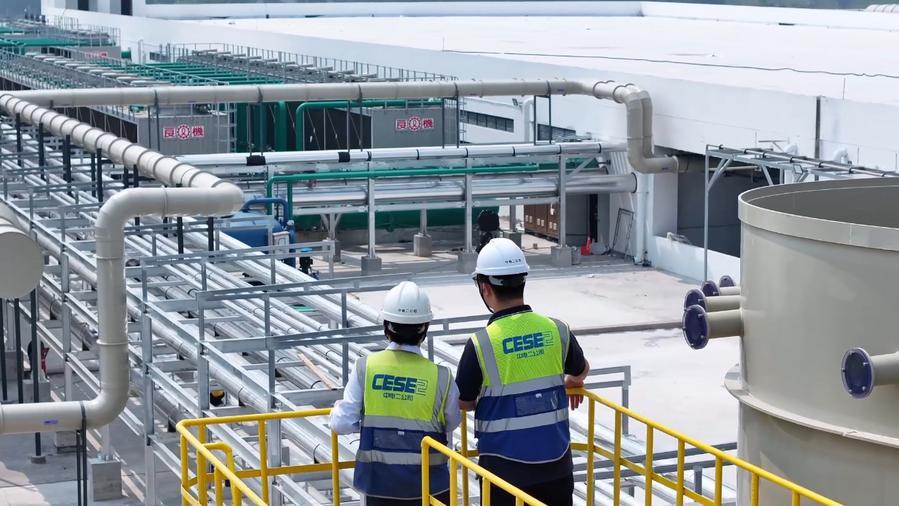
Shenzhen SED Industry Co., Ltd. (SED), a subsidiary of China Electronics Corporation, is exporting plant-building capability itself. For an optical module project in Thailand, its design team analyzed years of local climate data rather than copying domestic designs, adding safeguards against heat and humidity in everything from equipment selection to insulation and cleanroom airtightness.
At an electronics plant in Thailand's 304 Industrial Park, SED applied digital technology across design, construction and operations. Construction clashes fell by more than 95 percent, accidents by over 80 percent, and the plant went from blueprint to completion in just 270 days.
The company now has more than 500 staff and over 1,300 overseas supply chain partners across APEC economies including Thailand, Vietnam and Malaysia, SED said.
RESEARCH AND TALENT
New plants need people who can run, maintain and improve them. Shenzhen's ties with the region are therefore extending beyond production lines into laboratories and classrooms.
As of March 2026, BGI Group, a Shenzhen-based life science and genomics organization, had jointly trained students with more than 80 universities at home and abroad, including Chulalongkorn University and Mahidol University in Thailand, the University of Indonesia and the University of Malaya. These programs involved 4,490 students in total, 2,503 of them at master's or doctoral level.
Such training is tied to research. With Chulalongkorn University, BGI is working on population aging, gut microbiome studies and thalassemia. In Indonesia, BGI signed an agreement in September 2026 with the health ministry's center for biomedical and health genomics to support the Biomedical and Genome Science Initiative, the country's first national genome program, covering joint research, platform development and local training.
BGI describes its approach as "using projects to build disciplines, industries and talent." Since 2018, BGI has run 13 national-level training programs for more than 360 mid- and senior-level biotech professionals from Belt and Road partner countries, almost 60 percent of them from APEC members, and several alumni have become senior public health officials at home, the company said.
TECHNOLOGY ON THE GROUND
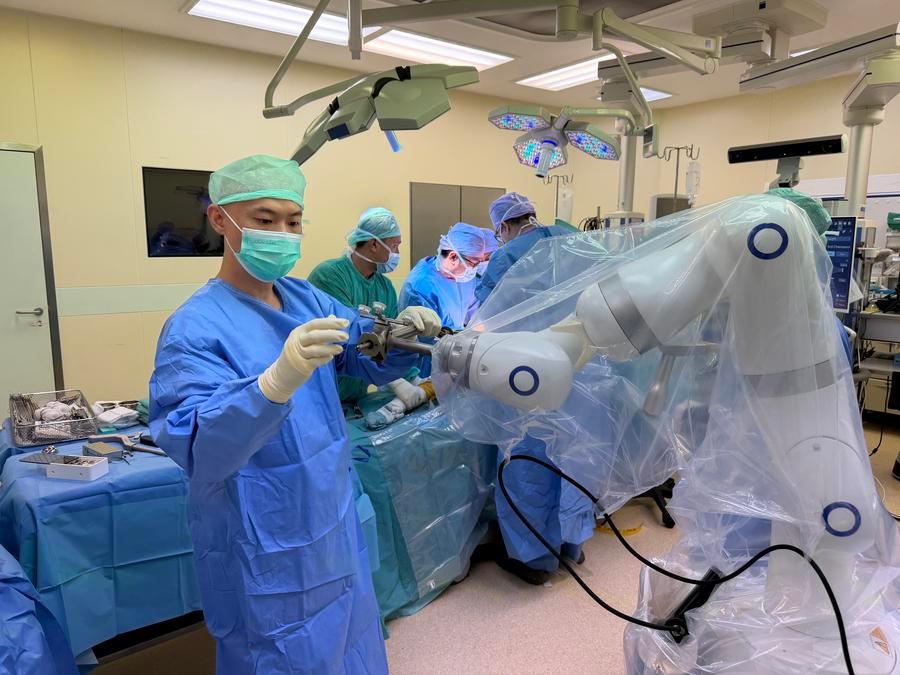
The ultimate test of sci-tech cooperation is whether it can serve local needs and improve everyday life. In a Kuala Lumpur operating room, orthopaedic surgeon Rajiv Rampal guided a Shenzhen-developed robot through a hip replacement. The machine, developed by Shenzhen-based Yuanhua Robotics, Perception and AI Technologies Ltd. (Yuanhua Tech) and manufactured in Hong Kong, completed its first Malaysian operation in July and had performed 21 procedures by early September.
Unlike many surgical robots that are tied to specific implant brands, the Shenzhen robot runs on an open platform: all 21 operations used international-brand implants familiar to local doctors.
AI algorithms plan for different implant brands, achieving sub-millimeter placement without changing surgeons' routines. "Let the machine adapt to the doctor, not the doctor to the machine," a Yuanhua Tech official said.
Shenzhen's rapid technological innovation, coupled with Hong Kong's international quality control standards, gives Malaysia access to cutting-edge medical technology, an official with the Malaysian Chinese-language daily Kwong Wah Yit Poh said.
At century-old Mahidol University in Thailand, 41 campus buildings are topped with solar panels. Huawei describes the project as the Asia-Pacific's largest single-site commercial and industrial solar-plus-storage system.
This project serves a national goal. Thailand announced at the COP26 climate summit in 2021 that it would achieve carbon neutrality by 2050, and has encouraged rooftop solar via incentives and tighter safety standards.
The university chose Huawei's smart photovoltaic solution: 15 megawatts of solar capacity, 600 kilowatt-hours of storage and optimisers, which is expected to save around 2.3 million U.S. dollars a year and cut carbon emissions by 11,000 tonnes. The optimisers allow more panels across the 41 rooftops and lift power output by 10 percent, while the storage provides backup power.
The campus is part of a wider footprint. By early 2025, Huawei's digital power business had served over 1,000 Thai enterprises and installed 6 gigawatts of solar inverters, helping generate more than 6 billion kilowatt-hours of electricity and cut carbon dioxide emissions by more than 5 million tonnes, said Yu Junxiang, an official with Huawei's arm in Thailand.
Taken together, Chen said, these cases show how Shenzhen, an urban test case for Chinese modernization, can serve a region: openness breeds cooperation and innovation drives shared growth, offering Asia-Pacific economies a viable path to build consensus, narrow development gaps and achieve shared prosperity.
(Video reporters: Hui Peipei and Li Jiale; video editors: Hui Peipei, Roger Lott, Li Qin and Li Jiale)■