ROME, Nov. 14 (Xinhua) -- A wave of hoax bomb threats targeting schools, airlines and media organizations has recently swept across Europe, disrupting public services and heightening security concerns.
As similar threats spill across national borders via hijacked email accounts and anonymous networks, European authorities face mounting pressure in identifying those responsible.
Though it remains unclear who is behind the threats hitting France, Spain, and other nations, European officials call them a coordinated effort to sow continent-wide confusion.
Regardless of who is responsible, how exactly are hoax bomb threats causing widespread disruption across Europe?
ORIGIN UNKNOWN
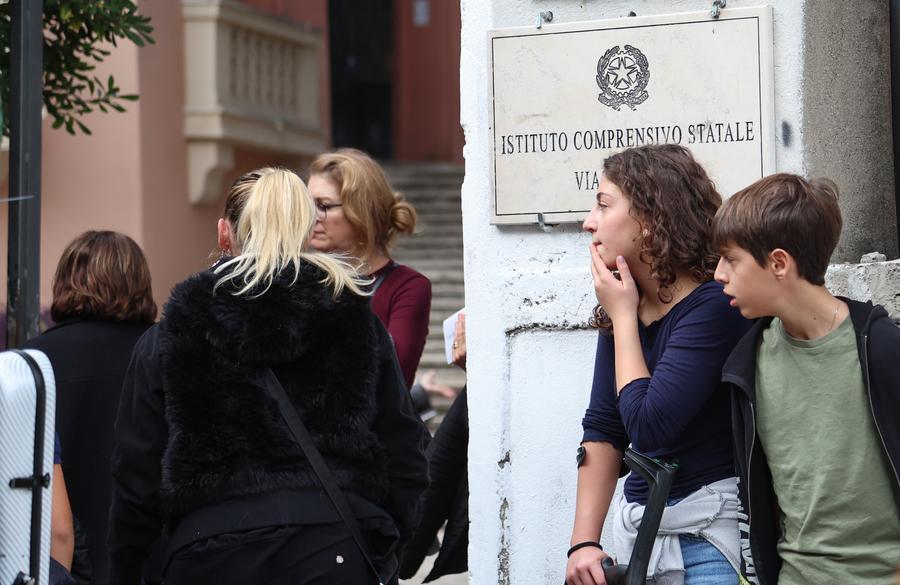
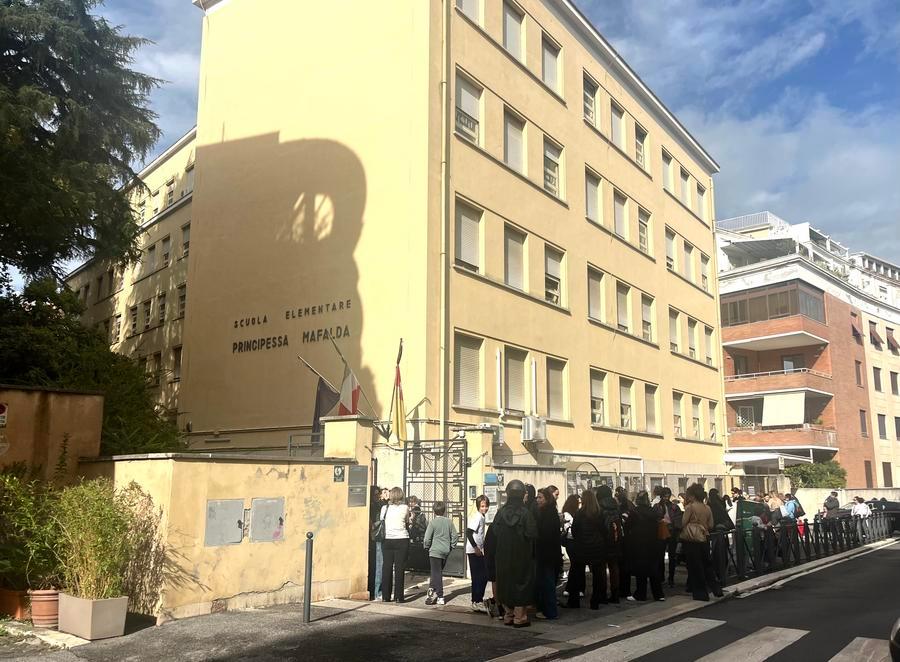
In Italy, around 6,300 schools received bomb threat emails on Wednesday, prompting widespread evacuations, while similar messages sent to schools in Scotland, Northern Ireland and the Republic of Ireland were dismissed as hoaxes.
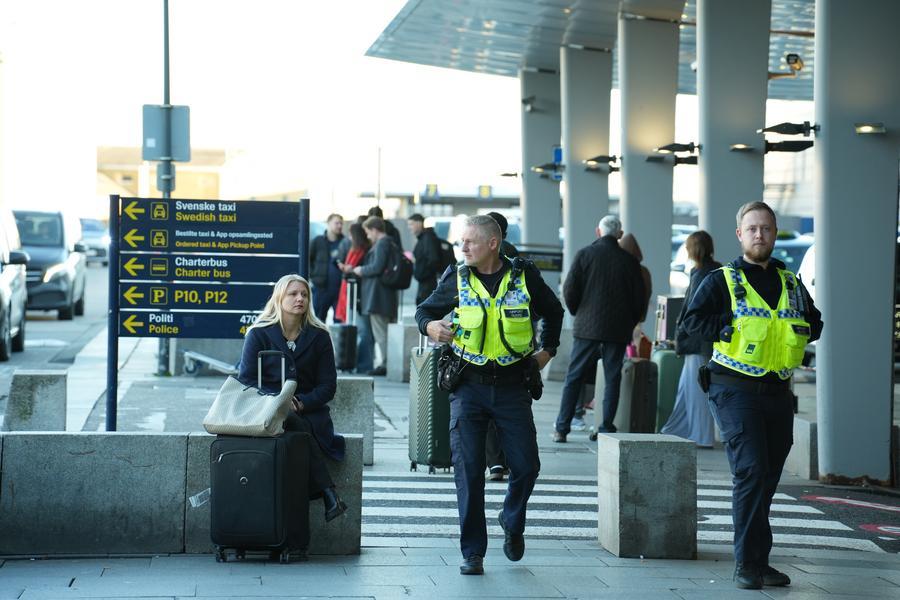
The incidents followed a series of alerts involving European air travel in early November, when at least seven flights and a cruise ship were targeted in one incident, while nearly 30 passenger flights received hoax threats in another, prompting diversions, unplanned landings and fighter-jet escorts. Later, broadcasters in Ireland, Bulgaria and Britain were also targeted.
Across Europe, the threats caused widespread disruption, although no explosives were found and no injuries were reported.
The origins of the threats, however, remain unclear. An email sent to Italian schools was signed by a purported figure named "Mikhail Andropov," who also claimed responsibility for threats against newsrooms in Ireland and Bulgaria.
But the sender's identity remains unknown, and investigators have yet to establish whether the messages were linked to the threats against European flights. Authorities have not attributed the incidents to any group or state actor.
The threats could have been copycat incidents triggered by an initial alert, repeated actions by an individual or group, or hybrid warfare operations by state actors or their supporters, among several possible explanations outlined by Matthew Borie, co-founder and chief intelligence officer of Osprey Flight Solutions, which advises airlines on flight threats.
Spanish Foreign Minister Jose Manuel Albares described the incidents as a possible attempt at "hybrid aggression" and psychological warfare, arguing that the recurrence of similar incidents across Europe was unlikely to be mere coincidence.
He said cyberattacks on digital platforms and supermarket refrigeration systems also fit the pattern, in which hackers remotely manipulated temperature controls, causing refrigerators to warm up and food to spoil.
SECURITY CHALLENGES
In Italy, the government said a special technical group would begin work on Friday to develop procedures and tools for responding to such threats in the short, medium, and long term. These measures would apply not only to schools but also to other potential targets.
Addressing such threats requires not only national-level preparedness but also closer coordination among European countries and institutions.
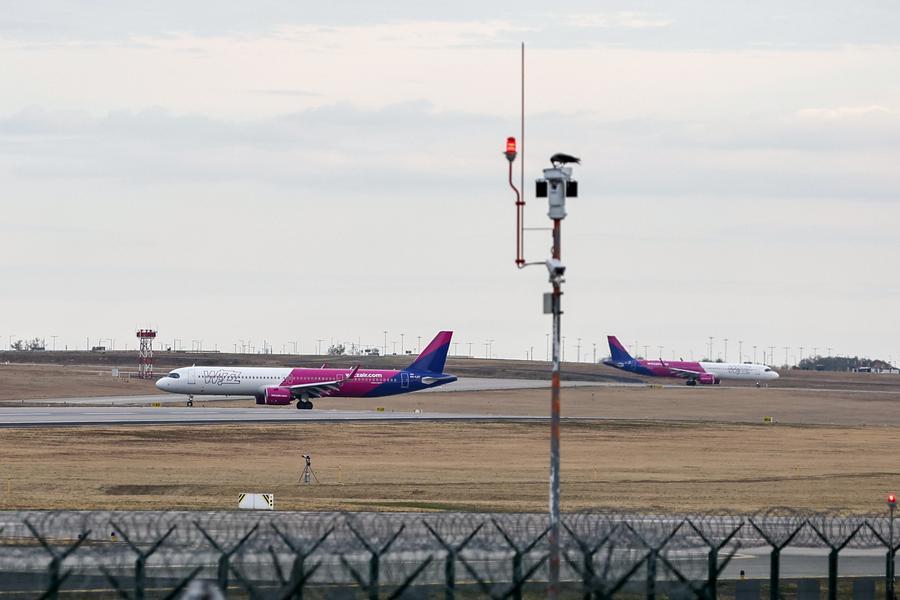
"Europe needs a much more harmonised approach to security and a coordinating body to address these kinds of hybrid threats, rather than leaving individual countries and airlines to deal with them in isolation," said Jozsef Varadi, chief executive of Hungarian airline Wizz Air.
But he acknowledged that national sovereignty remained an obstacle to a unified response, as governments were reluctant to concede on security matters.
Despite these challenges, efforts to strengthen coordination at the EU level are already underway.
At the institutional level, the European Commission activated an aviation security information-sharing mechanism on Nov. 5 and convened security experts from EU member states, with Norway, Switzerland and Iceland also invited to discuss possible coordination measures.
TRIGGERING ANXIETY
One underlying vulnerability is how easily attackers can exploit digital communication channels to disrupt public institutions. "It's too easy. Any one of us can use the available means and instruments to send an email to a school, a daycare, an airline, saying that there's a bomb," Italian Defense Minister Guido Crosetto said Wednesday.
"This episode shows how much irresponsibility, when combined with the extraordinary communicative power of the tools we have today, can cause damage and disruption on a large scale," said Antonello Giannelli, head of the Italian School Principals Association.
Irish Prime Minister Micheal Martin also said threats against broadcasters illustrated how relatively simple unconventional activities could disrupt the normal functioning of society and generate fear and anxiety.
Social media can further amplify such anxiety by circulating unverified claims. In Scotland, false information about school bomb threats heightened parental concerns and contributed to falling attendance at some schools, according to an analysis by Glasgow City Council reported by The Times.
Although investigators found no evidence linking the online activity to the threatening emails, the case highlights how misinformation can compound the effects of hoax threats and deepen public unease.
"We are, of course, on high alert," French President Emmanuel Macron said on Thursday. ■