BANGKOK, Nov. 14 (Xinhua) -- From radio telescopes to satellite launches and joint academic programs, China and Thailand have steadily expanded their aerospace partnership in recent years, turning scientific exchanges into practical cooperation that benefits both countries and the wider Southeast Asian region.
CHARTING COSMOS, OBSERVING EARTH
China and Thailand have jointly developed key infrastructure for high-precision observation and radio astronomy in northern Thailand, fields with great potential to address shared regional challenges.
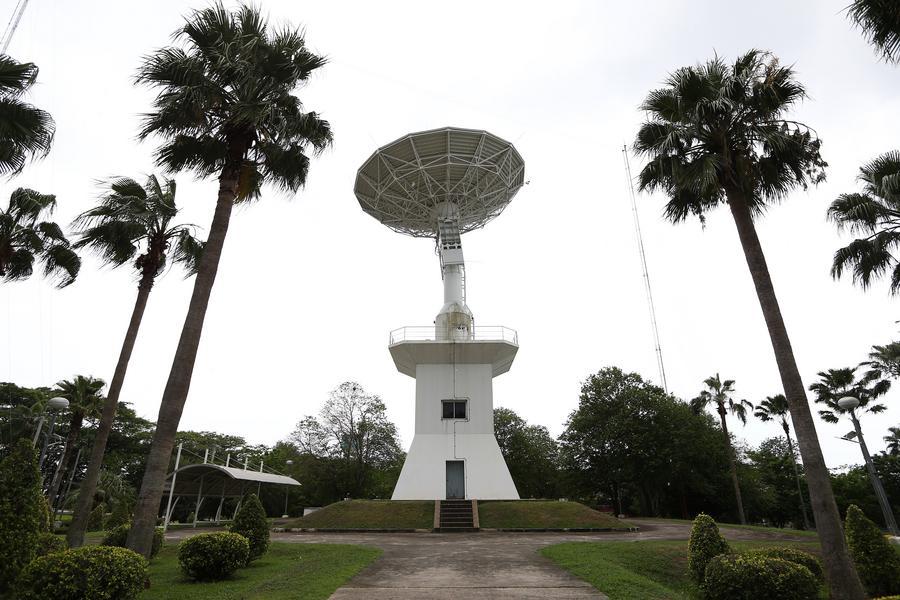
In May 2025, the National Astronomical Research Institute of Thailand (NARIT) and Chinese partners inaugurated Thailand's first Very Long Baseline Interferometry (VLBI) Global Observing System (VGOS) radio telescope, a 13-meter facility in Chiang Mai.
Supported by the Shanghai Astronomical Observatory of the Chinese Academy of Sciences, the project aims to advance research on geodesy and the movement of Earth's tectonic plates, contributing to global scientific collaboration.
Saran Poshyachinda, then director of NARIT, described the telescope as a symbol of deep bilateral cooperation. He noted that a second 13-meter VGOS telescope was being developed in southern Thailand's Nakhon Si Thammarat province to further enhance the country's observational capabilities and links with the global VGOS network.
"The momentum of our bilateral space cooperation is moving forward so rapidly. I cannot imagine how far we would go with this cooperation model," said Wiphu Rujopakarn, executive director of NARIT, noting that commercial space cooperation was also gaining momentum.
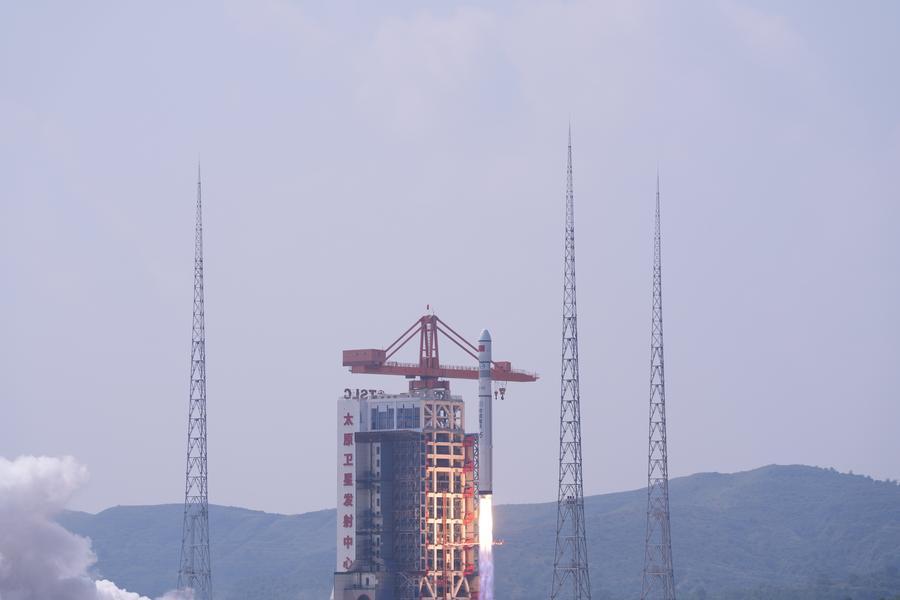
A further milestone came on Aug. 25, 2026, when a Long March-6C carrier rocket lifted off from the Taiyuan Satellite Launch Center in north China's Shanxi Province, sending seven satellites into space, including one developed for Thailand.
GISTDA Cube Sat 1, built by China's GalaxySpace, will provide data on land use, agriculture and ecological conditions for Thailand's Geo-Informatics and Space Technology Development Agency (GISTDA). It will also support Thai universities in satellite design, telemetry and remote-sensing education.
GISTDA satellite engineer Chidchanok Chaichuenchob said the project had involved close cooperation with Chinese partners in system design, integration, testing and mission preparation, adding that the experience would help strengthen Thailand's space capabilities and support future programs.
Phee Choosri, deputy executive director of space technology at GISTDA, said bilateral cooperation had evolved from basic data sharing to joint technology development, downstream applications and talent cultivation.
NURTURING NEXT GENERATION OF SPACE PIONEERS
Talent development is another important pillar of bilateral space cooperation.
Established through a partnership among GISTDA, Thailand's Burapha University and China's Wuhan University, the Sirindhorn Center for Geo-informatics (SCGI) offers a two-year dual master's degree program in geo-informatics. Students spend their first year in Thailand before completing their second year of research and coursework at Wuhan University.
Siriluk Prukpitikul, deputy executive director of strategic alliance engagement at GISTDA, said the program gives Thai students access to advanced academic resources and laboratory experience in China.
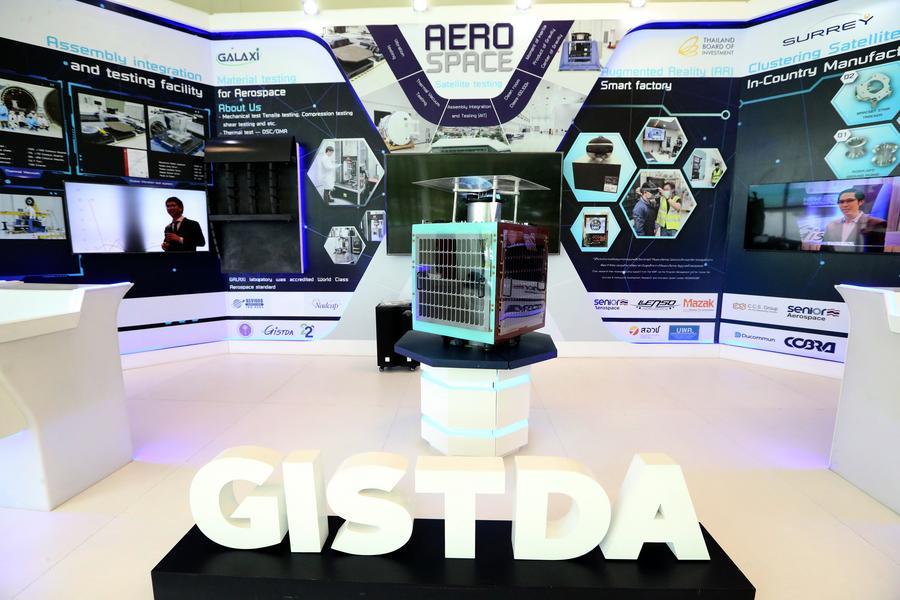
Since its establishment, the program has trained students from Thailand and other ASEAN countries in remote sensing, satellite navigation and spatial big data. Graduates have gone on to become university lecturers, technical specialists and researchers, applying their expertise to areas such as disaster management, urban planning and environmental protection.
"We must nurture the next generation of space professionals to keep pace with the booming space economy," Siriluk said, adding that talent development should anticipate future demands while meeting current needs.
Through cooperation in scientific research, satellite technology and education, China and Thailand are expanding their space partnership, boosting Thailand's technological capabilities and contributing to wider regional development.■