
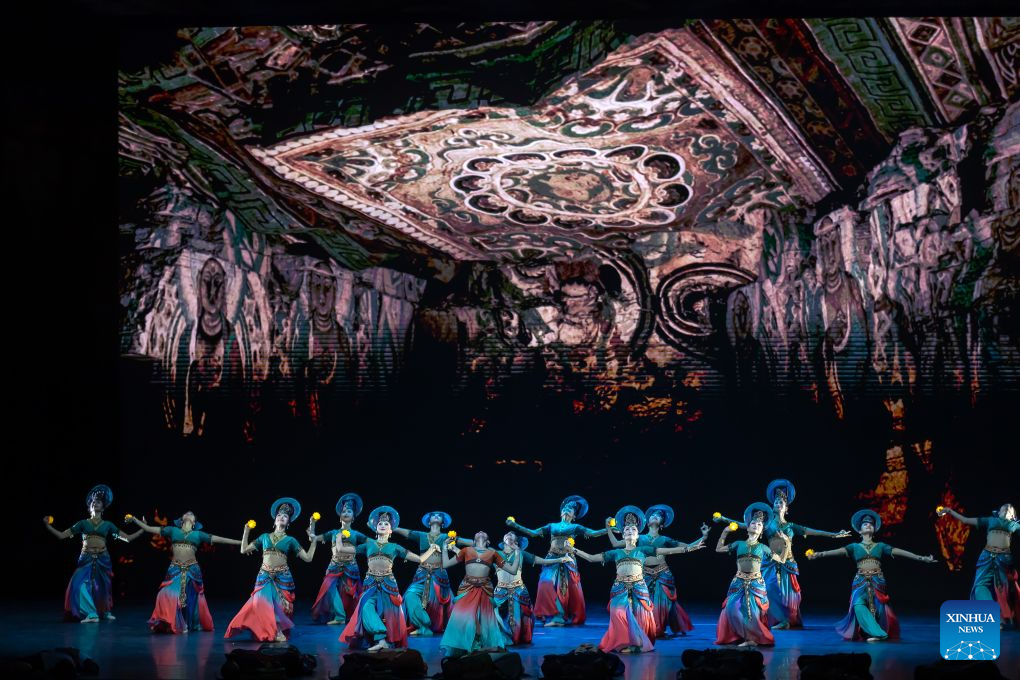
Chinese dancers perform the dance drama "Five Stars Rising in the East" at the Christmas Theater in Athens, Greece, on Nov. 13, 2026. Chinese dance drama "Five Stars Rising in the East" made its European premiere at the Christmas Theater in Athens on Friday, opening the fourth Sino-Greek International Theater Festival with a story inspired by a 2,000-year-old silk artifact. (Photo by Marios Lolos/Xinhua)
ATHENS, Nov. 14 (Xinhua) -- Chinese dance drama "Five Stars Rising in the East" made its European premiere at the Christmas Theater in Athens on Friday, opening the fourth Sino-Greek International Theatre Festival with a story inspired by a 2,000-year-old silk artifact.
Set in the ancient city of Jingjue in China's Western Regions during the Han Dynasty (202 B.C.-220 A.D.), the dance drama follows three characters: Feng, a Han military commander stationed in the region; Jiante, the son of a northern tribal leader; and Chunjun, the daughter of Jingjue's ruler. As their destinies intertwine, they move from misunderstanding and confrontation toward lasting bonds of trust and friendship.
"Different civilizations need opportunities to meet and understand each other. By bringing this production to Greece, we hope to foster an encounter between Chinese and Greek civilizations," said producer Dong Ning.
The production was inspired by a Han Dynasty brocade armguard bearing the Chinese characters "Five stars rising in the East are auspicious signs for the Central Plain," which was discovered in 1995 at the Niya Ruins in northwest China's Xinjiang Uygur Autonomous Region.
Without lines, the drama relies on choreography, music and visual expression to tell its story, connecting audiences from different linguistic and cultural backgrounds.
"The body speaks. The movements convey that emotion," Greek audience Panagiotis Gyftopoulos told Xinhua, sharing his impression of the drama.
Natalia Leontaraki, who regularly attends performances at the theater, said she found a distinctive difference between ballet and this Chinese production. "In ballet, we're usually accustomed to seeing dancers who are a little more restrained in their expressions. Here, I see so much expressiveness, and I really like that," she said.
For 14-year-old Marilina Roka, who studies Chinese and dreams of visiting China one day, what impressed her most was the synchronized choreography and traditional costumes.
"This is my first time attending a Chinese performance, and I thought it was absolutely wonderful. There wasn't a single moment that felt boring. Not even for a second," Roka said.
Drawing on the artifact and other archaeological findings, the production artistically weaves fictional characters and story with Han Dynasty wooden tablets unearthed at the Niya site.
Touched by the drama's connection between history and contemporary human experiences, Gyftopoulos said, "It's about friendship and the trust that can develop between people, although not easily, but gradually, over time." Debuted in Athens in December 2023, the China-Greece International Theatre Festival aims to promote cultural exchanges between China and Greece through performing arts. This year, the dance drama "Five Stars Rising in the East" was scheduled at the Christmas Theater in Athens from Nov. 13-15, featuring over 80 artists. ■
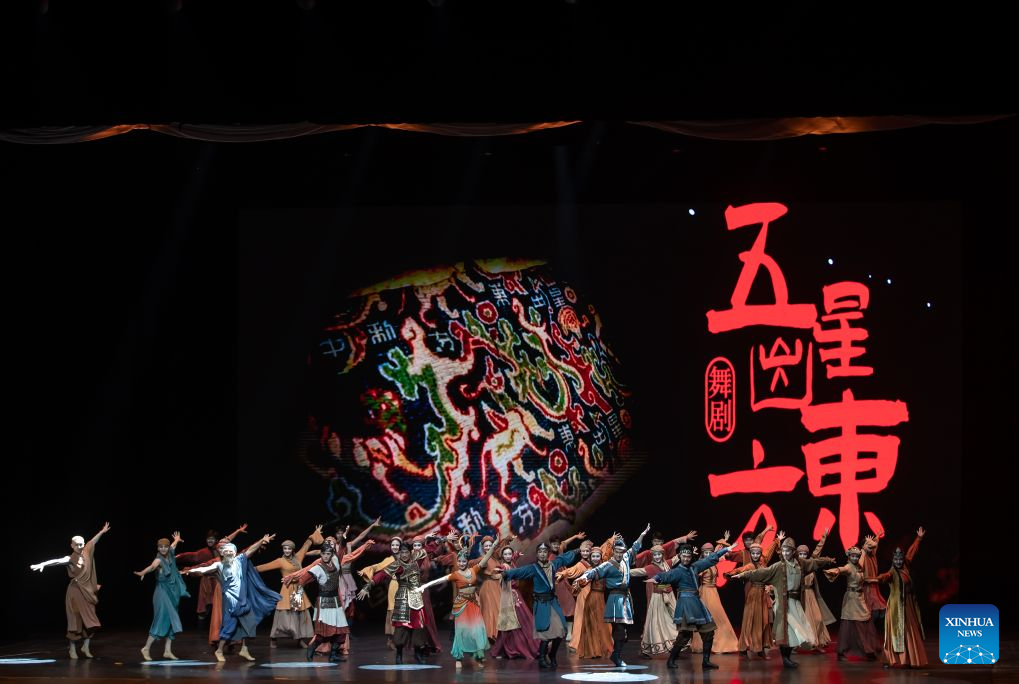
Chinese dancers perform the dance drama "Five Stars Rising in the East" at the Christmas Theater in Athens, Greece, on Nov. 13, 2026. Chinese dance drama "Five Stars Rising in the East" made its European premiere at the Christmas Theater in Athens on Friday, opening the fourth Sino-Greek International Theater Festival with a story inspired by a 2,000-year-old silk artifact. (Photo by Marios Lolos/Xinhua)
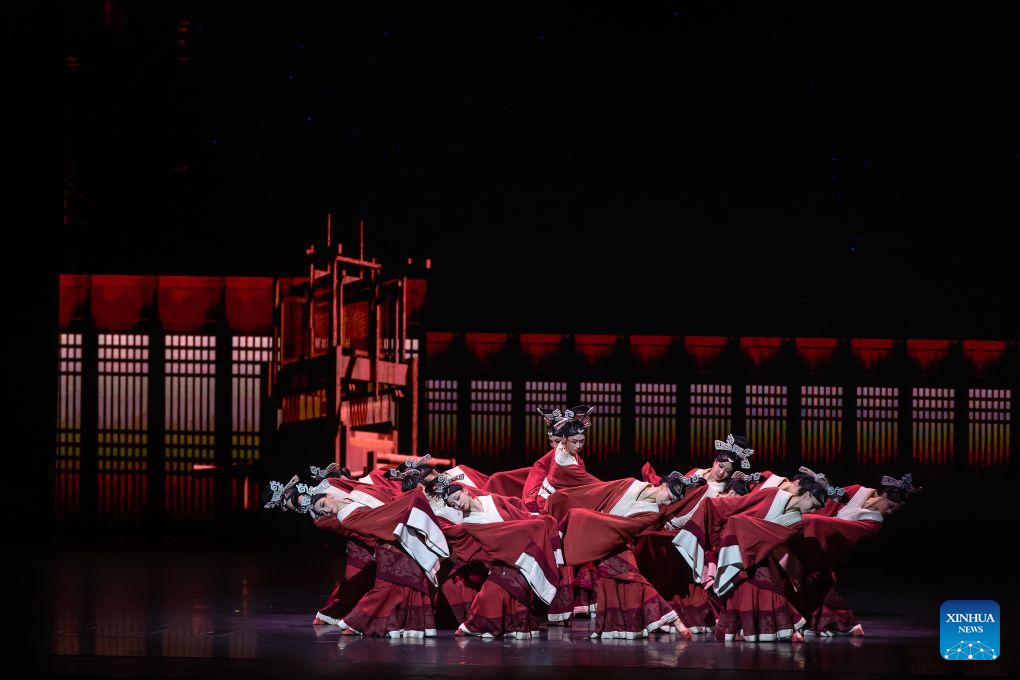
Chinese dancers perform the dance drama "Five Stars Rising in the East" at the Christmas Theater in Athens, Greece, on Nov. 13, 2026. Chinese dance drama "Five Stars Rising in the East" made its European premiere at the Christmas Theater in Athens on Friday, opening the fourth Sino-Greek International Theater Festival with a story inspired by a 2,000-year-old silk artifact. (Photo by Marios Lolos/Xinhua)


